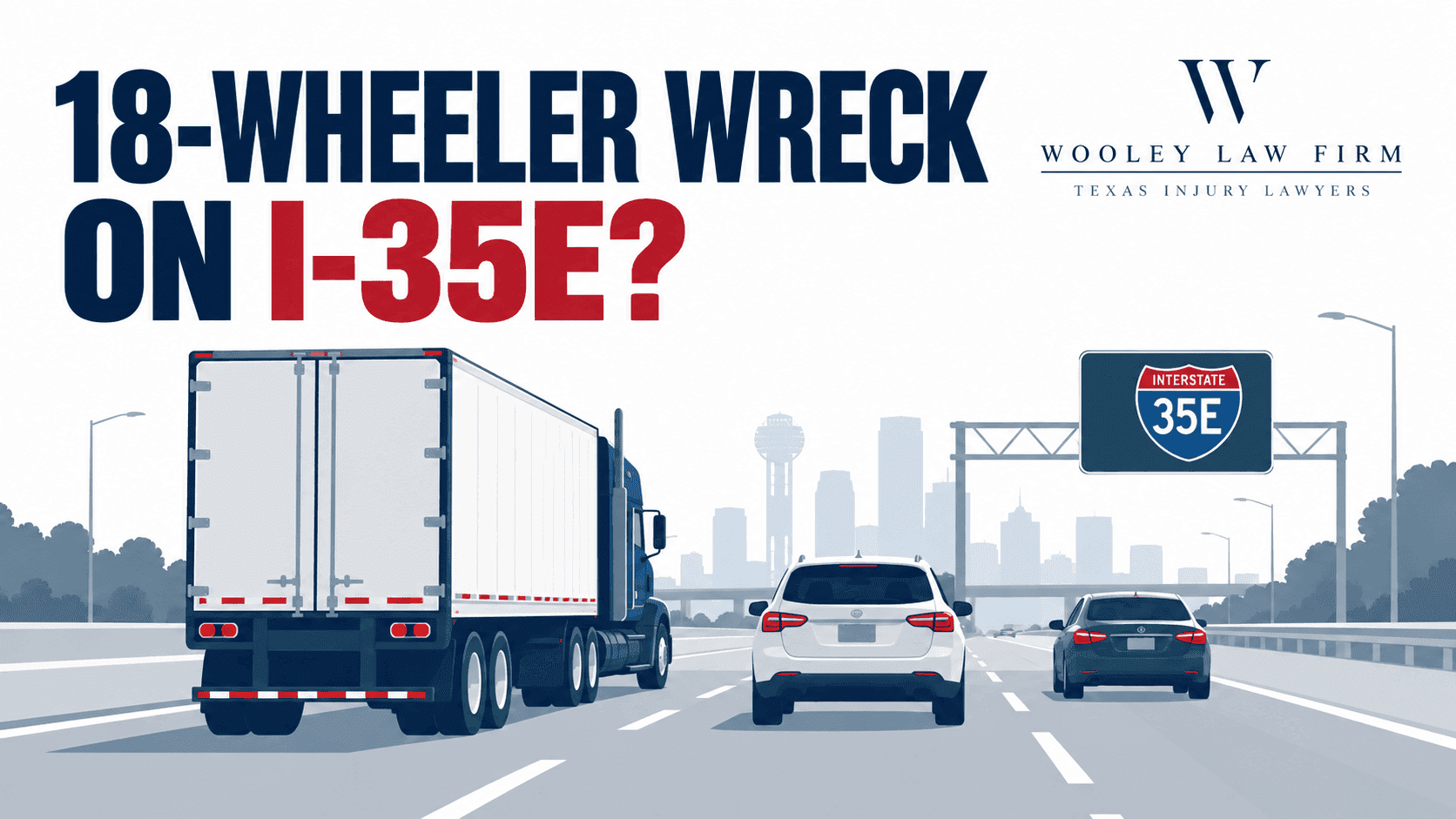
An 18-wheeler wreck on I-35E in Dallas is rarely just an ordinary car accident involving a larger vehicle. A tractor-trailer collision can raise questions about the truck driver, the motor carrier, tractor and trailer ownership, maintenance, electronic data, driver logs, cameras, dispatch records, and several potential layers of insurance coverage.
I-35E carries commuters, local traffic, delivery vehicles, buses, construction traffic, commercial vans, box trucks, and tractor-trailers through Dallas. Traffic can move at highway speed and then compress quickly near interchanges, downtown approaches, entrance ramps, exits, work zones, and recurring congestion. When a commercial driver fails to recognize that change early enough, the difference in size and stopping distance can turn an ordinary traffic slowdown into a catastrophic collision.
If you were seriously hurt by a commercial vehicle, our Dallas 18-wheeler accident lawyer page explains how The Wooley Law Firm investigates truck cases in Dallas and North Texas.
Why an I-35E Truck Wreck Requires a Different Investigation
A passenger-car wreck often begins with a relatively small set of questions: who was driving, who had the right of way, whether a signal was used, whether one driver followed too closely, and what the physical damage shows. A commercial truck case can involve all of those issues plus a much larger corporate and electronic record.
· Who employed or controlled the driver
· Which company was the authorized motor carrier
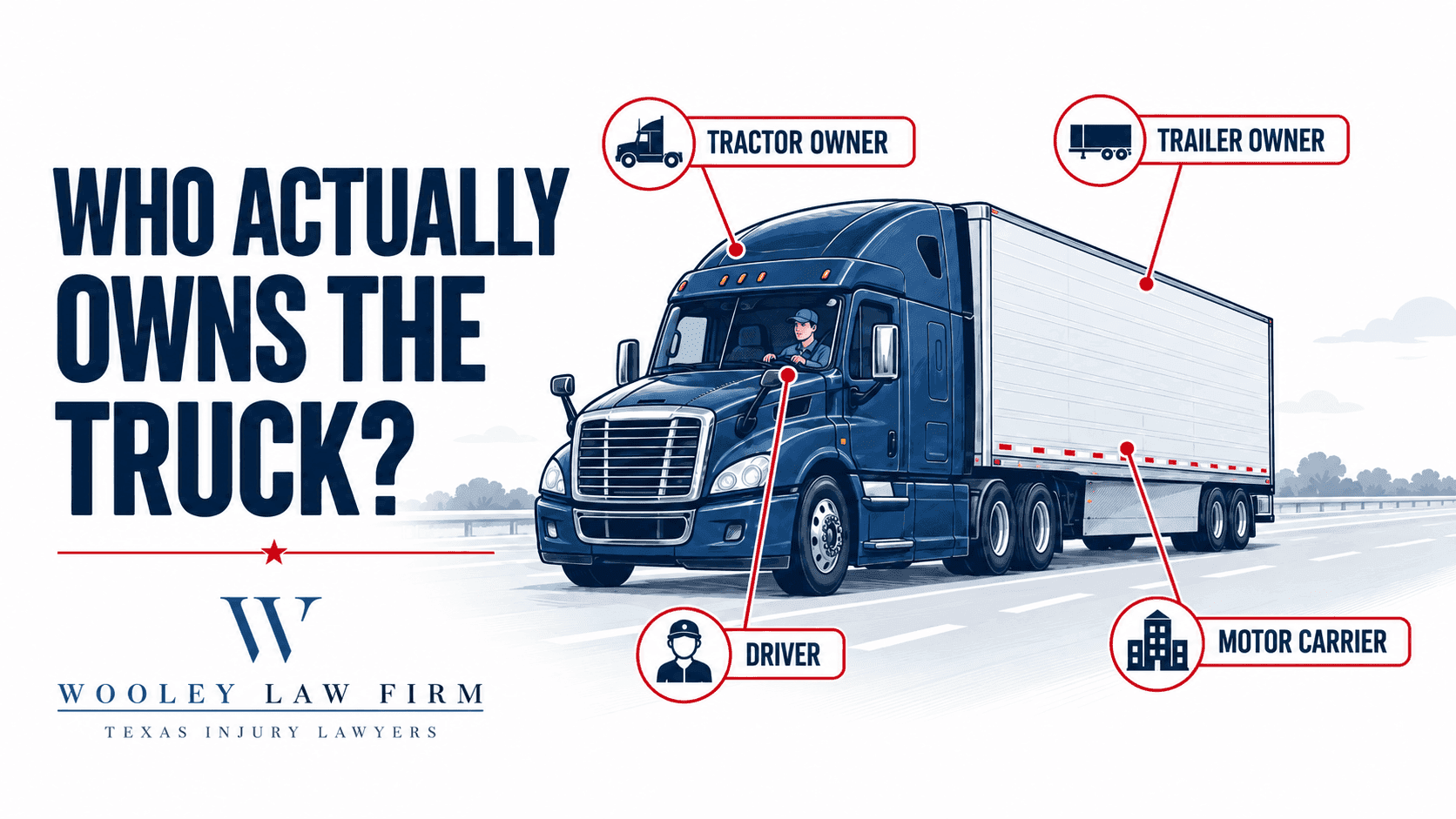
· Who owned the tractor and trailer
· Whether the tractor or trailer was leased
· Who maintained each piece of equipment
· Who dispatched the driver and controlled the route
· What electronic and camera systems were installed
· Whether fatigue, distraction, speed, maintenance, or cargo contributed
· Which liability and excess insurance policies may apply
The name painted on the truck does not necessarily identify every responsible company. Our article on suing the trucking company after a Dallas 18-wheeler wreck explains why the corporate relationships behind the truck may matter.
Rear-End 18-Wheeler Wrecks in I-35E Traffic
Rear-end truck collisions are especially dangerous when an 18-wheeler approaches a line of stopped or slowing traffic. A professional commercial driver should be scanning well ahead, maintaining a safe following distance, and adjusting speed for visible traffic conditions. The investigation should not begin and end with the fact that the truck hit the rear of another vehicle.
· How fast the truck was traveling before the slowdown
· How much following distance existed
· When brake lights and congestion became visible
· When the driver released the accelerator and applied the brakes
· Whether the driver was looking forward or distracted
· Whether a forward-collision warning occurred
· Whether automatic emergency braking activated
· Whether the tractor and trailer brakes were properly maintained
If you were struck in slowing traffic, see our guide to being rear-ended by an 18-wheeler in Dallas and our article about being rear-ended while stopped in Dallas traffic.
“Traffic Stopped Suddenly” Should Be Tested Against the Evidence
A carrier may argue that the traffic jam developed too quickly for the driver to react. That explanation should be compared with objective evidence. Highway traffic in Dallas can compress rapidly, but a commercial driver still has a duty to drive at a speed and following distance that are reasonable for the conditions. The key factual question is how much time and distance the driver actually had.
Truck video may show brake lights visible far ahead. Electronic data may show the truck maintained speed until just before impact. GPS and telematics may establish movement and timing. Collision-mitigation systems may reveal when the truck first detected traffic ahead. Witnesses may describe the truck approaching without slowing. The strongest reconstruction usually comes from comparing several sources rather than relying on a single statement.
The Truck’s Electronic Data May Help Build a Timeline
People often refer to commercial-truck electronic information as the “black box,” but relevant data may exist in several systems. Depending on the tractor and installed technology, investigators may look at the engine control module, electronic control units, telematics, electronic logging devices, camera systems, GPS systems, collision-mitigation equipment, and fleet-management platforms.
· Vehicle speed and speed changes
· Engine RPM and accelerator position
· Brake application and hard-braking events
· GPS location and movement
· Forward-collision or lane-departure warnings
· Automatic emergency braking activity
· Fault codes or system-status information
· Camera-triggered safety events
Automatic Emergency Braking Can Be Important
Newer commercial vehicles may have forward-collision warning and automatic emergency braking systems. In a rear-end wreck, those systems can provide another objective source of information about what the truck detected and how the driver or vehicle responded. The availability of retrievable data depends on the system, but it should be considered early.
Our guide to automatic emergency braking data in truck-wreck claims explains the kinds of questions that may need to be asked after a rear-end collision.
What If the Driver Says the Brakes Failed?
A claimed brake failure does not automatically make a collision unavoidable. It changes the investigation. Commercial vehicles require inspection, repair, and maintenance. The tractor and trailer can have separate braking components, separate owners, and different maintenance histories.
· When the brakes were last inspected
· Whether the driver reported defects
· Whether repairs were recommended and completed
· Who performed the work
· Whether the tractor and trailer systems were properly adjusted
· Whether prior out-of-service conditions or recurring problems existed
· What the electronic data shows about attempted braking
Read more about brake failure after a rear-end 18-wheeler accident in Dallas.
Unsafe Lane Changes on I-35E
I-35E truck wrecks also occur when an 18-wheeler moves laterally into an occupied lane. A tractor-trailer driver has to account for far more vehicle length than the driver of a passenger car. The driver must know what is beside the tractor, what is beside the trailer, what is approaching from behind, and whether enough room exists for the entire combination vehicle.
A common scenario occurs when the tractor has passed a car but the trailer has not. The driver looks forward, sees open pavement near the cab, and begins to merge. The trailer then crosses into the occupied lane and strikes the passenger vehicle. The collision can push the smaller vehicle into a barrier, another vehicle, the shoulder, or toward the trailer wheels.
Our article The Tractor Cleared My Car, but the 18-Wheeler’s Trailer Hit Me explains why trailer clearance matters in this type of Dallas lane-change wreck.
Injured in an Accident?
Free consultation. Tell us what happened and learn what options may be available.
Truck Cameras and Digital Mirrors May Show What the Driver Could See
Commercial fleets increasingly use forward-facing, driver-facing, side, and rear cameras. Some trucks also use camera-monitor systems commonly called digital mirrors. These systems may provide a view along the side of the tractor and trailer and, depending on the equipment, may create retrievable recordings.
If the driver says, “I never saw the car,” the available camera systems should be identified. Learn more about digital mirrors on 18-wheelers and truck-wreck evidence.
What If the Truck Forces You Off I-35E Without Hitting You?
Physical contact is not always necessary for a truck’s movement to cause a crash. An 18-wheeler may enter your lane, forcing you to brake or steer away. Your vehicle may hit a barrier or another car while the truck continues without contact. In that situation, the investigation should focus on what created the emergency and whether your evasive response was reasonable under the circumstances.
See our detailed discussion of an 18-wheeler forcing a vehicle off the road in Dallas.
Driver Fatigue and the Hours Before the Wreck
Fatigue can affect perception, judgment, lane control, and reaction time. Electronic logging devices are important, but a fatigue investigation often looks beyond whether the log appears technically compliant. Investigators may review the driver’s actual schedule, overnight driving, loading delays, dispatch communications, fuel stops, GPS history, delivery demands, and opportunities for meaningful rest.
For interstate property-carrying drivers subject to federal hours-of-service requirements, federal rules generally limit driving time and define duty windows, rest periods, and weekly limits, subject to exceptions. The practical question in a particular case is whether the driver was fit to operate safely and whether company scheduling contributed to unsafe driving.
Evidence That Should Be Considered for Preservation
· Forward-facing, driver-facing, side, and rear camera footage, if installed
· Engine-control-module and event data
· Electronic logging-device records and hours-of-service information
· GPS, telematics, hard-braking, speed, and safety-alert data
· Dispatch messages, trip assignments, bills of lading, and delivery records
· Driver qualification, training, safety, and disciplinary records
· Tractor and trailer inspection, maintenance, and repair records
· Post-crash photographs, measurements, tow records, and witness information
· The condition of the tractor, trailer, tires, brakes, lights, and other relevant components
Preservation can become especially important because commercial equipment is often repaired and returned to service quickly. A trailer can be repaired, tires can be replaced, damaged components can be discarded, and electronic information can be overwritten during ordinary operations. Prompt identification of the evidence can prevent avoidable disputes later.
Who May Be Responsible for an I-35E Truck Wreck?
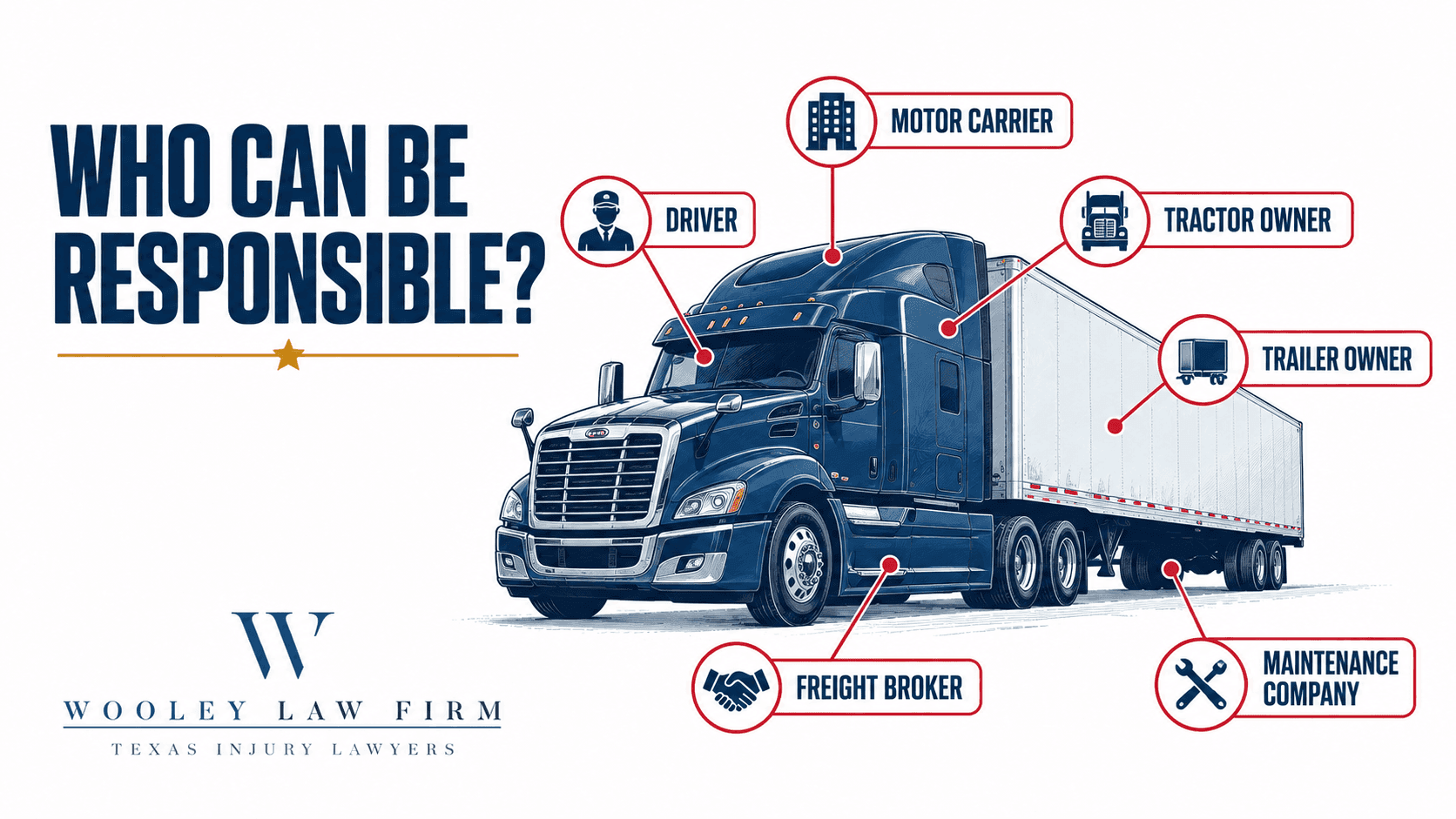
Depending on the facts, potentially responsible parties can include the driver, motor carrier, employer, tractor owner, trailer owner, leasing company, maintenance contractor, repair facility, loading company, manufacturer, or another negligent motorist. There is no universal list. The investigation should identify what each person or company actually did and whether that conduct contributed to the collision.
Serious Injuries After I-35E Tractor-Trailer Collisions
· Traumatic brain injuries
· Cervical and lumbar spine injuries
· Spinal cord injuries
· Fractures
· Shoulder and knee injuries
· Crush injuries
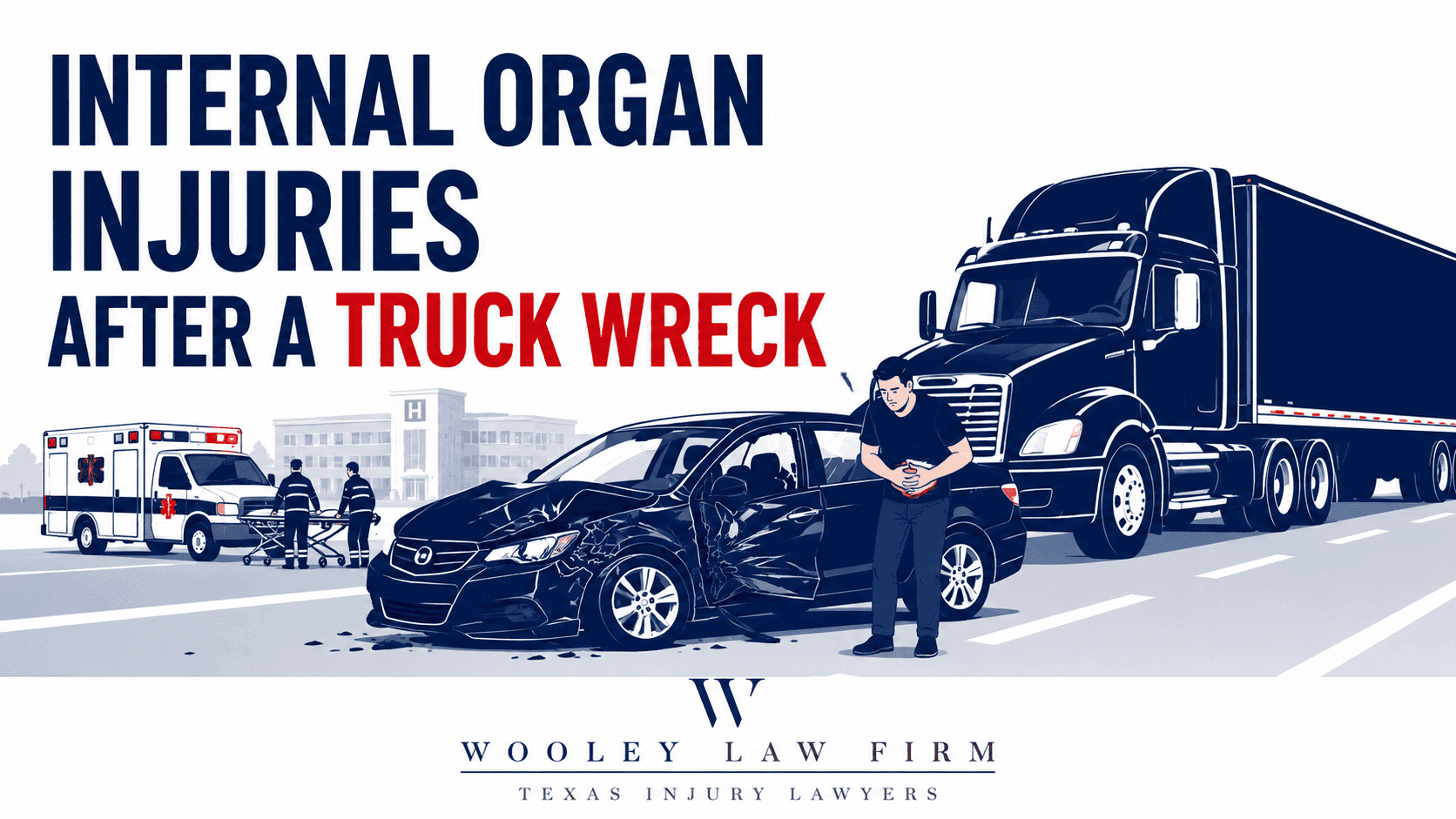
· Internal injuries
· Nerve injuries
· Amputations
· Burns and scarring
· Permanent impairment
· Wrongful death
Some injuries are apparent immediately. Others become clearer after the initial shock and adrenaline wear off. Appropriate medical evaluation should take priority over trying to predict at the roadside whether an injury will resolve quickly.
What Should You Do After an I-35E Truck Wreck?
Call 911 and report the collision.
Seek appropriate medical evaluation.
Photograph the tractor, trailer, license plates, USDOT markings, and damage if it is safe to do so.
Take wide photographs of the roadway, lane markings, traffic conditions, debris, and final vehicle positions.
Obtain witness names and contact information.
Save dash-camera footage and original phone photographs or videos.
Keep tow, storage, repair, rental, medical, and expense records.
Avoid guessing about facts you do not know when speaking with insurers.
Consider legal advice before giving a detailed recorded statement or signing broad releases.
Address preservation of commercial evidence promptly.
Talk to a Dallas Truck Wreck Lawyer After an I-35E Collision
A serious I-35E truck wreck may involve evidence that never appears in the police report. The truck may contain electronic data. The carrier may possess video. Dispatch records may explain the route and timing. Maintenance records may reveal a mechanical issue. Driver records may show prior safety concerns. And the tractor, trailer, driver, carrier, and leasing company may all be different parties.
The Wooley Law Firm represents people seriously injured in tractor-trailer and commercial-vehicle wrecks in Dallas and throughout North Texas. We investigate the crash, truck, electronic systems, driver, trucking companies, ownership relationships, maintenance evidence, and available insurance coverage.
Call (214) 699-6524 for a free consultation. You don’t pay unless we win.
Why the First 24 to 72 Hours Can Matter in a Serious Truck Case
A commercial-truck wreck can begin changing almost immediately after the vehicles are removed from I-35E. The tractor may be sent to a terminal. The trailer may go to a different location. A damaged component may be replaced. An onboard camera can continue recording new footage and overwrite an older event. Dispatch personnel may create internal reports. Insurers may contact witnesses. None of those things automatically means evidence will be lost, but they illustrate why a truck case develops on a different timeline from a routine passenger-car claim.
An injured person should focus first on safety and medical care. At the same time, counsel can begin identifying the tractor, trailer, driver, motor carrier, owners, insurers, and potential evidence sources. A preservation letter can identify categories of information that may become important, but the investigation should be tailored to the actual collision rather than simply sending a generic list.
How a Dallas Truck Lawyer Identifies the Correct Motor Carrier
The company name seen on the door is a useful starting point, but it is not always the entire answer. The tractor may display a motor carrier name and USDOT number while the tractor itself is owned by an owner-operator. The trailer may belong to a leasing company. The driver may be operating under another company’s authority for the trip. Bills of lading, lease agreements, dispatch records, registration documents, insurance filings, and federal carrier records can help identify the parties and their roles.
This matters because different entities can possess different evidence. The carrier may have driver logs and dispatch data. The tractor owner may have maintenance records. The trailer owner may have inspection and repair records. A broker or shipper may have load and routing information. The goal is not to add companies unnecessarily; it is to understand the actual transportation arrangement before deciding who should be pursued.
Insurance Coverage in an I-35E 18-Wheeler Case
Commercial-truck cases can involve more than one insurance policy. The motor carrier may have a primary liability policy. Depending on the structure of the operation, there may be excess or umbrella coverage, trailer coverage, owner-operator coverage, or other potentially relevant policies. The existence of multiple policies does not mean every policy applies, but identifying the insurance structure can be important when injuries are severe.
The injured person’s own coverage can also matter. Personal injury protection, medical-payments coverage, uninsured or underinsured motorist coverage, health insurance, Medicare, Medicaid, or other benefits may affect how medical bills are handled while the liability claim is pending. Those issues should be evaluated carefully rather than assuming the trucking carrier will immediately pay ongoing medical expenses.
How Medical Evidence Connects the Wreck to the Injury Claim
Liability is only one half of a serious truck case. The other half is proving the injuries and losses caused by the collision. Medical records can document the timing of symptoms, objective imaging, diagnoses, treatment recommendations, procedures, work restrictions, and future care. Consistent history is important because insurers often compare what the patient told emergency providers, specialists, therapists, and other doctors.
An insurer may also examine prior injuries or degenerative findings. A preexisting condition does not automatically defeat a claim, but it can make causation more complicated. The relevant question may be whether the I-35E collision caused a new injury, aggravated an existing condition, or made a previously manageable problem symptomatic. Medical evidence and a careful timeline are often more useful than broad statements such as “I never had any problem before.”
How Trucking Insurers Defend I-35E Claims
Common defense themes include sudden-stop arguments, claims that the passenger driver changed lanes, allegations that injuries are preexisting, arguments that treatment was delayed, disputes over medical charges, and efforts to separate the driver from the company. A trucking insurer may also emphasize the absence of a citation or the wording of the police report.
None of those issues should be ignored, but none should be accepted without analysis. A police officer may not have downloaded truck data. The driver’s initial statement may conflict with video. A medical delay may have a reasonable explanation. A company may be legally connected to the driver even if it characterizes the driver as an independent contractor. The evidence should be evaluated as a whole.
Reconstructing an I-35E Truck Wreck
In a serious collision, reconstruction may combine photographs, measurements, vehicle damage, electronic data, roadway geometry, witness statements, video, and the truck’s braking or steering information. The purpose is not to make a case appear more technical than it is. Reconstruction is useful when it answers a disputed factual question: how fast the truck was moving, when it began braking, where the vehicles were positioned, whether a lane change occurred, or whether the claimed sequence is physically consistent with the damage.
A simple case may not require extensive expert work. A complicated multi-impact or disputed electronic-data case may. The level of investigation should fit the facts and the seriousness of the injuries.
Frequently Asked Questions
Can I sue the trucking company after an I-35E wreck?
Potentially. It depends on the driver’s relationship with the company and whether the carrier’s own conduct contributed to the wreck.
What if the tractor and trailer have different owners?
Both ownership relationships may need investigation because operation, maintenance, control, and insurance can differ.
Can the truck’s electronic data show speed?
Depending on the vehicle and systems installed, electronic information may provide speed, braking, throttle, GPS, alerts, and other operational data.
What if the truck never hit me?
A no-contact collision may still require investigation if the truck’s movement created the emergency that caused your crash.
What if the trucking company says I stopped suddenly?
That explanation should be compared with video, electronic data, braking information, traffic conditions, witnesses, and other objective evidence.
Disclaimer: This article is for general informational purposes only and is not legal advice. Reading it does not create an attorney-client relationship. Every case is different.
Topics
Share This Article

Andrew J. Wooley
Personal Injury Attorney
Andrew J. Wooley is a dedicated personal injury attorney based in Dallas, Texas. He focuses on helping accident victims recover fair compensation for their injuries. With a commitment to personalized service, Andrew works directly with each client to understand their unique situation and fight for their rights.