
Loading articles...
Showing 22 articles with this tag
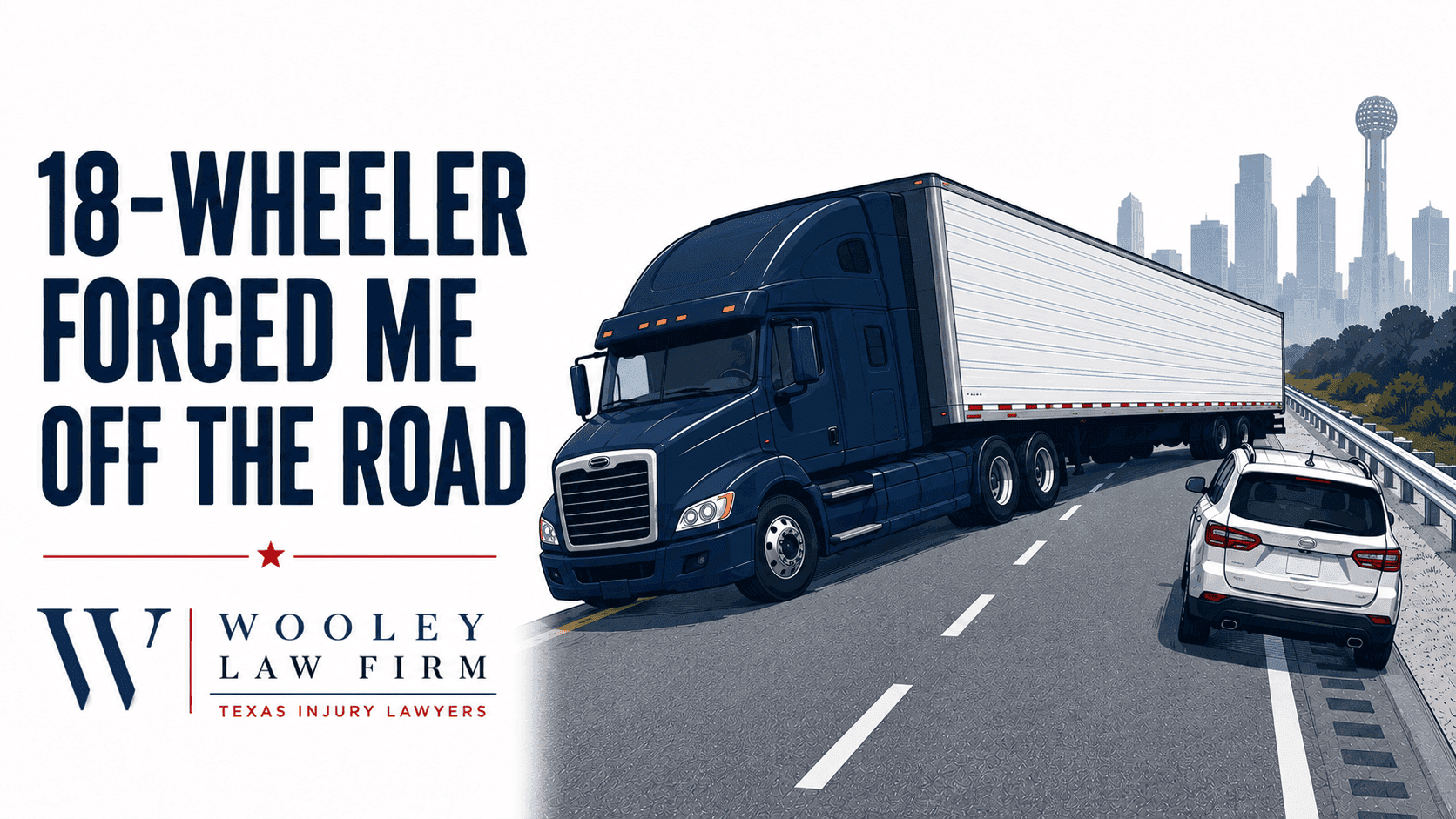
An 18-wheeler does not have to physically hit your vehicle to cause a serious wreck. If a truck suddenly changes lanes and forces you into a barrier, off the highway, or into another vehicle, evidence showing how the truck moved may become critical.
Read Article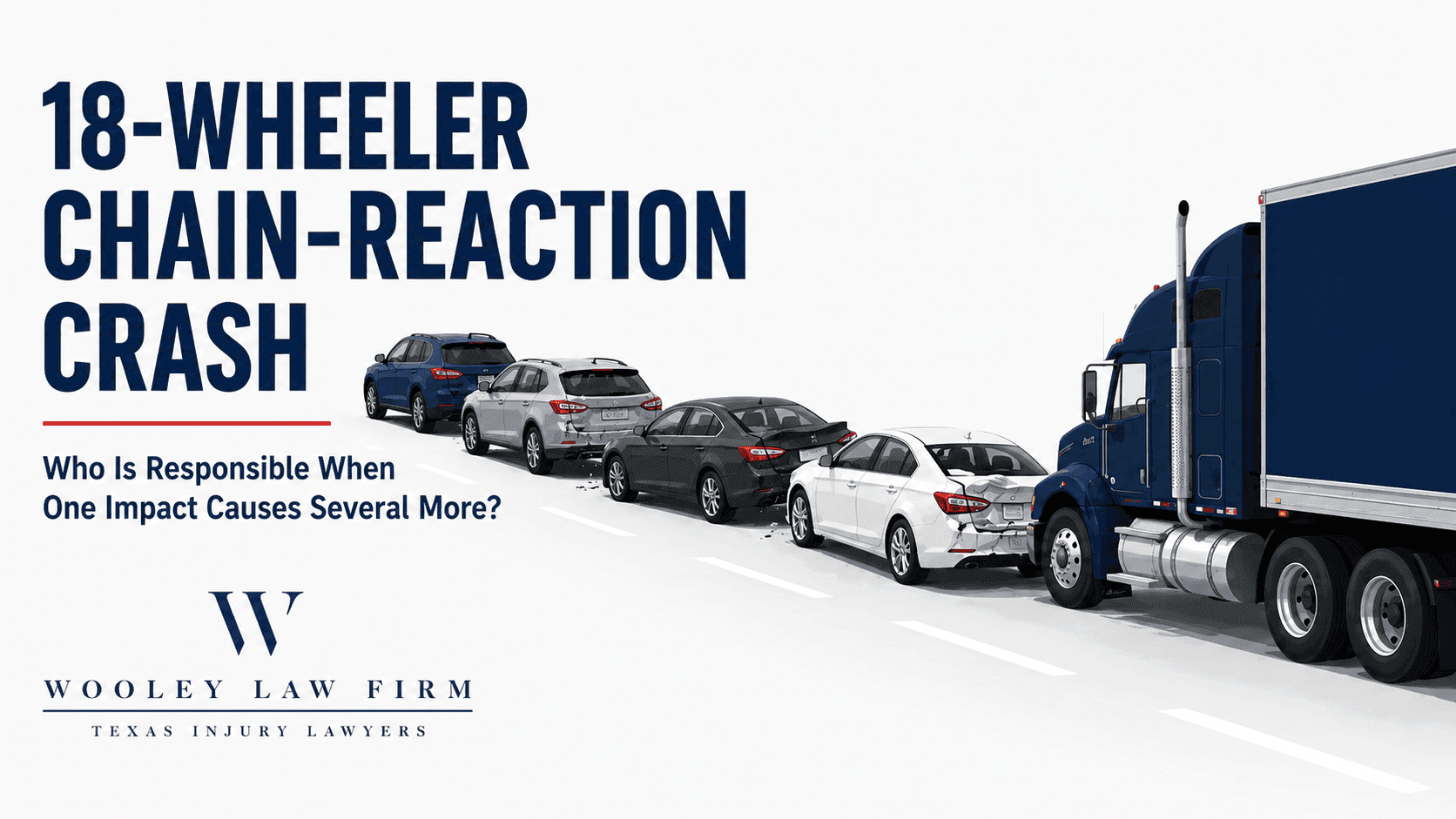
When an 18-wheeler crashes into one vehicle and pushes it into several others, determining responsibility can be complicated. A Dallas truck wreck investigation should examine the entire sequence of impacts—not just which vehicle hit you last.
Read Article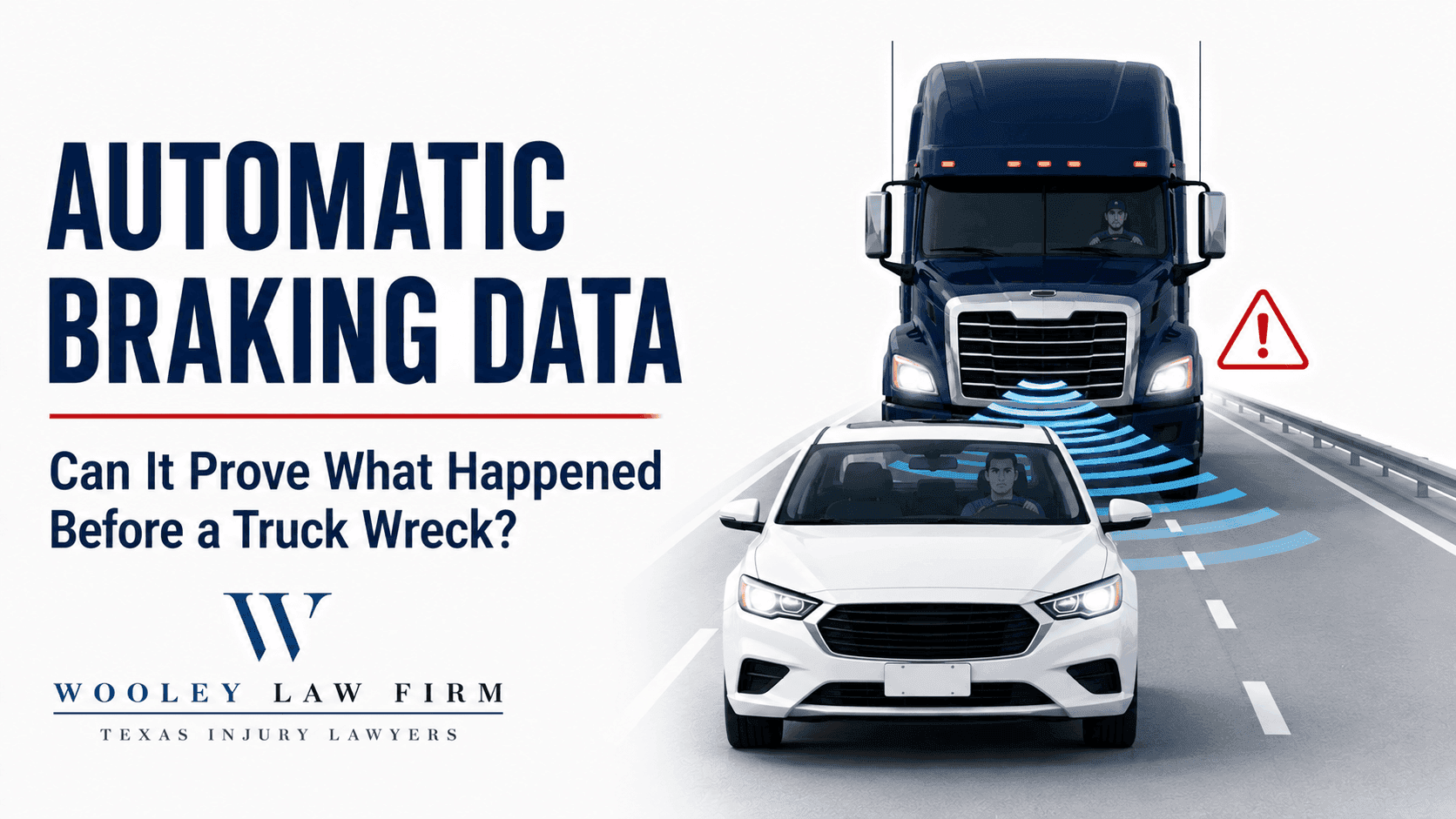
Modern 18-wheelers may have forward-collision warning and automatic emergency braking systems designed to detect vehicles ahead and help prevent rear-end crashes. After a serious Dallas truck wreck, data from these systems may help determine whether the truck detected the danger, warned the driver, and attempted to brake before impact.
Read Article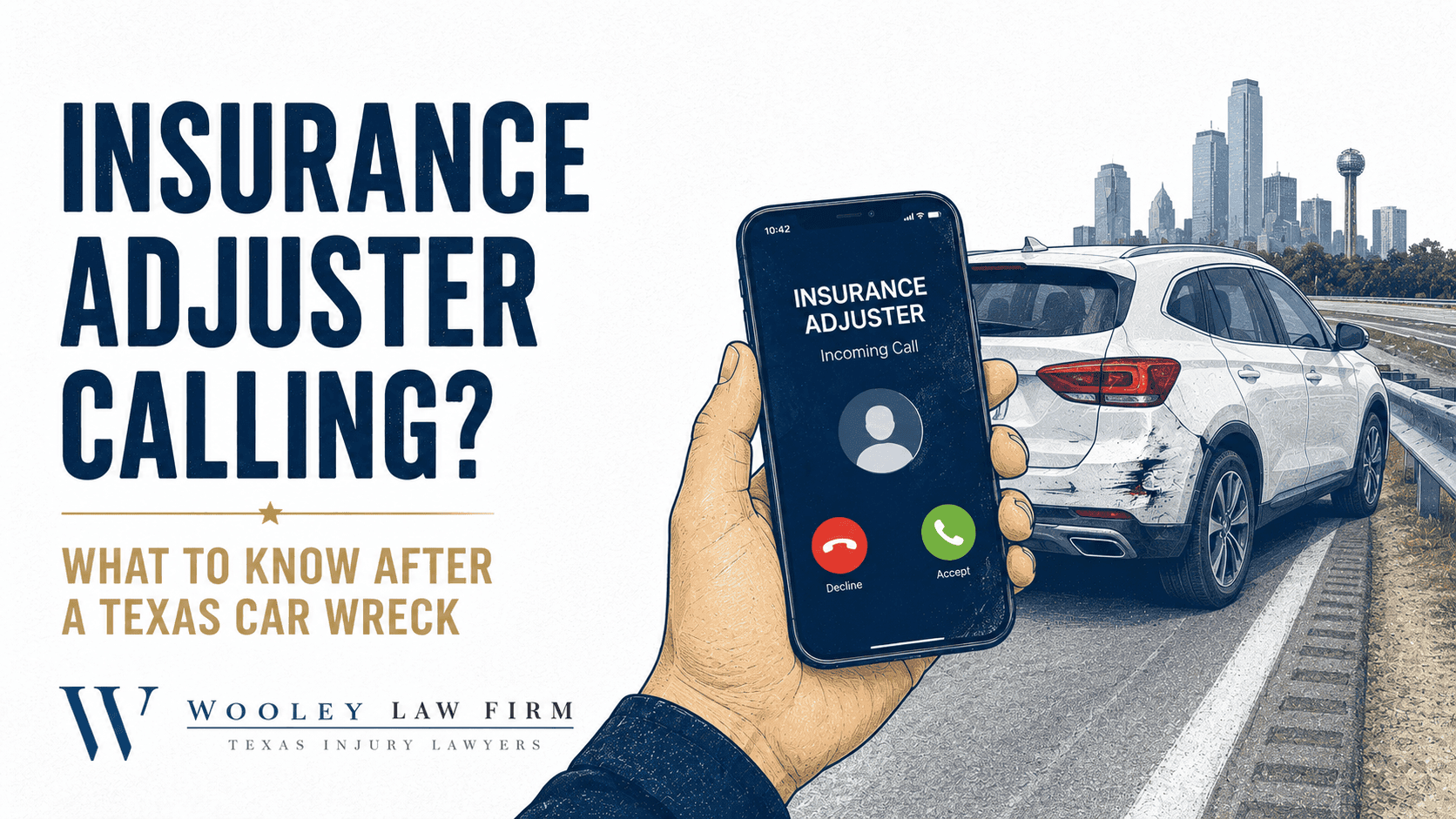
You were just involved in a wreck, and now an insurance adjuster is calling for your side of the story. Before giving a recorded statement, signing a medical authorization, or accepting an early settlement, understand why the insurance company wants information so quickly—and how your answers may affect your Dallas car or truck accident claim.
Read Article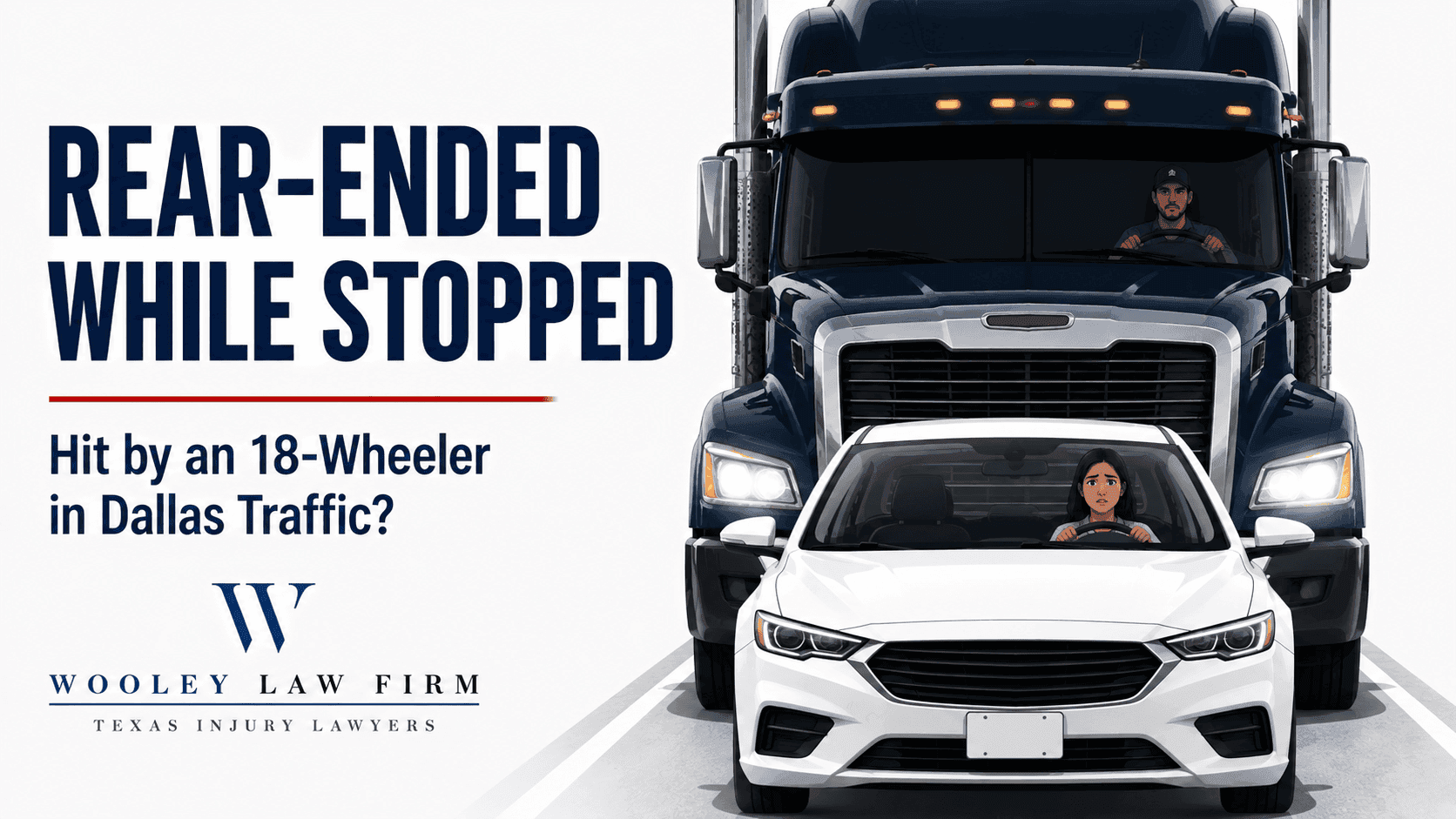
Were you stopped at a red light, in highway traffic, or in a construction backup when an 18-wheeler hit you from behind? Learn what evidence can help show why the truck failed to stop and what to do after a serious Dallas truck wreck.
Read Article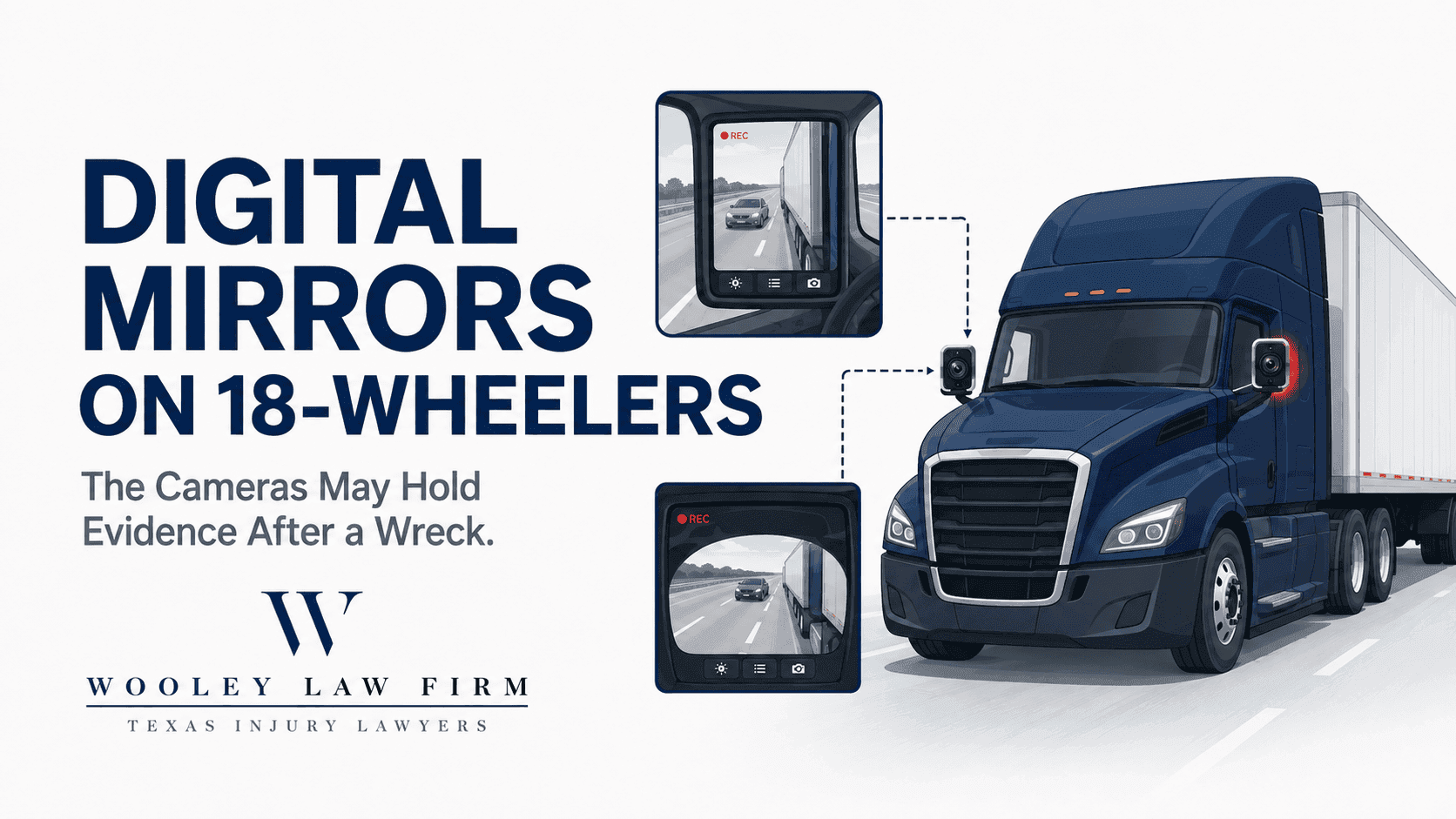
Some newer 18-wheelers use digital cameras and interior monitors instead of ordinary side mirrors. After a Dallas truck wreck, those systems may provide important evidence about what the truck driver could see, where nearby vehicles were located, and—in systems with recording capabilities—what happened before and during the collision.
Read Article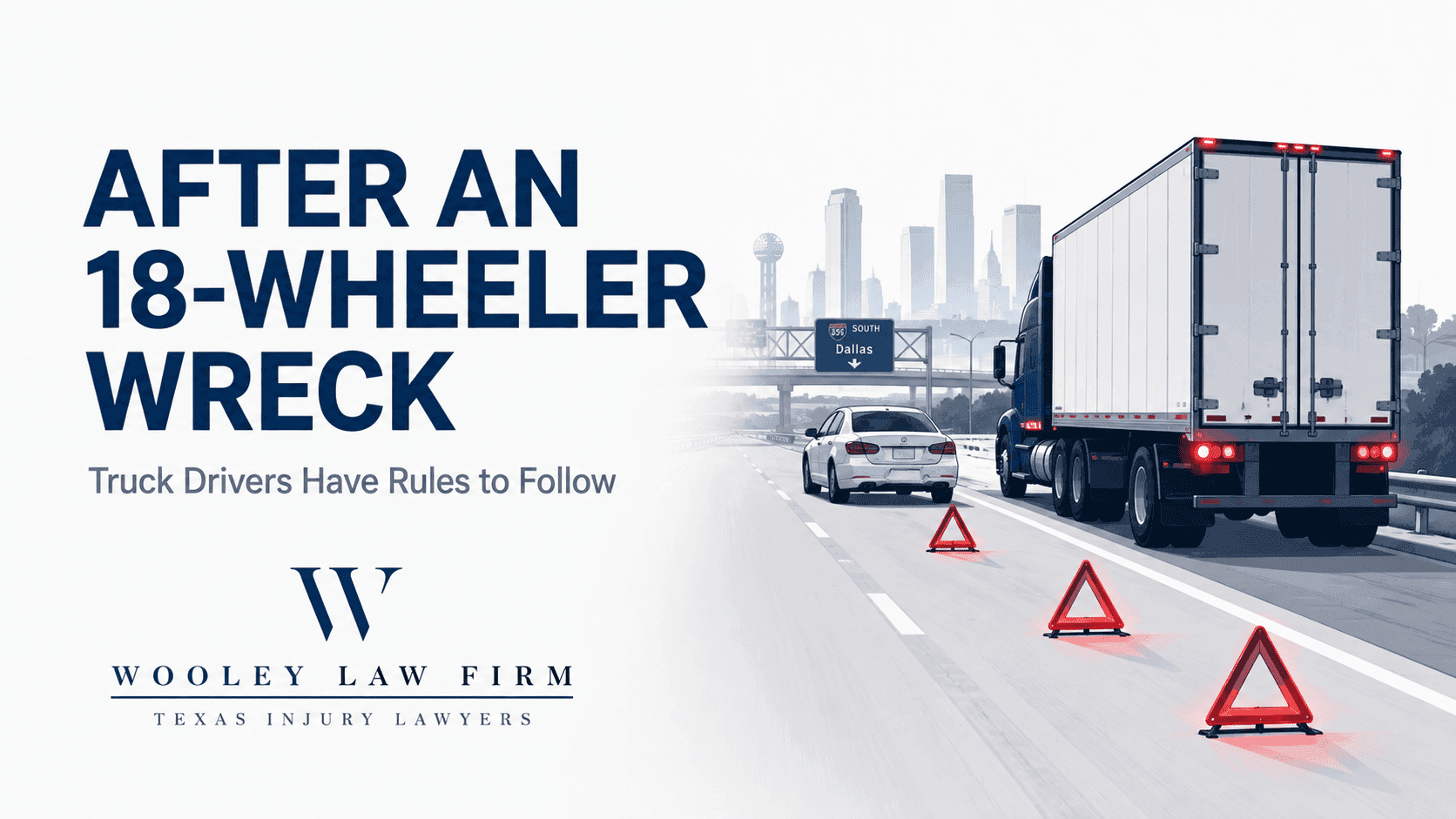
An 18-wheeler driver's responsibilities do not end when a collision occurs. Texas law and federal trucking regulations can require a commercial driver to stop, remain at the scene, assist injured people, report the wreck, warn approaching traffic, and comply with post-accident procedures.
Read Article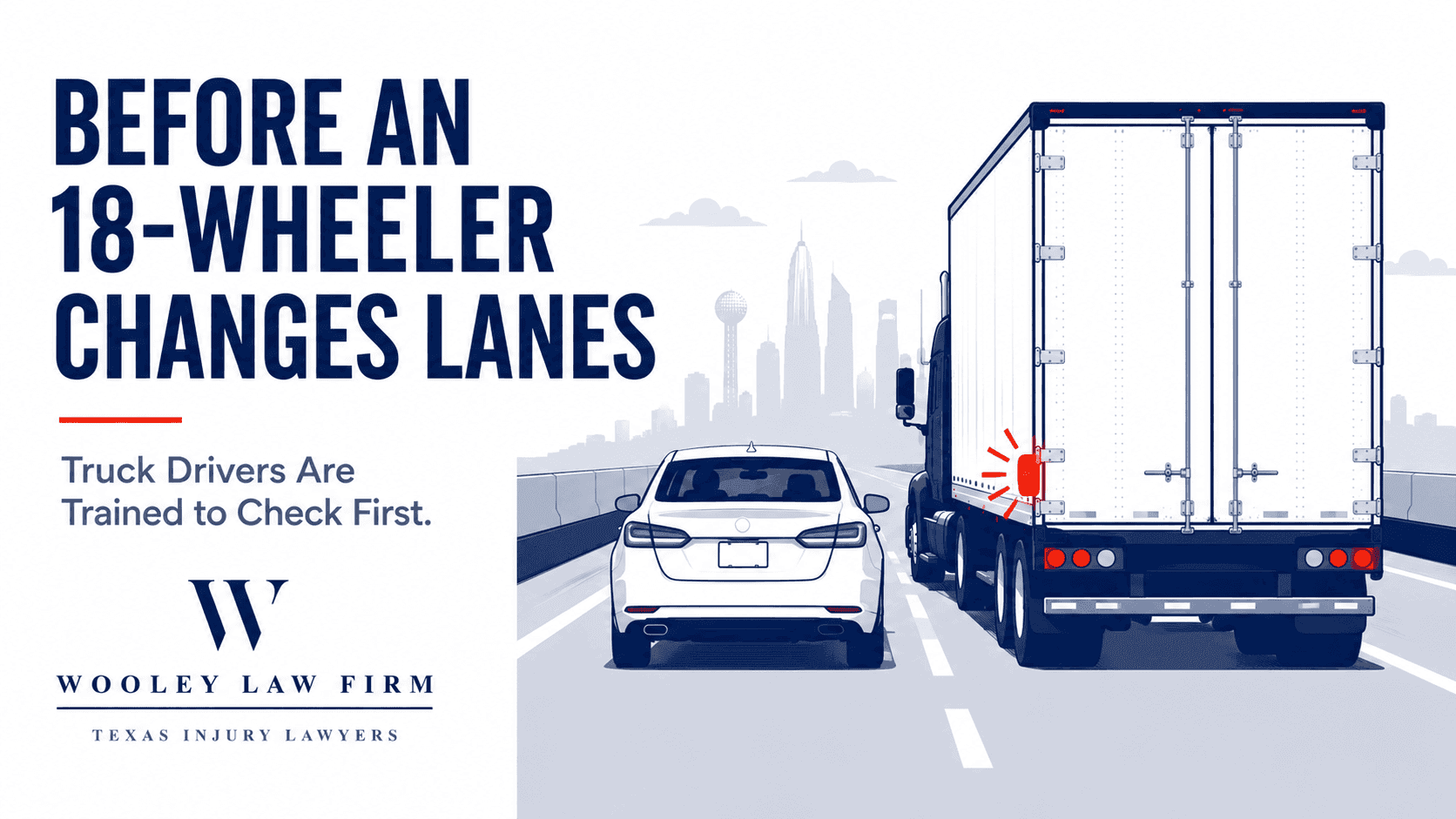
Before moving an 18-wheeler into another lane, a trained truck driver should monitor traffic, check multiple mirrors, account for blind spots, signal early, and confirm that the entire tractor-trailer has room to move. Skipping any part of that process can cause a devastating Dallas truck wreck.
Read Article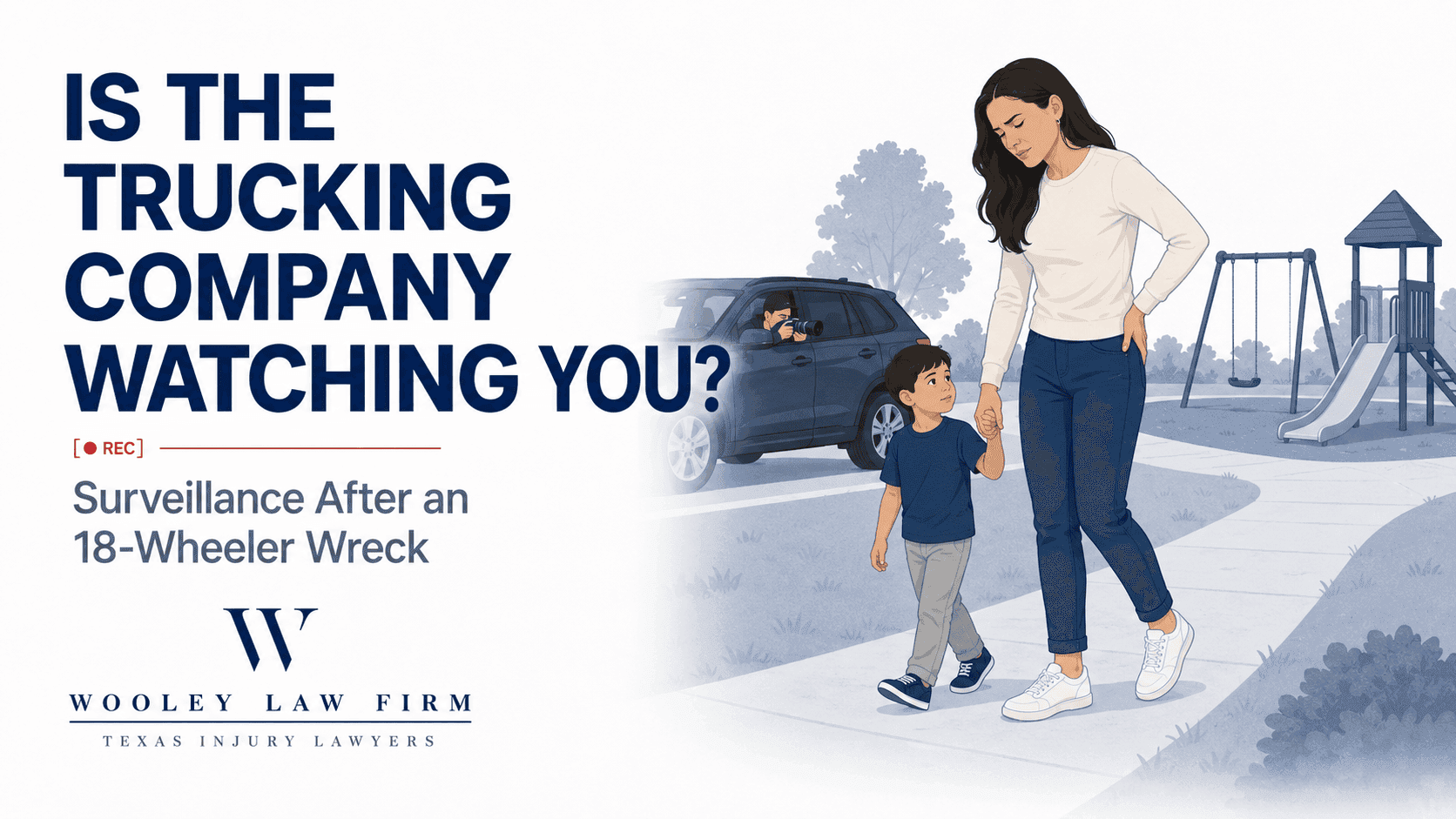
After a serious 18-wheeler wreck, the trucking company or its insurance carrier may hire a private investigator to watch and record the injured person. Learn why surveillance happens, what investigators look for, and how Dallas truck accident victims can protect their claims.
Read ArticlePage 2 of 3 | 22 total articles
Explore our legal insights organized by practice area
Our experienced attorneys are ready to help you understand your legal options. Contact us today for a free consultation.