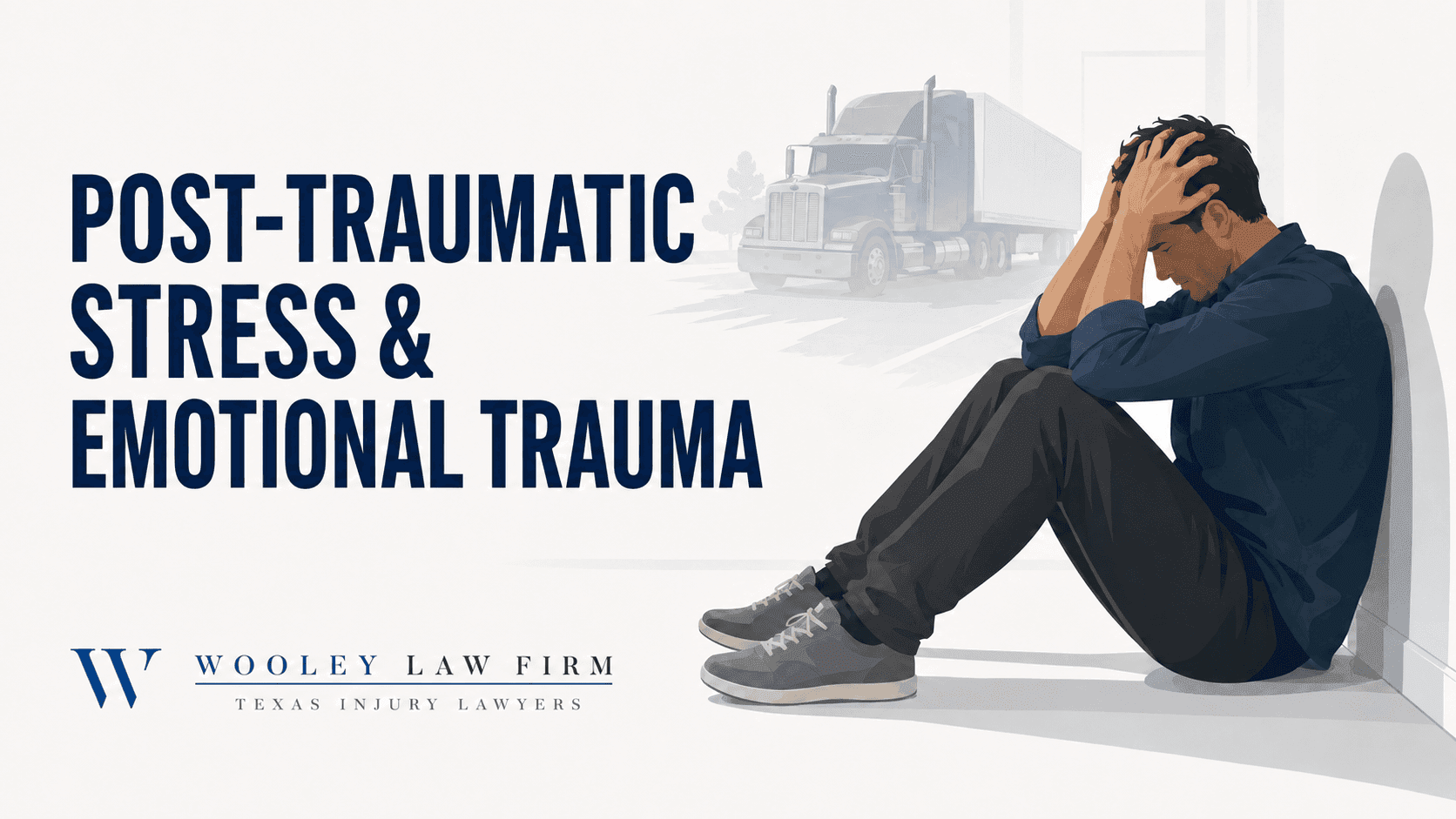
Not every serious truck-wreck injury appears on an X-ray, CT scan, or MRI.
A person may survive a violent collision with an 18-wheeler and continue experiencing fear, nightmares, panic, sleep problems, depression, anger, guilt, or an overwhelming fear of driving. These symptoms can interfere with work, relationships, medical recovery, and nearly every part of daily life.
Some emotional reactions improve as the victim recovers. Others persist or worsen and may develop into post-traumatic stress disorder, commonly known as PTSD.
PTSD is a recognized mental health condition that can develop after experiencing or witnessing a frightening or life-threatening event, including a serious motor vehicle accident. Although many people experience temporary distress after trauma, some continue to have symptoms that significantly interfere with daily life.
If you or someone you love is experiencing post-traumatic stress or emotional trauma after an 18-wheeler, semi-truck, tractor-trailer, or commercial-vehicle wreck in Dallas-Fort Worth, those symptoms should not be minimized simply because they are not visible.
The Wooley Law Firm represents people seriously injured in wrecks involving:
18-wheelers and tractor-trailers
Semi-trucks
Flatbed trucks
Box trucks
Delivery trucks and vans
Tanker trucks
Dump trucks
Construction vehicles
Garbage and sanitation trucks
Buses and other commercial vehicles
Learn more about our representation of seriously injured truck-wreck victims on our 18-wheeler and truck accident lawyer page.
Call 214-699-6524 for a free consultation. You do not pay attorney’s fees unless we recover compensation for you.
Emotional Trauma After an 18-Wheeler Wreck
A truck collision can be terrifying.
The victim may see an 18-wheeler approaching but have no way to avoid the crash. A tractor-trailer may crush the vehicle, push it into other traffic, or force it beneath a trailer. The victim may become trapped, smell fuel, hear other people screaming, or believe that they or a loved one are about to die.
Afterward, the brain and body may continue reacting as though the danger is still present.
A victim may experience emotional trauma after:
Being trapped inside a damaged vehicle
Believing the truck was going to crush or kill them
Watching an 18-wheeler approach in a rearview mirror
Being pushed beneath or beside a trailer
Experiencing a rollover or jackknife collision
Seeing another person seriously injured or killed
Hearing the sounds of the crash repeatedly in their memory
Suffering permanent or disfiguring injuries
Undergoing emergency surgery
Spending time in an intensive-care unit
Losing mobility or independence
Being unable to return to work
Caring for an injured child or family member
Surviving a wreck in which another person died
A traumatic event may cause emotional, cognitive, physical, and behavioral stress reactions. These reactions may begin immediately or may take days or weeks to become apparent.
What Is Post-Traumatic Stress Disorder?
Post-traumatic stress disorder is a mental health condition that may develop after a person experiences or witnesses a shocking, dangerous, or life-threatening event.
Anyone can develop PTSD. It is not limited to military combat or intentional violence. Serious accidents are among the events that can lead to the condition.
A PTSD diagnosis is not based merely on feeling upset after a wreck. A qualified mental health professional evaluates the nature, duration, severity, and effect of the symptoms.
The symptoms generally involve several categories, including:
Reexperiencing the traumatic event
Avoiding reminders of the trauma
Changes in mood and thinking
Increased alertness and physical reactivity
Symptoms must be evaluated in the context of the individual patient. A lawyer, insurance adjuster, family member, or online article cannot diagnose PTSD.
Common PTSD Symptoms After a Truck Wreck
Truck-wreck victims may experience symptoms differently. Some are overwhelmed by vivid memories. Others become emotionally numb or avoid talking about the crash.
Potential symptoms include:
Nightmares
Flashbacks
Intrusive memories
Panic attacks
Fear of driving
Fear of riding in a vehicle
Anxiety around 18-wheelers
Avoidance of highways or crash locations
Difficulty sleeping
Irritability
Anger
Depression
Emotional numbness
Loss of interest in activities
Difficulty concentrating
Memory problems
Feeling detached from family
Hypervigilance
Exaggerated startle response
Guilt or shame
Physical reactions to reminders of the crash
Feeling unsafe even when no danger is present
The National Institute of Mental Health describes PTSD symptoms as including reexperiencing, avoidance, arousal or reactivity symptoms, and changes in cognition and mood.
Reexperiencing the Truck Wreck
Reexperiencing symptoms can make the crash feel as though it is happening again.
A victim may experience:
Vivid memories of the collision
Nightmares about being struck or trapped
Flashbacks
Images of damaged vehicles
Memories of another person’s injuries
Physical panic when hearing air brakes
Fear when seeing a tractor-trailer
Distress when driving near the crash scene
Certain sounds, smells, images, or physical sensations may trigger these reactions.
Triggers may include:
Truck horns
Air brakes
Screeching tires
Sirens
Diesel smells
Broken glass
Driving at night
Rain or similar weather
The highway where the wreck occurred
News reports about other crashes
Medical appointments
Photographs of the damaged vehicle
The reaction may be so intense that the victim temporarily feels as though they are back at the crash scene.
Avoidance After a Truck Accident
A victim may attempt to avoid anything connected to the wreck.
Avoidance may include:
Refusing to drive
Avoiding highways
Avoiding the crash location
Refusing to ride near large trucks
Changing work routes
Avoiding conversations about the crash
Refusing to look at photographs
Avoiding medical appointments
Withdrawing from friends and family
Avoiding activities once enjoyed
Avoidance may temporarily reduce anxiety, but it can also interfere with work, treatment, independence, and relationships.
A person who previously drove throughout Dallas-Fort Worth may become unable to travel on I-35E, I-30, I-20, I-635, US-75, SH-121, or other heavily traveled roadways because the presence of commercial trucks causes severe distress.
Hypervigilance and Feeling Constantly on Guard
After a violent wreck, a person may remain physically and emotionally prepared for another collision.
This is sometimes described as hypervigilance.
The victim may:
Constantly check mirrors
Watch every nearby truck
Grip the steering wheel tightly
Brake suddenly
Scan intersections repeatedly
Feel unable to relax in a vehicle
Become startled by horns or traffic sounds
Experience a racing heartbeat
Sweat or shake while riding in a car
Become irritable with other drivers
Feel that danger is always approaching
These reactions can make driving exhausting and may themselves create safety concerns.
Nightmares and Sleep Problems
Sleep disturbances are common after traumatic events.
A truck-wreck victim may experience:
Nightmares
Difficulty falling asleep
Fear of going to sleep
Frequent waking
Panic upon waking
Memories of the collision at bedtime
Pain-related sleep disruption
Daytime exhaustion
Irritability
Difficulty concentrating
Poor sleep can worsen pain, anxiety, depression, cognitive problems, and the ability to participate in physical rehabilitation.
Some victims sleep in short intervals because they repeatedly wake after dreaming about the crash.
Panic Attacks and Anxiety
A panic attack may involve an intense wave of fear accompanied by physical symptoms.
These may include:
Rapid heartbeat
Chest tightness
Difficulty breathing
Sweating
Shaking
Dizziness
Nausea
Feeling detached from reality
Fear of losing control
Fear of dying
A victim may have a panic attack while driving, entering a highway, passing an 18-wheeler, or hearing sounds that resemble the collision.
Anxiety may also become more generalized. A person may worry constantly about family members driving, another wreck occurring, medical bills, job security, or the possibility of permanent disability.
Depression After a Serious Truck Wreck
A catastrophic collision can take away many things that once gave a person purpose and enjoyment.
A victim may be unable to work, exercise, drive, care for children independently, or participate in hobbies. Chronic pain and medical uncertainty can further affect emotional well-being.
Possible signs of depression include:
Persistent sadness
Loss of interest
Low energy
Changes in appetite
Sleep problems
Difficulty concentrating
Feelings of hopelessness
Feelings of worthlessness
Social withdrawal
Reduced motivation
Frequent crying
Thoughts of death or self-harm
Depression and PTSD may occur together, but they are not the same condition. A qualified healthcare provider should evaluate symptoms and recommend appropriate treatment.
Anyone experiencing thoughts of suicide or self-harm should seek immediate emergency assistance.
Survivor’s Guilt After a Truck Wreck
A person who survives a fatal or catastrophic collision may feel guilty even when they did nothing wrong.
The victim may wonder:
Why did I survive?
Could I have prevented the crash?
Could I have helped the other person?
Why was my family member more seriously injured?
Should I have taken a different route?
Could I have reacted faster?
These thoughts may continue even when the evidence shows that the truck driver or another party caused the wreck.
Survivor’s guilt can complicate grief and recovery and may require professional treatment.
Anger, Irritability, and Changes in Relationships
Emotional trauma does not always look like sadness or fear.
A person may become:
Angry
Impatient
Easily frustrated
Emotionally distant
Argumentative
Overprotective
Sensitive to noise
Unable to tolerate crowds or traffic
Family members may feel as though the injured person has changed.
The victim may withdraw from a spouse, children, friends, or coworkers because they do not believe anyone understands what they experienced.
PTSD can affect family members as well as the person directly injured. Family and friends may struggle to understand changes in behavior, communication, or emotional availability after a life-threatening accident.
Emotional Numbness and Detachment
Some people do not initially appear visibly distressed. Instead, they feel emotionally numb.
A victim may report:
Feeling disconnected from reality
Feeling detached from loved ones
Being unable to experience happiness
Losing interest in family activities
Feeling as though the future has disappeared
Being unable to cry or express emotion
Feeling that no one understands
Emotional numbness can be a trauma response. It should not be interpreted as proof that the wreck had no psychological effect.
Fear of Driving After an 18-Wheeler Accident
A serious fear of driving can substantially affect independence.
The victim may be unable to:
Drive to work
Attend medical appointments
Take children to school
Shop for groceries
Travel outside the neighborhood
Drive on highways
Ride beside a tractor-trailer
Travel at the time of day when the wreck happened
Some victims can drive only on surface streets. Others require a family member, rideshare service, or medical transportation.
A person whose occupation requires driving may be unable to return to work even when their physical injuries have improved.
Emotional Trauma After Permanent Physical Injuries
PTSD and emotional trauma may be intensified when the crash causes permanent physical changes.
The victim may be adjusting to:
Paralysis
Loss of a limb
Facial disfigurement
Burn scars
Vision loss
Hearing loss
Chronic pain
Reduced mobility
Loss of independence
Inability to return to work
Learn more about the lasting impact of:
The emotional consequences of a catastrophic injury may continue long after the physical wounds have healed.
Injured in an Accident?
Free consultation. Tell us what happened and learn what options may be available.
PTSD and Traumatic Brain Injuries
Some emotional, behavioral, and cognitive symptoms may also be associated with a traumatic brain injury.
A person may experience:
Memory problems
Irritability
Sleep disruption
Depression
Anxiety
Difficulty concentrating
Emotional instability
Headaches
Sensitivity to light or sound
PTSD and a traumatic brain injury can occur in the same collision. Distinguishing between overlapping symptoms may require evaluation by neurologists, neuropsychologists, psychiatrists, psychologists, or other qualified providers.
Learn more about traumatic brain injury symptoms after a Dallas-Fort Worth car or truck wreck.
When Should a Truck-Wreck Victim Seek Help?
Fear, stress, sleep problems, and upsetting memories may occur after a traumatic event. Many people gradually improve. Others continue to struggle or experience worsening symptoms.
A victim should consider speaking with a qualified healthcare provider when symptoms:
Interfere with work
Prevent driving
Affect relationships
Cause repeated nightmares
Lead to panic attacks
Continue or worsen
Interfere with medical treatment
Cause social withdrawal
Lead to increased alcohol or substance use
Cause feelings of hopelessness
Include thoughts of self-harm
Seeking mental health treatment is not a sign of weakness. PTSD is a recognized medical condition, and effective treatments are available.
Diagnosing PTSD After a Truck Accident
A mental health provider may evaluate:
What happened during the collision
Whether the victim believed they might die
Whether another person was seriously injured or killed
When symptoms began
How often symptoms occur
Whether symptoms interfere with daily life
Sleep patterns
Driving-related fears
Avoidance
Mood changes
Panic symptoms
Employment problems
Relationship changes
Prior trauma or mental health history
Substance use
Physical and brain injuries
A diagnosis may come from a:
Psychiatrist
Psychologist
Licensed professional counselor
Clinical social worker
Physician
Other qualified mental health professional
The victim should describe symptoms honestly and completely. Minimizing emotional problems may prevent both appropriate treatment and accurate documentation.
Acute Stress Reactions and PTSD
Not every emotional response immediately after a wreck is PTSD.
A person may experience acute stress reactions during the days and weeks after the crash. These reactions may include fear, confusion, intrusive memories, sleep problems, and increased alertness.
For some people, these symptoms gradually improve. For others, they continue and become more disruptive.
Only a qualified provider can determine whether a patient meets the diagnostic criteria for PTSD or another trauma-related condition.
Treatment for PTSD After a Truck Wreck
Treatment should be individualized. It may involve psychotherapy, medication, or a combination of approaches.
The National Institute of Mental Health identifies psychotherapy and medication as treatment options for PTSD.
Trauma-Focused Psychotherapy
Trauma-focused therapy helps the patient process the traumatic event and address thoughts, emotions, and behaviors connected to it.
Potential approaches may include:
Cognitive processing therapy
Prolonged exposure therapy
Trauma-focused cognitive behavioral therapy
Eye movement desensitization and reprocessing
Other evidence-based psychotherapy
The VA’s National Center for PTSD identifies cognitive processing therapy and prolonged exposure among established approaches used to treat PTSD, including PTSD following serious motor vehicle accidents.
The appropriate therapy should be selected by a qualified treating provider.
Medication
A psychiatrist or other authorized provider may prescribe medication to address symptoms such as:
Depression
Anxiety
Panic attacks
Sleep problems
Nightmares
Medication decisions depend on the patient’s symptoms, medical history, other prescriptions, and treatment plan.
Counseling for Family Members
Family therapy or education may help relatives understand trauma-related behavior and learn how to support recovery.
The entire family may be affected when the injured person cannot drive, work, sleep normally, or participate in family activities.
Avoiding Treatment Can Make Documentation More Difficult
Some truck-wreck victims avoid mental health treatment because they:
Feel embarrassed
Believe they should handle it alone
Do not want to appear weak
Are focused on physical injuries
Do not recognize the symptoms
Fear being judged
Cannot afford treatment
Lack transportation
Believe the symptoms will disappear
However, untreated symptoms may continue interfering with daily life.
From a legal perspective, an insurer may argue that emotional trauma was not serious when the records contain no diagnosis, treatment, counseling, medication, or documentation of symptoms.
The purpose of treatment should always be the victim’s health and recovery. At the same time, appropriate medical documentation may help establish the nature and extent of the injury.
How Emotional Trauma Can Affect Physical Recovery
Mental and physical recovery are often connected.
Emotional trauma may interfere with the ability to:
Sleep
Attend appointments
Participate in physical therapy
Take medication consistently
Drive to treatment
Communicate with providers
Return to work
Maintain family relationships
Follow rehabilitation recommendations
A victim who becomes afraid of vehicles may avoid necessary appointments. Someone experiencing depression may struggle to participate fully in rehabilitation.
These consequences should be addressed as part of the overall recovery plan.
How PTSD Can Affect Employment
A truck-wreck victim may be physically capable of some work but emotionally unable to return to the same occupation.
PTSD may interfere with employment through:
Inability to drive
Panic around commercial vehicles
Sleep deprivation
Poor concentration
Memory problems
Irritability
Difficulty interacting with customers or coworkers
Absences for treatment
Reduced productivity
Fear of the crash location
Inability to work near traffic
Difficulty responding to loud noises
These problems may be especially significant for:
Commercial drivers
Delivery drivers
Sales representatives
Construction workers
First responders
Roadside workers
Healthcare workers
Employees who travel frequently
Workers whose jobs involve heavy equipment or large vehicles
A claim may include both past lost wages and future loss of earning capacity when the emotional injury reduces the victim’s ability to earn income.
Physical Symptoms of Emotional Trauma
PTSD and anxiety can produce real physical symptoms.
These may include:
Racing heartbeat
Chest tightness
Shortness of breath
Sweating
Shaking
Headaches
Stomach problems
Muscle tension
Dizziness
Fatigue
Sleep disruption
Increased pain sensitivity
A person may fear that they are experiencing another medical emergency when panic symptoms arise.
All new or concerning physical symptoms should be medically evaluated rather than automatically attributed to anxiety.
Children and Emotional Trauma After Truck Wrecks
Children may also develop emotional and behavioral symptoms after experiencing or witnessing a serious truck collision.
Possible signs include:
Nightmares
Separation anxiety
Bedwetting
Fear of vehicles
Clinginess
Irritability
Changes in school performance
Withdrawal
Reenacting the crash during play
Physical complaints
Difficulty sleeping
Regression to earlier behaviors
Children and adolescents may respond differently from adults, and trusted caregivers play an important role in helping them recover after traumatic events.
A child who appears physically unharmed may still need evaluation and support.
Emotional Trauma Affecting Spouses and Family Members
Family members who were not inside the vehicle may also experience emotional consequences.
A spouse or parent may:
Receive a terrifying call from the hospital
See the injured person in intensive care
Fear losing their loved one
Become a full-time caregiver
Witness painful medical procedures
Experience financial stress
Lose companionship and emotional support
Develop anxiety about driving or family safety
The legal rights of family members depend on the specific facts and applicable Texas law. However, the effect of the injury on the household may be important in documenting the full consequences of the wreck.
Compensation for PTSD and Emotional Trauma
Depending on the facts and evidence, a truck-wreck claim may include compensation for:
Psychological treatment
Psychiatric care
Counseling
Prescription medication
Future mental health treatment
Lost wages
Loss of earning capacity
Mental anguish
Physical pain
Physical impairment
Loss of enjoyment of life
Transportation expenses
Other related losses
Mental anguish may include severe emotional pain, anxiety, grief, fear, depression, humiliation, or distress caused by the collision and resulting injuries.
A PTSD claim should be supported by evidence showing the symptoms, treatment, duration, severity, and effect on the victim’s life.
Read more about the potential categories of compensation in our guide to truck accident damages after a Dallas 18-wheeler wreck.
Evidence Supporting a PTSD or Emotional Trauma Claim
Relevant evidence may include:
Mental health treatment records
Psychiatric evaluations
Counseling records
Medication records
Primary-care records
PTSD screening results
Sleep-treatment records
Employment records
Work restrictions
Attendance records
Statements from family members
Testimony from friends and coworkers
A record of missed activities
Documentation of driving limitations
Journals describing symptoms
Evidence of panic attacks
Evidence of changes in relationships
The victim’s testimony may be important, but objective documentation can help demonstrate that the emotional injury is genuine and substantial.
Keeping a Trauma and Recovery Journal
A written record may help the victim track symptoms and explain them accurately to treating providers.
The journal may document:
Nightmares
Flashbacks
Panic attacks
Driving attempts
Avoided locations
Sleep problems
Medication side effects
Counseling appointments
Missed work
Changes in relationships
Activities no longer performed
Physical reactions to trucks or traffic
Good and bad days
The journal should be truthful and should not exaggerate symptoms.
A personal-injury claimant should understand that journals and social-media activity may become relevant in litigation. Discuss documentation practices with legal counsel.
How Insurance Companies Defend PTSD Claims
Insurance companies frequently challenge emotional and psychological injuries because they are not visible on imaging.
The trucking company’s insurer may argue that:
The victim does not have PTSD
The symptoms are temporary
The emotional problems existed before the wreck
The victim never sought treatment
The treatment began too late
The victim can still drive
The symptoms do not affect employment
Physical recovery should have resolved the distress
Other life stressors caused the condition
The victim is exaggerating
Counseling is unnecessary
Future treatment is speculative
An insurer may also review social-media posts and attempt to use a photograph or brief activity to suggest that the victim is not suffering.
A person can smile at a family event and still experience serious PTSD. Mental health symptoms may fluctuate, and a single photograph does not show the person’s overall condition.
Preexisting Anxiety or Depression Does Not Automatically Defeat a Claim
Some victims had anxiety, depression, prior trauma, or counseling before the truck wreck.
That does not automatically prevent recovery.
The relevant questions may include:
Did the wreck cause a new condition?
Did it aggravate an existing condition?
Did symptoms become more severe?
Did the victim require additional treatment?
Did the wreck create new driving-related fears?
Did the condition begin interfering with work or relationships?
Accurate pre-wreck and post-wreck medical records may help show how the person’s condition changed.
Who May Be Responsible for a Truck Wreck Causing Emotional Trauma?
A truck-wreck case may involve several responsible parties.
The Truck Driver
A commercial driver may cause a traumatic collision through:
Speeding
Following too closely
Fatigued driving
Distracted driving
Unsafe lane changes
Failure to check blind spots
Running a red light
Driving while impaired
Making an unsafe wide turn
Failure to control speed
Failure to maintain a proper lookout
The Trucking Company
A motor carrier may be responsible for its driver’s conduct and for its own unsafe practices.
Potential company negligence may include:
Hiring an unqualified driver
Inadequate training
Negligent supervision
Retaining an unsafe driver
Pressuring drivers to meet unsafe schedules
Failing to inspect or maintain the truck
Ignoring safety violations
Unsafe dispatch practices
Failure to enforce fatigue policies
A Cargo Loader or Shipper
Improperly loaded or unsecured cargo can cause a rollover, jackknife, cargo spill, or loss-of-control crash.
Learn more about flatbed truck accidents, cargo securement, and liability.
A Maintenance or Repair Company
A maintenance provider may share responsibility when negligent work contributes to:
Brake failure
Tire failure
Steering problems
Wheel detachment
Trailer separation
Mechanical breakdown
A Truck or Parts Manufacturer
A defective vehicle component may cause or worsen the collision.
Evidence That Should Be Preserved After the Truck Wreck
The trucking company and its insurer may begin investigating while the victim is receiving emergency treatment.
Important evidence may include:
Engine control module data
Electronic logging-device records
GPS and telematics data
Dash-camera footage
Driver-facing camera footage
Dispatch communications
Cellphone records
Driver qualification files
Training records
Hours-of-service logs
Maintenance records
Inspection reports
Cargo records
Bills of lading
Photographs and videos
Surveillance footage
Witness statements
Police body-camera footage
911 recordings
Physical vehicle evidence
Crash video, 911 calls, and photographs may also help explain why the event was traumatic and why the victim reasonably feared serious injury or death.
Electronic information may be overwritten or lost unless prompt steps are taken to preserve it.
Learn more about the evidence that matters after a Texas 18-wheeler wreck and 18-wheeler black-box data after a Dallas-Fort Worth truck crash.
What to Do After Experiencing Emotional Trauma
Seek Appropriate Medical or Mental Health Care
Discuss symptoms with a physician, psychologist, psychiatrist, counselor, or other qualified provider.
Report Symptoms Honestly
Tell providers about:
Nightmares
Flashbacks
Driving fears
Panic attacks
Depression
Anger
Sleep problems
Relationship changes
Difficulty working
Substance use
Thoughts of self-harm
Attend Recommended Treatment
Follow through with counseling, psychiatric care, medication management, and other recommended treatment.
Document How Symptoms Affect Daily Life
Record changes in:
Driving
Work
Sleep
Relationships
Parenting
Medical treatment
Social activities
Independence
Avoid Self-Medicating
Using alcohol or drugs to manage trauma symptoms can create additional health, relationship, and legal problems. Speak with a qualified provider about safe treatment options.
Be Careful With Social Media
Insurance companies may review public posts and attempt to use isolated photographs or comments against the claim.
Contact a Truck Wreck Lawyer Promptly
Early legal involvement may help preserve evidence, identify responsible parties, and document both physical and emotional injuries.
How The Wooley Law Firm Handles Emotional Trauma Claims
A serious truck-wreck claim involves more than submitting hospital bills to an insurance adjuster.
Depending on the facts, The Wooley Law Firm may:
Investigate the collision
Obtain the crash report
Send evidence-preservation demands
Secure electronic truck data
Identify the driver and motor carrier
Review driver qualification records
Examine hours-of-service evidence
Obtain maintenance and inspection records
Locate witnesses
Obtain available video footage
Review medical and mental health records
Document the effect on work and daily life
Calculate lost wages
Evaluate reduced earning capacity
Investigate available insurance coverage
Consult qualified experts when appropriate
File suit when necessary
Prepare the case for trial
The goal is to determine why the wreck happened, identify every responsible party, and demonstrate how the collision affected the victim physically, emotionally, financially, and personally.
Dallas-Fort Worth PTSD Lawyer After a Truck Wreck
The Wooley Law Firm represents seriously injured people throughout:
Dallas
Fort Worth
Arlington
Irving
Garland
Mesquite
Richardson
Plano
Frisco
McKinney
Allen
Denton
Lewisville
Carrollton
Grand Prairie
Grapevine
Mansfield
Keller
Southlake
North Texas
We also handle serious commercial-truck injury cases throughout Texas.
If you or a loved one developed PTSD, anxiety, depression, driving fear, or other emotional trauma after an 18-wheeler wreck, call 214-699-6524.
You can also learn more by visiting our Dallas truck accident lawyer page.
Your consultation is free and confidential. You do not pay attorney’s fees unless we obtain a recovery for you.
Frequently Asked Questions About PTSD After a Truck Wreck
Can a truck wreck cause PTSD?
Yes. PTSD can develop after experiencing or witnessing a life-threatening event, including a serious motor vehicle accident.
Is it normal to feel afraid after an 18-wheeler collision?
Fear, anxiety, upsetting memories, and sleep problems can occur after a traumatic event. Many people improve over time. Persistent or worsening symptoms that interfere with daily life should be evaluated by a qualified provider.
How soon can PTSD symptoms begin?
Symptoms may begin soon after the wreck, but trauma-related reactions may also emerge days or weeks later.
Do I need a formal PTSD diagnosis to claim emotional injuries?
A formal diagnosis and treatment records may strengthen the documentation of the claim. However, the specific evidence required depends on the condition, symptoms, treatment, and applicable law.
Can I recover compensation for fear of driving?
Driving anxiety may be relevant when it is caused by the wreck and affects work, medical treatment, transportation, independence, or normal daily activities.
Can I recover compensation for nightmares and panic attacks?
Nightmares, panic attacks, flashbacks, and sleep disruption may be part of a mental-anguish or PTSD claim when supported by appropriate evidence.
What if I had anxiety or depression before the wreck?
A prior mental health condition does not automatically defeat the claim. The issue may be whether the collision caused new symptoms or aggravated the existing condition.
Can PTSD prevent someone from returning to work?
Yes. PTSD may affect driving, concentration, sleep, memory, communication, emotional regulation, and the ability to work around vehicles or traffic.
Can family members testify about changes they observed?
Family members, friends, and coworkers may provide relevant testimony about changes in mood, sleep, behavior, driving, relationships, and daily activities.
What treatments are available for PTSD?
Treatment may include psychotherapy, medication, or both. Evidence-based trauma-focused therapies may include cognitive processing therapy and prolonged exposure therapy. Treatment decisions should be made by a qualified healthcare provider.
What if I am embarrassed to seek counseling?
PTSD is a recognized medical condition, not a personal weakness. Treatment may improve symptoms and help document the condition and its effect on daily life.
How long do I have to file a truck-accident claim in Texas?
Texas law imposes deadlines on personal-injury claims. Different or shorter notice requirements may apply when a government-owned truck or public entity is involved.
Important electronic data and video may disappear well before the legal deadline, so the investigation should begin promptly.
How much does it cost to hire The Wooley Law Firm?
The Wooley Law Firm handles personal-injury cases on a contingency-fee basis. You pay no upfront attorney’s fee and owe no attorney’s fee unless the firm obtains a recovery for you.
Speak With a Dallas-Fort Worth Truck Wreck Lawyer
A serious truck wreck can remain with a person long after the damaged vehicles have been removed from the road.
You may be dealing with nightmares, panic attacks, depression, driving fear, relationship changes, and an inability to return to normal life. Meanwhile, the trucking company and its insurer may already be collecting evidence and preparing to minimize your claim.
You deserve someone protecting your interests.
Call The Wooley Law Firm at 214-699-6524 for a free consultation about PTSD or emotional trauma caused by a Dallas-Fort Worth truck wreck.
You do not pay attorney’s fees unless we win.
Disclaimer:
This article is provided for general informational purposes only and does not constitute medical, psychological, or legal advice. PTSD, depression, anxiety, and other trauma-related conditions should be evaluated by qualified healthcare professionals. Anyone experiencing thoughts of suicide, self-harm, or an immediate mental health crisis should call 911 or seek emergency assistance. Reading this article or contacting The Wooley Law Firm does not create an attorney-client relationship. Every case is different, and past results do not guarantee a similar outcome. Legal deadlines may apply, so you should consult a qualified Texas attorney regarding your specific circumstances.
Topics
Share This Article

Andrew J. Wooley
Personal Injury Attorney
Andrew J. Wooley is a dedicated personal injury attorney based in Dallas, Texas. He focuses on helping accident victims recover fair compensation for their injuries. With a commitment to personalized service, Andrew works directly with each client to understand their unique situation and fight for their rights.