High winds can push an 18-wheeler into another lane, overturn a trailer, or cause a collision involving several vehicles. If you were injured when a semi-truck lost control in windy conditions in Dallas, the trucking company may blame the weather. But wind alone does not determine who is legally responsible.
The investigation should examine whether the driver recognized the danger, adjusted speed, accounted for the trailer’s weight, and continued driving when stopping somewhere safe was the reasonable choice.
A Dallas truck wreck lawyer can investigate those decisions and preserve evidence that may explain how a wind-related crash happened.
Why Are 18-Wheelers Dangerous in High Winds?
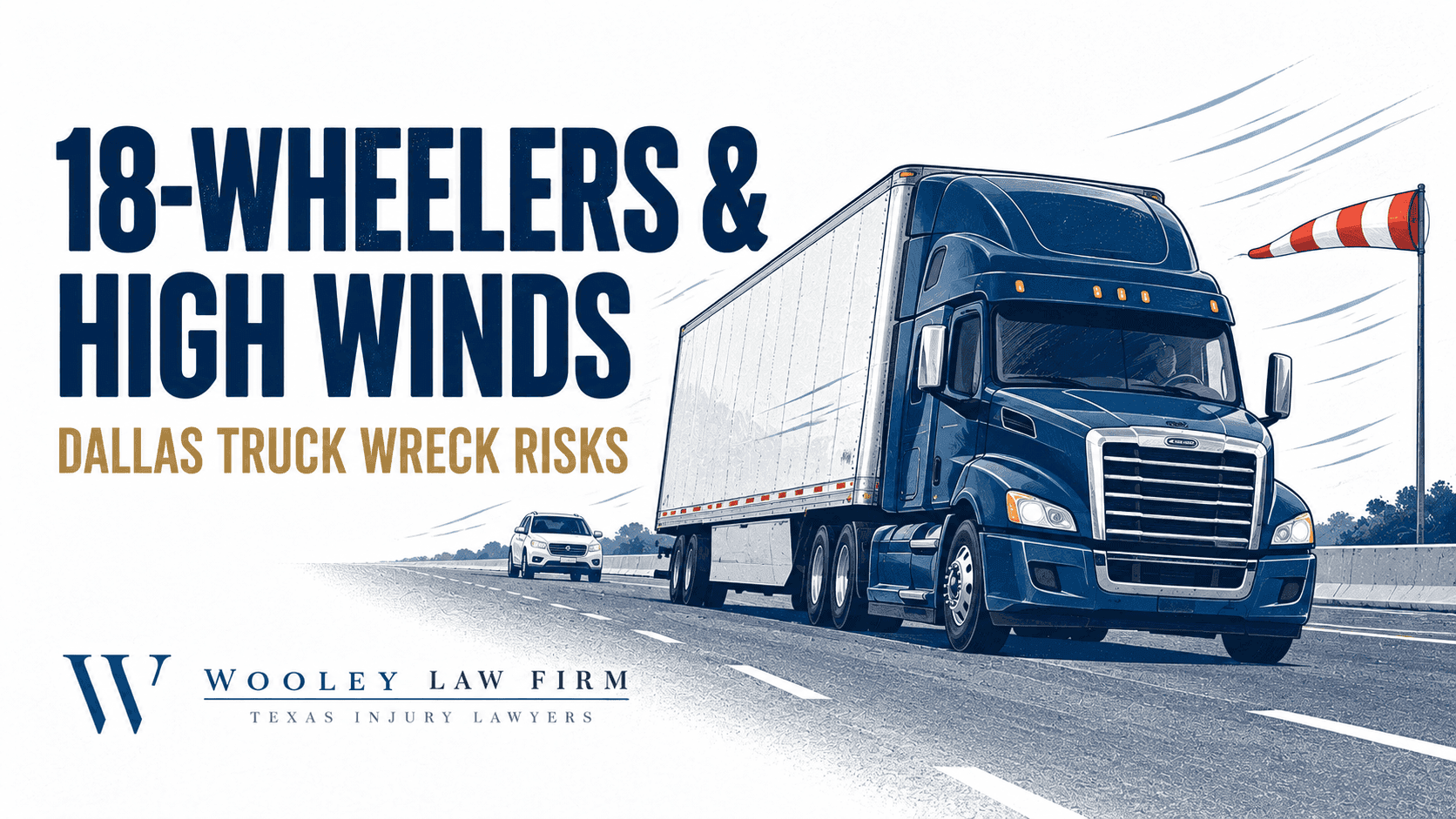
The tall, broad side of an enclosed trailer gives crosswinds a large surface to push against. A gust striking the side of a tractor-trailer can move it toward nearby traffic or contribute to a rollover.
The National Weather Service warns that a strong gust can overturn a trailer and advises motorists to keep their distance from high-profile vehicles during high winds.
Several dangerous situations can develop:
Lane departures and sideswipes: A trailer moves across the lane line into a passenger vehicle.
Blow-over crashes: Wind overturns the tractor-trailer, potentially into an occupied lane.
Loss of control: A driver makes an abrupt correction as the truck moves sideways.
Secondary collisions: Drivers encounter an overturned truck, scattered cargo, or an unexpected traffic backup.
These risks matter on Dallas–Fort Worth routes such as I-35E, I-635, I-20, and I-30. For a particular crash, investigators should examine the truck’s direction of travel, wind direction, roadway layout, and surrounding traffic.
Why Empty and Lightly Loaded Trailers Deserve Special Attention
An empty trailer still presents a large side surface to the wind, but it lacks the additional weight of a substantial cargo load. That combination can make an empty or lightly loaded enclosed trailer particularly vulnerable.
The Wyoming Department of Transportation’s wind-safety guidance identifies enclosed trailers as especially susceptible to blow-over crashes and uses vehicle weight in its wind restrictions. Those Wyoming restrictions do not establish Texas law, but the guidance illustrates why trailer configuration and actual weight matter. dot.state.wy.us
After a Dallas semi-truck wind accident, useful questions include:
Was the trailer empty, partially loaded, or fully loaded?
What did the tractor, trailer, and cargo actually weigh?
Where was the cargo positioned, and was it properly secured?
Did the driver know the load’s weight before entering the windy area?
Did company instructions address operating that equipment in high winds?
A loaded truck can still overturn. Weight alone does not establish that continuing the trip was safe.
What Wind Speed Is Too Dangerous for an 18-Wheeler?
There is no single wind-speed number in the federal hazardous-conditions rule that makes every tractor-trailer safe below it or unsafe above it.
A meaningful assessment considers gusts, wind direction, vehicle speed, trailer shape, load weight and distribution, and the roadway. A forecast’s average wind speed may also fail to capture the gust that struck a particular truck.
A driver should not wait for a trailer to begin tipping before taking deteriorating conditions seriously. Repeated difficulty staying in the lane, significant trailer movement, and relevant weather alerts should prompt reassessment of whether the trip can safely continue.
Injured in an Accident?
Free consultation. Tell us what happened and learn what options may be available.
What Do Texas Law and Federal Trucking Rules Require?
Under Texas Transportation Code § 545.351, drivers must use a speed that is reasonable and prudent under existing circumstances. The statute also requires an appropriate speed reduction when weather or highway conditions create a special hazard.
Driving below the posted speed limit does not necessarily satisfy that duty during dangerous winds.
For commercial operations subject to the federal rule, 49 C.F.R. § 392.14 requires extreme caution when hazardous conditions adversely affect visibility or traction. Drivers must reduce speed, and operations must stop when conditions become sufficiently dangerous, until safe operation is possible.
The regulation does not expressly list wind or establish a universal wind-speed cutoff. Its application should be evaluated against the actual conditions, including wind-driven dust or rain that affects visibility or traction.
A wind-related negligence claim may also involve unsafe speed and other unreasonable driving decisions, even when visibility remains clear.
Our article on precautions truck drivers must take in rain, wet roads, and flooding explains related weather hazards.
When Should a Truck Driver Stop Because of Wind?
The decision should account for the conditions and whether the specific truck can remain under safe control. Reasonable precautions may include reducing speed, increasing space around other vehicles, avoiding abrupt maneuvers, and identifying a safe parking location before conditions worsen.
Stopping also requires judgment. A travel lane or exposed shoulder may create additional danger. A suitable truck stop, rest area, or other lawful parking location may provide a safer place to wait when it can be reached safely.
Dispatch communications deserve scrutiny if a driver reported difficulty controlling the truck. Investigators should determine what the company knew, what instructions it gave, and whether delivery demands influenced the decision to continue.
Can the Trucking Company Blame the Wind for Your Wreck?
It may argue that an unexpected gust made the collision unavoidable. That explanation needs to be tested against the evidence.
For example, a sudden gust with little warning presents different questions from a driver continuing at highway speed after repeated lane departures and messages reporting dangerous conditions.
The investigation should ask:
What forecasts and warnings were available before the crash?
Had the driver already experienced trouble controlling the trailer?
Did the truck slow as conditions worsened?
Did the company receive a request to stop or delay the trip?
Were safe alternatives reasonably available?
Weather-related crashes are not automatically proof of negligence. They also are not automatically unavoidable. Responsibility depends on the conduct, the conditions, and what caused the injuries.
What Evidence Matters After a Dallas High-Wind Truck Wreck?
An effective investigation connects the weather to the truck’s movements and the decisions made before impact.
Weather Records and Alerts
Wind observations, gust reports, warning times, and storm movement can help reconstruct conditions. A distant weather station’s reading may not establish the precise wind at the crash site.
Dashcam and Other Video
Dashcam footage and nearby recordings may show trailer movement, visibility, traffic, and the driver’s response. Footage showing the truck struggling to stay in its lane before impact may be particularly useful.
Electronic Truck Data
Depending on the equipment and available records, downloads may reveal speed, braking, or stability-control events.
Electronic logging devices primarily document duty status and should not be assumed to contain a detailed crash reconstruction.
Cargo and Weight Records
Scale tickets, bills of lading, and loading records can help establish what the trailer carried. Those records may also help evaluate a claim that the truck was sufficiently heavy to operate safely.
Company Communications
Dispatch messages, weather notices, safety policies, and driver reports may show what was known before the collision. A driver’s request to stop—and the company’s response—could become significant evidence.
Physical Evidence
Vehicle damage, tire marks, cargo location, and the final positions of the tractor and trailer can help explain the sequence.
Prompt preservation matters because recordings and electronic records may be overwritten. For crashes along that corridor, our I-35E truck wreck guide discusses additional investigation issues.
What Should You Do After a Wind-Related Truck Accident?
Call 911 and seek appropriate medical care. Stay away from an unstable trailer, spilled cargo, downed power lines, and moving traffic.
If you can do so safely:
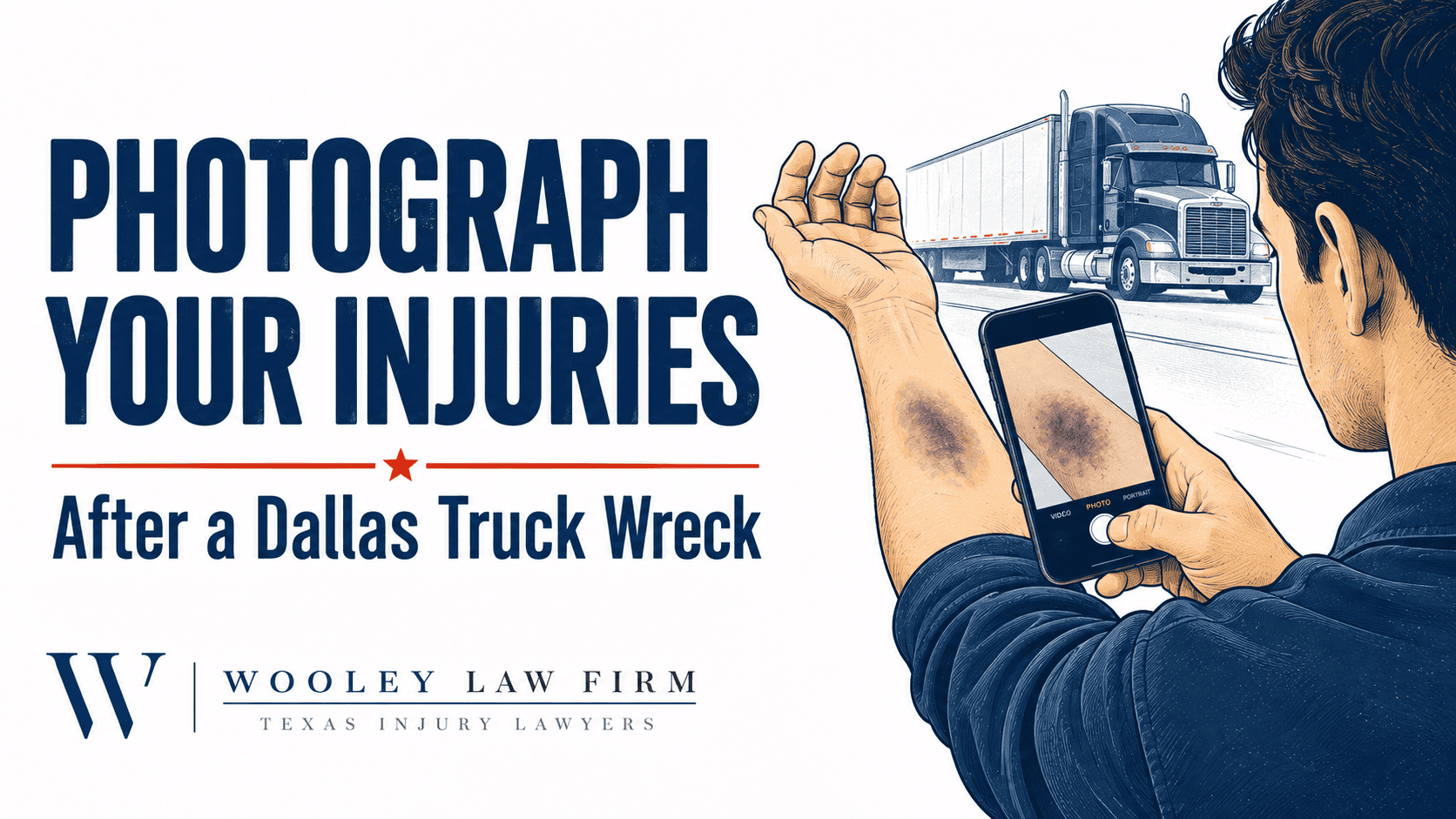
Photograph the vehicles, trailer, roadway, debris, and visible injuries.
Obtain witness names and contact information.
Record the truck’s company name and identifying numbers.
Preserve original dashcam files.
Keep medical records, expense receipts, and documentation of missed work.
Depending on the facts, a claim may include medical expenses, future care, lost income, reduced earning capacity, pain, physical impairment, and other recoverable losses.
The driver and motor carrier may be responsible. Claims against additional parties require a separate factual and legal basis.
Frequently Asked Questions About High-Wind Truck Accidents
Can wind cause a truck wreck without overturning the trailer?
Yes. A truck may cross a lane line, sideswipe a car, or contribute to a collision without rolling over.
Can I have a claim if I swerved to avoid the truck and it never touched my car?
Potentially. You would still need evidence that negligent truck operation caused the evasive maneuver and resulting injuries. Video and independent witnesses can be particularly useful.
Does a wind warning automatically prove the driver was at fault?
No. A warning may be relevant, but the claim still requires proof of legally responsible conduct and causation.
Talk to a Dallas Truck Wreck Lawyer About a High-Wind Crash
If an 18-wheeler struck your vehicle, overturned beside you, or forced you off the road during high winds, The Wooley Law Firm can review what happened and explain your options.
Contact The Wooley Law Firm or call (214) 699-6524 for a free consultation. You don’t pay unless we win.
This article is for general informational purposes only and is not legal advice. Reading it does not create an attorney-client relationship. Every case is different.
Topics
Share This Article

Andrew J. Wooley
Personal Injury Attorney
Andrew J. Wooley is a dedicated personal injury attorney based in Dallas, Texas. He focuses on helping accident victims recover fair compensation for their injuries. With a commitment to personalized service, Andrew works directly with each client to understand their unique situation and fight for their rights.