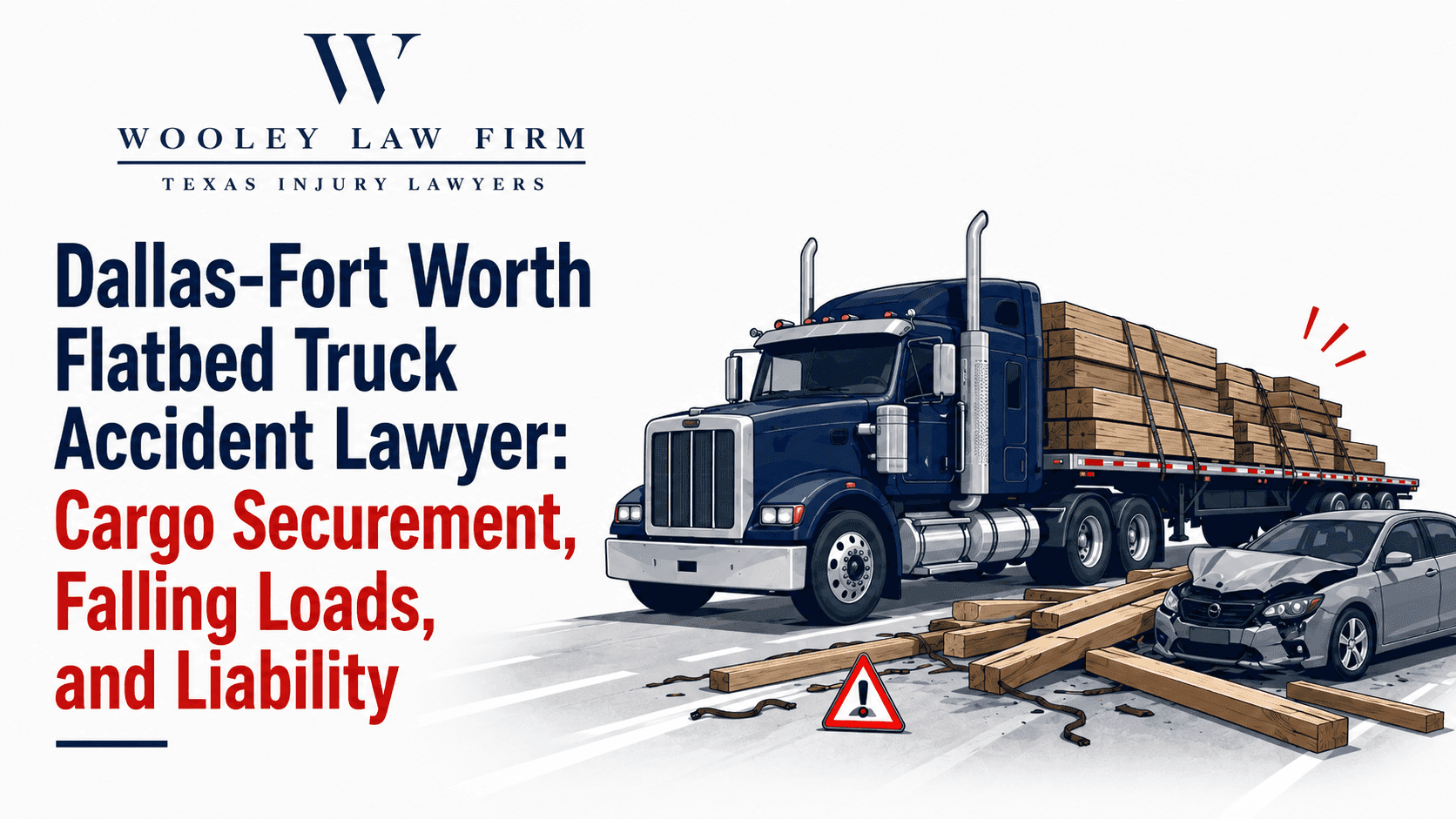
Flatbed truck accidents can be among the most dangerous commercial vehicle crashes on Texas roads. Unlike enclosed trailers, flatbed trailers carry exposed cargo such as steel beams, metal coils, lumber, pipe, concrete products, construction materials, industrial machinery, and heavy equipment.
These loads may weigh thousands of pounds and are commonly held in place by chains, straps, binders, blocks, friction mats, stakes, and edge protectors. When the cargo is improperly loaded, inadequately secured, or not inspected during the trip, it can shift, roll, slide, or fall into traffic.
A single securement failure can cause:
Falling or flying debris;
A load to enter an adjacent lane;
A flatbed trailer to roll over;
A truck driver to lose control;
A vehicle to become trapped beneath cargo;
A multi-vehicle highway collision; or
Fatal injuries to motorists, passengers, motorcyclists, pedestrians, and workers.
If you were injured by a flatbed truck in Dallas, Fort Worth, Arlington, Irving, Garland, Grand Prairie, Plano, McKinney, Frisco, Denton, Lewisville, Mesquite, or another Texas community, the case may involve much more than ordinary driver negligence.
Flatbed truck accident claims frequently depend on federal cargo-securement regulations, load documentation, inspection records, the condition of the chains or straps, and evidence identifying who loaded and secured the freight.
The Wooley Law Firm represents people injured in serious truck wrecks throughout Dallas-Fort Worth and across Texas. Learn more by visiting our Dallas truck accident lawyer page or our main 18-wheeler accident attorney page.
Call (214) 699-6524 for a free consultation. You do not pay attorney’s fees unless we win.
Why Flatbed Truck Accidents Are Different
A flatbed truck is not simply an 18-wheeler without trailer walls. The exposed nature of the cargo creates hazards that do not exist in the same way with many enclosed trailers.
Flatbed Cargo Is Exposed to Traffic
Enclosed trailers have walls and doors that may help contain cargo. A flatbed trailer generally does not.
If a chain breaks, a strap loosens, a binder fails, or cargo was positioned incorrectly, nothing may prevent the load from falling directly onto the road or another vehicle.
Exposed flatbed loads may include:
Structural steel;
Steel coils;
Lumber and logs;
Metal pipe;
Concrete barriers;
Roofing materials;
Construction supplies;
Cranes and forklifts;
Tractors and excavators;
Vehicles;
Industrial machinery; and
Prefabricated building components.
These materials can cause catastrophic damage when they break loose at highway speed.
A Shifting Load Can Destabilize the Truck
Cargo does not have to fall off the trailer to cause a crash. A load that shifts several inches may alter the truck’s center of gravity and affect how the driver steers, brakes, or turns.
A shifting load may contribute to:
Flatbed truck rollovers;
Jackknife accidents;
Trailer sway;
Loss-of-control crashes;
Unsafe lane departures;
Longer stopping distances; and
The truck or trailer striking vehicles in adjacent lanes.
Heavy or elevated cargo can make a flatbed particularly unstable on curves, entrance ramps, exit ramps, construction detours, and highways with sudden traffic congestion.
Learn more about this type of wreck in our guide to truck rollover accidents in Dallas.
Securement Failures Can Be Sudden and Violent
Flatbed cargo is often held in place through a system of several components. A failure involving one part of that system can affect the entire load.
Potential problems include:
Frayed or cut synthetic straps;
Rusted, stretched, or damaged chains;
Loose load binders;
Missing edge protection;
Defective anchor points;
Insufficient numbers of tiedowns;
Tiedowns with inadequate strength;
Improper blocking or bracing;
Sharp cargo edges cutting through webbing;
Cargo stacked too high;
Uneven weight distribution; and
Failure to account for movement during braking or turning.
At highway speeds, a securement failure can leave nearby motorists with little or no time to react.
Federal Cargo-Securement Rules for Flatbed Trucks
Federal Motor Carrier Safety Administration regulations establish requirements intended to prevent cargo from shifting, leaking, spilling, blowing, or falling from commercial vehicles.
These regulations can be central to determining why a flatbed accident happened and who may be responsible.
49 CFR Part 393, Subpart I
The federal cargo-securement standards appear primarily in 49 CFR Part 393, Subpart I.
Under these rules, cargo transported on public roads must be loaded and secured to prevent it from falling from the vehicle. Cargo must also be contained, immobilized, or secured so that shifting does not adversely affect the vehicle’s stability or maneuverability.
An investigation should determine whether the cargo-securement system was capable of resisting the forces created by:
Acceleration;
Braking;
Turning;
Lane changes;
Road vibration;
Hills and grades;
Emergency maneuvers; and
Normal highway travel.
The fact that cargo had chains or straps around it does not automatically mean that it was secured correctly.
Working Load Limit Requirements
Every tiedown and securement device has a working load limit, commonly called its WLL.
The aggregate working load limit is generally calculated using the combined restraining capacity of the devices securing the cargo. Federal rules impose minimum strength requirements based on the cargo and the manner in which it is secured.
This issue can become important when:
Too few chains or straps were used;
The devices were not rated for the load;
The working load limit markings were missing or unreadable;
Damaged equipment was treated as fully functional;
The tiedowns were attached incorrectly;
The carrier failed to account for the cargo’s weight; or
The shipper provided inaccurate weight information.
A load may appear to be tied down while still failing to meet the applicable strength requirements.
Driver Inspection and Reinspection Duties
Cargo securement is not necessarily a one-time task performed before departure.
Under 49 CFR § 392.9, drivers subject to the rule generally must assure themselves that the cargo is properly distributed and secured before operating the truck.
Drivers generally must also inspect the cargo and securement devices within the first 50 miles of the trip and make necessary adjustments.
Additional reexaminations are generally required when:
The driver changes duty status;
The vehicle has been driven for three hours; or
The vehicle has been driven for 150 miles,
whichever occurs first.
These inspection requirements matter because chains, straps, binders, and cargo can settle or loosen after the truck begins moving.
A flatbed driver may be negligent when the evidence shows that the driver:
Failed to conduct the initial inspection;
Did not stop for the required reinspection;
Falsified inspection records;
Ignored a loose or damaged tiedown;
Continued driving after being warned of shifting cargo; or
Failed to correct a dangerous condition.
Commodity-Specific Securement Rules
Certain kinds of cargo are subject to additional requirements because they create unique risks.
Commodity-specific federal regulations address materials such as:
Logs;
Dressed lumber;
Metal coils;
Paper rolls;
Concrete pipe;
Intermodal containers;
Automobiles and light trucks;
Heavy vehicles, equipment, and machinery;
Flattened or crushed vehicles;
Roll-on/roll-off containers; and
Large boulders.
The correct securement method may depend on the cargo’s size, weight, shape, orientation, and tendency to roll or shift.
For example, metal coils may require specific loading, blocking, bracing, and tiedown configurations depending on how the coil’s eye is positioned. Heavy equipment may require securement at particular attachment points and additional restraints for accessories that could move during transport.
A lawyer investigating a flatbed crash should identify the exact commodity being transported before deciding which regulations apply.
Common Causes of Flatbed Truck Accidents in Dallas-Fort Worth
Flatbed accidents may result from driver error, loading mistakes, equipment failure, corporate safety failures, or a combination of several problems.
Improperly Secured Cargo
Cargo may break loose because the loader or driver used:
Too few tiedowns;
Improper tiedown angles;
Inadequate blocking or bracing;
Incorrect anchor points;
Devices with insufficient working load limits;
Damaged chains, straps, or binders; or
The wrong securement method for the commodity.
Failure to Inspect the Load
Even a load that was secured properly at departure can loosen during transportation.
Road vibration, sudden braking, weather, cargo compression, and movement between materials can reduce tension in the securement system. A driver who fails to reinspect and adjust the load may allow a correctable problem to become a catastrophic roadway hazard.
Damaged Straps, Chains, or Binders
Securement equipment can deteriorate through:
Repeated use;
Exposure to weather;
Cuts and abrasions;
Corrosion;
Overloading;
Improper storage;
Contact with sharp cargo edges; and
Lack of inspection or replacement.
Photographs and physical preservation of the equipment can be critical in determining whether the failure resulted from wear, misuse, inadequate maintenance, or a manufacturing defect.
Missing Edge Protectors
Sharp metal, concrete, or lumber edges may cut through synthetic straps. Edge protectors can help prevent abrasion and distribute pressure where the tiedown crosses the cargo.
Missing, damaged, or incorrectly positioned edge protection may be evidence of an unsafe loading or securement process.
Uneven or Improper Weight Distribution
Cargo should be positioned with the truck’s stability and axle limitations in mind.
Improper distribution may cause:
Excessive weight on one side;
Overloaded axles;
Reduced steering control;
Increased rollover risk;
Trailer sway;
Uneven braking; and
Tire or suspension failures.
Overweight Flatbed Loads
An overweight truck may require more distance to stop and may place excessive stress on brakes, tires, axles, suspension parts, and securement devices.
Relevant evidence can include:
Scale tickets;
Permits;
Bills of lading;
Shipping documents;
Cargo manifests;
Weigh-station records; and
Electronic dispatch communications.
Excessive Speed on Curves or Ramps
A loaded flatbed may have a higher or less stable center of gravity than a truck pulling ordinary enclosed freight.
A driver who enters a curve, ramp, or turn too quickly may cause the load to shift or the trailer to roll. Posted speed limits do not necessarily establish a safe speed for every commercial vehicle, load, traffic condition, or roadway configuration.
Sudden Braking and Unsafe Following Distance
When a flatbed driver follows too closely, the driver may be forced to brake suddenly. The resulting forward force can cause cargo to move, break through securement, or affect control of the truck.
Learn more about these crashes in our guide for people who were rear-ended by an 18-wheeler in Dallas.
Unsafe Lane Changes
A shifting load may contribute to trailer sway or lane departure. In other cases, a driver may change lanes without accounting for oversized cargo or side overhang.
Victims involved in this type of collision may also find our article about being sideswiped by an 18-wheeler in Dallas-Fort Worth helpful.
Injured in an Accident?
Free consultation. Tell us what happened and learn what options may be available.
Unsafe Turns
Flatbed trailers may carry long steel, pipe, lumber, or machinery that increases the space required for a safe turn. Cargo overhang can also create a strike hazard beyond the trailer itself.
Our article about wide-turn 18-wheeler accidents in Dallas-Fort Worth explains the evidence and safety issues that frequently arise in turning crashes.
Types of Flatbed Truck Accidents
Flatbed trailers can cause several distinct crash patterns.
Falling-Cargo Accidents
Steel, lumber, pipe, equipment, or construction materials may fall directly onto a vehicle or roadway.
A falling load may:
Crush an occupied car;
Penetrate a windshield;
Strike a motorcycle;
Block several traffic lanes;
Cause drivers to swerve;
Trigger a chain-reaction crash; or
Cause a fatal collision.
Shifting-Load Rollover Accidents
A load that moves laterally can change the trailer’s center of gravity. This may cause the flatbed to overturn, slide across lanes, or strike several vehicles.
Jackknife Accidents
Cargo movement, excessive speed, sudden braking, or loss of traction can cause the trailer to swing outward at an angle to the tractor.
A jackknifed flatbed may sweep across several lanes and expose motorists to both the trailer and its unsecured cargo.
Cargo-Overhang Accidents
Long materials may extend beyond the rear or sides of a flatbed. When overhang is inadequately marked, poorly illuminated, or not considered during a turn, it can strike nearby vehicles, cyclists, pedestrians, or fixed objects.
Debris-Avoidance Crashes
The flatbed does not have to collide with the victim’s vehicle. A motorist may be forced to swerve or brake suddenly to avoid cargo that has fallen into the road.
A trucking company may still be responsible when its unsecured load creates the emergency that causes the crash.
Underride and Override Accidents
Passenger vehicles can become trapped beneath a flatbed trailer during a rear-end, side-impact, or turning collision. Because the trailer deck may align with the passenger compartment, these crashes can cause catastrophic head, neck, and fatal injuries.
Who Can Be Liable for a Texas Flatbed Truck Accident?
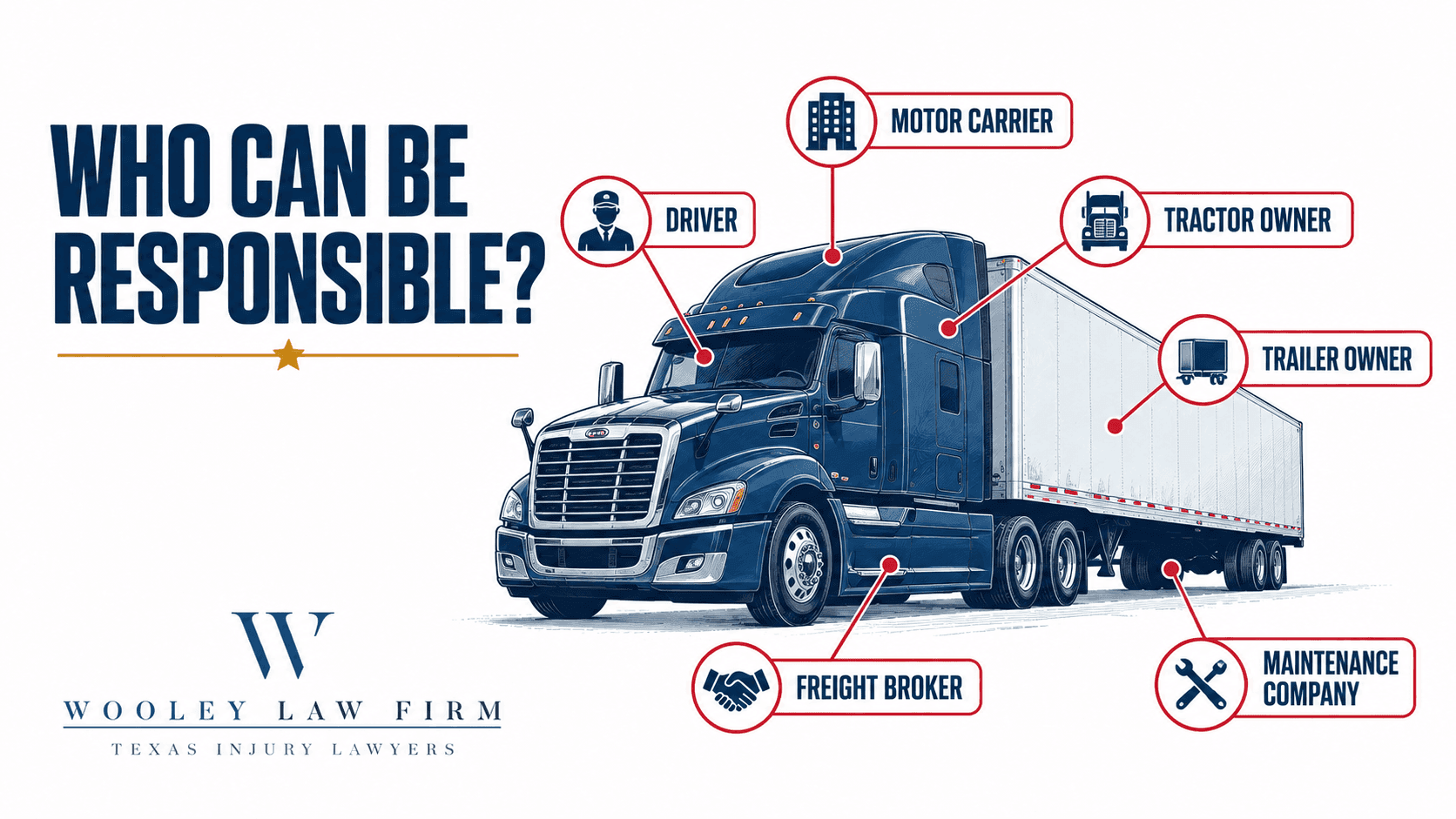
Flatbed cases are rarely limited to asking whether the driver made a mistake. Several businesses may have participated in loading, securing, inspecting, transporting, maintaining, or supplying the cargo and equipment.
The Flatbed Truck Driver
The driver may be responsible for:
Failing to inspect the cargo;
Failing to perform required reinspections;
Driving too fast for the load or conditions;
Following too closely;
Braking abruptly;
Making an unsafe turn;
Changing lanes unsafely;
Ignoring warnings about loose cargo;
Operating while fatigued or distracted; or
Continuing to drive after detecting a securement problem.
The Motor Carrier or Trucking Company
The trucking company may be responsible for the driver’s conduct and for its own unsafe business practices.
Potential carrier negligence may include:
Negligent hiring;
Inadequate driver training;
Negligent supervision;
Failure to enforce cargo-securement policies;
Dispatch pressure;
Unrealistic delivery schedules;
Failure to provide proper equipment;
Allowing damaged securement devices to remain in service;
Inadequate maintenance;
Poor inspection procedures; and
A history of ignored safety violations.
The trucking company’s internal records may reveal whether the crash resulted from an isolated mistake or a broader safety failure.
The Shipper
The shipper may provide cargo descriptions, weight information, handling instructions, or special securement requirements.
A shipper may bear responsibility if it:
Misrepresented the cargo’s weight;
Failed to disclose an unusual hazard;
Provided incorrect loading instructions;
Supplied unstable or defective packaging; or
Participated in creating a concealed loading defect.
The Loading Company or Freight Facility
The company that physically placed and secured the load may be one of the most important defendants.
The loader may have:
Positioned the cargo unevenly;
Used the wrong type of tiedown;
Failed to use sufficient securement;
Omitted blocking, bracing, or edge protection;
Exceeded axle limits;
Failed to secure movable equipment parts; or
Released the truck with an obviously dangerous load.
Warehouse surveillance footage, loading-bay photographs, gate records, and employee testimony may help establish what happened before departure.
The Trailer Owner or Leasing Company
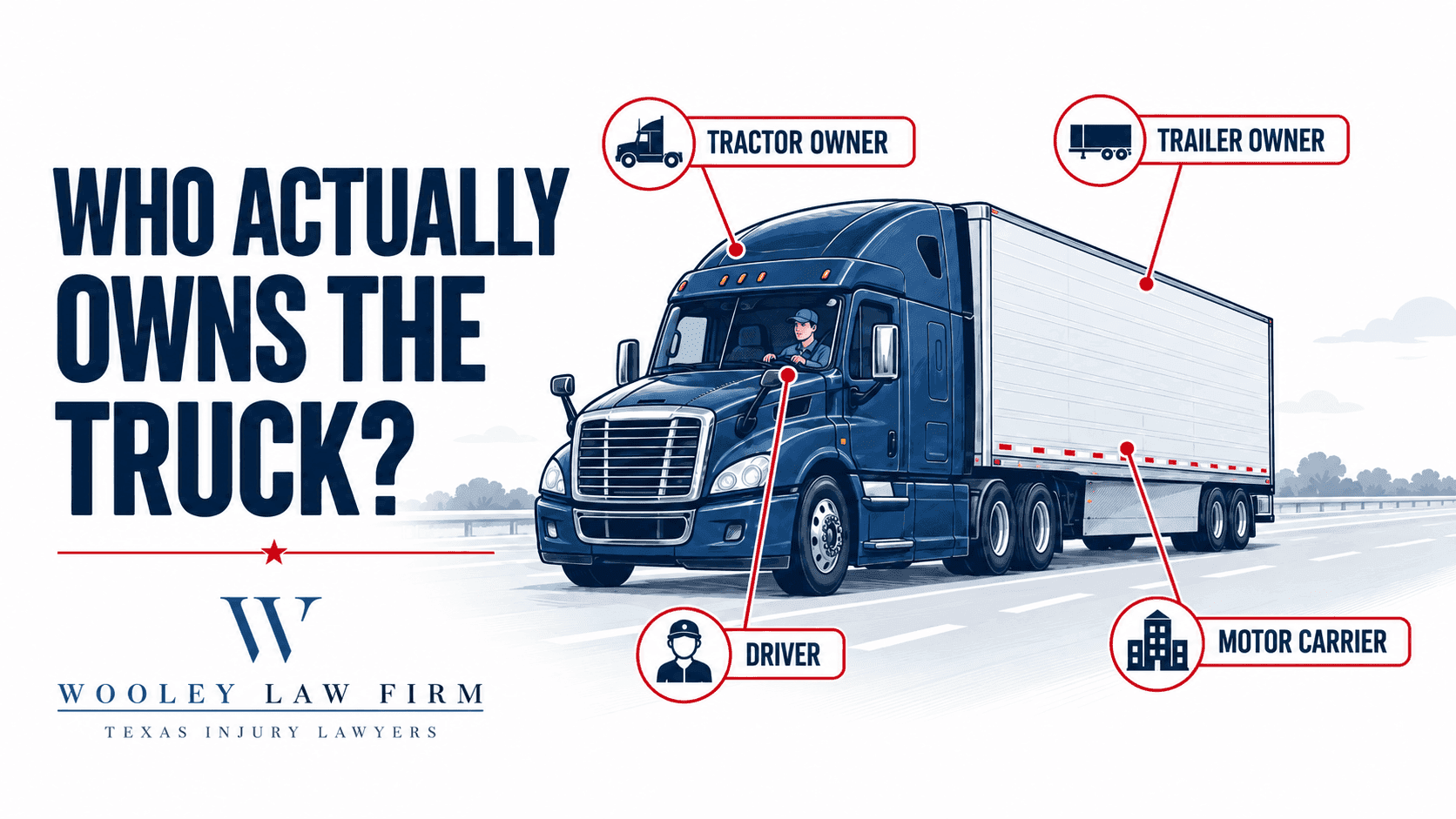
The tractor, trailer, and cargo may be owned by different companies.
A trailer owner or leasing company may be responsible for defective:
Anchor points;
Rub rails;
Winches;
Structural components;
Decking;
Stakes;
Tie-down rails; or
Other trailer equipment.
Maintenance Contractors
A third-party maintenance provider may be liable if it failed to identify or repair a dangerous trailer component or securement system.
Securement-Equipment Manufacturers
A product-liability claim may exist if a chain, strap, binder, hook, winch, anchor point, or other component failed because of a manufacturing or design defect.
Preserving the failed equipment is essential. Once it is discarded, repaired, or returned to service, proving why it failed may become much more difficult.
Brokers and Other Logistics Companies
Freight brokers, logistics providers, and other transportation companies may also require investigation. Their potential responsibility depends on their actual role, contracts, control, representations, and involvement in selecting or managing the carrier.
The name displayed on the truck does not necessarily identify every responsible company.
Evidence Needed After a Flatbed Truck Accident
The trucking company and its insurer may begin investigating immediately. The victim should have someone working just as quickly to preserve evidence.
Important evidence may include:
The Flatbed, Cargo, and Securement Equipment
The trailer, remaining cargo, chains, straps, binders, edge protectors, anchor points, blocks, and other components should be photographed and preserved before they are repaired, discarded, reused, or altered.
Load Photographs and Loading-Bay Video
Some carriers, drivers, shippers, and warehouses photograph cargo before departure. Loading facilities may also have surveillance cameras covering docks, gates, scales, and staging areas.
This evidence may show:
Who loaded the cargo;
Who attached the securement devices;
How the cargo was positioned;
Whether edge protectors were used;
How many tiedowns were installed;
Whether damage was visible before departure; and
Whether the load shifted before the truck left the facility.
Bills of Lading and Load Documents
Relevant documents may include:
Bills of lading;
Cargo manifests;
Load tickets;
Scale tickets;
Weight certificates;
Permits;
Dispatch instructions;
Commodity descriptions;
Loading diagrams;
Pickup and delivery records; and
Communications concerning the load.
Driver Inspection Records
The investigation should determine:
Whether a pre-trip inspection occurred;
Whether the driver stopped within the first 50 miles;
When later reinspections occurred;
Whether adjustments were made;
Whether the driver reported a securement issue; and
Whether inspection records match GPS and electronic-log data.
Electronic Logging and GPS Data
Electronic logging devices and telematics may help establish:
The route;
Driving time;
Rest periods;
Vehicle speed;
Sudden braking;
Stops that may have been cargo inspections;
The timing of the crash; and
Whether the driver followed the planned route.
Engine and Event Data
Electronic control module or event data recorder information may provide evidence of:
Speed;
Braking;
Throttle position;
Engine activity; and
Other vehicle operations before the collision.
Read more about this evidence in our article on 18-wheeler black-box data after a Dallas-Fort Worth truck wreck.
Dashcam and Onboard Video
Video may show the truck’s movement, roadway conditions, cargo movement, or the driver’s conduct. Some systems overwrite older footage automatically, making prompt preservation critical.
Driver Qualification and Training Records
These records may establish whether the driver was properly qualified and trained to transport the specific cargo involved.
Important materials may include:
Employment applications;
Driving history;
Prior employer inquiries;
Training records;
Road-test documents;
Disciplinary records;
Safety evaluations; and
Prior cargo-securement violations.
Maintenance and Inspection Records
Trailer maintenance records may show defects involving:
Anchor points;
Winches;
Rails;
Deck components;
Tires;
Brakes;
Suspension;
Lighting;
Reflective markings; and
Other safety equipment.
Witness Statements and Roadway Video
Witnesses may have seen the cargo moving, a strap dragging, debris falling, or the driver continuing after another motorist attempted to warn the truck.
Nearby businesses, homes, traffic cameras, toll systems, and other vehicles may also have captured the crash.
For a broader explanation, read our guide to the evidence that matters most in Texas 18-wheeler cases.
Why Evidence Can Disappear Quickly
Truck accident evidence is often controlled by the same companies that may face liability.
Cargo may be delivered, removed, salvaged, or discarded. Chains and straps may be put back into service. The trailer may be repaired. Surveillance footage may be overwritten. Electronic records may be deleted through ordinary retention schedules.
A preservation letter can demand that the potentially responsible parties retain relevant evidence, including:
The tractor and trailer;
Cargo remnants;
Securement equipment;
Loading photographs;
Surveillance video;
Electronic data;
Inspection records;
Dispatch communications;
Driver records; and
Maintenance documentation.
A preservation demand is not a substitute for a full investigation, but it can be an important early step.
Read our article, Truck Accident Cases Are Different: Evidence Disappears Fast in Texas, for more information about why timing matters.
Common Injuries Caused by Flatbed Truck Accidents
Falling cargo, heavy equipment, and unstable flatbed trailers can cause severe or fatal injuries.
Common injuries include:
Traumatic brain injuries;
Skull fractures;
Spinal cord injuries;
Paralysis;
Neck and back injuries;
Herniated discs;
Broken ribs;
Collarbone fractures;
Arm and leg fractures;
Crush injuries;
Internal organ damage;
Amputations;
Severe burns;
Lacerations and scarring;
Psychological trauma; and
Wrongful death.
Symptoms may not always be obvious at the scene. Adrenaline can temporarily mask pain, and conditions involving the brain, spine, or internal organs may worsen over time.
Seek medical attention promptly and report all symptoms accurately.
Compensation After a Texas Flatbed Truck Accident
Depending on the facts and available insurance coverage, an injured person may pursue compensation for:
Emergency medical treatment;
Hospital expenses;
Surgery;
Rehabilitation;
Physical therapy;
Prescription medication;
Future medical care;
Lost wages;
Loss of earning capacity;
Property damage;
Towing and storage charges;
Rental expenses;
Physical pain;
Mental anguish;
Physical impairment;
Disfigurement; and
Other legally recoverable damages.
When a flatbed accident causes death, eligible family members may have wrongful-death claims. The estate may also have a survival claim for losses sustained by the person before death.
The value of a case depends on the injuries, medical evidence, future limitations, liability facts, available coverage, and strength of the preserved evidence. Learn more in our guide to truck accident damages and what may affect the value of a Dallas 18-wheeler case.
What to Do After a Flatbed Truck Accident
Get Medical Care
Call 911 after a serious collision. Accept emergency treatment when needed and follow up promptly if symptoms appear or worsen.
Photograph the Truck, Trailer, Cargo, and Roadway
When it can be done safely, photograph:
The tractor;
The trailer;
The cargo;
Chains and straps;
Loose or broken equipment;
Cargo on the roadway;
Vehicle damage;
Skid marks;
Road conditions; and
Identifying numbers and company markings.
Do not place yourself in danger to obtain photographs.
Identify Witnesses
Obtain names and contact information from people who saw the load move, cargo fall, or the collision occur.
Do Not Give a Recorded Statement Without Legal Advice
A trucking insurer may request a recorded statement shortly after the crash. The adjuster may ask questions designed to minimize the trucking company’s responsibility or the severity of your injuries.
You can report the basic facts to your own insurer without speculating. Consider speaking with an attorney before providing a detailed recorded statement to the trucking company’s carrier.
Do Not Sign a Quick Settlement
The full extent of an injury may not be known immediately. A release generally ends the claim, even if surgery, future treatment, or permanent limitations are discovered later.
Speak With a Truck Accident Lawyer Promptly
Early legal involvement can help identify the proper defendants and preserve cargo-securement evidence before it disappears.
Flatbed Truck Accidents on Dallas-Fort Worth Highways
Dallas-Fort Worth is a major center for construction, manufacturing, distribution, freight transportation, and interstate trucking. Flatbed trucks regularly transport materials through North Texas on roadways such as:
Interstate 20;
Interstate 30;
Interstate 35E;
Interstate 35W;
Interstate 45;
Interstate 635;
Interstate 820;
US Highway 67;
US Highway 75;
US Highway 80;
US Highway 287;
US Highway 380;
State Highway 121;
State Highway 161;
State Highway 183; and
The Dallas North Tollway.
Flatbed crashes may also occur near industrial parks, warehouses, construction sites, rail yards, freight terminals, commercial driveways, and loading facilities.
The Wooley Law Firm handles serious truck accident cases in Dallas County, Tarrant County, Collin County, Denton County, and throughout Texas.
How The Wooley Law Firm Investigates Flatbed Truck Accidents
At The Wooley Law Firm, we understand that a flatbed collision may involve multiple companies, multiple insurance policies, federal regulations, and evidence that can disappear quickly.
Depending on the case, our investigation may include:
Sending preservation notices;
Inspecting the tractor and trailer;
Preserving failed chains, straps, and binders;
Obtaining cargo and shipping documents;
Identifying the shipper and loading company;
Requesting driver inspection records;
Securing electronic logging and GPS data;
Obtaining onboard video;
Reviewing maintenance records;
Investigating the driver’s training and qualifications;
Examining federal compliance;
Interviewing witnesses;
Reviewing roadway and business surveillance footage; and
Consulting qualified trucking, engineering, medical, or accident-reconstruction professionals when appropriate.
We have handled serious commercial truck wreck cases across Texas and have recovered millions of dollars for injured clients.
Our goal is to identify what went wrong, determine every party that may be responsible, preserve the evidence, and pursue the compensation our client is entitled to seek under Texas law.
Speak With a Dallas-Fort Worth Flatbed Truck Accident Lawyer
A flatbed truck crash is not an ordinary car accident. The case may involve cargo-securement regulations, specialized equipment, several corporate defendants, and evidence controlled by the trucking and shipping companies.
If you were injured by falling cargo, a shifting load, an overturned flatbed, or another unsafe commercial truck, contact The Wooley Law Firm.
We represent injured people in Dallas, Fort Worth, Arlington, Irving, Garland, Mesquite, Grand Prairie, Plano, Frisco, McKinney, Carrollton, Lewisville, Denton, and communities throughout Texas.
Visit our Dallas truck accident lawyer page or learn more about our statewide truck-wreck practice on our 18-wheeler accident attorney page.
Call (214) 699-6524 or contact The Wooley Law Firm online.
The consultation is free. You do not pay attorney’s fees unless we win.
Frequently Asked Questions About Texas Flatbed Truck Accidents
What makes a flatbed accident different from another 18-wheeler crash?
Flatbed trailers carry exposed cargo that may shift, roll, slide, or fall directly into traffic. These cases often require a detailed investigation of cargo weight, load distribution, tiedown strength, commodity-specific regulations, and required inspections.
Who is responsible when cargo falls from a flatbed truck?
Potentially responsible parties may include the driver, motor carrier, shipper, loading company, trailer owner, maintenance contractor, freight company, and manufacturer of a defective securement component.
The responsible parties depend on who controlled the loading, securement, inspection, transportation, and equipment.
Is the trucking company responsible for cargo loaded by someone else?
Possibly. The carrier and driver may have independent duties concerning cargo distribution, securement, and inspection. A separate loader or shipper may also be liable. Responsibility must be evaluated based on the cargo, contracts, loading process, and what the driver could or should have identified.
How often must a flatbed driver inspect the cargo?
Federal regulations generally require a driver subject to the rule to inspect the cargo and securement devices within the first 50 miles. The driver must generally reinspect when changing duty status, after driving three hours, or after driving 150 miles, whichever occurs first.
Exceptions may apply in limited situations, so the facts and applicable regulations should be reviewed carefully.
Can I bring a claim if the flatbed never hit my vehicle?
Yes. You may have a claim when falling cargo, debris, or an unstable load causes you to swerve, brake, leave the road, or collide with another vehicle.
The key issue is whether the unsafe flatbed load caused or contributed to the crash.
What evidence proves that cargo was secured incorrectly?
Relevant evidence may include scene photographs, chains, straps, binders, load documents, cargo weight records, loading video, driver inspection records, GPS data, expert inspection, maintenance records, witness statements, and the applicable federal securement requirements.
What if a strap or chain broke?
The investigation should determine why it broke. Potential causes include wear, corrosion, cuts, overloading, insufficient working load limit, improper use, missing edge protection, defective manufacture, or failure to replace damaged equipment.
The broken component should be preserved whenever possible.
Are there special rules for steel coils and heavy equipment?
Yes. Federal regulations contain commodity-specific requirements for several cargo types, including metal coils and heavy vehicles, equipment, and machinery. The proper securement method depends on the cargo’s weight, configuration, orientation, and movement risks.
Should I speak to the trucking company’s insurance adjuster?
You should use caution. The adjuster represents the trucking company and insurer, not you. Consider obtaining legal advice before giving a recorded statement, signing medical authorizations, or accepting a settlement.
How long do I have to file a flatbed truck accident lawsuit in Texas?
Texas personal injury claims are generally subject to a two-year limitations period, but exceptions and shorter notice requirements can apply. Claims involving governmental entities may have much shorter notice deadlines.
Do not wait until the limitations deadline approaches. Evidence can disappear long before the time to file suit expires.
How much does it cost to hire The Wooley Law Firm?
We handle truck accident cases on a contingency-fee basis. There is no upfront attorney’s fee, and you do not pay attorney’s fees unless we obtain a recovery for you.
Disclaimer
This article is provided for general informational purposes only and is not legal advice. Reading this article or contacting The Wooley Law Firm does not create an attorney-client relationship. Every truck accident case is different, and the outcome of any claim depends on the specific facts, applicable law, available evidence, insurance coverage, and other circumstances. Past results do not guarantee or predict a similar outcome in any future case. You should speak with a qualified Texas attorney about your particular situation and any deadlines that may apply.
Topics
Share This Article

Andrew J. Wooley
Personal Injury Attorney
Andrew J. Wooley is a dedicated personal injury attorney based in Dallas, Texas. He focuses on helping accident victims recover fair compensation for their injuries. With a commitment to personalized service, Andrew works directly with each client to understand their unique situation and fight for their rights.