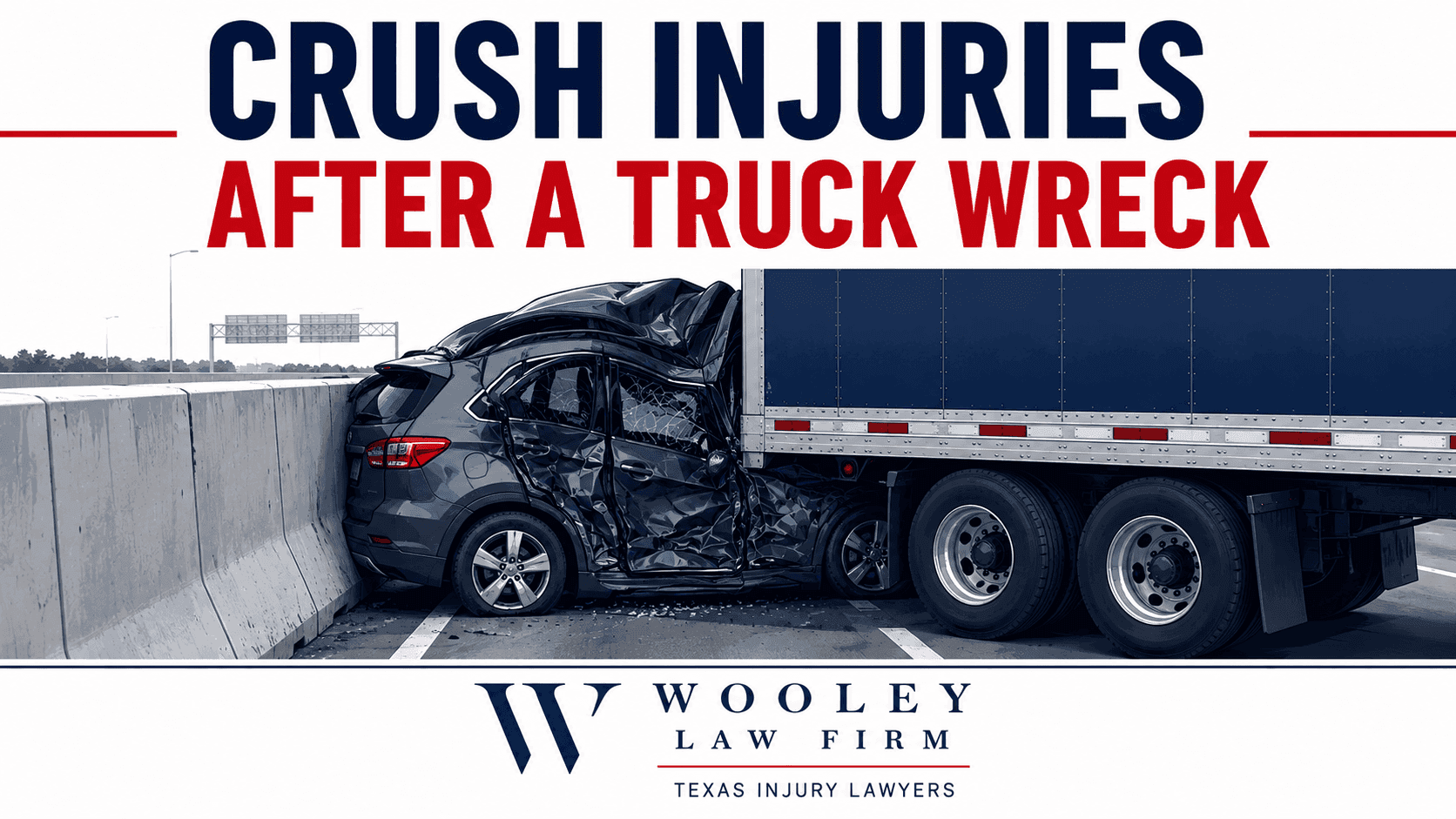
An 18-wheeler can crush a passenger vehicle in seconds.
A driver or passenger may become pinned between the dashboard and seat, trapped beneath a collapsed roof, compressed against a concrete barrier, or caught between a tractor-trailer and another vehicle. Motorcyclists, bicyclists, pedestrians, road workers, and occupants of smaller cars are especially vulnerable to the enormous weight and force of a commercial truck.
Crush injuries can damage skin, muscles, nerves, blood vessels, bones, joints, and internal organs at the same time. In severe cases, the breakdown of injured muscle can release dangerous substances into the bloodstream, leading to abnormal heart rhythms, kidney damage, shock, limb loss, or death.
A crush injury occurs when excessive force or pressure is applied to a body part, often because it is squeezed between heavy objects. The resulting damage may include bleeding, fractures, open wounds, nerve injury, infection, and compartment syndrome.
If you or someone you love suffered a crush injury after an 18-wheeler, semi-truck, tractor-trailer, or commercial-vehicle wreck in Dallas-Fort Worth, the claim may involve emergency surgery, intensive care, rehabilitation, lost income, permanent impairment, amputation, and substantial future medical needs.
The Wooley Law Firm represents people seriously injured in wrecks involving:
18-wheelers and tractor-trailers
Semi-trucks
Flatbed trucks
Box trucks
Delivery trucks and vans
Tanker trucks
Dump trucks
Construction vehicles
Garbage and sanitation trucks
Buses and other commercial vehicles
Learn more about our representation of injured truck-wreck victims on our 18-wheeler and truck accident lawyer page.
Call 214-699-6524 for a free consultation. You do not pay attorney’s fees unless we recover compensation for you.
What Is a Crush Injury?
A crush injury occurs when powerful pressure compresses a body part.
The force may damage several structures at once, including:
Skin
Muscles
Tendons
Ligaments
Nerves
Arteries and veins
Bones
Joints
Internal organs
Unlike a simple fracture, a serious crush injury may affect the entire limb or body region. The victim may suffer broken bones, torn muscles, interrupted blood flow, nerve damage, and tissue death in the same area.
The visible injury may not show the full extent of the damage beneath the skin.
Crush injuries can result in significant muscle and nerve damage, loss of blood flow, tissue death, and dangerous effects throughout the body.
How Truck Wrecks Cause Crush Injuries
Commercial trucks can weigh many times more than passenger vehicles. During a collision, a smaller vehicle may be pushed, folded, rolled, or trapped beneath the truck or trailer.
Crush injuries may occur when:
A tractor-trailer rear-ends a passenger vehicle
A truck pushes a car into another vehicle
A trailer rolls over onto a smaller vehicle
A vehicle becomes trapped beneath a trailer
A wide-turning truck pins a car against a curb or barrier
A jackknifed trailer sweeps across traffic lanes
The passenger compartment collapses inward
The dashboard traps the victim’s legs
The roof collapses during a rollover
A truck runs over a motorcyclist, bicyclist, or pedestrian
Steel, pipe, lumber, machinery, or other cargo falls from a trailer
A victim is trapped for an extended time before emergency extraction
Multiple vehicles compress a car during a pileup
Crushing force may be concentrated on one arm or leg, or it may affect the chest, abdomen, pelvis, and multiple extremities.
Common Types of Crush Injuries After an 18-Wheeler Wreck
The consequences depend on the body part involved, the amount of pressure, and how long the victim remains trapped.
Common injuries include:
Crushed hands or fingers
Crushed feet or toes
Arm and leg injuries
Pelvic crush injuries
Chest compression
Abdominal crush injuries
Severe fractures
Muscle destruction
Blood-vessel injuries
Nerve injuries
Compartment syndrome
Rhabdomyolysis
Crush syndrome
Internal bleeding
Organ damage
Amputation
A victim may suffer several of these conditions at the same time.
Crushed Hands and Arms
A driver may instinctively grip the steering wheel or brace for impact. The hands, wrists, forearms, and elbows may then become trapped beneath the dashboard, door, roof, or other vehicle components.
Hand and arm crush injuries may involve:
Broken fingers
Hand fractures
Wrist fractures
Radius or ulna fractures
Tendon injuries
Ligament damage
Nerve damage
Blood-vessel injuries
Severe lacerations
Tissue loss
Partial or complete amputation
Damage to the hand can interfere with gripping, typing, writing, lifting, driving, dressing, cooking, and performing skilled work.
Even when surgeons save the limb, the victim may experience permanent weakness, numbness, stiffness, chronic pain, or loss of fine-motor control.
Crushed Legs and Feet
The front of a passenger vehicle may collapse during a truck collision, trapping the victim’s feet, ankles, knees, or legs.
Lower-extremity crush injuries may include:
Foot and toe fractures
Ankle fractures
Tibia and fibula fractures
Knee injuries
Femur fractures
Muscle destruction
Nerve injuries
Loss of circulation
Compartment syndrome
Severe open wounds
Amputation
These injuries may prevent the victim from standing, walking, driving, climbing stairs, or returning to a physically demanding occupation.
Treatment may require rods, plates, screws, external fixation devices, vascular surgery, skin grafts, and repeated orthopedic procedures.
Pelvic Crush Injuries
The pelvis protects major blood vessels, nerves, and organs. A severe truck impact may compress or fracture the pelvic ring.
A pelvic crush injury may be accompanied by:
Major internal bleeding
Hip injuries
Bladder damage
Urethral injuries
Bowel injuries
Nerve damage
Sexual dysfunction
Difficulty walking
Chronic pelvic pain
Because major blood vessels pass through the pelvis, unstable pelvic fractures can cause substantial blood loss.
A victim may require emergency stabilization, blood transfusions, surgery, rehabilitation, and prolonged restrictions on walking or weight-bearing.
Chest Crush Injuries
A victim’s chest may be compressed between the seat and steering wheel, dashboard, door, or collapsed roof.
Potential chest injuries include:
Rib fractures
Flail chest
Lung contusions
Collapsed lung
Heart injuries
Major blood-vessel damage
Breathing difficulties
Respiratory failure
Severe crushing blunt-force trauma can cause life-threatening respiratory complications and may require intensive care, mechanical ventilation, or other advanced treatment.
Learn more about internal organ injuries after a Dallas-Fort Worth truck wreck.
Abdominal Crush Injuries
Compression of the abdomen may damage the:
Liver
Spleen
Kidneys
Intestines
Pancreas
Bladder
Abdominal blood vessels
The victim may suffer internal bleeding, bowel perforation, infection, organ failure, or the need for emergency surgery.
These injuries are particularly dangerous because serious internal damage may exist even when the skin is not broken.
What Is Compartment Syndrome?
Muscles, nerves, and blood vessels are grouped inside sections of tissue known as compartments. These compartments are surrounded by connective tissue that does not easily stretch.
After a crush injury, bleeding and swelling may increase pressure inside the compartment. That pressure can reduce blood flow and prevent oxygen from reaching the nerves and muscles.
Acute compartment syndrome is a medical emergency. Without prompt treatment, it can cause permanent muscle and nerve damage.
Symptoms of Acute Compartment Syndrome
Possible warning signs include:
Severe or increasing pain
Pain that seems greater than expected
Tightness or fullness in the limb
Pain when the muscles are stretched
Swelling
Numbness
Tingling
Weakness
Pale or cool skin
Reduced movement
A pulse may still be present even when dangerous pressure is building. A victim should not wait for the limb to become completely numb or lose circulation before seeking emergency care.
Treatment for Compartment Syndrome
Treatment often requires an emergency surgical procedure called a fasciotomy.
During a fasciotomy, the surgeon opens the tissue surrounding the affected compartment to relieve pressure and restore blood flow.
The wound may remain open temporarily because of swelling. The victim may later need:
Additional surgery
Wound closure
Skin grafting
Infection treatment
Physical therapy
Occupational therapy
Scar management
Delayed treatment may result in tissue death, contractures, permanent nerve damage, or amputation. Prolonged loss of blood flow following compartment syndrome can permanently injure and shorten muscles and nerves.
What Is Rhabdomyolysis?
Rhabdomyolysis occurs when damaged skeletal muscle breaks down and releases muscle-cell contents into the bloodstream.
Trauma and crush injuries are recognized causes of rhabdomyolysis. Symptoms may include muscle pain, weakness, decreased urine output, and dark or cola-colored urine.
The released substances can disrupt the body’s chemical balance and damage the kidneys.
Potential complications include:
Acute kidney injury
Dangerous potassium levels
Abnormal heart rhythms
Low calcium levels
Shock
Seizures
Organ failure
Not every person with rhabdomyolysis develops obvious dark urine. Blood and urine testing may be necessary to identify the condition.
What Is Crush Syndrome?
A crush injury affects the compressed body part. Crush syndrome refers to the dangerous effects that severe muscle damage can have throughout the entire body.
Crush syndrome is associated with traumatic muscle breakdown and the release of cell contents and electrolytes into the circulation. It can cause metabolic abnormalities, organ dysfunction, and kidney injury.
Crush syndrome may develop after prolonged compression of a large muscle mass, such as the thighs, pelvis, or torso.
Possible complications include:
Rhabdomyolysis
Kidney failure
High potassium levels
Abnormal heart rhythms
Acid buildup
Shock
Multiple-organ failure
Death
The victim’s medical condition can change rapidly, particularly after the crushing pressure is released and damaged muscle contents begin circulating throughout the body.
Kidney Damage After a Crush Injury
The kidneys filter waste and excess substances from the blood.
When muscle breaks down, a protein called myoglobin may enter the bloodstream. Large amounts can contribute to kidney damage, particularly when the victim is dehydrated, in shock, or suffering other traumatic injuries.
Potential signs of kidney problems include:
Reduced urine output
Dark urine
Swelling
Fatigue
Nausea
Confusion
Abnormal blood-test results
Severe kidney injury may require dialysis.
Some victims recover kidney function. Others may require long-term monitoring or continued treatment.
Blood-Vessel Injuries and Loss of Circulation
Crushing pressure may tear, compress, or completely disrupt arteries and veins.
Reduced blood flow can deprive muscles, nerves, and skin of oxygen.
A vascular injury may cause:
Severe bleeding
Loss of pulse
Pale or cold skin
Numbness
Weakness
Tissue death
Need for vascular reconstruction
Amputation
Emergency surgery may be necessary to repair damaged blood vessels and restore circulation.
Even when blood flow is restored, the affected limb may have permanent nerve and muscle damage.
Injured in an Accident?
Free consultation. Tell us what happened and learn what options may be available.
Nerve Damage After a Crush Injury
Nerves may be compressed, stretched, torn, or deprived of blood during a truck wreck.
Nerve injuries may cause:
Numbness
Tingling
Burning pain
Electric-shock sensations
Muscle weakness
Paralysis
Loss of coordination
Reduced grip strength
Foot drop
Loss of sensation
Some compressed nerves improve over time. Severely damaged or severed nerves may require surgery and may never fully recover.
Nerve damage can also create safety risks. A person who cannot feel heat, pressure, or pain may suffer additional injuries without realizing it.
Fractures and Orthopedic Damage
Crush injuries frequently cause complex fractures involving multiple pieces of bone and severe damage to surrounding tissue.
Possible injuries include:
Open or compound fractures
Comminuted fractures
Joint fractures
Pelvic fractures
Hand and foot fractures
Femur fractures
Tibia and fibula fractures
Radius and ulna fractures
Treatment may include:
Internal plates and screws
Intramedullary rods
External fixation
Bone grafting
Joint reconstruction
Repeated surgery
Joint replacement
Even when a fracture heals, the victim may experience arthritis, stiffness, weakness, chronic pain, or limited movement.
Open Wounds, Infection, and Tissue Death
Truck-wreck crush injuries may involve open wounds contaminated by:
Broken glass
Road debris
Dirt
Metal fragments
Fuel
Cargo materials
Damaged vehicle components
Damaged tissue may have poor blood flow, making it harder for the body to fight infection and heal.
Treatment may require:
Antibiotics
Repeated wound cleaning
Debridement
Removal of dead tissue
Skin grafts
Flap reconstruction
Wound-vac therapy
Amputation
Serious infection may spread into the bloodstream and lead to sepsis.
Amputation After a Crush Injury
Doctors may be unable to save a crushed limb when the damage involves:
Extensive tissue destruction
Loss of circulation
Severe infection
Irreparable nerve damage
Dead muscle
Uncontrollable bleeding
Failed reconstructive procedures
In some cases, amputation is necessary to save the victim’s life.
The loss of a limb can create lifelong prosthetic, medical, vocational, and emotional needs.
Learn more about amputations and loss of limbs after a Dallas-Fort Worth truck wreck.
Symptoms That Require Immediate Medical Attention
Crush injuries can become medical emergencies even when the victim initially appears stable.
Emergency warning signs may include:
Severe or worsening pain
Rapid swelling
A tight or firm limb
Numbness or tingling
Weakness
Inability to move the affected area
Pale, blue, or cold skin
Loss of pulse
Dark or cola-colored urine
Reduced urine output
Dizziness
Confusion
Rapid heartbeat
Difficulty breathing
Abdominal or chest pain
Loss of consciousness
Acute compartment syndrome, internal bleeding, severe vascular damage, and rhabdomyolysis require immediate medical evaluation.
This article is not a substitute for emergency medical care. Call 911 after a serious truck wreck or when a crush injury is suspected.
How Doctors Diagnose Crush Injuries
Diagnosis may involve trauma surgeons, orthopedic surgeons, vascular surgeons, neurologists, kidney specialists, plastic surgeons, and rehabilitation professionals.
The evaluation may include:
Physical examination
Neurological testing
Pulse and circulation checks
X-rays
CT scans
MRI scans
Ultrasound
Angiography
Compartment-pressure testing
Blood tests
Urine tests
Kidney-function testing
Heart monitoring
Blood testing may look for elevated muscle enzymes, electrolyte abnormalities, blood loss, kidney problems, and signs of infection.
Repeated testing may be necessary because swelling, muscle breakdown, and kidney complications can develop after the initial emergency evaluation.
Treatment After a Serious Crush Injury
Treatment depends on the affected body part and the severity of the damage.
Emergency care may include:
Bleeding control
Blood transfusions
Intravenous fluids
Pain medication
Antibiotics
Fracture stabilization
Surgery to repair blood vessels
Fasciotomy
Removal of dead tissue
Treatment for internal injuries
Kidney monitoring
Dialysis
Wound management
Skin grafting
Amputation
A victim may require several surgeries before doctors know how much tissue can be saved.
Rehabilitation After a Crush Injury
Surviving the emergency is often only the beginning.
Rehabilitation may involve:
Physical therapy
Occupational therapy
Strength training
Range-of-motion exercises
Gait training
Hand therapy
Nerve rehabilitation
Scar management
Prosthetic training
Pain management
Psychological counseling
Vocational rehabilitation
The victim may need to relearn how to:
Walk
Climb stairs
Grip objects
Write
Type
Drive
Dress
Bathe
Cook
Return to work
Recovery may take months or years.
Long-Term Effects of Crush Injuries
Potential long-term complications include:
Chronic pain
Nerve pain
Numbness
Muscle weakness
Reduced range of motion
Joint stiffness
Arthritis
Scarring
Disfigurement
Contractures
Difficulty walking
Loss of hand function
Kidney impairment
Recurrent infection
Amputation
Depression
Anxiety
PTSD
Inability to return to work
A person may technically retain the limb but have very limited function.
The claim should account for how the injury affects the victim’s actual ability to work, care for family, perform household activities, exercise, drive, and live independently.
Post-Traumatic Stress After Being Trapped
Being pinned inside a crushed vehicle can be terrifying.
A victim may remember:
Hearing metal collapse
Being unable to move
Feeling unable to breathe
Smelling fuel
Hearing emergency crews outside
Fearing the vehicle would catch fire
Believing that rescue would not arrive in time
Seeing another occupant seriously injured
Afterward, the victim may experience nightmares, panic attacks, fear of driving, anxiety around large trucks, or post-traumatic stress.
Learn more about post-traumatic stress and emotional trauma after a Dallas-Fort Worth truck wreck.
How Crush Injuries Affect Employment
Crush injuries may prevent a victim from returning to a previous occupation.
The effect may be especially serious for workers whose jobs require:
Standing
Walking
Climbing
Lifting
Carrying
Driving
Operating machinery
Using tools
Repetitive hand movements
Fine-motor coordination
Working at heights
Responding quickly in emergencies
Employment losses may include:
Missed wages
Lost overtime
Reduced hours
Loss of benefits
Reassignment to lighter work
Lower future earnings
Vocational retraining
Early retirement
Permanent inability to work
A claim may include past lost wages and loss of future earning capacity.
Compensation for Crush Injuries After a Truck Wreck
Depending on the facts and available evidence, compensation may be available for:
Ambulance transportation
Emergency-room care
Hospitalization
Intensive-care treatment
Surgery
Fasciotomy procedures
Blood-vessel repair
Orthopedic treatment
Skin grafts
Dialysis
Rehabilitation
Medication
Future medical care
Prosthetic devices
Lost wages
Loss of earning capacity
Physical pain and suffering
Mental anguish
Physical impairment
Disfigurement
Attendant care
Home modifications
Transportation expenses
Out-of-pocket costs
Property damage
A serious crush-injury claim should not be evaluated solely by adding up the initial medical bills.
The case may involve years of treatment, future surgery, reduced earning ability, chronic pain, permanent impairment, and lifelong medical consequences.
Read more about the potential categories of compensation in our guide to truck accident damages after a Dallas 18-wheeler wreck.
Physical Impairment After a Crush Injury
Physical impairment concerns the loss of the ability to participate in activities that were part of the victim’s normal life.
A person may no longer be able to:
Walk normally
Run
Exercise
Drive
Work with their hands
Lift children
Perform household repairs
Cook independently
Participate in sports
Travel comfortably
Care for themselves without assistance
Return to a previous career
These losses may not be reflected in medical billing records.
Evidence should show how the injury changed the victim’s daily life.
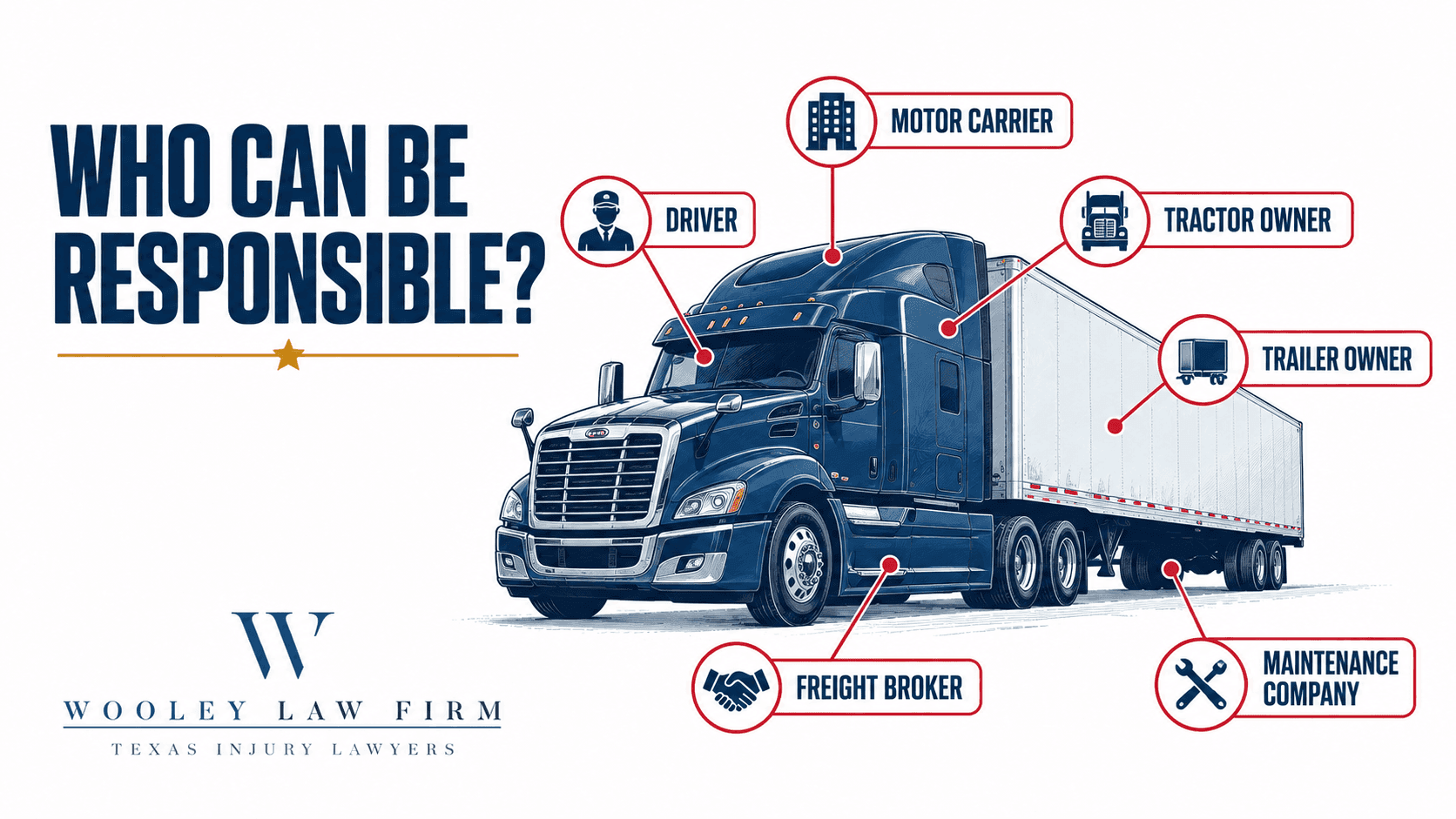
Who May Be Responsible for a Truck Wreck Causing Crush Injuries?
Serious truck collisions often involve more than one responsible person or company.
The Truck Driver
A commercial driver may cause a crushing collision through:
Speeding
Following too closely
Fatigued driving
Distracted driving
Unsafe lane changes
Failure to check blind spots
Running a red light
Driving while impaired
Making an unsafe wide turn
Failing to control speed
Failing to maintain a proper lookout
The Trucking Company
A motor carrier may be responsible for the conduct of its driver and for its own unsafe practices.
Potential company negligence may include:
Hiring an unqualified driver
Inadequate training
Negligent supervision
Retaining an unsafe driver
Pressuring drivers to meet unsafe schedules
Failing to inspect or maintain the truck
Ignoring safety violations
Unsafe dispatch practices
Failure to enforce fatigue policies
A Cargo Loader or Shipper
Improperly loaded or unsecured cargo can cause a rollover, jackknife, cargo spill, or falling-load collision.
Flatbed trucks carrying steel, pipe, lumber, machinery, and construction materials can cause devastating crushing injuries.
Learn more about flatbed truck accidents, cargo securement, and liability.
A Maintenance or Repair Company
A maintenance company may share responsibility when negligent inspection or repair contributes to:
Brake failure
Tire separation
Steering failure
Wheel detachment
Trailer separation
Mechanical breakdown
A Truck or Parts Manufacturer
A defective truck component may cause or worsen the collision.
Potential defects may involve:
Brakes
Tires
Steering systems
Coupling devices
Underride guards
Fuel systems
Trailer components
Other safety equipment
Evidence That Should Be Preserved
The trucking company and its insurer may begin investigating while the injured person is still trapped, hospitalized, or undergoing surgery.
Important evidence may include:
Engine control module data
Electronic logging-device records
GPS and telematics data
Dash-camera footage
Driver-facing camera footage
Dispatch communications
Cellphone records
Driver qualification files
Training records
Hours-of-service logs
Drug and alcohol testing records
Maintenance records
Inspection reports
Cargo-loading records
Bills of lading
Weight tickets
Post-crash inspection materials
Photographs and videos
Surveillance footage
Witness statements
Police body-camera footage
911 recordings
Fire and rescue records
Vehicle-extraction records
Physical vehicle evidence
The damaged vehicles may provide important evidence about passenger-compartment intrusion, underride, roof collapse, seat failure, and the location where the victim became trapped.
Electronic records may be overwritten or lost unless prompt steps are taken to preserve them.
Learn more about the evidence that matters after a Texas 18-wheeler wreck and 18-wheeler black-box data after a Dallas-Fort Worth truck crash.
Medical Evidence Needed for a Crush-Injury Claim
Relevant evidence may include:
Ambulance records
Emergency-room records
Trauma records
Operative reports
Fasciotomy records
Vascular-surgery records
Orthopedic records
Imaging
Blood and urine tests
Kidney-function records
Dialysis records
Wound-care records
Skin-graft records
Rehabilitation records
Prosthetic evaluations
Future-surgery recommendations
Work restrictions
Functional-capacity evaluations
Life-care plans
Photographs may document:
Swelling
Open wounds
Surgical incisions
Fasciotomy wounds
Skin grafts
Scarring
Tissue loss
Amputation
Mobility devices
The medical evidence should explain not only what happened during the emergency, but also how the injuries will affect the victim in the future.
How Insurance Companies Defend Crush-Injury Claims
Even when the injury is catastrophic, the trucking company’s insurer may attempt to limit what it pays.
The insurance company may argue that:
The injured person caused or contributed to the wreck
The driver was not acting within the scope of employment
Some injuries resulted from a preexisting condition
The victim recovered after surgery
Future treatment is unnecessary
An amputation or complication was unrelated to the crash
The victim can return to work
The need for attendant care is exaggerated
The physical impairment is limited
The victim failed to follow medical recommendations
An insurer may offer a settlement before the long-term effects of nerve damage, kidney injury, muscle loss, or reconstructive surgery are known.
Once a settlement and release are completed, the victim generally cannot seek additional compensation because complications later become worse.
What to Do After a Crush Injury Caused by a Truck Wreck
Seek Emergency Medical Treatment
A suspected crush injury requires prompt medical evaluation, particularly when the victim was trapped, pinned, or compressed.
Report Every Symptom
Tell medical providers about:
Severe or worsening pain
Swelling
Tightness
Numbness
Weakness
Reduced movement
Dark urine
Reduced urine output
Chest pain
Abdominal pain
Difficulty breathing
Follow Specialist Recommendations
Attend appointments with orthopedic surgeons, vascular surgeons, kidney specialists, wound-care providers, therapists, and other recommended specialists.
Preserve the Vehicle and Other Evidence
Do not allow the damaged vehicle to be destroyed before it can be inspected when passenger-compartment intrusion or equipment failure may be important.
Photograph the Injuries
Document wounds, swelling, surgeries, skin grafts, scars, mobility devices, and the recovery process.
Keep Financial and Employment Records
Preserve:
Medical bills
Prescription receipts
Transportation expenses
Employment records
Pay information
Work restrictions
Home-care expenses
Equipment estimates
Insurance correspondence
Avoid a Premature Settlement
Do not resolve the claim before understanding the prognosis, future surgery needs, kidney function, functional limitations, and employment consequences.
Contact a Truck Wreck Lawyer Promptly
Early legal involvement can help preserve truck data, video, physical vehicle evidence, and information showing how the victim became trapped or crushed.
How The Wooley Law Firm Handles Crush-Injury Claims
A crush-injury case requires more than submitting hospital bills to an insurance adjuster.
Depending on the facts, The Wooley Law Firm may:
Investigate the collision
Obtain the crash report
Send evidence-preservation demands
Preserve the truck and passenger vehicle
Secure electronic truck data
Identify the driver and motor carrier
Investigate cargo-loading companies
Review driver qualification records
Examine hours-of-service evidence
Obtain maintenance and inspection records
Locate witnesses
Obtain available video footage
Review rescue and extraction records
Analyze medical and surgical records
Document future medical needs
Calculate lost wages
Evaluate reduced earning capacity
Investigate available insurance coverage
Consult qualified experts
File suit when necessary
Prepare the case for trial
The goal is to determine why the wreck happened, identify every responsible party, and show how the crush injuries changed the victim’s health, work, independence, and future.
Dallas-Fort Worth Crush Injury Lawyer
The Wooley Law Firm represents seriously injured people throughout:
Dallas
Fort Worth
Arlington
Irving
Garland
Mesquite
Richardson
Plano
Frisco
McKinney
Allen
Denton
Lewisville
Carrollton
Grand Prairie
Grapevine
Mansfield
Keller
Southlake
North Texas
We also handle serious commercial-truck injury cases throughout Texas.
If you or a loved one suffered crush injuries, compartment syndrome, rhabdomyolysis, kidney damage, nerve injuries, or amputation after an 18-wheeler wreck, call 214-699-6524.
You can also learn more by visiting our Dallas truck accident lawyer page.
Your consultation is free and confidential. You do not pay attorney’s fees unless we obtain a recovery for you.
Frequently Asked Questions About Crush Injuries After Truck Wrecks
What is a crush injury?
A crush injury occurs when excessive force or pressure compresses a body part. It can damage muscles, nerves, blood vessels, bones, and other tissue.
What is the difference between a crush injury and crush syndrome?
A crush injury refers to the local damage caused by compression. Crush syndrome refers to dangerous effects throughout the body caused by extensive muscle breakdown and the release of muscle-cell contents into the circulation.
What is compartment syndrome?
Compartment syndrome occurs when pressure builds to dangerous levels inside a muscle compartment. The pressure can reduce blood flow to nerves and muscles. Acute compartment syndrome is a medical emergency.
Can compartment syndrome cause an amputation?
Yes. If pressure is not relieved promptly, the loss of blood flow may cause permanent muscle and nerve damage, tissue death, and the need for amputation.
What is rhabdomyolysis?
Rhabdomyolysis is the breakdown of skeletal muscle. Crush trauma is one potential cause. The condition may lead to dark urine, weakness, muscle pain, electrolyte problems, and kidney damage.
Can a crush injury cause kidney failure?
Yes. Severe muscle breakdown may release substances into the bloodstream that can damage the kidneys. Some victims may require dialysis.
Can symptoms develop after leaving the crash scene?
Yes. Swelling, compartment pressure, muscle breakdown, internal bleeding, and kidney problems may develop or worsen after the initial collision.
New or worsening symptoms require immediate medical attention.
What if doctors saved my limb but it no longer works normally?
A victim may still have claims for pain, physical impairment, lost earning capacity, future treatment, nerve damage, weakness, and reduced mobility even when amputation was avoided.
Can I recover compensation for future surgeries?
Future surgeries and other medical treatment may be included when supported by appropriate medical evidence and caused by the truck wreck.
Can I recover compensation if I cannot return to my job?
A victim may be able to pursue past lost wages and loss of earning capacity when the crush injury limits or eliminates the ability to perform prior work.
What if I had a prior injury to the same arm or leg?
A prior condition does not automatically prevent recovery. The issue may be whether the truck wreck caused a new injury or aggravated the previous condition.
How long do I have to file a truck-accident claim in Texas?
Texas law imposes deadlines on personal-injury claims. Different or shorter notice requirements may apply when a government-owned truck or public entity is involved.
Important electronic data, video, and physical vehicle evidence may disappear well before the filing deadline, so the investigation should begin promptly.
How much does it cost to hire The Wooley Law Firm?
The Wooley Law Firm handles personal-injury cases on a contingency-fee basis. You pay no upfront attorney’s fee and owe no attorney’s fee unless the firm obtains a recovery for you.
Speak With a Dallas-Fort Worth Truck Wreck Lawyer
A crush injury can destroy muscle, nerves, bones, and blood vessels in seconds.
The victim may be facing emergency surgery, compartment syndrome, kidney damage, chronic pain, permanent impairment, or amputation. Meanwhile, the trucking company and its insurance carrier may already be collecting evidence and building their defense.
You deserve someone protecting your interests.
Call The Wooley Law Firm at 214-699-6524 for a free consultation about crush injuries caused by a Dallas-Fort Worth truck wreck.
You do not pay attorney’s fees unless we win.
Disclaimer:
This article is provided for general informational purposes only and does not constitute medical or legal advice. Crush injuries, compartment syndrome, internal bleeding, rhabdomyolysis, and reduced circulation may be medical emergencies. Call 911 or seek immediate emergency care after a serious collision or when experiencing severe pain, rapid swelling, numbness, weakness, dark urine, reduced urine output, breathing problems, or other concerning symptoms. Reading this article or contacting The Wooley Law Firm does not create an attorney-client relationship. Every case is different, and past results do not guarantee a similar outcome. Legal deadlines may apply, so you should consult a qualified Texas attorney regarding your specific circumstances.
Topics
Share This Article

Andrew J. Wooley
Personal Injury Attorney
Andrew J. Wooley is a dedicated personal injury attorney based in Dallas, Texas. He focuses on helping accident victims recover fair compensation for their injuries. With a commitment to personalized service, Andrew works directly with each client to understand their unique situation and fight for their rights.