After a serious 18-wheeler wreck in Dallas, the truck driver's mistake may be only part of the story.
The trucking company may have hired a driver with a troubling safety history. It may have failed to investigate prior crashes or driving violations. It may have ignored warning signs after hiring the driver. Or it may have allowed a driver to remain behind the wheel despite repeated safety problems.
That raises an important question:
Can a trucking company be held responsible for hiring or keeping an unsafe truck driver?
Depending on the facts and Texas law applicable to the case, the company's hiring, retention, supervision, training, and safety practices may become important parts of a Dallas truck-wreck investigation.
Federal motor-carrier regulations also require covered motor carriers to investigate certain driver qualifications and safety history and maintain specific driver records.
If you were seriously injured by a commercial truck, our Dallas truck accident lawyer page explains how The Wooley Law Firm investigates serious 18-wheeler wrecks throughout Dallas and North Texas.
What Is Negligent Hiring in a Dallas Truck Accident Case?
Negligent hiring generally focuses on what a trucking company knew or reasonably should have discovered before putting a driver behind the wheel.
A commercial truck driver may operate an 18-wheeler weighing many times more than the passenger vehicles traveling beside it.
Hiring a commercial driver should therefore involve more than simply asking whether the applicant has a driver's license.
Depending on the driver and trucking operation involved, a motor carrier may need to investigate information concerning the driver's:
Commercial driver's license;
Motor vehicle record;
Prior driving history;
Previous commercial driving employment;
Prior crashes;
Safety-performance history;
Drug and alcohol testing history;
Medical qualification;
Road-test qualification; and
Other information required by applicable federal regulations.
If a serious Dallas truck accident occurs, these records can help answer a critical question:
Was there information available before the driver was hired that should have raised safety concerns?
This is different from simply asking whether the truck driver caused the collision. Our related article explains the broader question of whether you can sue the trucking company after a Dallas 18-wheeler wreck.
What Is a Driver Qualification File?
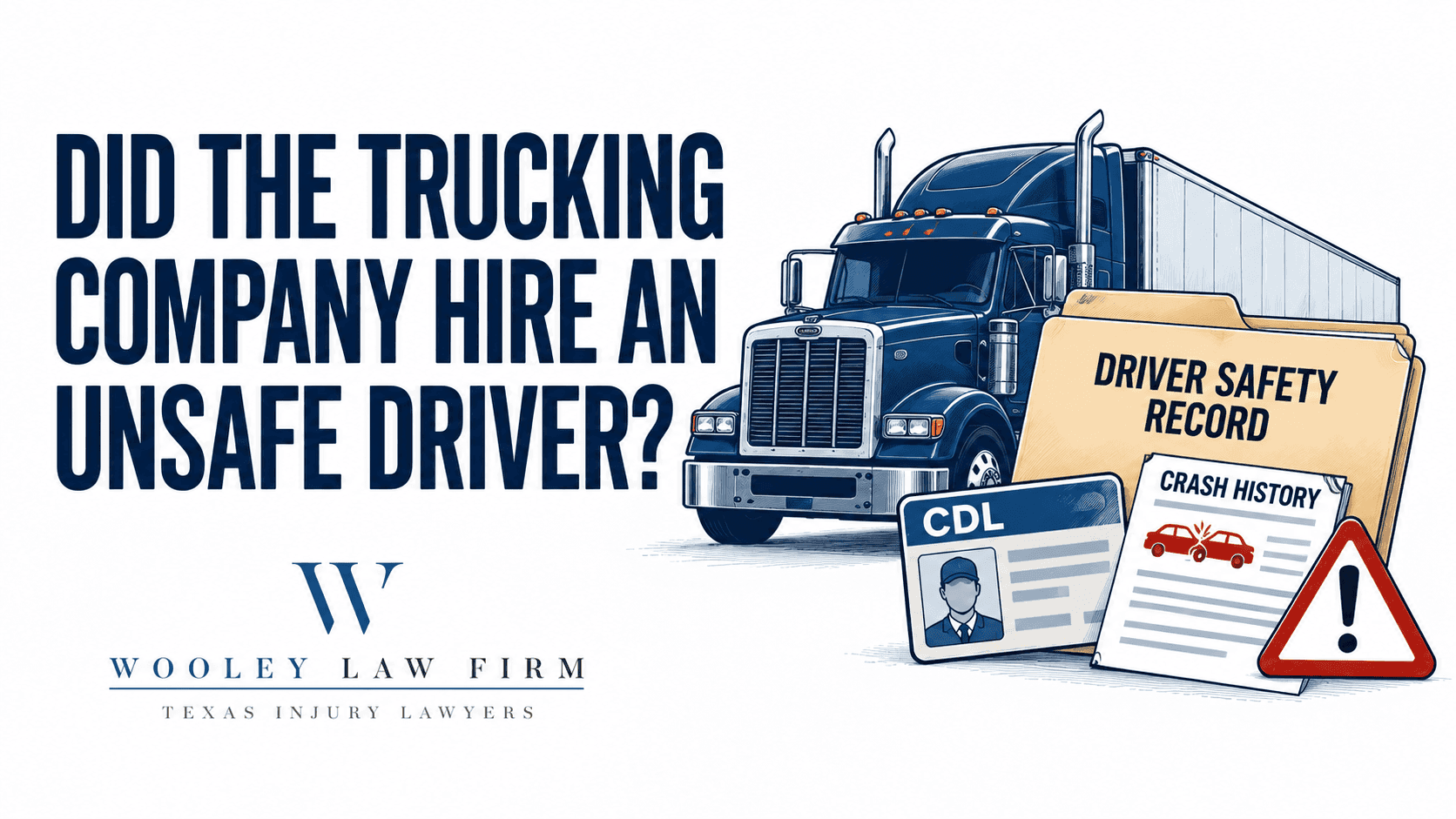
One of the most important records in a truck-wreck investigation may be the driver's Driver Qualification File, often called the DQ file.
Federal regulations require covered motor carriers to maintain qualification files for drivers they employ.
Depending on the circumstances, a driver's qualification records may include items such as:
The driver's employment application;
Motor vehicle records obtained from licensing authorities;
Road-test documentation or an accepted equivalent;
Medical qualification information; and
Records relating to required reviews of the driver's driving history.
A DQ file can help establish what information the trucking company collected before or during the driver's employment.
But sometimes what is missing can be as important as what is present.
If the carrier failed to obtain required information, failed to investigate prior safety history, or ignored information suggesting that a driver could pose a safety risk, those facts may deserve additional investigation.
The DQ file is only one category of evidence. Our guide to evidence that can help prove an 18-wheeler wreck case discusses driver files, electronic data, inspection records, maintenance records, cameras, dispatch communications, and other evidence that may exist after a truck collision.
Trucking Companies Must Investigate Certain Prior Driving History
Federal regulations require covered motor carriers to conduct specific investigations and inquiries concerning drivers they employ.
For example, 49 C.F.R. § 391.23 generally requires an inquiry into the driver's motor vehicle record for the preceding three years and an investigation of safety-performance history with certain prior Department of Transportation-regulated employers.
That prior safety history can include important information concerning previous commercial-truck crashes.
This matters after a Dallas 18-wheeler wreck because the question may not simply be whether the driver made a mistake that day.
The investigation may reveal that the driver had a history of similar problems before the collision.
Why Prior Crashes Can Matter
Imagine a trucking company hires a driver who later rear-ends stopped traffic on I-635 in Dallas.
The truck driver says traffic stopped unexpectedly.
But the driver's prior records reveal previous preventable rear-end crashes involving following too closely or failing to control speed.
That history could raise questions such as:
Did the trucking company know about the prior crashes?
Should it have discovered them during the hiring process?
Did anyone review the driver's safety record?
Was additional training required?
Did the company monitor the driver after hiring?
Were there later incidents that should have prompted discipline or retraining?
Why was the driver allowed to continue operating an 18-wheeler?
Prior crashes do not automatically prove liability for a later wreck. But they can be an important part of understanding what the trucking company knew about its driver.
If the collision involved a truck striking the back of your vehicle, our guide to being rear-ended by an 18-wheeler in Dallas explains the driver, company, braking, electronic-data, and preservation issues that can arise in these cases.
Why the Truck Driver's License History Matters
A commercial driver's license history may reveal warning signs that deserve closer examination.
Depending on the circumstances, relevant records could show:
Suspensions;
Disqualifications;
Serious traffic violations;
Speeding citations;
Reckless-driving incidents;
Failure-to-yield violations;
Following-too-closely citations;
Out-of-service issues; or
Other driving-related problems.
The important question after a truck wreck is often:
What did the trucking company know—or what should its required investigation have revealed—before allowing this driver onto the road?
A company may claim that a wreck resulted from a one-time mistake. The driver's actual history may tell a more complete story.
Drug and Alcohol History Can Also Be Important
Commercial motor carriers and drivers are subject to federal drug and alcohol testing rules in qualifying operations.
Depending on the circumstances, an investigation may examine:
Pre-employment controlled-substance testing;
Random testing;
Post-accident testing;
Reasonable-suspicion testing;
Prior positive tests;
Prior refusals to test;
Return-to-duty requirements; and
Whether the driver was prohibited from performing safety-sensitive functions.
A company that ignored disqualifying information or allowed a prohibited driver to operate a commercial motor vehicle can present very different issues from a company confronted with a driver who had no prior warning signs.
Our detailed article about drug and alcohol testing rules for 18-wheeler drivers discusses pre-employment testing, post-crash testing, random testing, the FMCSA Clearinghouse, and evidence that may reveal whether a trucking company allowed an unsafe driver to remain on the road.
Injured in an Accident?
Free consultation. Tell us what happened and learn what options may be available.
What Is Negligent Retention?
Negligent hiring generally focuses on what the company knew or should have discovered before hiring the driver.
Negligent retention focuses more heavily on what happened after the driver was hired.
A driver may initially appear qualified but later develop a troubling safety record.
For example, after hiring a driver, a trucking company might learn of:
Preventable crashes;
Repeated speeding violations;
Hours-of-service problems;
Complaints about unsafe driving;
Failed inspections;
Drug or alcohol violations;
Distracted-driving incidents;
Repeated unsafe lane changes;
Company policy violations; or
Other dangerous conduct.
Those events can create an important question:
At what point should the trucking company have taken the driver off the road?
A carrier's response to repeated safety problems may become just as important as what it knew when the driver was originally hired.
What Is Negligent Supervision?
Commercial drivers spend much of their working day away from a terminal or direct supervisor.
That does not mean their conduct is invisible.
Modern trucking companies may have access to substantial information about how a driver operates, including:
GPS data;
Electronic logging devices;
Telematics;
Speed information;
Hard-braking events;
Forward-facing cameras;
Driver-facing cameras;
Dispatch communications;
Collision-warning systems;
Electronic safety alerts; and
Inspection results.
These systems can sometimes show a pattern developing long before a serious collision.
Suppose a carrier repeatedly receives alerts showing speeding, hard braking, or unsafe following distance but takes no meaningful action.
If the same driver later causes a serious collision involving similar conduct, the company's supervision and response to those prior warnings may deserve close examination.
Our article about 18-wheeler black-box data after a Dallas-Fort Worth truck wreck explains how ECM/EDR information, ELD records, GPS, telematics, and onboard cameras may help show how a truck and driver were operating before a collision.
What Is Negligent Training?
A commercial driver's license does not necessarily mean a driver is prepared for every truck, route, load, or driving condition.
Depending on the trucking operation and circumstances, driver training may become an issue involving subjects such as:
Safe following distance;
Proper lane changes;
Blind spots;
Defensive driving;
Speed control;
Emergency braking;
Fatigue management;
Hours-of-service compliance;
Distracted driving;
Vehicle inspections;
Cargo considerations;
Driving in rain or poor weather; and
Operating particular commercial equipment.
Dallas presents demanding conditions for commercial drivers.
An 18-wheeler traveling through I-35E, I-30, I-20, I-45, I-635, U.S. 75, or Loop 12 may encounter heavy traffic, construction, merging vehicles, sudden slowdowns, and stop-and-go congestion.
A trucking company's training records may help show how it prepared a driver to handle the type of maneuver or driving situation that ultimately caused the wreck.
Unsafe Lane Changes Can Raise Training and Supervision Questions
Lane-change wrecks are a good example.
A tractor may clear another vehicle while the trailer is still beside it. A driver who does not properly monitor mirrors and blind spots can move the trailer directly into a passenger vehicle.
If an unsafe lane change causes a serious Dallas truck wreck, the investigation should address what the driver did.
But it may also be appropriate to examine:
The driver's prior lane-change incidents;
Training on blind spots;
Mirror use;
Digital-mirror systems;
Previous complaints;
Onboard-camera footage;
Safety alerts; and
Whether the carrier previously counseled or disciplined the driver.
Our guide explaining what truck drivers should do before changing lanes in Dallas discusses mirror checks, blind spots, signaling, trailer clearance, and why the trucking company's training may become important after an unsafe lane-change crash.
If the truck changed lanes and triggered collisions involving several vehicles, also see our article about an 18-wheeler lane change causing a multi-vehicle wreck in Dallas.
What Did the Trucking Company Know—or What Should It Have Known?
This is often the central question in a negligent-hiring or negligent-retention investigation.
Suppose the driver's file contains:
Multiple prior commercial-vehicle crashes;
Serious speeding violations;
A suspended or restricted license;
Failed drug testing;
Prior safety complaints;
Repeated hours-of-service violations; or
Disciplinary records from previous employers.
The existence of those records does not automatically determine the outcome of a case.
But they can dramatically change the investigation.
A truck-wreck lawyer may need to determine:
When did the carrier receive this information?
Who reviewed it?
What did the company do about it?
Did the carrier follow its own safety policies?
Did it conduct the investigation required by federal regulations?
Did someone approve the driver despite known concerns?
Did the company later receive additional warnings and still allow the driver to drive?
These questions move the investigation beyond the driver's conduct during the few seconds before impact and toward the trucking company's decisions before the wreck ever occurred.
Evidence to Request After a Truck Wreck Involving an Unsafe Driver
Potentially important evidence may include:
Complete Driver Qualification File;
Employment application;
Motor vehicle records;
CDL records;
Prior-employer inquiries;
Prior crash history;
Safety-performance history;
Road-test documentation;
Medical qualification records;
Training records;
Disciplinary records;
Safety complaints;
Driver scorecards;
Written warnings;
Drug and alcohol testing records;
Clearinghouse-related records when applicable;
Hours-of-service records;
Electronic logging-device records;
Dispatch communications;
Telematics;
Dash-camera footage;
Driver-facing camera footage; and
Company safety policies.
The trucking company may possess many of these records before the injured person even knows they exist.
That is one reason evidence preservation can be so important after a serious 18-wheeler accident.
For a broader discussion of what should be investigated and preserved, see our article on evidence that can help prove an 18-wheeler accident case.
Texas Law Has Special Rules for Negligent-Hiring Claims in Commercial Truck Cases
Texas commercial-motor-vehicle cases have special procedural rules under Chapter 72 of the Texas Civil Practice and Remedies Code.
If an employer stipulates that the driver was its employee and was acting within the scope of employment at the time of the collision, Texas law can affect how certain ordinary-negligence theories against the employer are handled.
The particular claims and evidence available depend on the facts of the wreck and the procedural posture of the lawsuit.
The practical point for an injured person is that negligent hiring should not be treated as a generic allegation.
The driver's actual safety history, qualification records, violations, and the trucking company's investigation should be examined before deciding what claims the evidence supports.
Could the Trucking Company's Conduct Amount to Gross Negligence?
In some cases, the evidence may suggest more than an ordinary hiring mistake.
For example, an investigation could reveal that a company knew a driver posed a serious safety risk but consciously allowed the driver to continue operating anyway.
Whether conduct rises to the level of gross negligence and could support exemplary damages is a much higher and highly fact-specific legal question.
Potentially important evidence could include:
Repeated safety warnings;
Serious known violations;
Management communications;
Prior crashes;
Driver disciplinary history;
Internal safety reports; and
Decisions by management personnel after learning about a known danger.
Not every negligent-hiring case involves gross negligence.
But if the company's own records show serious known risks that were repeatedly ignored, that evidence may deserve close examination.
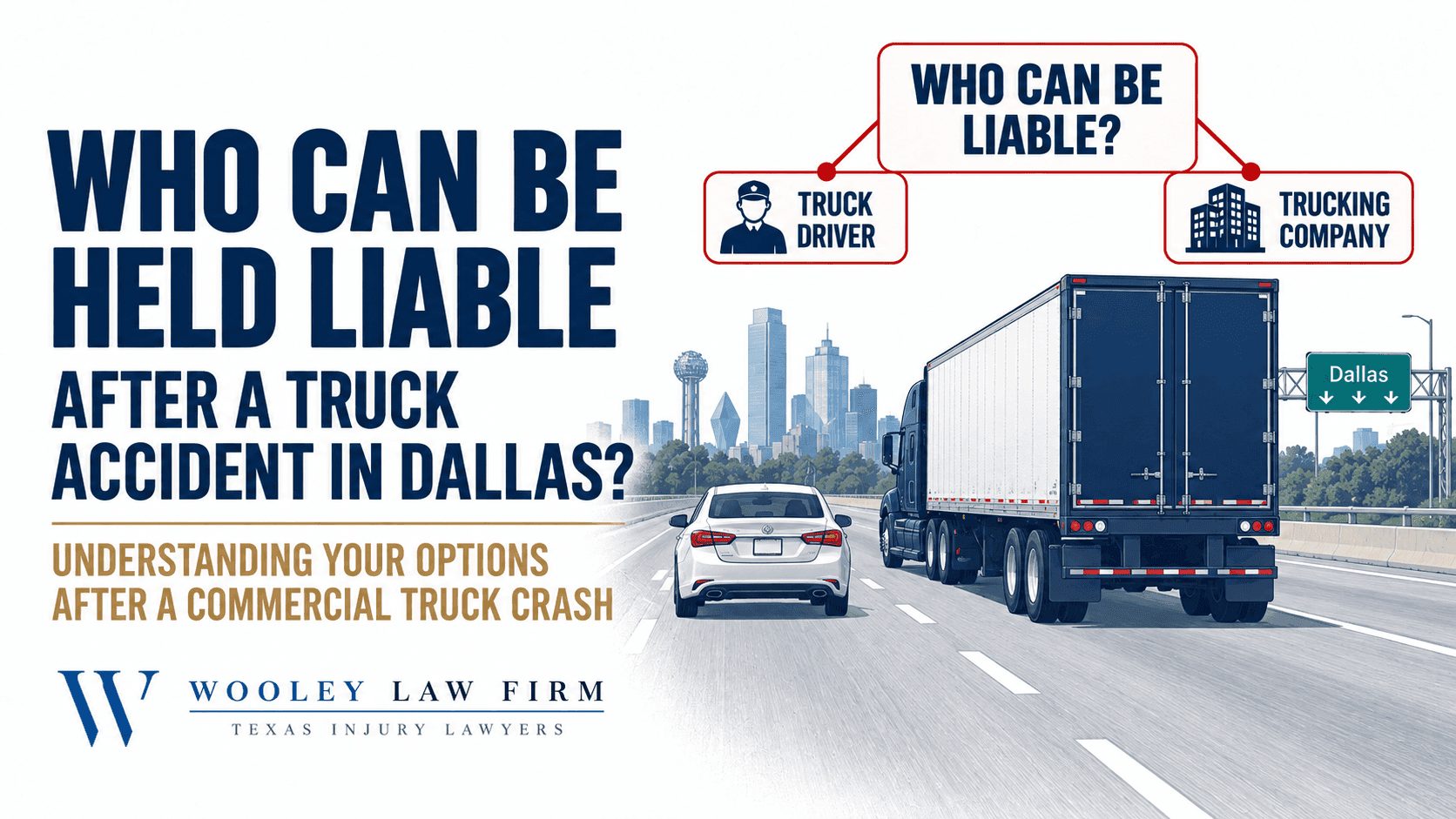
Can I Sue the Truck Driver and the Trucking Company?
Potentially.
The driver's negligence and the trucking company's potential responsibility raise related but different questions.
The driver may have caused the immediate collision by speeding, following too closely, making an unsafe lane change, driving distracted, or violating another safety rule.
The trucking company may potentially be responsible for the driver's conduct under principles of vicarious liability when the applicable legal requirements are satisfied. The carrier's own conduct may also become important depending on the evidence and Texas law.
Our broader article on suing a trucking company after a Dallas 18-wheeler wreck explains other ways a motor carrier's liability may become an issue after a serious commercial-truck collision.
Frequently Asked Questions About Negligent Hiring After a Dallas Truck Wreck
What is in an 18-wheeler driver's qualification file?
Depending on the driver and applicable regulations, the file may contain the driver's employment application, motor vehicle records, road-test documentation, medical qualification information, and other records required by federal regulations.
Can I find out whether the truck driver had prior accidents?
Potentially. Federal motor-carrier regulations require certain investigations of a driver's previous safety-performance history. Discovery in a lawsuit may also reveal other records concerning prior crashes, depending on relevance and applicable procedural and evidentiary rules.
What if the truck driver had prior speeding tickets?
Prior violations may be relevant to investigating the driver's qualifications and what the trucking company knew. The significance and admissibility of a particular violation depend on the circumstances.
What if the trucking company knew the driver had already caused crashes?
That can be important evidence. The investigation should determine what the company knew, when it learned the information, how similar the prior incidents were, and what the carrier did in response.
Can a trucking company be responsible for failing to train a driver?
Potentially, depending on the facts and applicable Texas law. Training records may become important when a collision appears connected to an area in which the driver lacked adequate instruction or demonstrated previous safety problems.
What is negligent retention?
Negligent retention generally concerns a company's decision to continue employing or using a driver after learning information suggesting that the driver may pose an unreasonable safety risk.
Why should the driver qualification file be preserved quickly?
Driver records can be central to determining what a motor carrier knew about its driver. Preservation should be addressed early so potentially relevant records and electronic evidence can be identified before they are lost, overwritten, or otherwise become more difficult to obtain.
Injured by an Unsafe Truck Driver in Dallas?
A serious truck wreck should not be investigated as though it were simply a larger car accident.
If an unsafe driver caused the collision, an important question may be:
Why was that driver behind the wheel of an 18-wheeler in the first place?
At The Wooley Law Firm, we investigate both the truck driver and the trucking company after serious Dallas 18-wheeler wrecks.
That investigation may include the driver's qualification file, employment history, prior crashes, license history, safety violations, training records, drug and alcohol records, electronic logs, dispatch communications, cameras, telematics, and the trucking company's own safety records.
Learn more about our approach to these cases on our Dallas 18-wheeler accident lawyer page.
If you or a family member was seriously injured in a commercial-truck collision in Dallas or the Dallas-Fort Worth area, call (214) 699-6524 for a free consultation.
You don't pay unless we win.
Disclaimer
This article is for general informational purposes only and is not legal advice. Reading it does not create an attorney-client relationship. Every case is different.
Topics
Share This Article

Andrew J. Wooley
Personal Injury Attorney
Andrew J. Wooley is a dedicated personal injury attorney based in Dallas, Texas. He focuses on helping accident victims recover fair compensation for their injuries. With a commitment to personalized service, Andrew works directly with each client to understand their unique situation and fight for their rights.