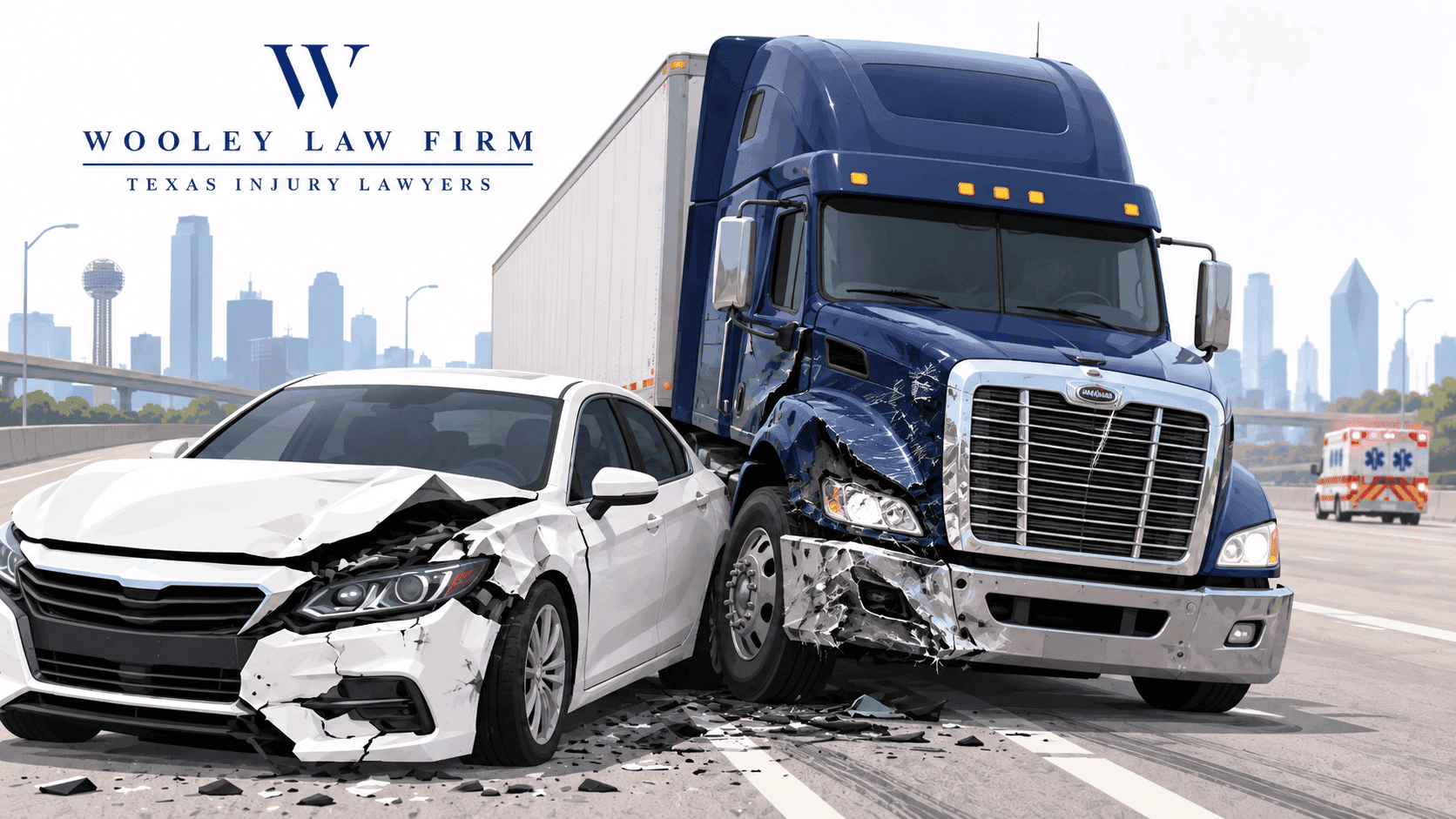
If you were hit by what looked like an 18-wheeler without a trailer attached, you may wonder whether your collision is really considered a truck accident.
It can be.
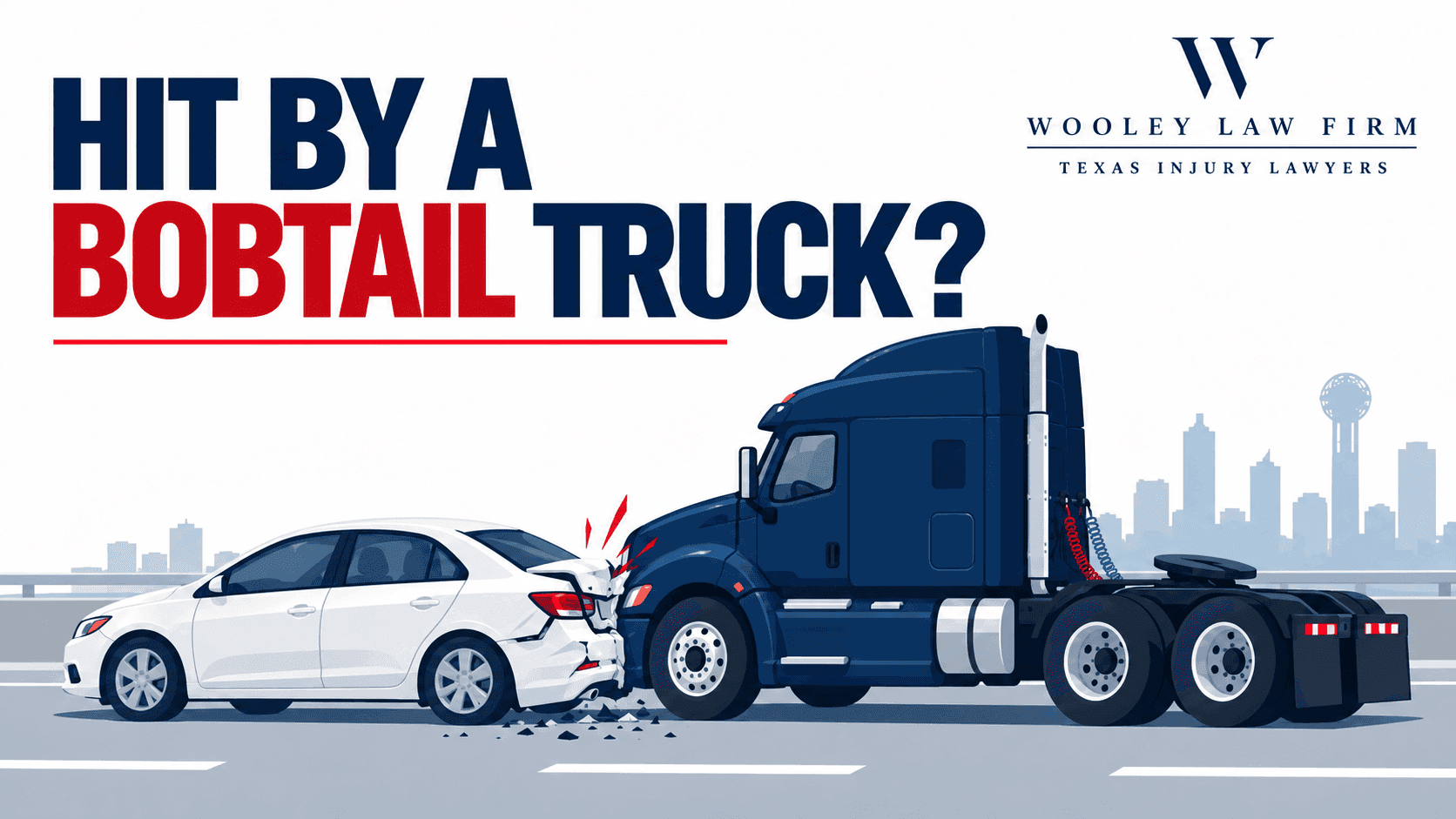
The vehicle you saw was likely a bobtail truck, a semi-truck tractor operating without a trailer. Even though it was not pulling a 53-foot trailer at the time of the collision, the tractor may still be a commercial vehicle operated by a trucking company or motor carrier.
That distinction matters.
A serious Dallas bobtail truck accident may involve evidence and insurance issues that would not normally exist in an ordinary car wreck. The investigation may need to identify the motor carrier responsible for the tractor, determine who owned or leased it, preserve electronic truck data, investigate the driver's employment or contractor relationship, and obtain inspection, brake, tire, and maintenance records.
If you were seriously injured by a bobtail, semi tractor, or other commercial truck in Dallas, The Wooley Law Firm's Dallas truck accident lawyer page explains more about how commercial-truck cases may differ from ordinary car-accident claims.
What Is a Bobtail Truck?
In the trucking industry, bobtailing generally refers to operating a tractor without a trailer attached.
Picture a normal tractor-trailer.
Now remove the trailer.
The remaining tractor—with the engine, cab, drive axles, fifth wheel, fuel tanks, air-brake system, and other equipment—is commonly called a bobtail when driven by itself.
You may also hear people describe the same vehicle as:
A semi without a trailer
A semi tractor without a trailer
A tractor without a trailer
A bobtail semi
A bobtail tractor
An 18-wheeler cab without a trailer
A commercial tractor
A truck tractor
People injured in these crashes may never hear the word "bobtail" until after the wreck. They may simply tell the police or their insurance company, "I was hit by a semi with no trailer."
The terminology should not distract from the important question:
Who was operating and responsible for the tractor when the collision occurred?
Is a Bobtail Accident Still a Commercial Truck Accident?
Potentially, yes.
The fact that a tractor was not pulling a trailer does not automatically transform it into an ordinary passenger vehicle.
The investigation should determine how the tractor was being used at the time of the crash, who owned it, which motor carrier had authority over it, what the driver was doing, and what insurance applied.
For example, a driver might be bobtailing:
To pick up a trailer;
After dropping off a trailer;
Between loads;
Back to a trucking terminal;
To or from a repair facility;
To a truck stop;
To a parking or storage location;
Under dispatch from a motor carrier; or
For a personal purpose unrelated to a load.
Those facts can become important when determining which company and which insurance policy may be responsible for the collision.
Why Bobtail Truck Wrecks Can Cause Serious Injuries
A tractor without its trailer may look much smaller than a complete 18-wheeler, but it is still a large piece of commercial equipment.
The tractor itself contains a heavy diesel engine, transmission, fuel tanks, axles, wheels, frame, fifth-wheel assembly, and commercial cab.
A collision between that tractor and a passenger car, pickup, motorcycle, pedestrian, or cyclist can result in serious injuries.
Depending on the type of impact, injuries may include:
Traumatic brain injuries;
Concussions;
Neck and back injuries;
Herniated or bulging discs;
Spinal injuries;
Broken bones;
Shoulder injuries;
Knee injuries;
Internal injuries;
Crush injuries;
Scarring;
Permanent impairment; and
Wrongful death.
A bobtail collision should not be dismissed as a minor wreck merely because there was no trailer attached.
Bobtail Trucks Can Handle Differently Without a Trailer
A tractor operating without a trailer is not simply a shorter version of the same tractor-trailer combination.
Removing the trailer changes the vehicle's weight distribution and operating characteristics.
That is particularly important when investigating braking, traction, steering, speed, and loss-of-control collisions.
A driver who routinely operates a fully loaded tractor-trailer should understand that the tractor may respond differently when operating alone.
After a bobtail accident, investigators may need to determine:
How fast the tractor was traveling;
Whether the driver was following too closely;
When the driver began braking;
Whether the tractor lost traction;
Whether the driver braked aggressively;
Whether the tractor skidded;
Whether the driver lost directional control;
Whether the tires were properly maintained;
Whether the brakes were properly adjusted and functioning; and
Whether electronic safety systems activated before the collision.
These questions become especially important after a rear-end crash or loss-of-control wreck.
Why Braking Evidence Is Especially Important in a Bobtail Accident
A tractor-trailer combination normally has braking systems on both the tractor and trailer.
A bobtail has no trailer brakes available because there is no trailer attached.
That makes the condition and operation of the tractor's braking system especially important when determining why the vehicle did or did not stop.
Federal motor-carrier regulations contain detailed requirements concerning commercial-vehicle brakes, inspection, repair, and maintenance. Motor carriers are also generally required to systematically inspect, repair, and maintain commercial motor vehicles under their control.
After a serious Dallas bobtail accident, the investigation may examine:
Brake inspection records;
Brake adjustment;
Brake chambers;
Brake linings or pads;
Drums or rotors;
Slack adjusters;
Air lines and hoses;
Air-pressure problems;
Warning lights;
Diagnostic fault codes;
Previous brake complaints;
Roadside inspection reports;
Repair invoices; and
Post-crash brake inspections.
If the driver says, "The brakes didn't work," that should usually begin the mechanical investigation—not end it.
Our article about brake failure after a Dallas 18-wheeler accident explains the maintenance and inspection evidence that may become important when a commercial driver blames the truck's brakes for a collision.
The Tractor's Maintenance History Can Tell a Story
Because a bobtail wreck involves the tractor itself, investigators should determine exactly how that tractor had been maintained before the collision.
Federal regulations generally require motor carriers to systematically inspect, repair, and maintain vehicles subject to their control.
Important records may include:
Preventive-maintenance schedules;
Inspection reports;
Repair orders;
Driver-reported defects;
Brake repairs;
Tire replacements;
Steering repairs;
Suspension work;
Alignment records;
Diagnostic reports;
Roadside inspection history;
Out-of-service violations;
Annual inspection records; and
Invoices from outside repair facilities.
The timeline matters.
A repair invoice from six months earlier may mean little by itself. But repeated complaints about the same braking or steering problem followed by another repair immediately before the crash could raise very different questions.
Maintenance evidence should be connected to what actually happened in the wreck.
Injured in an Accident?
Free consultation. Tell us what happened and learn what options may be available.
Tire Evidence May Also Matter
Bobtail tractors depend on their tires for braking, steering, and traction.
After a loss-of-control accident, investigators may need to examine:
Tread depth;
Tire pressure;
Uneven wear;
Tire age;
Prior repairs;
Cuts or damage;
Mismatched tires;
Alignment issues; and
Whether a tire failed before or because of the collision.
The physical tires may be more useful than photographs alone.
If a damaged tire is discarded or replaced before an inspection occurs, potentially important evidence can disappear.
The Truck's Black Box May Show What Happened
Modern commercial tractors can generate substantial electronic evidence.
The absence of a trailer does not make that evidence disappear.
Depending on the tractor and its installed systems, electronic information may include:
Vehicle speed;
Engine RPM;
Throttle position;
Brake application;
Hard-braking events;
Cruise-control status;
GPS location;
Telematics information;
Fault codes;
Engine information;
Collision alerts; and
Other operational data.
Our guide to 18-wheeler black-box data after a Dallas-Fort Worth truck wreck explains how ECM, event, GPS, telematics, camera, and other electronic information may help reconstruct a commercial-truck collision.
That evidence can be particularly important if the driver says:
"I wasn't speeding."
"I hit the brakes immediately."
"The car stopped suddenly."
"The brakes failed."
"The other driver cut me off."
Electronic data may provide objective information that can be compared against those statements.
Did the Bobtail Have Automatic Emergency Braking?
Some newer commercial tractors are equipped with collision-warning and automatic emergency braking technology.
Depending on the system, an investigation may reveal information about whether the tractor:
Detected traffic ahead;
Issued a forward-collision warning;
Automatically applied braking;
Recorded a hard-braking event;
Generated a system fault;
Had a collision-mitigation system disabled; or
Recorded speed changes before impact.
This information can be particularly important when a bobtail rear-ends a vehicle stopped in Dallas traffic.
Our article about automatic emergency braking data after a truck wreck explains how this technology may help establish when a commercial truck detected a hazard and how the driver responded.
How Do You Identify the Trucking Company Behind a Bobtail?
This can be one of the most important issues after a bobtail accident.
When a trailer is attached, people often photograph the entire tractor-trailer and assume the company name they see identifies everyone involved.
A bobtail gives you fewer clues.
But the tractor itself may display important identifying information.
After a collision, photographs should capture as much of the tractor as safely possible, including:
Company name;
USDOT number;
MC number, if displayed;
License plate;
Unit number;
VIN, if available;
Cab markings;
Door lettering;
Logos; and
Any leasing or ownership information.
A USDOT number can be particularly useful when identifying the motor carrier associated with a commercial vehicle.
The Federal Motor Carrier Safety Administration maintains public motor-carrier information that can assist in identifying trucking companies and their operating information.
Do not assume that the company logo on the driver's shirt or even the name printed on the truck tells the entire story.
The Tractor Owner and Motor Carrier May Be Different Companies
Commercial trucking relationships can be complicated.
The driver may own the tractor.
A leasing company may own it.
The driver may lease the tractor from another company.
The tractor may be leased to a motor carrier.
The motor carrier may control dispatch while the owner-operator remains responsible for certain maintenance.
A separate maintenance company may perform repairs.
That means an investigation may need to answer several different questions:
Who owned the tractor?
Who leased it?
Which motor carrier was operating it?
Who employed or contracted with the driver?
Who dispatched the driver?
Who was responsible for maintenance?
What was the driver doing when the collision occurred?
Our guide to truck owner and leasing-company liability after a Dallas truck wreck explains why tractor ownership, leasing arrangements, carrier control, and maintenance responsibilities should be investigated separately.
What Insurance Covers a Bobtail Truck Accident?
Insurance can become more complicated when a tractor is operating without a trailer.
The answer may depend on why the driver was bobtailing and what relationship existed between the driver, tractor owner, and motor carrier at the time.
Potentially relevant coverage may include a motor carrier's commercial auto liability policy and, depending on the circumstances and policy language, other commercial coverage associated with the owner-operator or tractor.
You may also hear terms such as:
Bobtail insurance
Non-trucking liability insurance
Commercial auto insurance
Motor carrier liability insurance
These terms should not automatically be treated as interchangeable.
For example, a policy marketed as non-trucking liability coverage may turn on whether the tractor was being used in the business of a motor carrier at the time of the crash. The actual policy language and the facts surrounding the trip matter.
The question is not simply:
"Was a trailer attached?"
The better questions include:
Why was the driver operating the tractor?
For whom was the driver operating it?
Was the driver under dispatch?
Had the driver just completed a delivery?
Was the driver traveling to pick up another trailer or load?
Was the trip for a business or personal purpose?
Those facts may affect which insurer or insurers should receive the claim.
What If the Driver Says He Was "Off Duty"?
A driver saying "I was off duty" does not necessarily resolve who may be responsible for a bobtail accident.
Hours-of-service status and the legal question of whose business the driver was furthering are not necessarily the same issue.
The investigation may need to examine:
Electronic logging device records;
Dispatch records;
GPS history;
Trip assignments;
Load information;
Delivery records;
Text messages;
Driver communications;
Fuel purchases;
Toll records;
Lease agreements; and
The driver's destination.
Suppose a driver had just dropped a trailer in Dallas and was bobtailing directly to another facility to pick up the next trailer.
That situation may raise different insurance and carrier-responsibility questions than a driver using the tractor for a purely personal trip.
Who May Be Responsible for a Dallas Bobtail Truck Accident?
Responsibility depends on the evidence, but potentially involved parties can include:
The Truck Driver
A driver may be responsible for negligent conduct such as speeding, distraction, unsafe lane changes, following too closely, failing to maintain a proper lookout, or failing to control the tractor.
The Motor Carrier or Trucking Company
Depending on the relationship and facts, the motor carrier may face claims involving the driver's operation of the tractor or the company's own conduct.
Our article on suing the trucking company after a Dallas 18-wheeler wreck discusses some of the evidence used to investigate the company behind a commercial driver.
The Tractor Owner or Leasing Company
Ownership and maintenance responsibilities should be examined rather than assumed.
A Maintenance or Repair Company
If a brake, tire, steering, or other mechanical problem contributed to the wreck, records may show that an outside repair facility recently inspected or worked on the tractor.
A Component Manufacturer
In some cases, an actual product defect may require investigation of the manufacturer or supplier of a failed component.
The facts determine which parties should be investigated.
Evidence to Preserve After a Bobtail Truck Accident
A bobtail truck case can change quickly if the tractor returns to service.
Important evidence may include:
The physical tractor;
Engine control module or event data;
GPS and telematics records;
Forward-facing camera footage;
Driver-facing camera footage;
Collision-warning information;
Automatic emergency braking data;
Electronic logging device records;
Driver logs;
Dispatch communications;
Cellphone evidence where appropriate;
Driver qualification records;
Training records;
Tractor inspection records;
Brake inspection and repair records;
Tire records;
Maintenance history;
Roadside inspection reports;
Lease agreements;
Tractor ownership documents;
Insurance policies;
Driver-motor carrier agreements;
Post-crash photographs;
Police photographs;
Dash-camera footage;
Witness statements; and
Tow and repair records.
Electronic information can potentially be overwritten. Physical components can be replaced. The tractor can be repaired and returned to service.
That is why preservation can become important early in a serious commercial-truck injury case.
Do Not Forget the Tractor Just Because There Was No Trailer
A bobtail accident can actually make certain parts of the investigation more focused.
There is no need to determine whether a separate trailer's brakes failed.
There is no trailer owner to identify unless a trailer relationship is otherwise relevant.
There is no cargo load affecting the trailer at the moment of impact.
Instead, attention can focus directly on the tractor and the companies responsible for it:
Who owned it?
Who operated it?
Who controlled it?
Who maintained it?
Were its brakes working?
Were its tires safe?
What does its electronic data show?
Where was the driver going?
Why was the driver bobtailing?
Which motor carrier was involved?
Which insurance policies applied?
Those questions can turn what initially appears to be "a semi without a trailer" into a much more complete commercial-truck investigation.
Frequently Asked Questions About Dallas Bobtail Truck Accidents
What does bobtail mean in trucking?
Bobtailing generally refers to a truck tractor operating without a trailer attached. Someone may also describe it as a semi without a trailer, tractor without a trailer, or bobtail semi.
Is a bobtail the same thing as an 18-wheeler?
A bobtail is generally the tractor portion of what people commonly call an 18-wheeler. When the trailer is disconnected, the tractor can operate by itself.
Can I sue after being hit by a bobtail truck?
Potentially. Whether a claim exists and who may be responsible depend on how the collision occurred and the relationships among the driver, motor carrier, tractor owner, leasing company, maintenance providers, and insurers.
Does the trucking company's insurance still apply if there was no trailer?
It may, depending on the circumstances and policy language. The reason the driver was operating the tractor and the driver's relationship with the motor carrier can be important. Other commercial policies may also need to be investigated.
What if the bobtail truck driver says the brakes failed?
That makes the tractor's inspection and maintenance history particularly important. Investigators may examine brake components, prior defects, repair records, inspection reports, electronic data, fault codes, and the physical tractor.
Does a bobtail truck have a black box?
Commercial tractors may contain multiple electronic systems capable of recording information. Depending on the truck and installed technology, investigators may obtain speed, braking, throttle, engine, GPS, telematics, camera, collision-warning, or other information.
Should the bobtail tractor be inspected after a serious crash?
When vehicle condition, braking, tires, steering, or mechanical failure may be relevant, preserving and inspecting the tractor before significant repairs can be important. The appropriate inspection depends on the circumstances of the collision.
Dallas Bobtail Truck Accident Lawyer
If you were injured by a semi truck without a trailer in Dallas, do not assume it is just another car-accident claim.
The tractor may be connected to a motor carrier, owner-operator, leasing company, maintenance company, and multiple layers of commercial insurance. It may also contain electronic evidence showing speed, braking, GPS location, warnings, and what happened immediately before the collision.
The Wooley Law Firm investigates serious bobtail, tractor-trailer, 18-wheeler, and commercial-truck accidents throughout Dallas-Fort Worth and Texas.
Call (214) 699-6524 for a free consultation. You don't pay unless we win.
Disclaimer
This article is for general informational purposes only and is not legal advice. Reading it does not create an attorney-client relationship. Every case is different, and past results do not guarantee a similar outcome.
Topics
Share This Article

Andrew J. Wooley
Personal Injury Attorney
Andrew J. Wooley is a dedicated personal injury attorney based in Dallas, Texas. He focuses on helping accident victims recover fair compensation for their injuries. With a commitment to personalized service, Andrew works directly with each client to understand their unique situation and fight for their rights.