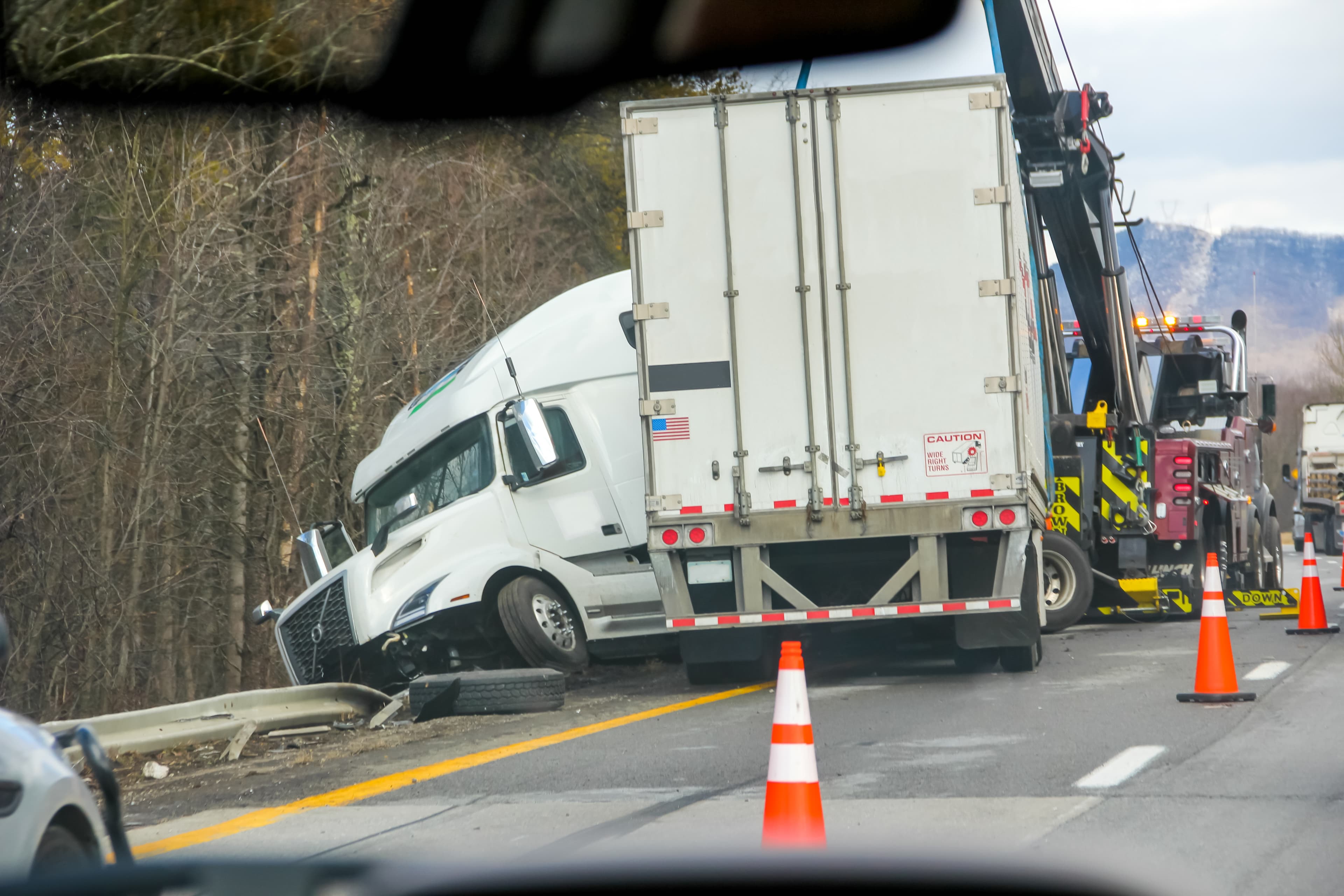
Commercial vehicle crashes are among the most dangerous wrecks on Texas roads. When an 18-wheeler, box truck, delivery van, dump truck, garbage truck, construction vehicle, or other commercial vehicle collides with a passenger car, the people in the smaller vehicle often suffer the worst injuries.
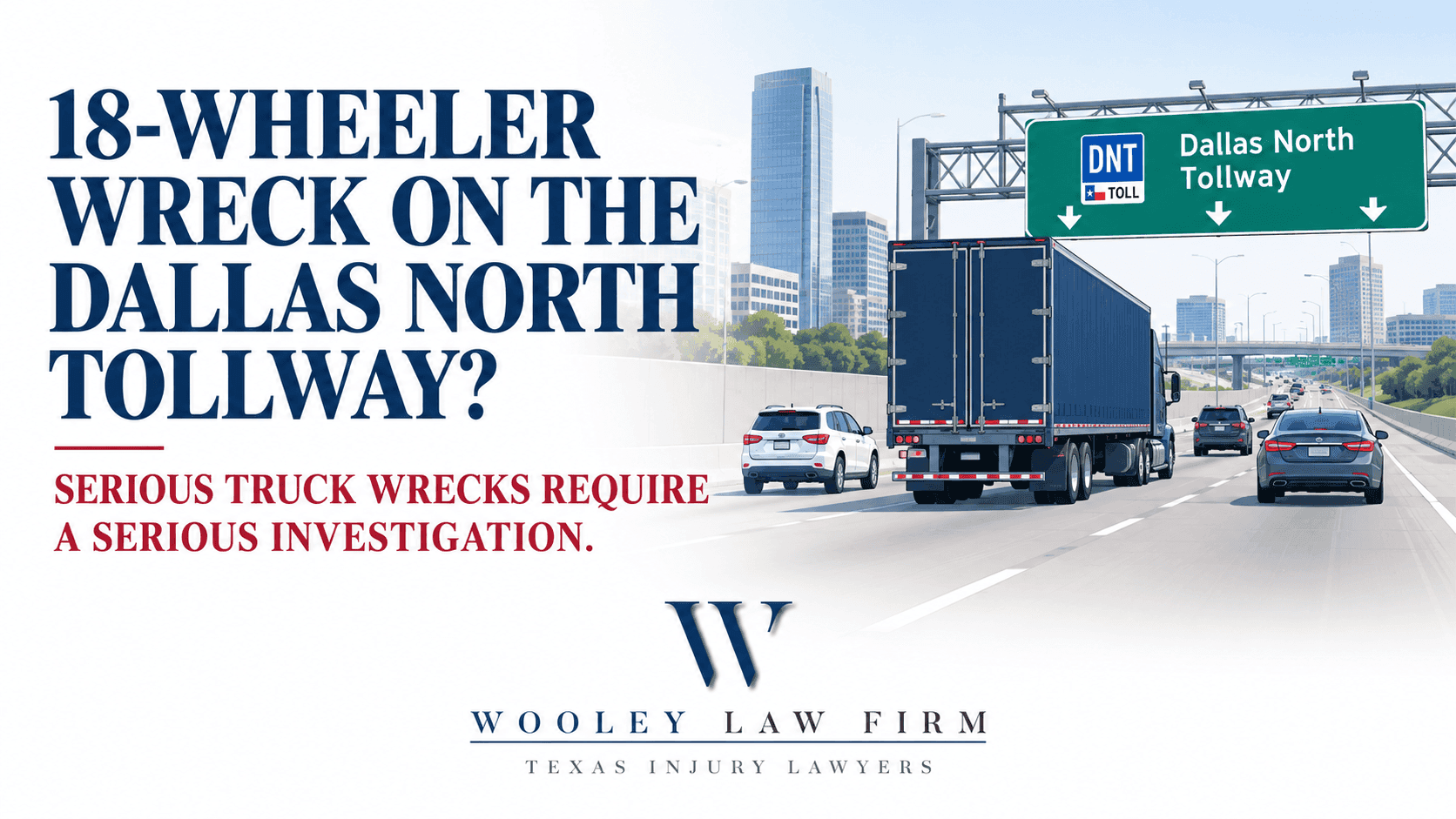
That is especially true in Dallas-Fort Worth, where major highways like I-35E, I-635, I-30, I-20, US-75, Loop 12, SH-183, and the Dallas North Tollway carry heavy commercial traffic every day.
According to TxDOT, Texas crash data is collected from law enforcement crash reports and maintained in the state’s crash database. Based on TxDOT CRIS data reviewed by The Wooley Law Firm, Dallas County had 4,214 commercial motor vehicle crashes in 2025, causing 37 deaths and 1,655 injuries. From 2021 through 2025, Dallas County had 21,926 commercial motor vehicle crashes, resulting in 203 deaths and 8,010 injuries.
Those numbers show a clear problem: commercial vehicle crashes are not rare in Dallas. They happen repeatedly, and many are preventable.
Why Commercial Vehicle Crashes Are So Dangerous
Commercial vehicles are larger, heavier, harder to stop, and more difficult to maneuver than normal passenger vehicles. A fully loaded 18-wheeler can weigh up to 80,000 pounds. When a vehicle that large is speeding, following too closely, changing lanes unsafely, or driven by a fatigued driver, the damage can be catastrophic.
Victims of Dallas truck wrecks may suffer:
Traumatic brain injuries
Neck and back injuries
Herniated discs
Spinal cord injuries
Broken bones
Internal injuries
Crush injuries
Burns
Amputations
Permanent impairment
Wrongful death
At The Wooley Law Firm, we believe many commercial vehicle crashes happen because trucking companies, delivery companies, drivers, maintenance contractors, and other businesses put speed, profit, and deadlines ahead of safety.
1. Driver Fatigue
Driver fatigue is one of the most serious causes of commercial vehicle crashes. Truck drivers and commercial drivers may be pressured to meet delivery windows, finish routes, return to the yard, or keep moving even when they are tired.
Federal hours-of-service rules are designed to reduce fatigue. Under the federal rules for property-carrying commercial drivers, a driver generally may drive a maximum of 11 hours after 10 consecutive hours off duty and may not drive beyond the 14th consecutive hour after coming on duty. The official federal regulation also states that a driver may not drive after the 14-hour on-duty window and limits total driving time to 11 hours within that period.
In our opinion, fatigue remains a major danger because the rules only work if drivers and trucking companies follow them. A truck driver may be unsafe if they:
Drive too many hours
Falsify logs
Skip required rest breaks
Drive overnight while exhausted
Use stimulants to stay awake
Ignore warning signs of fatigue
Feel pressured by dispatch or company deadlines
In a Dallas truck accident case, fatigue may be proven through electronic logging device data, dispatch records, fuel receipts, GPS data, cell phone records, delivery records, bills of lading, and driver logs.
2. Distracted Driving
Distracted driving is another major cause of commercial vehicle crashes. TxDOT states that distracted driving crashes include crashes where distraction in the vehicle, driver inattention, or cell phone use was listed as a contributing factor, and TxDOT describes distracted driving as consistently near the top of Texas crash causes.
Distracted commercial drivers are especially dangerous because a large truck needs more time and distance to stop. A few seconds of inattention can cause a truck driver to miss slowed traffic, drift into another lane, run a red light, or fail to see a pedestrian, motorcyclist, or smaller vehicle.
Common distractions include:
Texting while driving
Talking on the phone
Looking at GPS or dispatch screens
Adjusting in-cab technology
Eating or drinking
Looking at paperwork
Reaching for items
Watching videos
Using a tablet or onboard device
Talking with passengers or coworkers
TxDOT’s distracted driving campaign has warned that distracted driving continues to be a serious problem in Texas and has caused thousands of serious injuries and hundreds of deaths in prior years.
For a Dallas truck wreck lawyer, distracted driving evidence can be critical. Cell phone records, dash camera footage, event data, GPS records, driver-facing cameras, and witness statements may show that the commercial driver was not paying attention before the crash.
3. Speeding and Driving Too Fast for Conditions
Speeding is one of the most dangerous things a commercial driver can do. A speeding 18-wheeler takes longer to stop, creates more force on impact, and gives the driver less time to react.
Speeding does not always mean driving above the posted speed limit. A commercial driver can also be unsafe by driving too fast for traffic, rain, fog, construction zones, curves, hills, or stopped traffic ahead.
Examples include:
Driving too fast in heavy Dallas traffic
Failing to slow for congestion on I-635 or I-35E
Approaching stopped traffic too quickly
Speeding through construction zones
Driving too fast in rain or low visibility
Failing to reduce speed near an exit ramp
Taking a curve or turn too quickly
The FMCSA’s Large Truck and Bus Crash Facts report is a recurring annual report that tracks fatal, injury, and property-damage-only crashes involving large trucks and buses. National truck crash data repeatedly shows that driver-related factors, including speeding, remain important issues in serious truck crashes.
In our opinion, speeding by a commercial driver is especially reckless in Dallas because heavy traffic, sudden slowdowns, short merging distances, and construction zones are common throughout the metroplex.
Injured in an Accident?
Free consultation. Tell us what happened and learn what options may be available.
4. Following Too Closely
Tailgating is dangerous for any driver, but it is especially dangerous for an 18-wheeler or heavy commercial vehicle. Trucks need more space to stop. When a truck driver follows too closely, even a normal slowdown can become a violent rear-end collision.
Following too closely often happens when a commercial driver is:
Impatient in traffic
Speeding
Distracted
Fatigued
Trying to pressure another vehicle to move over
Failing to account for truck weight and stopping distance
Driving aggressively to meet a deadline
Rear-end 18-wheeler crashes can cause severe neck injuries, back injuries, head injuries, spinal injuries, and permanent pain. These cases often require a careful investigation into speed, braking, following distance, dash camera video, event recorder data, and the truck driver’s reaction time.
5. Unsafe Lane Changes and Blind Spot Crashes
Large commercial vehicles have significant blind spots. Truck drivers are trained to check mirrors, signal, maintain proper lookout, and avoid moving into occupied lanes. When they fail to do so, they can sideswipe, crush, or force a smaller vehicle off the road.
Unsafe lane change crashes are common on Dallas highways because traffic moves quickly and lanes often merge near exits, construction zones, and interchanges.
Commercial vehicle blind spot crashes may involve:
An 18-wheeler moving into a car’s lane
A truck sideswiping a vehicle
A tractor-trailer forcing a car onto the shoulder
A truck changing lanes without signaling
A driver failing to check mirrors
A truck merging too aggressively in construction traffic
In many cases, the truck driver claims they “never saw” the other vehicle. That is not an excuse. Commercial drivers are responsible for keeping a proper lookout before changing lanes.
6. Poor Vehicle Maintenance
Commercial vehicles must be properly inspected, repaired, and maintained. When trucking companies cut corners on maintenance, the results can be deadly.
Poor maintenance can cause:
Brake failure
Tire blowouts
Steering problems
Lighting failures
Trailer defects
Coupling problems
Worn tires
Suspension problems
Reflector and conspicuity tape violations
Unsafe loads
Mechanical breakdowns on the roadway
The FMCSA maintains national safety data involving large trucks and buses, including crash facts and commercial motor vehicle statistics. Maintenance problems are important because a trucking company may be liable not only for the driver’s conduct, but also for negligent inspection, negligent maintenance, negligent repair, or allowing an unsafe vehicle on the road.
After a serious Dallas truck wreck, key evidence may include:
Driver vehicle inspection reports
Maintenance logs
Repair records
Brake inspection records
Tire records
Annual inspection reports
Out-of-service history
Prior violations
Company safety policies
This evidence should be preserved quickly. Trucking companies and insurers may move fast after a crash to protect themselves.
7. Improper Loading or Overloaded Trucks
Commercial vehicles must be loaded safely. Cargo that is too heavy, unsecured, unbalanced, or improperly distributed can make a truck harder to stop and easier to roll over or jackknife.
Improper loading can contribute to:
Rollovers
Jackknife crashes
Tire failures
Brake strain
Cargo spills
Lost loads
Trailer sway
Loss of control
In some cases, responsibility may extend beyond the driver or trucking company. A shipper, loader, broker, warehouse, or maintenance provider may also have played a role.
A Dallas truck accident attorney should investigate who loaded the trailer, who inspected the cargo, whether weight limits were exceeded, and whether the cargo was properly secured.
8. Inexperienced or Poorly Trained Drivers
Commercial drivers need training and judgment. Driving an 18-wheeler through Dallas traffic is not the same as driving a passenger car. Truck drivers must know how to manage speed, space, mirrors, braking, turns, blind spots, grades, construction zones, and emergency situations.
A poorly trained truck driver may cause a crash by:
Making a wide turn from the wrong lane
Failing to check blind spots
Misjudging stopping distance
Braking too late
Driving too fast downhill
Failing to inspect the vehicle
Mishandling a tire blowout
Failing to secure the truck after stopping
Ignoring company safety rules
Trucking companies may be liable for negligent hiring, training, supervision, or retention if they put an unsafe driver behind the wheel.
9. Weather and Road Conditions
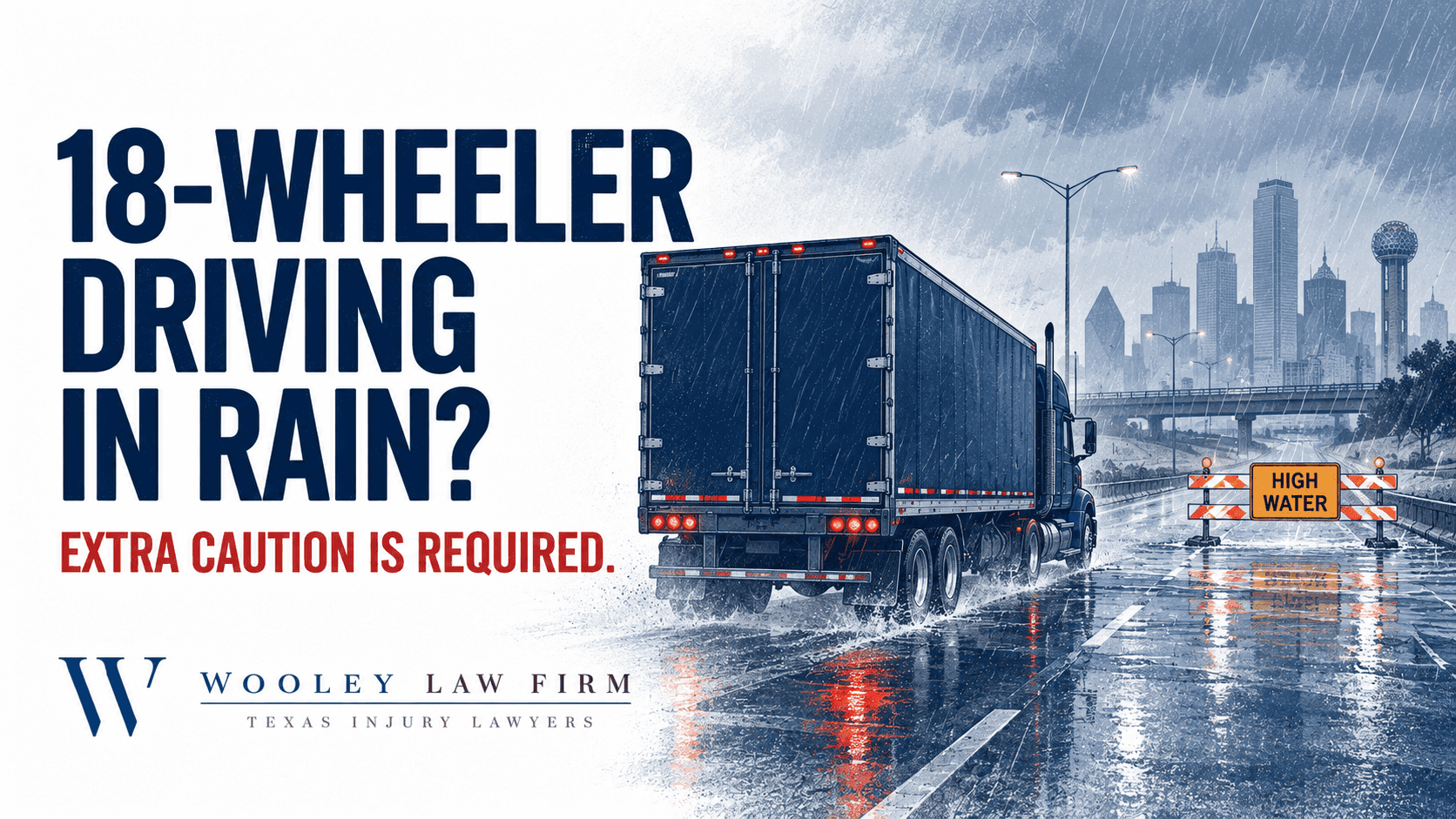
Texas weather can change quickly. Heavy rain, fog, high winds, ice, and standing water can make commercial vehicle operation extremely dangerous.
Commercial drivers are required to adjust their driving to the conditions. That may mean slowing down, increasing following distance, using headlights, avoiding sudden lane changes, or stopping when conditions become unsafe.
Weather-related truck crashes often happen when a driver:
Drives too fast in rain
Fails to slow for wet roads
Hydroplanes
Loses control in high winds
Follows too closely in low visibility
Fails to adjust for construction zones
Drives aggressively despite hazardous conditions
Bad weather is not an automatic excuse. The real question is whether the commercial driver acted reasonably under the conditions.
10. Company Pressure and Unsafe Business Practices
Some commercial vehicle crashes are not caused by one bad decision. They are caused by a company’s entire safety culture.
A trucking company, delivery company, or motor carrier may contribute to a crash by:
Setting unrealistic delivery deadlines
Encouraging drivers to rush
Ignoring hours-of-service violations
Failing to maintain vehicles
Hiring unsafe drivers
Failing to review driver records
Ignoring prior crashes or violations
Failing to train drivers
Failing to enforce safety rules
Putting profit over public safety
In our opinion, this is one of the most important issues in Dallas commercial vehicle crash cases. The driver may be the person behind the wheel, but the company may have created the danger long before the crash occurred.
Dallas Roads Where Commercial Vehicle Crashes Commonly Happen
Dallas-Fort Worth has some of the busiest commercial traffic corridors in Texas. Based on TxDOT CRIS data reviewed by The Wooley Law Firm, Dallas County commercial motor vehicle crashes from 2021 through 2025 were especially common on:
I-35E
I-20
I-30
I-635
Loop 12
I-45
US-75
SH-183
SH-114
US-175
These roads carry commuters, delivery vehicles, construction vehicles, tractor-trailers, and out-of-state commercial traffic. When heavy trucks mix with congested traffic, the risk of serious injury crashes increases.
What Evidence Can Prove the Cause of a Commercial Vehicle Crash?
Commercial vehicle crashes require fast investigation. Important evidence may disappear if it is not preserved.
Evidence may include:
Police crash report
Truck event data recorder
Electronic logging device data
Dash camera footage
Driver-facing camera footage
GPS and telematics data
Cell phone records
Dispatch communications
Bills of lading
Delivery schedules
Maintenance records
Inspection reports
Driver qualification file
Prior violations
Witness statements
Scene photographs
Vehicle damage photographs
Surveillance video from nearby businesses
ECM data
Company safety manuals
An experienced Dallas truck wreck lawyer can send preservation letters, investigate the crash, identify all responsible parties, and work to prove what caused the wreck.
What Should You Do After a Commercial Vehicle Crash in Dallas?
After a crash involving an 18-wheeler or commercial vehicle, you should:
Call 911 and report the crash.
Get medical attention immediately.
Take photos and videos if you can do so safely.
Get witness information.
Do not give a recorded statement to the trucking company’s insurance carrier.
Do not sign documents from the insurance company without legal advice.
Keep all medical records, bills, photos, and repair documents.
Contact a Dallas truck wreck lawyer as soon as possible.
Commercial trucking companies often send investigators, adjusters, and defense teams to the scene quickly. You deserve someone protecting your side too.
Injured in a Dallas Commercial Vehicle Crash? Call The Wooley Law Firm.
If you were injured in a crash involving an 18-wheeler, semi-truck, delivery truck, box truck, dump truck, garbage truck, construction vehicle, or other commercial vehicle in Dallas-Fort Worth, The Wooley Law Firm can help.
The Wooley Law Firm represents people injured in serious commercial vehicle crashes across Dallas, Fort Worth, and North Texas. Our firm investigates trucking companies, commercial drivers, maintenance failures, unsafe policies, and insurance company tactics.
You may be entitled to compensation for:
Medical bills
Future medical care
Lost wages
Loss of earning capacity
Pain and suffering
Mental anguish
Physical impairment
Disfigurement
Property damage
Wrongful death damages, when applicable
The Wooley Law Firm has recovered millions for people injured by commercial vehicles and 18-wheelers.
Call The Wooley Law Firm today for a free consultation with a Dallas truck wreck lawyer. You do not pay unless we win.
Frequently Asked Questions About Commercial Vehicle Crashes in Dallas
What is the most common cause of commercial vehicle crashes?
Commercial vehicle crashes can have many causes, including driver fatigue, distracted driving, speeding, following too closely, unsafe lane changes, poor maintenance, improper loading, and company pressure. In many cases, more than one factor contributes to the wreck.
Can a trucking company be responsible for a crash?
Yes. A trucking company may be responsible if it hired an unsafe driver, failed to train the driver, ignored safety violations, failed to maintain the truck, pressured the driver to meet unsafe deadlines, or violated federal safety rules.
Why are 18-wheeler crashes so serious?
18-wheelers are much heavier than passenger vehicles. Because of their size and weight, they take longer to stop and can cause catastrophic injuries in a collision.
Should I talk to the trucking company’s insurance adjuster?
You should be careful. Insurance adjusters may ask questions designed to reduce or deny your claim. Before giving a recorded statement or signing anything, speak with a Dallas truck accident attorney.
How soon should I contact a lawyer after a truck wreck?
As soon as possible. Important evidence such as camera footage, electronic logs, black box data, maintenance records, and dispatch records may need to be preserved quickly.
Share This Article

Andrew J. Wooley
Personal Injury Attorney
Andrew J. Wooley is a dedicated personal injury attorney based in Dallas, Texas. He focuses on helping accident victims recover fair compensation for their injuries. With a commitment to personalized service, Andrew works directly with each client to understand their unique situation and fight for their rights.