If you were injured in a Dallas car wreck, you probably expect the insurance company to review photographs from the crash, the police report, repair estimates, witness statements, and other evidence showing what happened.
What you may not expect is for the insurer to search for photographs of your vehicle taken weeks, months, or even years before the collision.
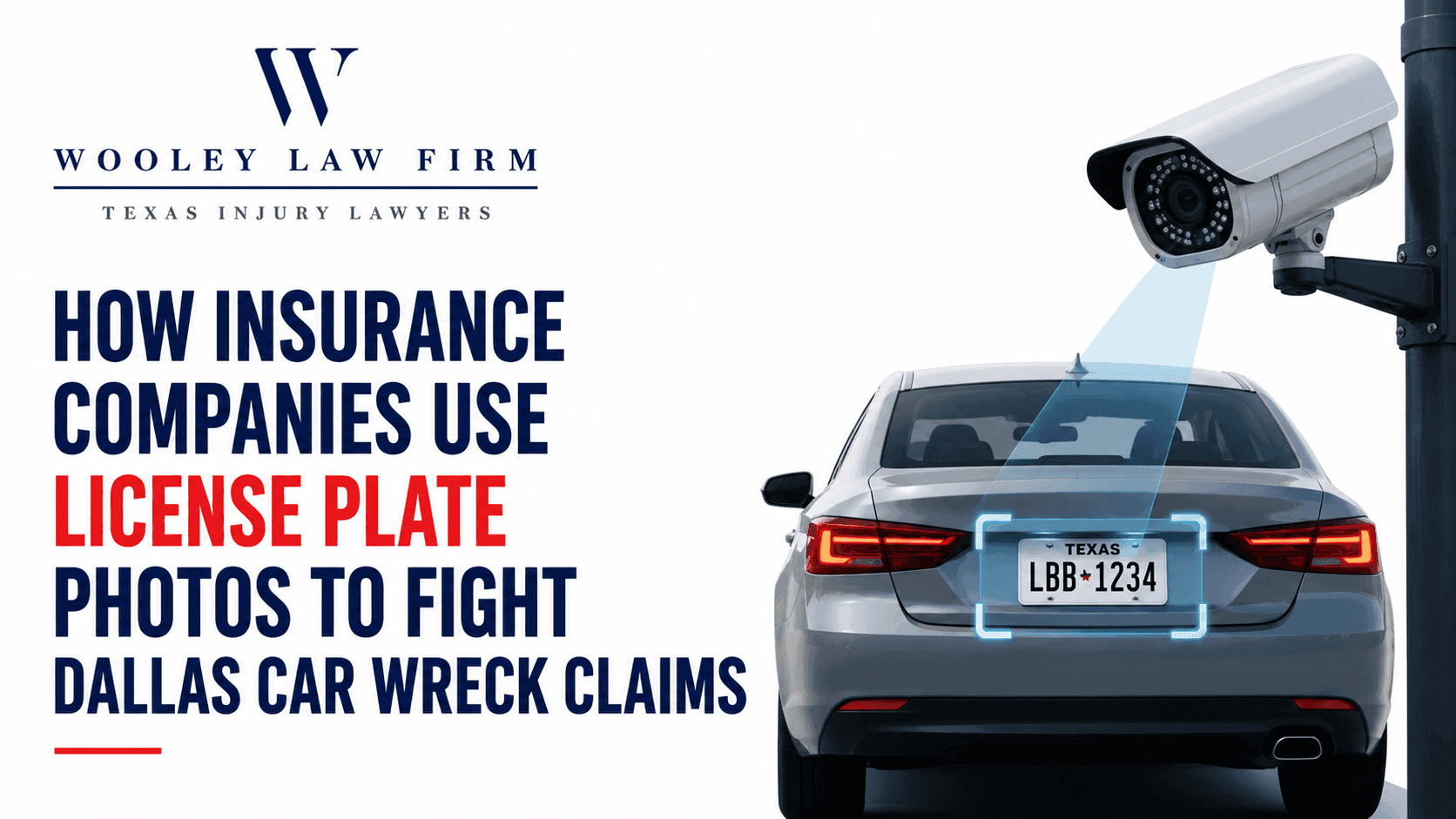
Insurance companies now have access to vehicle-intelligence databases that can associate historical photographs with a vehicle's license plate. An insurer may search those photographs when investigating a property damage claim and argue that dents, scratches, bumper damage, or other conditions existed before the wreck.
That can create another dispute for an injured driver who is already dealing with medical treatment, lost income, vehicle repairs, and insurance adjusters.
At The Wooley Law Firm, we recently encountered this issue in a Dallas-area hit-and-run claim involving Allstate. The experience demonstrates why accident victims should understand the evidence insurers may be collecting—and why they should not automatically accept an adjuster's conclusion that part of their vehicle damage was "pre-existing."
If you were injured in a wreck and are having problems with the insurance company, a Dallas car accident lawyer can investigate the collision, the available insurance coverage, and the evidence being used to evaluate your claim.
Allstate Searched Historical Photos of Our Client's Truck After a Hit-and-Run
The Wooley Law Firm recently represented a client whose pickup truck was damaged in a hit-and-run collision involving an 18-wheeler.
The commercial vehicle struck our client's truck and left the scene.
The collision caused severe and obvious damage to the front passenger side of the pickup. The physical damage was consistent with a substantial collision.
But while investigating the property damage claim, Allstate informed our client that it had conducted a photo search of his own vehicle.
The search produced multiple historical photographs of the pickup taken before the crash. The photographs were associated with the vehicle's Texas license plate and showed the truck on public roadways and in other locations on different dates.
Allstate then told our client that it believed portions of the damage around the rear bumper, tailgate, and rear of the truck existed before the collision and would not be included in its assessment.
In other words, although the truck had suffered major new front-passenger-side damage when it was struck by an 18-wheeler, the insurance company searched historical photographs for other areas of the vehicle that it could potentially characterize as prior damage.
This is important for Dallas car accident victims because a dispute over what damage was caused by the wreck can directly affect the amount an insurer agrees to pay for repairs or the value of a totaled vehicle.
The Bigger Question: Could the Same Technology Help Find the Hit-and-Run Truck?
After learning that Allstate could locate historical photographs associated with his vehicle's license plate, our client asked an obvious question:
Could that technology help identify the 18-wheeler that struck him and fled?
According to communications provided to our firm, the answer he received was no.
The insurer's representative explained that cameras photograph vehicles and place those photographs into a searchable database. When our client requested the photographs that had been found of his pickup, Allstate provided them.
So the technology was useful enough to locate our client's vehicle, examine historical photographs, and potentially reduce part of the property damage payment.
But our client was told it could not be used to identify the commercial truck that caused the collision and left the scene.
We are not suggesting that every license plate recognition database can identify every hit-and-run vehicle. Whether a search is successful may depend on whether cameras captured the vehicle, what information investigators have, which databases are available, and what investigative services an insurer or investigator can access.
But the situation raises an important question for injured drivers:
If sophisticated vehicle-search technology is being used to investigate you, what technology is being used to investigate the vehicle that caused the wreck?
Hit-and-run victims should also review whether their own uninsured/underinsured motorist coverage may apply when the responsible driver cannot be identified.
What Is License Plate Recognition Technology?
License plate recognition, often called LPR or ALPR technology, uses cameras and software to capture license plates and associate those plates with information about a vehicle sighting.
Depending on the particular database, a record may include:
a photograph of the vehicle;
an image of the license plate;
the date of the sighting;
the time of the sighting;
location information; and
other vehicle information.
One company operating in this industry is Digital Recognition Network, or DRN.
DRN currently markets vehicle-intelligence tools to the insurance industry that include Picture Proof, Vehicle Sighting Search, and Partial Plate Search. DRN describes Picture Proof as a way to compare vehicle imagery and evaluate prior vehicle condition. It also describes partial-plate technology as a tool capable of producing investigative leads in matters that can include hit-and-run investigations.
DRN has also published examples discussing the use of historical vehicle photographs to identify alleged pre-existing damage and evaluate insurance claims.
We are not saying DRN was the vendor used by Allstate in our client's particular claim. Allstate should identify the vendor, product, database, and search methodology actually used in that matter.
The broader point is that these tools exist and are being marketed to insurers.
Why Insurance Companies Look for "Pre-Existing Damage"
An insurance carrier generally does not want to pay for vehicle damage that was unrelated to the collision being claimed.
For example, if a vehicle already had a badly damaged bumper before a Dallas car wreck, the insurer may argue that it should not have to pay for the entire bumper as if the wreck caused all of that damage.
The real dispute is often whether the damage was actually there before the crash and whether the insurer's evidence proves it.
A historical photograph does not automatically answer that question.
A blurry roadway image taken from a considerable distance may show that a vehicle was at a particular location on a particular day. That does not necessarily mean the photograph clearly establishes the condition of every part of that vehicle.
A photograph may not reliably show:
a small dent;
a crack behind a bumper;
mounting or bracket damage;
damage underneath the vehicle;
scratches or paint transfer;
wheel or rim damage;
tire damage;
damage around a taillight;
structural damage; or
damage hidden by the angle of the photograph.
If an insurance company is using an old photograph to reduce your Dallas car accident property damage claim, do not assume the insurer's interpretation of that photograph is automatically correct.
Injured in an Accident?
Free consultation. Tell us what happened and learn what options may be available.
Ask the Insurance Company to Show You the Alleged Prior Damage
If an adjuster tells you that damage to your vehicle existed before the collision, ask what evidence supports that conclusion.
If the insurer mentions a historical photo search, request the photographs.
Important information may include:
the name of the vehicle-intelligence or LPR vendor;
the database that was searched;
every photograph returned by the search;
higher-resolution or original-resolution versions of the images;
the date and time associated with each photograph;
available location information;
metadata associated with the photographs;
reports generated by the database;
the search criteria used;
the insurance company's claim notes discussing the search;
identification of the photograph supposedly showing each item of prior damage; and
an explanation of how the adjuster determined the disputed damage was visible before the wreck.
The key question is simple:
Show me where this particular damage appears before the collision.
If the insurance carrier cannot clearly identify it, the conclusion that the damage was pre-existing deserves closer examination.
Drivers dealing with broader coverage disputes can also review our discussion of denied auto insurance coverage in Texas and our Dallas insurance coverage practice.
Historical Vehicle Photos Can Also Help Your Dallas Car Accident Claim
The same photographs an insurance company finds while looking for prior damage may sometimes become useful evidence for the accident victim.
Suppose the insurer obtains a timestamped photograph of your vehicle taken a month before the collision.
The insurer wants to use that photograph to argue that something was already damaged.
But the photograph may actually show that the portion of the vehicle damaged in the wreck looked intact.
That historical photograph could become independent evidence of your vehicle's pre-crash condition.
The images should be compared with other evidence, including:
photographs taken at the collision scene;
photographs you took before the accident;
body-shop photographs;
repair estimates;
tow-yard photographs;
surveillance footage;
dashcam footage;
witness testimony;
measurements;
vehicle inspection records; and
other physical evidence from the collision.
A timestamped pre-crash photograph showing an undamaged portion of the vehicle can be particularly useful when post-crash photographs show obvious new damage to that same area.
The insurance company's conclusion is not necessarily the final word.
What If the Insurance Company Says the Crash Was Too Minor to Cause Your Injuries?
A property damage dispute can also spill into a bodily injury claim.
Insurance companies sometimes argue that a vehicle did not sustain enough visible damage for the occupants to have suffered significant injuries.
But the condition of the vehicle is only one piece of evidence.
A personal injury claim may involve medical records, diagnostic testing, testimony about symptoms, treatment history, photographs, crash mechanics, witness evidence, and other information showing how the collision affected the injured person.
Do not allow a disagreement about bumper damage to become the entire story of your injury claim.
If you were hurt, seek appropriate medical evaluation and explain accurately when your symptoms began and how they affect your daily life. You can also read our guide on getting medical care after a Dallas car accident.
Hit-and-Run Accident Victims Should Preserve Every Possible Identification Clue
When a driver flees after causing a wreck, small pieces of information can become important.
Try to preserve anything you remember or can obtain, including:
all or part of the license plate;
vehicle color;
make or model;
tractor or trailer color;
trucking company name;
USDOT numbers or other markings;
company logos;
trailer numbers;
distinctive damage;
direction of travel;
approximate collision time;
intersection or highway location;
nearby businesses;
traffic cameras;
home surveillance cameras;
dashcams; and
eyewitness information.
Digital Recognition Network currently advertises partial-license-plate searches as one potential tool for developing leads in investigations that include hit-and-run matters.
That does not mean a database will always locate the responsible vehicle. But partial information that might seem insignificant could still be worth preserving.
For more information about these cases, read our guide to hit-and-run accident claim challenges.
An 18-Wheeler Hit-and-Run Can Involve Even More Evidence
When the fleeing vehicle is an 18-wheeler, tractor-trailer, delivery vehicle, or other commercial truck, additional evidence may exist beyond ordinary roadway photographs.
Depending on the facts, relevant information might include:
electronic logging device records;
GPS and telematics data;
dispatch records;
bills of lading;
driver qualification records;
onboard cameras;
dashcams;
maintenance records;
driver communications;
toll records;
fuel records;
delivery records; and
company vehicle-tracking information.
That is one reason a serious commercial vehicle case should be investigated differently from an ordinary fender-bender.
Our Dallas 18-wheeler and truck accident practice explains additional issues that can arise when a commercial vehicle causes a serious collision.
Do Not Sign a Release Until You Understand What It Covers
Insurance companies may attempt to resolve a property damage claim quickly.
Before signing anything, determine exactly what rights the document releases.
A property damage payment does not necessarily resolve an injury claim, but the actual language of the release matters. Accident victims should be particularly careful if a document refers broadly to claims arising from the collision, bodily injury, unknown damages, or a complete release of the responsible party.
If you were injured, do not assume a document concerns only your vehicle because that is how the adjuster described it.
Read it carefully and consider having it reviewed before signing.
Why a Dallas Car Wreck Attorney May Investigate the Insurance Company's Evidence
A serious car wreck case is not only about collecting evidence against the driver who caused the collision.
Sometimes it also requires examining the evidence the insurance company is using against you.
A Dallas car wreck attorney may investigate:
where the insurer obtained historical photographs;
whether the photographs actually show the disputed area;
whether higher-quality versions exist;
whether the dates and vehicle identification are accurate;
whether photographs favorable to the claimant were also returned;
how the adjuster interpreted the images;
whether repair-shop evidence contradicts the insurer's position;
whether additional surveillance or vehicle data exists;
whether UM/UIM coverage applies after a hit-and-run; and
whether other parties or insurance policies may be responsible.
At The Wooley Law Firm, we investigate serious Dallas car accidents, challenge unsupported attempts to minimize claims, and look for evidence that may help establish what actually happened.
Frequently Asked Questions About License Plate Photos and Dallas Car Accident Claims
Can an insurance company find old photographs of my car?
Potentially. Vehicle-intelligence companies maintain databases containing historical vehicle sightings and photographs connected to license plates or VIN information. Whether a particular insurer has access to those databases or uses them in a particular claim will depend on the carrier and its investigative tools.
Can old vehicle photographs be used to deny part of my property damage claim?
An insurer may rely on photographs to argue that particular damage existed before the wreck. That does not necessarily mean its conclusion is correct. The quality, angle, timing, resolution, and contents of the image matter.
Can I ask the adjuster for the photographs?
Yes. If the carrier claims historical photographs prove prior damage, ask the insurer to identify and produce the images it is relying upon and explain precisely what the photographs supposedly establish.
Can license plate recognition help find a hit-and-run driver?
Sometimes it may provide investigative leads. Success depends on the available plate information, location, time, camera coverage, database access, and whether the responsible vehicle was actually captured.
What insurance pays if a hit-and-run driver is never found?
Depending on the policy and facts, uninsured motorist coverage may apply when the responsible hit-and-run driver cannot be identified. You can learn more from our guide to Texas UM/UIM coverage.
Should I accept the insurance company's conclusion that my vehicle had prior damage?
Not automatically. Ask to see the evidence and compare it with pre-crash photographs, post-crash photographs, repair-shop documentation, and other available evidence.
Should I hire a Dallas car accident lawyer for a property damage dispute?
Many property damage disputes can be resolved without litigation. But if you were also injured, the crash involved a hit-and-run or commercial vehicle, the insurer is disputing major portions of the loss, or insurance coverage is complicated, speaking with an attorney may help you understand how the property damage dispute affects the larger personal injury claim.
Injured in a Dallas Car Wreck? We Can Investigate the Insurance Company's Evidence
Insurance companies have increasingly sophisticated tools for investigating claims. Those tools may have legitimate uses, including determining whether particular damage actually resulted from a collision.
But the technology should not become a one-way street.
If an insurer searches historical photographs of your vehicle to find evidence that saves the company money, you have every right to ask what photographs were found, what they actually show, and whether other available technology and evidence could help establish who caused your wreck.
If you were injured in a Dallas car accident, hit-and-run crash, 18-wheeler collision, or another serious motor vehicle wreck, The Wooley Law Firm can investigate the collision, insurance coverage, and evidence affecting your claim.
You may have the right to seek justice and pursue compensation for medical expenses, pain and suffering, lost wages, mental anguish, impairment, property damage, and other losses.
Call (214) 699-6524 for a free consultation. You don't pay unless we win.
You may also contact The Wooley Law Firm online.
Disclaimer: This article is for general informational purposes only and is not legal advice. Reading it does not create an attorney-client relationship. Every case is different, and past results do not guarantee a similar outcome.
Topics
Share This Article

Andrew J. Wooley
Personal Injury Attorney
Andrew J. Wooley is a dedicated personal injury attorney based in Dallas, Texas. He focuses on helping accident victims recover fair compensation for their injuries. With a commitment to personalized service, Andrew works directly with each client to understand their unique situation and fight for their rights.
Related Local News
Recent related coverage