After a serious car accident in Dallas, getting medical care should be your first priority. But for many injured people, the bills start arriving before they even understand the full extent of their injuries. Ambulance bills, emergency room charges, separate ER physician bills, radiology charges, hospital liens, follow-up treatment, and insurance paperwork can quickly become overwhelming.
If another driver caused your crash, those medical expenses may become part of your personal injury claim. But the process is rarely simple. Hospitals and medical providers may assert liens or seek payment out of a future settlement. Health insurance may or may not cover certain charges. Some providers may bill separately even though you were treated at the same facility.
A Dallas car accident attorney can help you understand what bills are related to the wreck, how hospital liens may affect your case, and how to pursue compensation from the at-fault driver’s insurance company.
Medical Treatment After a Dallas Car Wreck
Car accidents can cause injuries that are not always obvious right away. Even if you feel “okay” at the scene, pain, stiffness, headaches, dizziness, numbness, or back problems may appear hours or days later. Common car wreck injuries include:
Neck and back injuries
Herniated discs
Concussions and traumatic brain injuries
Broken bones
Shoulder, knee, and joint injuries
Internal injuries
Facial injuries and lacerations
Nerve damage
Soft tissue injuries
Emotional trauma and anxiety after the crash
After a Dallas car wreck, injured victims may receive treatment at hospitals, emergency rooms, trauma centers, urgent care clinics, imaging centers, physical therapy offices, orthopedic clinics, chiropractic offices, pain management clinics, and other medical providers throughout Dallas.
Dallas-area crash victims may be treated at hospitals and trauma centers such as Baylor University Medical Center, Methodist Dallas Medical Center, Parkland Memorial Hospital, Texas Health Presbyterian Hospital Dallas, Medical City Dallas, and UT Southwestern / Clements University Hospital. This list is provided only as examples of Dallas-area medical facilities where injured people may receive care; it does not imply endorsement, affiliation, sponsorship, or recommendation by any hospital or medical provider.
Why You May Receive Multiple Bills After One ER Visit
Many car accident victims are surprised to learn that one emergency room visit can lead to several different medical bills. You may think you are receiving one bill from the hospital, but separate providers may bill independently.
After a Dallas car accident, you may receive bills from:
The ambulance company
The hospital or emergency facility
The emergency room physician group
Radiologists who read X-rays, CT scans, or MRIs
Anesthesiologists
Lab companies
Imaging providers
Specialists who evaluated you
Follow-up doctors or therapists
This can be confusing because you may not remember meeting every provider who later sends a bill. For example, you may never meet the radiologist who reviewed your CT scan, but that radiologist may still send a separate bill. You may also receive a separate bill from the ER doctor even though you were treated inside a hospital emergency department.
A Dallas car wreck lawyer can help organize these bills, determine which charges are accident-related, and make sure they are considered when calculating the value of your personal injury claim. Medical bills and treatment records may also contain unfamiliar ICD-10 diagnosis codes. For example, a V87 diagnosis code after a Dallas car wreck generally documents that the treatment was connected to a motor vehicle collision. The V87 code usually describes how the injury occurred, not the specific injury itself, so it may appear alongside separate codes for neck pain, back injuries, concussions, fractures, or other accident-related conditions.
Ambulance Bills After a Dallas Car Accident
If you were transported by ambulance after a crash, you may receive a separate ambulance bill. Ambulance charges can be expensive, especially if emergency medical services provided treatment at the scene, transported you to the hospital, or used advanced life support services.
Ambulance bills matter in a car accident claim because they can help show that the crash caused immediate injuries requiring emergency care. They may also become part of your recoverable damages.
However, ambulance billing can create problems. The bill may be submitted to health insurance, auto insurance, or sent directly to you. In some cases, the provider may seek payment from a settlement. A personal injury attorney can help identify where the ambulance bill should be submitted and whether it should be included in your claim against the at-fault driver.
ER Doctor Bills Are Often Separate From Hospital Bills
One of the most common billing surprises after a Dallas car accident is a separate bill from the emergency room doctor. Many hospitals use independent physician groups to staff the emergency department. That means the hospital may bill for the facility, nursing care, supplies, medication, imaging, and other services, while the ER physician group sends a separate bill for the doctor’s evaluation and treatment.
This can leave injured victims wondering why they are being charged twice. The answer is that the hospital bill and ER doctor bill usually cover different services.
A Dallas car accident attorney can review these bills, determine whether they are connected to the wreck, and help account for them in the injury claim. If there is a settlement, your lawyer can also help address outstanding provider balances and negotiate where appropriate.
Injured in an Accident?
Free consultation. Tell us what happened and learn what options may be available.
Radiologist Bills After a Car Wreck
Radiology bills are also common after a crash. If the ER orders X-rays, CT scans, MRIs, or other imaging, a radiologist may review the images and issue a report. That radiologist may bill separately from the hospital or imaging center.
Radiology evidence can be important in a Dallas car accident case. Imaging may help diagnose fractures, disc injuries, internal injuries, brain injuries, or other trauma. Even when imaging is “negative” for fractures or acute findings, it can still become part of the medical record documenting your symptoms and treatment.
Because radiology bills and reports can be separate from the hospital record, it is important to gather the full set of medical records and bills. Missing records can make it harder to prove what treatment you received and how much your accident-related medical care cost.
What Is a Hospital Lien in a Texas Car Accident Case?
A hospital lien is a legal claim that may allow a hospital to seek payment from a personal injury claim or settlement. In Texas, hospital liens are generally governed by Chapter 55 of the Texas Property Code.
In a car accident case, a hospital lien may arise when an injured person receives hospital services for injuries caused by someone else’s negligence. If the lien is valid, the hospital may claim a right to be paid from the injured person’s settlement or judgment.
This does not mean the hospital owns your entire case. It also does not mean every bill is automatically valid, reasonable, or properly perfected. Hospital lien issues can be complicated, and the details matter.
A Dallas car accident lawyer can help determine:
Whether a hospital lien was filed
Whether the lien relates to the car accident
Whether the lien was filed correctly
Whether the charges are reasonable
Whether health insurance should have been billed
Whether the lien can be reduced or resolved
How the lien affects settlement negotiations
Why Hospital Liens Matter in Dallas Car Accident Claims
Hospital liens can affect how settlement funds are distributed. If a lien is valid and unresolved, it may need to be addressed before the case can fully close. This is one reason it is important not to ignore medical bills, lien notices, or letters from hospitals after a car accident.
Insurance companies may also try to use medical billing issues to complicate or undervalue a claim. They may argue that treatment was unrelated, unnecessary, too expensive, or not properly documented. An attorney can push back by using medical records, billing records, crash reports, imaging reports, doctor opinions, and other evidence to connect the treatment to the collision.
Should You Use Health Insurance After a Dallas Car Accident?
Many injured people wonder whether they should use health insurance after a car wreck. In many situations, using available health insurance may help reduce the amount owed to medical providers. However, every situation is different, and some providers may still assert liens or claim balances.
Health insurance can also create reimbursement or subrogation issues. That means a health insurer may seek repayment from a personal injury settlement for accident-related medical expenses it paid.
A Dallas car accident attorney can help identify all potential reimbursement claims, liens, and unpaid medical bills so you have a clearer picture of what may need to be resolved from a settlement.
What If You Do Not Have Health Insurance?
If you do not have health insurance, you should still seek medical care after a serious crash. Delaying treatment can harm your health and your legal claim. Insurance companies often argue that a gap in treatment means the injuries were not serious or were not caused by the wreck.
Some medical providers treat injury victims under a letter of protection, lien agreement, or other arrangement that allows treatment while the legal claim is pending. These arrangements should be reviewed carefully because they may affect how much must be paid back from a settlement.
A Dallas car wreck lawyer can help you understand your treatment options and how medical bills may be handled in your case.
How a Dallas Car Wreck Attorney Can Help With Medical Bills and Liens
After a crash, your focus should be on healing. A lawyer can help manage the legal and billing issues that often follow a serious car wreck.
The Wooley Law Firm can help by:
Investigating the crash
Identifying the at-fault driver and available insurance coverage
Gathering police reports, medical records, and billing records
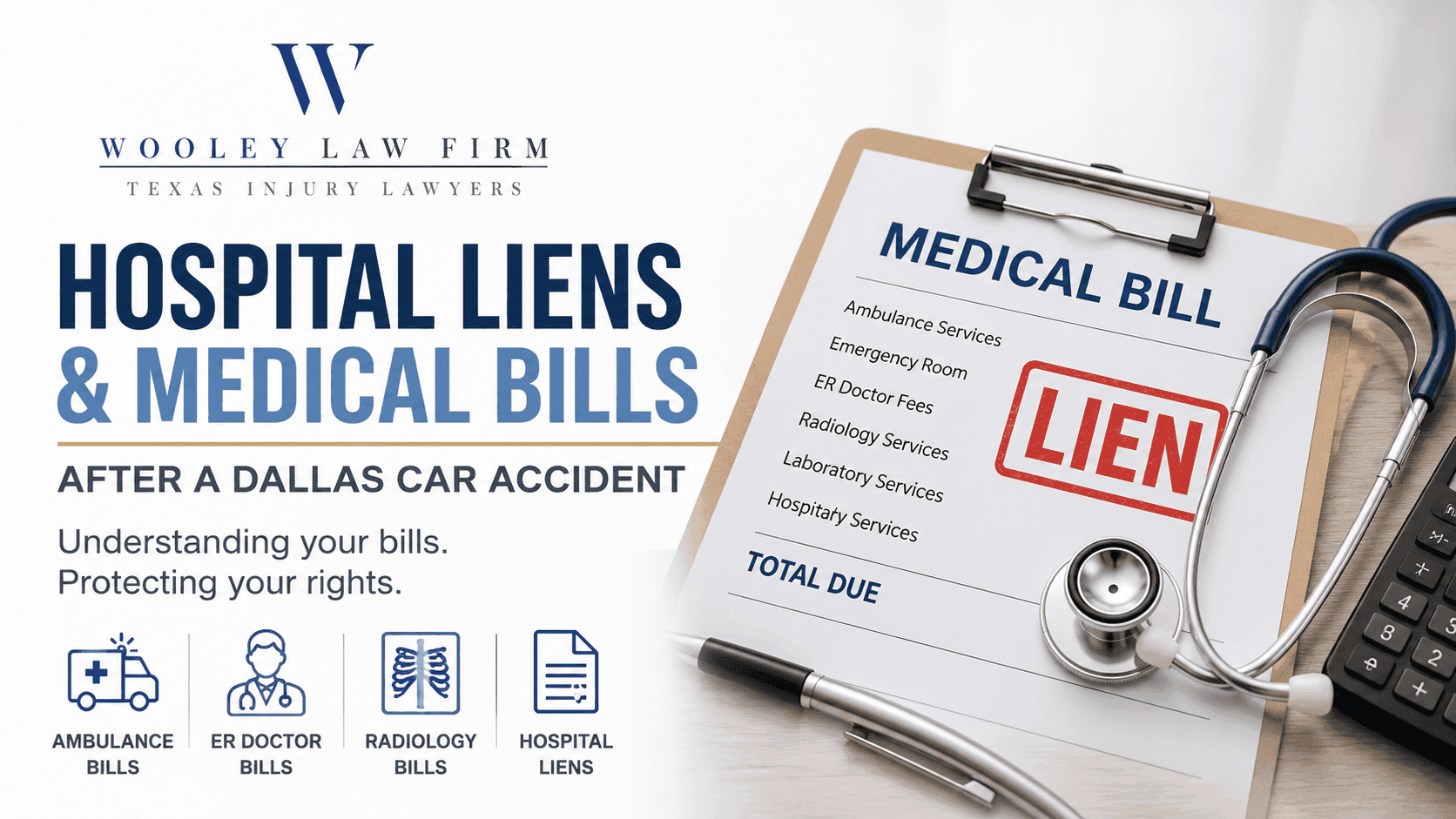
Tracking ambulance, hospital, ER doctor, radiology, and follow-up treatment bills
Reviewing hospital liens and provider claims
Communicating with insurance adjusters
Evaluating the full value of your damages
Negotiating medical bills and liens where appropriate
Pursuing compensation for medical expenses, pain and suffering, lost wages, impairment, disfigurement, mental anguish, and other damages
A personal injury claim is not just about the first hospital bill. It should account for the full impact of the crash, including emergency care, follow-up treatment, future medical needs, lost income, physical pain, emotional distress, and the ways the injuries affect your daily life.
Do Not Settle Before You Understand Your Medical Bills
After a Dallas car accident, the at-fault driver’s insurance company may contact you quickly. The adjuster may sound friendly, but the insurance company’s goal is to protect its own bottom line. If you settle too early, you may later discover additional bills, liens, or medical problems that were not included in the settlement.
Before accepting any settlement, it is important to understand:
The full extent of your injuries
Whether you need follow-up treatment
Whether you may need future care
Whether hospital liens have been filed
Whether ambulance, ER doctor, and radiology bills remain unpaid
Whether health insurance, Medicare, Medicaid, or another benefit plan claims reimbursement
Whether the settlement fairly compensates you for all damages
Once a case settles, you usually cannot go back and ask for more money later. That is why it is important to speak with a Dallas car accident attorney before signing a release.
Frequently Asked Questions About Hospital Liens and Medical Bills After a Dallas Car Accident
What is a hospital lien after a car accident in Texas?
A hospital lien is a legal claim that may allow a hospital to seek payment from a personal injury settlement or judgment after treating someone injured by another person’s negligence. In a Dallas car accident case, this may affect how settlement funds are distributed after the case resolves.
Can a hospital lien attach to my Dallas car accident settlement?
Yes, if the lien is valid under Texas law, it may attach to a personal injury claim, settlement, or judgment related to the accident. That is why it is important to identify and address hospital liens before settling a car wreck claim.
Do ambulance bills count as part of my car accident claim?
Ambulance bills may be part of your damages if the ambulance treatment was related to the crash. These bills can also help show that you needed immediate medical care after the collision.
Why did I get a separate bill from the ER doctor?
Many hospitals use separate emergency physician groups. As a result, the hospital may send one bill for the facility and services, while the ER doctor sends a separate bill for medical evaluation and treatment.
Why did I receive a radiology bill after my ER visit?
If you had X-rays, CT scans, MRIs, or other imaging after the wreck, a radiologist may have reviewed those images and issued a report. That radiologist may bill separately from the hospital or imaging center.
Should I use health insurance after a Dallas car accident?
In many cases, using health insurance may reduce the amount owed to medical providers. However, health insurance can also create reimbursement or subrogation issues. A Dallas car accident lawyer can help review medical bills, liens, and repayment claims.
What happens if I do not have health insurance?
You should still seek medical care after a serious crash. Some providers may offer treatment under a lien, letter of protection, or other arrangement. Before agreeing to treatment on a lien, it is important to understand how the provider will be paid from any settlement.
Can a Dallas car accident attorney help reduce medical bills or liens?
A Dallas car accident attorney may be able to review bills and liens, challenge improper or unrelated charges, and negotiate reductions where appropriate. This can be important because unpaid medical bills and liens may affect how much money you receive after settlement.
Should I settle my car accident claim before all medical bills are known?
Usually, it is risky to settle before you understand the full extent of your injuries, treatment needs, medical bills, and liens. Once you sign a settlement release, you generally cannot ask the insurance company for more money later.
When should I contact a Dallas car wreck lawyer?
You should contact a Dallas car wreck lawyer as soon as possible after a crash, especially if you went to the hospital, received ambulance transport, have ongoing pain, are missing work, or are receiving medical bills and lien notices.
Talk to a Dallas Car Accident Lawyer About Hospital Liens and Medical Bills
Medical billing after a Dallas car wreck can be confusing, stressful, and unfair. You may be dealing with pain, missed work, vehicle damage, insurance calls, and a stack of medical bills from providers you barely recognize. You do not have to sort it out alone.
The Wooley Law Firm helps injured crash victims understand their rights, deal with insurance companies, and pursue compensation after serious motor vehicle collisions in Dallas and throughout North Texas.
If you were injured in a Dallas car accident, North Central Expressway crash, I-35E wreck, I-30 collision, I-635 crash, or another motor vehicle wreck, you may have the right to seek justice and pursue compensation for medical expenses, pain and suffering, lost wages, mental anguish, impairment, and other damages.
Call (214) 699-6524 for a free consultation. You don’t pay unless we win. Contact Us Today!
This article is for general information only and is not legal advice. Every case is different.
Topics
Share This Article

Andrew J. Wooley
Personal Injury Attorney
Andrew J. Wooley is a dedicated personal injury attorney based in Dallas, Texas. He focuses on helping accident victims recover fair compensation for their injuries. With a commitment to personalized service, Andrew works directly with each client to understand their unique situation and fight for their rights.
Related Local News
Recent related coverage