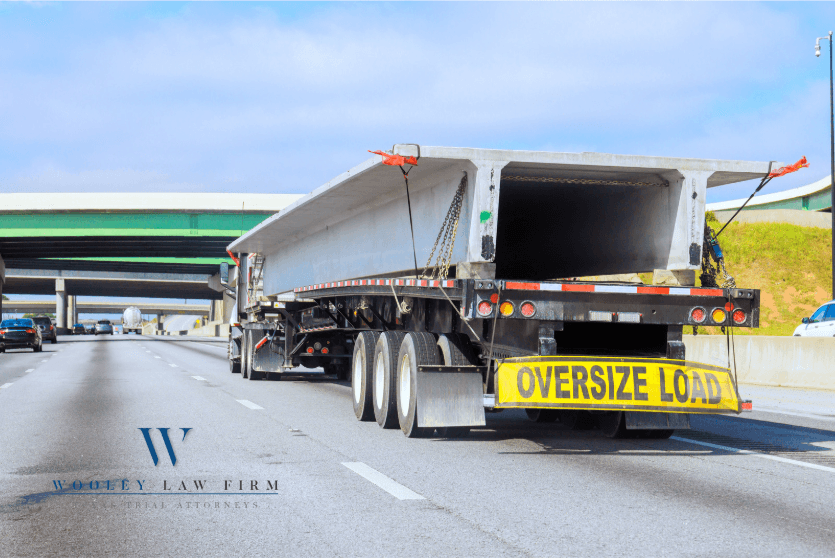
A crash involving a semi hauling a wide load is not like an ordinary 18-wheeler wreck. Oversize loads take up more roadway, require extra space to turn and merge, and can create serious hazards for nearby drivers, especially when the route is tight, traffic is heavy, or the load shifts. Wide-load moves also come with special rules, permits, and escort requirements that don’t apply to standard commercial trucks.
If you were injured in a wide-load crash in Texas, it’s important to understand: these cases often involve multiple responsible parties, and the best evidence can disappear quickly unless it’s preserved early.
Why Wide Load Trailers Are More Dangerous Than Regular Semi-Trucks
Wide loads reduce the margin for error
A standard commercial vehicle operating on the national network is typically limited to 102 inches wide.
Once a load exceeds legal size, it often requires a permit, a specific route, and additional precautions.
Oversize loads create unique crash risks
Wide loads can cause:
Side-swipe collisions (because the load extends into adjacent space)
Lane encroachment issues in construction zones and narrow corridors
Turn-sweep hazards (the trailer/load swings wide, cutting space other vehicles need)
Bridge clearance and roadside obstacle strikes
Sudden braking chain-reaction crashes when traffic can’t safely pass
Driver visibility problems increase danger
Even skilled drivers can have blind spots that grow when hauling an oversize load, especially when the load blocks mirrors or changes the turning path.
Wide Load Rules That Don’t Apply to Most Semi-Trucks
Oversize moves are regulated differently because they pose different dangers. In Texas, oversized/overweight travel generally requires a permit and sometimes an authorized route.
Oversize/overweight permits and route restrictions
Texas requires oversize/overweight vehicles or loads that exceed legal limits to have an OS/OW permit, and some loads require an authorized route. That route matters because it may limit travel on certain roads, bridges, or times of day.
Escort vehicles and escort flaggers
Texas has specific escort and equipment requirements for certain permitted moves, including rules about escort flaggers and required training for traffic direction in some situations.
Compliance and enforcement expectations
TxDMV regulates oversize/overweight transport through permitting and compliance enforcement, aimed at public safety and protecting roads/bridges.
Why these rules matter in an injury case:
When a wide-load crash happens, one of the first questions is whether the driver and carrier complied with permit conditions, route rules, escort requirements, and safety precautions.
Injured in an Accident?
Free consultation. Tell us what happened and learn what options may be available.
Common Wide Load Crash Scenarios
Unsafe turns and lane encroachment
Wide loads often need extra room. If traffic control is inadequate or a driver turns too sharply vehicles can get pinned, clipped, or forced into curbs and barriers.
Improper route selection
If an oversize load is taken onto a road that’s too narrow, has tight intersections, or cannot safely accommodate the turning radius, the risk rises dramatically.
Escort failure or poor escort positioning
Escort vehicles are intended to help warn traffic and create space. When escort procedures are skipped or poorly executed, drivers around the wide load may not realize the danger until it’s too late.
Speed for conditions and stopping distance
Wide loads often require slower travel due to stability and clearance concerns. Excess speed can turn a manageable situation into a major crash.
Who Can Be Liable in a Texas Wide Load Accident?
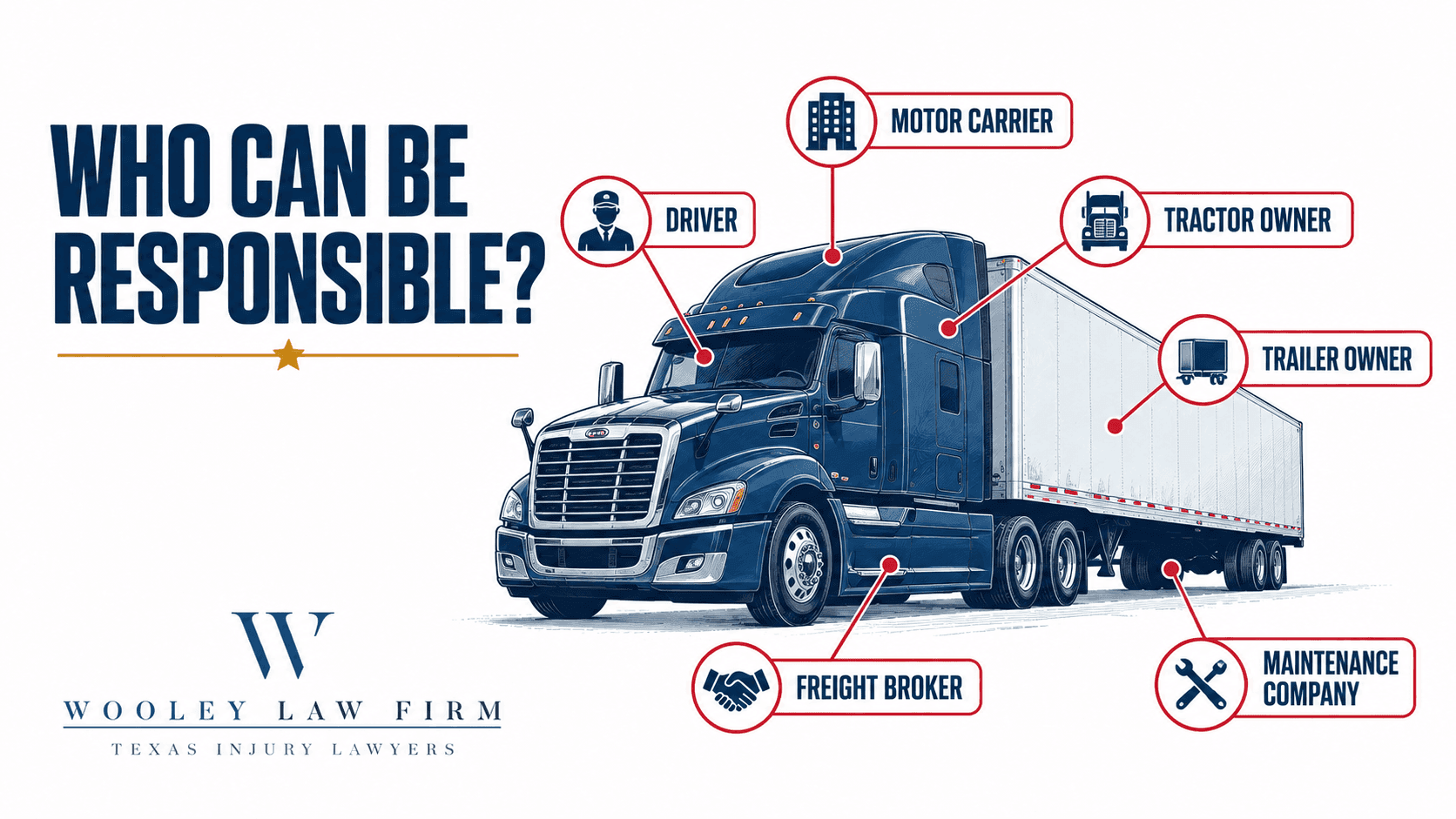
Wide-load cases are rarely “just the driver.” Depending on the facts, liability may involve:
The wide-load truck driver
Potential issues include unsafe turns, improper lane usage, speed for conditions, distraction, fatigue, or failing to follow permit instructions.
The trucking company (motor carrier)
A carrier may be liable for:
Unsafe dispatch decisions and scheduling pressure
Failing to train drivers on wide-load procedures
Allowing noncompliant moves without proper permits/escorts
Poor safety supervision
The permit/route planning entity
Some moves involve third parties who plan routes or coordinate permits. If the route choice was unsafe or permit conditions weren’t followed, that can matter.
Escort/pilot car company
If escorts were required and they failed to position correctly, warn traffic, or follow protocol (or weren’t properly qualified when required), they may share responsibility.
Shipper/loader
If the load dimensions were misrepresented, the load was improperly positioned, or documentation was inaccurate, the shipper/loader may be part of the liability chain.
Why Hiring an Attorney Early Matters in Wide Load Cases
Wide-load crashes are time-sensitive because key evidence can disappear quickly.
Permit documents and route plans can make or break the case
A wide-load case often turns on:
The OS/OW permit and its conditions
The authorized route (when required)
Escort requirements and whether they were met
Compliance records and communications
The best evidence is often “day-of” evidence
Important proof may include:
Dash cam footage (often overwritten)
Telematics (speed/braking/location)
Scene photos showing signage, escort placement, lane position, and load dimensions
Witness statements while memories are fresh
Multiple defendants and multiple insurance policies
Wide-load moves may involve layered insurance across the carrier, escorts, and other contractors. Early investigation helps identify all coverage sources.
How The Wooley Law Firm Helps After a Texas Wide Load Crash
At The Wooley Law Firm, we’ve handled truck wreck cases across Texas and have obtained millions of dollars for injured clients. Wide-load cases require fast action: securing permits, route instructions, escort requirements, compliance records, and objective data before it disappears. We build these claims around the proof that carriers and insurers can’t ignore, and we prepare cases in a trial-ready way from day one. Learn more about your options on our 18-wheeler wrecks page or reach out through our Contact page.
Call (214) 699-6524 for a free consultation. You don’t pay unless we win.
Frequently Asked Questions
What is considered a “wide load” in Texas?
In general, loads exceeding legal size limits require oversize permitting and sometimes route restrictions. Texas publishes size/weight limits and OS/OW permitting requirements through TxDMV.
Are escort vehicles always required for wide loads?
Not always. Escort requirements depend on the load’s dimensions and permit conditions. Texas outlines escort and equipment requirements for certain moves.
Who can be liable besides the truck driver?
Depending on the facts: the motor carrier, escort company, permit/route coordinator, shipper/loader, and sometimes maintenance or equipment providers.
What should I do after a wide-load crash?
Get medical care, document the scene if safe, avoid recorded statements, and speak with counsel early so permit/route/escort evidence can be preserved.
Topics
Share This Article

Andrew J. Wooley
Personal Injury Attorney
Andrew J. Wooley is a dedicated personal injury attorney based in Dallas, Texas. He focuses on helping accident victims recover fair compensation for their injuries. With a commitment to personalized service, Andrew works directly with each client to understand their unique situation and fight for their rights.