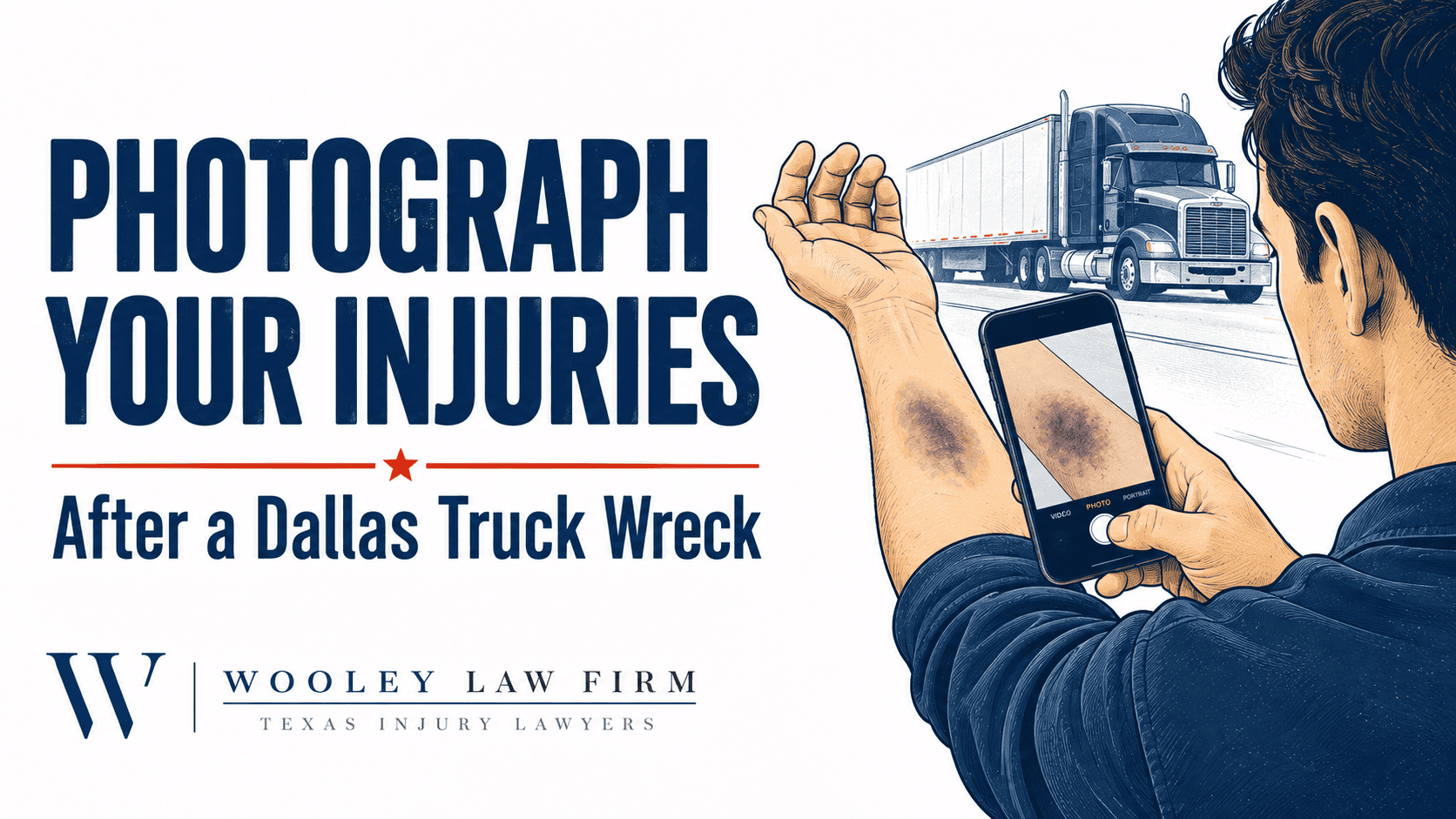
After an 18-wheeler wreck in Dallas, you may take pictures of your damaged vehicle, the truck, and the crash scene. Photographs of your injuries can be just as important.
Bruises fade. Swelling changes. Cuts heal. By the time an insurance company evaluates your claim, the visible evidence of what happened to your body may look very different.
Clear photographs can help preserve that evidence. They give your medical records context and help show the progression of visible injuries during your recovery.
If you were injured in a commercial truck collision, a Dallas truck wreck lawyer can explain how injury photographs fit into the broader evidence supporting your claim.
Get necessary medical care first. Take photographs as soon as you safely can, and continue documenting changes while you recover.
Why Injury Pictures Matter After an 18-Wheeler Accident
A medical record might describe “contusions to the chest,” “left knee swelling,” or “multiple abrasions.” Those descriptions matter, but they may not fully communicate how the injuries looked.
A photograph can help show:
The location and extent of bruising.
Visible swelling around an injured joint.
Cuts, scrapes, and other skin injuries.
Stitches, staples, and changes as a wound heals.
The appearance of scars over time.
Multiple injured areas that might otherwise be difficult to describe.
For example, a medical note stating “bruising to the left thigh” may tell only part of the story. A clear photograph could show that the discoloration covered a substantial area.
Pictures do not automatically establish fault or determine what a case is worth. They can, however, help an adjuster, attorney, or jury understand the visible effects of the collision.
At The Wooley Law Firm, photographs of our clients’ injuries have helped us obtain millions of dollars in compensation for injured clients. Clear pictures of bruises, cuts, swelling, and scars help an insurance adjuster—and, if necessary, a jury—better understand the severity of the injuries and what our clients experienced during recovery. Medical records describe an injury; photographs can help show its visible effects long after the bruising fades or the wound heals.
Past results do not guarantee a similar outcome. Every case is different.
What Injuries Should You Photograph?
Photograph visible injuries you believe resulted from the truck wreck, including areas that initially seem minor. Tell your medical providers about them, too.
Bruises and Contusions
A contusion is a bruise. Bruising occurs when small blood vessels break and blood leaks into surrounding tissue. Pain, swelling, and discoloration may occur, and the appearance can change during healing. MedlinePlus explains bruises and their symptoms.
Photograph visible bruising on your arms, legs, shoulders, chest, abdomen, face, or other affected areas. If a mark appears where the seat belt crossed your body, document it and bring it to your medical provider’s attention.
Do not assume a photograph can establish the exact age or severity of a bruise. Medical evaluation and the surrounding facts remain important.
Cuts, Scrapes, and Lacerations
Take pictures of visible cuts and scrapes when doing so will not interfere with treatment.
If a wound requires stitches or staples, later photographs can document its appearance during recovery. Do not remove dressings or disturb a wound just to take a picture. Follow your healthcare provider’s instructions.
Swelling
Photograph visible swelling in your hands, wrists, knees, ankles, face, or other injured areas.
When practical, a picture showing both sides of the body can provide context—for example, both ankles in the same frame. That comparison documents appearance; it does not establish a diagnosis.
Scars and Changes in Appearance
Continue taking occasional photographs if an injury leaves a scar or other lasting change.
An early wound photograph and a later scar photograph document different stages of recovery. Our article about facial injuries, scarring, and disfigurement after a truck wreck discusses related issues.
Injured in an Accident?
Free consultation. Tell us what happened and learn what options may be available.
When Should You Take Pictures After a Dallas Truck Wreck?
Start as soon as you safely can after receiving necessary care.
You do not need to remain at the scene or delay an ambulance ride to photograph your injuries. A trusted family member may be able to help later, with your permission.
If you were taken by ambulance after an 18-wheeler wreck in Dallas, your EMS and hospital records may provide important early documentation. Your photographs can supplement those records.
Take additional pictures as the visible injuries change. A practical approach is to photograph them:
When you first notice them.
Over the next several days as their appearance changes.
During healing, when there are meaningful differences.
Later, if scars or other visible changes remain.
You do not need hundreds of nearly identical pictures. The goal is an accurate record of the injury and its progression.
How to Take Useful Injury Photographs
A cellphone is usually enough. Clear, accurate pictures matter more than professional equipment.
Take an Overview and a Close-Up
Start with a wider photograph showing where the injury is located. Then take a closer photograph showing its details.
A close-up alone may make it difficult to tell whether a bruise is on your arm, leg, or another part of your body.
Use Clear, Even Lighting
Use lighting that accurately shows your skin and the injury. Avoid strong shadows, glare, and colored lighting.
Review the picture to make sure it is in focus. When possible, use similar lighting and angles for follow-up photographs so changes are easier to compare.
Include a Size Reference When Safe
A clean ruler placed beside an injury may help show its size. Do not place objects on an open wound or press against a painful area.
Keep a Simple Date Log
Record when each photograph was taken and what it shows. For example:
“October 15: Right knee swelling, photographed after returning home from the emergency room.”
Be accurate. If you do not remember a date, say so rather than guessing.
Preserve the Original Files
Keep the original photographs on your device and save a backup.
Original files may retain useful information about when they were created. Sending a picture through some messaging or social-media services may compress it or remove information.
Keep the complete set, including photographs showing improvement. Do not apply filters, change colors, use AI enhancement, or overwrite originals with edited versions.
How Can a Dallas Truck Wreck Lawyer Use Injury Photos?
Your lawyer can compare injury photographs with medical records, your account of the collision, and other evidence.
Pictures may help document:
Visible injuries shortly after the wreck.
Changes during treatment and recovery.
The appearance of wounds requiring medical care.
Scarring or other lasting changes.
The physical effects underlying your description of pain and limitations.
An insurance company may question whether an injury existed, how extensive it was, or whether it was related to the collision. Accurate, dated photographs can help address those questions.
But photographs have limits. A picture of a bruise does not, by itself, prove that a truck driver caused the wreck or establish the full extent of your injuries.
Your claim may also require medical opinions, treatment records, employment records, witness testimony, and evidence showing how the collision happened.
What If Your Injuries Do Not Show Up in Pictures?
The absence of visible bruising does not establish that someone escaped injury.
Some injuries involve structures beneath the skin. Cleveland Clinic explains that a muscle contusion can involve pain and other symptoms even though the injury itself is not visible from the outside. Learn more about muscle contusions.
Photographs cannot show everything. Tell your healthcare provider about pain, weakness, numbness, reduced movement, and other symptoms, even when the affected area looks normal.
Our guide to internal organ injuries after a Dallas truck wreck explains why the medical investigation can extend beyond visible trauma.
Do not try to judge the seriousness of an injury from its appearance alone. Rapid swelling, numbness, or severe pressure and pain can require urgent medical evaluation.
Should You Post Injury Pictures on Social Media?
Preserve injury photographs privately and discuss them with your attorney before posting.
A social-media caption may omit important context. Public comments can also create unnecessary disputes about what happened or how you are recovering.
Send photographs securely to your lawyer, particularly when they show sensitive areas of your body. If you have already posted about the wreck, tell your attorney before deleting or changing anything so relevant evidence is preserved.
What If You Did Not Take Pictures Before the Bruises Faded?
You can still pursue an injury claim without photographs of every bruise or cut.
Other evidence may include:
Ambulance and emergency-room records.
Medical examinations and treatment notes.
Photographs taken by relatives.
Hospital or clinical photographs, if available.
Witness observations.
Records of treatment, work restrictions, and recovery.
Preserve what you have now. Do not recreate an injury or alter a photograph to show how you remember it looking.
Explain to your attorney what the injury looked like, when you noticed it, and who else saw it.
Frequently Asked Questions About Truck-Wreck Injury Photos
Can bruises and cuts matter in a truck accident claim?
Yes. They can help document physical injuries and the recovery process. The significance of those injuries depends on the medical evidence, their effects, and the circumstances of the case.
Should I photograph bruises that appear after I leave the hospital?
Yes. Photograph newly visible marks and tell your healthcare provider about new or worsening symptoms. Explain when you first noticed them.
Are photographs enough to prove my injuries?
Photographs are one part of the evidence. Medical records and, when needed, medical opinions help establish the diagnosis, treatment, and relationship to the wreck.
Should I wait until my injuries heal before contacting a lawyer?
You can speak with an attorney while you are still receiving treatment. Early contact can help you understand what to preserve as your recovery continues.
Talk to a Dallas Truck Wreck Lawyer About Preserving Your Injury Evidence
You may remember exactly how your bruises, cuts, and swelling looked after the collision. Months later, showing those injuries can be much harder without photographs.
The Wooley Law Firm can help organize injury evidence, obtain medical records, investigate the truck wreck, and evaluate the losses caused by the collision.
If you were injured in an 18-wheeler or commercial truck wreck in Dallas or North Texas, contact The Wooley Law Firm or call (214) 699-6524 for a free consultation.
Get medical care. Photograph visible injuries when safe. Keep the original files and document changes during recovery.
This article is for general informational purposes only and is not legal or medical advice. Reading it does not create an attorney-client relationship. Every case is different.
Topics
Share This Article

Andrew J. Wooley
Personal Injury Attorney
Andrew J. Wooley is a dedicated personal injury attorney based in Dallas, Texas. He focuses on helping accident victims recover fair compensation for their injuries. With a commitment to personalized service, Andrew works directly with each client to understand their unique situation and fight for their rights.