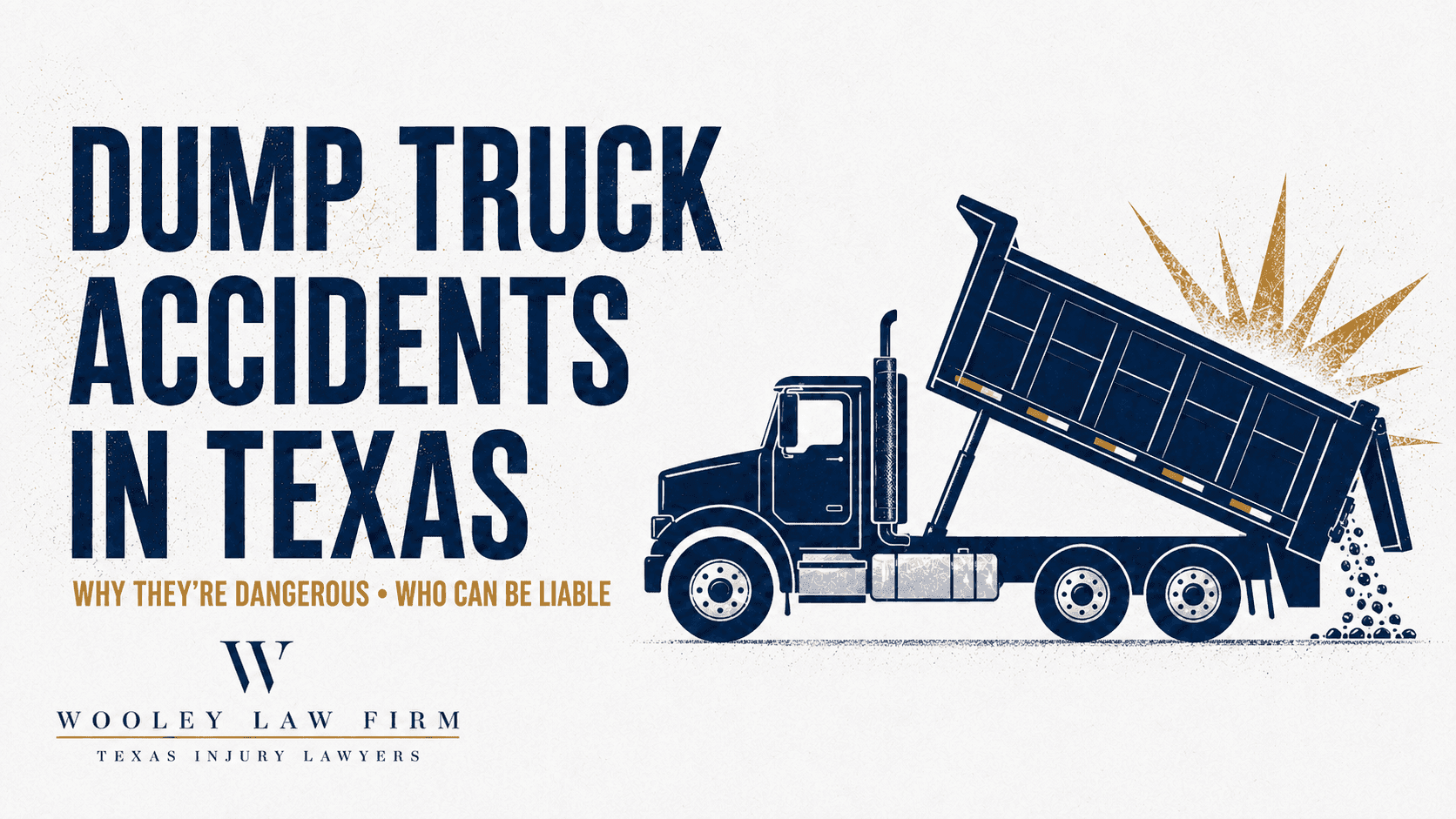
A crash involving a dump truck can be more dangerous than a typical semi-truck wreck. Dump trucks are heavier, stop slower, and often operate in high-risk environments like construction zones, road work areas, and tight intersections. On top of that, dump trucks frequently haul loose material like gravel, dirt, sand, asphalt, or debris, which creates a unique hazard when it spills into the roadway or strikes other vehicles.
If you were injured in a Texas dump truck accident, it’s important to know: these claims often involve special rules about containing loose materials and cargo securement duties that can help prove fault and liability may extend beyond the driver to multiple companies. For help with serious truck injury cases, visit our 18-wheeler wrecks page.
Why Dump Trucks Are More Dangerous Than Many Other Commercial Trucks
They carry loose material that can spill or blow out
Unlike enclosed trailers, dump trucks often carry loads that can escape the bed, especially if the load is overfilled, the tailgate isn’t secured, or the load isn’t covered.
Their weight and stopping distance increase crash severity
Dump trucks can weigh tens of thousands of pounds before they’re fully loaded and a loaded dump truck has longer stopping distances and higher crash force.
They frequently operate in construction and work zones
Dump trucks commonly merge in and out of lanes, back up, and make frequent stops creating higher crash risk for nearby drivers.
Dump Truck Rules That Don’t Apply the Same Way to Other Semi-Trucks
Dump trucks hauling loose material are subject to specific legal requirements that often become a major issue in injury cases.
Texas “loose materials” law: cover the load and secure the tailgate
Texas Transportation Code § 725.021 requires vehicles subject to the chapter to be equipped/maintained to prevent loose material from escaping, and includes requirements like a securely closed tailgate and that a commercial motor vehicle transporting loose material must have the load covered and the covering firmly secured (or completely enclosed by the load-carrying compartment). This matters because “spilled gravel” or “flying debris” isn’t just bad luck. Failure to comply can be powerful evidence of negligence.
Federal cargo securement duties also apply
Federal safety rules prohibit a driver from operating, and a carrier from requiring a driver to operate, unless cargo is properly distributed and adequately secured under the cargo securement standards. In dump truck cases, that can include securement of the load, safe tailgate function, and measures that prevent material loss during transport.
Injured in an Accident?
Free consultation. Tell us what happened and learn what options may be available.
Common Dump Truck Crash Scenarios
Loose debris spills into traffic
Gravel, dirt, or broken asphalt can spill and cause loss of control, windshield strikes, or multi-vehicle chain reactions, especially at highway speeds.
Tailgate failure or unsecured tailgate
A tailgate that isn’t properly latched can release material suddenly, creating an immediate hazard. (Texas law specifically addresses tailgate closure to prevent spillage.)
Overloaded or improperly loaded dump trucks
Overloads can increase stopping distance, reduce stability, and increase the chance of brake problems. Overweight operation can also implicate permit/weight compliance issues in Texas.
Unsafe backing or work-zone operations
Dump trucks often back up at job sites or in congested areas. Without safe procedures, spotters, and proper visibility, backing incidents can cause severe injuries.
Who Can Be Liable in a Texas Dump Truck Accident?
Dump truck cases are rarely “just the driver.” Depending on the facts, liability may include:
The dump truck driver
Potential fault includes speeding for conditions, following too closely, unsafe lane changes, distracted driving, and hauling a load without required containment.
The trucking company or employer
The company may be liable for negligent hiring, training, supervision, unsafe scheduling, or allowing trucks to operate with unsafe equipment or noncompliant load practices.
The construction company or site operator
If the dump truck was operating on a construction project, the general contractor or site operator may share responsibility for unsafe traffic control, unsafe work-zone practices, or negligent supervision.
The loader or material supplier
If the truck was overloaded, improperly loaded, or dispatched with unsafe instructions, the entity responsible for loading can be part of the liability chain.
Maintenance providers or manufacturers
Brake failures, hydraulic issues, tailgate latch problems, or other mechanical defects can involve maintenance contractors or product manufacturers.
Why Hiring an Attorney Early Matters in Dump Truck Cases
Dump truck claims can turn on evidence that disappears quickly.
Key evidence can be lost fast
Important proof may include:
Photos of the load, tarp/cover, and tailgate condition
Dash cam footage (often overwritten)
Maintenance and inspection records
Weight tickets, dispatch logs, and route records
Jobsite communications and contractor agreements
Witness statements before memories fade
Multiple insurance policies may apply
Construction-related trucking often involves multiple companies, policies, and contractors. Identifying all responsible parties early can affect recovery.
Evidence-driven cases settle differently
Insurers discount claims that aren’t supported by objective proof. Preserving evidence early and establishing liability clearly strengthens negotiation leverage.
How The Wooley Law Firm Helps After a Texas Dump Truck Crash
At The Wooley Law Firm, we’ve handled truck wreck cases across Texas and have obtained millions of dollars for injured clients. Dump truck cases require fast action like securing evidence of the load condition, tarp compliance, tailgate function, maintenance history, and the responsible companies involved in the hauling chain. Learn more about serious truck cases on our 18-wheeler wrecks page or reach out through our Contact page.
Call (214) 699-6524 for a free consultation. You don’t pay unless we win.
Frequently Asked Questions
Do dump trucks have to cover their loads in Texas?
For commercial motor vehicles transporting loose material, Texas law requires the load to be covered and the covering firmly secured (or completely enclosed), and requires a securely closed tailgate to prevent spillage.
Who is liable if a dump truck drops rocks or debris that causes a crash?
Potential liability can include the driver, trucking company, loader/material supplier, and sometimes construction contractors depending on who controlled loading, securement, and operations.
What should I do after a dump truck accident?
Get medical care, document the scene and debris if safe, identify the company and truck markings, avoid recorded statements, and talk to counsel early so evidence can be preserved.
Are federal cargo securement rules relevant in dump truck cases?
Yes. Federal rules require cargo to be properly secured and impose duties on drivers and carriers regarding safe transport.
Topics
Share This Article

Andrew J. Wooley
Personal Injury Attorney
Andrew J. Wooley is a dedicated personal injury attorney based in Dallas, Texas. He focuses on helping accident victims recover fair compensation for their injuries. With a commitment to personalized service, Andrew works directly with each client to understand their unique situation and fight for their rights.