Texas Truck Wrecks and Commercial Vehicle Crashes Are a Serious Problem
Texas highways are filled with 18-wheelers, tractor-trailers, delivery trucks, buses, oilfield trucks, construction vehicles, waste trucks, and other commercial motor vehicles. These vehicles are essential to the Texas economy, but when a truck driver, trucking company, or commercial operator fails to follow basic safety rules, the results can be devastating.
According to FMCSA Motor Carrier Management Information System (MCMIS) data, there were 18,824 reportable commercial motor vehicle crashes in Texas in 2025. Those crashes caused 586 fatalities and 11,589 injuries. For crash victims and grieving families, these numbers are more than statistics. They represent people whose lives were changed in an instant because of a serious truck wreck or commercial vehicle crash.
If you or a loved one were hurt in a collision with an 18-wheeler, tractor-trailer, delivery truck, bus, or other commercial vehicle, a Texas truck wreck attorney can help investigate what happened, preserve evidence, and identify every responsible party. Contact Us!
What Counts as a Reportable Truck or Commercial Vehicle Crash?
A State reportable crash must involve a truck or bus and meet certain seriousness requirements.
For this purpose, a truck generally means a vehicle with a gross vehicle weight rating or gross combined weight rating greater than 10,000 pounds. A bus generally means a passenger-carrying vehicle designed to seat at least nine people, including the driver.
The crash must also result in at least one of the following:
A fatality;
An injury where the injured person is taken to a medical facility for immediate medical attention; or
At least one vehicle being towed from the scene because of disabling damage.
The towed vehicle does not have to be the truck or bus. If an 18-wheeler causes a wreck and another vehicle must be towed because of disabling damage, that crash may qualify as a reportable commercial motor vehicle crash.
Types of Commercial Vehicles Involved in Texas Truck Wrecks
The 2025 Texas crash data shows that truck wrecks and commercial motor vehicle crashes involve many different types of vehicles, not just traditional 18-wheelers. Understanding the vehicle type matters because each vehicle has different handling characteristics, stopping distances, blind spots, cargo risks, and safety rules.
Tractor/Semi-Trailer
A tractor/semi-trailer is what most people think of as an 18-wheeler. The tractor is the powered truck cab, and the semi-trailer is attached behind it. These vehicles are commonly used for long-haul freight, regional delivery, refrigerated cargo, flatbed hauling, and other commercial transportation.
Because of their size and weight, tractor/semi-trailers can cause catastrophic rear-end, jackknife, underride, override, wide-turn, and lane-change crashes. The data listed 11,236 tractor/semi-trailers involved in crashes, making this the most common commercial vehicle type in the dataset.
Single-Unit Truck With Two Axles and Six Tires
A single-unit truck with two axles and six tires is a truck where the cab and cargo area are built on the same frame, rather than being connected to a separate trailer. These vehicles are commonly used as box trucks, delivery trucks, moving trucks, utility trucks, and smaller commercial freight vehicles.
Although they are usually smaller than tractor-trailers, they are still much heavier than passenger vehicles and may have large blind spots, longer stopping distances, and cargo-related risks. The data listed 3,984 single-unit trucks with two axles and six tires involved in crashes.
Truck/Trailer
A truck/trailer generally refers to a straight truck or single-unit truck pulling a separate trailer. These vehicles may be used for construction, landscaping, equipment hauling, utility work, agriculture, or local freight.
Truck/trailer combinations can create risks involving trailer sway, improper hitching, braking imbalance, poor cargo securement, and difficulty turning or stopping. The data listed 1,642 truck/trailers involved in crashes.
Single-Unit Truck With Three or More Axles
A single-unit truck with three or more axles is a larger straight truck built on one frame with additional axles to carry heavier loads. These may include dump trucks, concrete mixers, garbage trucks, heavy delivery trucks, and other industrial or construction vehicles.
These trucks can be difficult to maneuver and may require more time to stop, especially when loaded. Depending on the body type, they may also create risks involving falling debris, shifting loads, work-zone traffic, and frequent stopping. The data listed 1,169 single-unit trucks with three or more axles involved in crashes.
Truck Tractor Operating Bobtail
A bobtail truck tractor is a tractor operating without a trailer attached. Even without a trailer, a bobtail tractor is still a large commercial vehicle. Bobtail tractors can handle differently than loaded tractor-trailers because much of the braking system and weight distribution is designed for operation with a trailer.
A bobtail tractor may be more prone to traction issues, braking instability, and control problems under certain conditions. The data listed 1,032 truck tractors operating bobtail involved in crashes.
Bus With Seating for More Than 15 People
A bus with seating for more than 15 people includes larger passenger buses, public transit buses, shuttle buses, charter buses, school-type buses, and other high-capacity passenger vehicles.
Bus crashes can involve unique safety concerns because they may injure passengers, pedestrians, cyclists, and occupants of other vehicles. Investigations may focus on driver training, route schedules, passenger safety, maintenance, surveillance footage, blind spots, and whether the bus operator followed applicable safety rules. The data listed 978 buses with seating for more than 15 people involved in crashes.
Bus With Seating for 9 to 15 People
A bus with seating for 9 to 15 people is a smaller passenger-carrying vehicle. These may include hotel shuttles, airport shuttles, church vans, daycare vehicles, medical transport vans, employee shuttles, and smaller transit vehicles.
These vehicles can still qualify as commercial motor vehicles depending on their use and passenger capacity. Crashes may involve questions about driver qualifications, passenger restraints, maintenance, route planning, and whether the vehicle was being operated for a business, nonprofit, government agency, or transportation service. The data listed 225 buses with seating for 9 to 15 people involved in crashes.
Tractor/Double
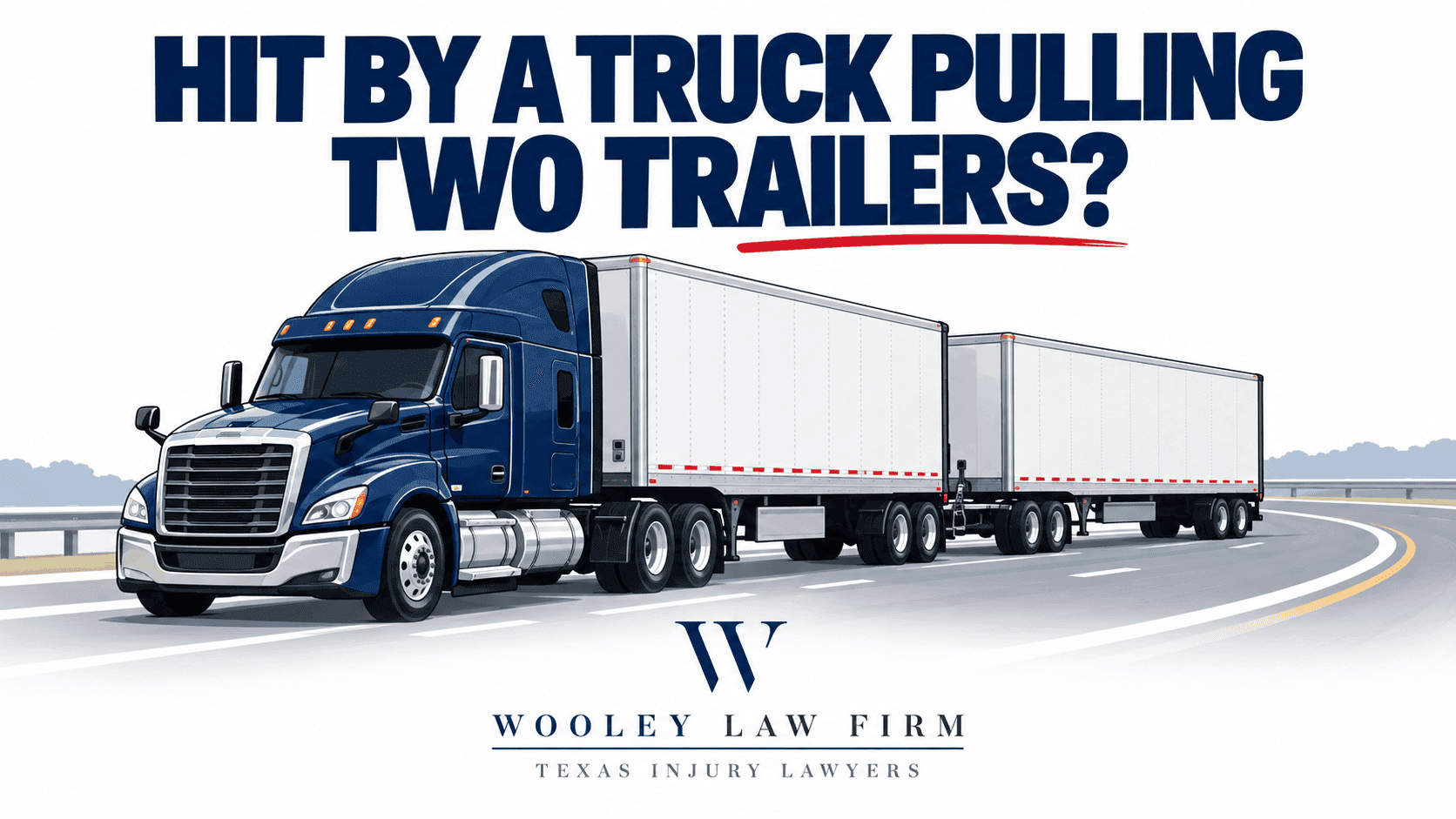
A tractor/double is a truck tractor pulling two trailers. These vehicles are often used in freight, package delivery, and line-haul operations.
Double-trailer combinations can be more difficult to control than single-trailer combinations. They may create increased risks involving trailer sway, off-tracking, lane changes, merging, braking, and rollovers. The data listed 117 tractor/doubles involved in crashes.
Tractor/Triple
A tractor/triple is a truck tractor pulling three trailers. These are less common and are subject to significant operational restrictions depending on the jurisdiction and route.
Triple-trailer combinations create serious handling and control concerns because of their length, multiple articulation points, braking complexity, and potential for trailer sway. Even though the data listed only 11 tractor/triples involved in crashes, these vehicles can present significant risks when involved in a collision.
Together, these vehicle categories show why truck wreck cases require more than a basic police report. A crash involving a tractor-trailer, bobtail tractor, dump truck, delivery truck, bus, double-trailer, or triple-trailer may involve different safety rules, different evidence, different defendants, and different questions about how the wreck happened.
Injured in an Accident?
Free consultation. Tell us what happened and learn what options may be available.
Most Texas Commercial Vehicle Crashes Involve Heavy Trucks
The 2025 Texas crash data also shows that most commercial vehicles involved in crashes were large, heavy vehicles.
Of the commercial vehicles involved in crashes, 15,508 had a gross vehicle weight rating over 26,000 pounds. Another 4,984 vehicles had a gross vehicle weight rating between 10,001 and 26,000 pounds. Only 12 vehicles were listed at 10,000 pounds or less.
This matters because heavy trucks require more time and distance to stop, can be harder to maneuver, and can cause severe injuries when they collide with passenger vehicles. A crash involving a vehicle over 26,000 pounds may raise questions about commercial driver qualifications, braking systems, maintenance records, load weight, cargo securement, route planning, and whether the trucking company followed federal and state safety rules.
Cargo Body Types in Texas Truck Accident Cases
The type of cargo body can affect how a truck wreck happens, how severe the impact is, and what evidence should be investigated. The most common cargo body type was enclosed box, with 7,458 vehicles involved in crashes. The data also included 2,603 flatbeds, 1,237 dump trucks, 1,133 cargo tanks, 608 vehicles towing another vehicle, 393 intermodal containers, 379 grain, chips, and gravel bodies, 179 concrete mixers, 170 automobile transporters, 133 pole trailers, 105 garbage trucks, and 62 logging vehicles. Another 4,839 vehicles were listed as “other.”
These categories show that Texas truck wrecks involve more than standard tractor-trailers. A flatbed accident may involve unsecured or shifting cargo. A dump truck or gravel truck crash may raise questions about load weight, falling debris, braking ability, or construction-zone safety. A cargo tank crash may involve hazardous materials or spill risks. A garbage truck or concrete mixer crash may involve stop-and-go neighborhood or worksite traffic. An automobile transporter, logging truck, or pole trailer may create unique dangers because of vehicle length, visibility, cargo securement, and turning radius. A truck wreck attorney should investigate the truck’s cargo, weight, maintenance history, route, driver training, company policies, and cargo securement practices.
Where Texas Truck Wrecks Happen Most Often
Commercial vehicle crashes happen throughout Texas, but the highest numbers are concentrated in the state’s major population and transportation centers.
Harris County had 2,557 commercial vehicles involved in crashes, followed by Dallas County with 1,727, Tarrant County with 1,162, Bexar County with 1,035, Travis County with 565, Denton County with 451, Midland County with 426, Montgomery County with 363, Collin County with 356, and El Paso County with 348.
City-level data tells the same story. Houston had 1,565 commercial vehicles involved in crashes, followed by Dallas with 970, San Antonio with 836, Fort Worth with 711, Austin with 387, El Paso with 256, Laredo with 169, Arlington with 162, Beaumont with 155, Irving with 143, Denton with 135, Midland with 135, Odessa with 122, and Grand Prairie with 113. Another 7,913 crashes did not list a city.
These numbers reflect how often commercial vehicles travel through Texas’s busiest corridors, including Houston, Dallas, Fort Worth, San Antonio, Austin, and El Paso. They also show the danger in fast-growing suburban counties, border freight corridors, oilfield regions, industrial areas, and cities with heavy delivery, transit, construction, and trucking activity.
Whether a truck wreck happens on I-35, I-20, I-10, I-45, US-75, Loop 610, SH 130, an oilfield road, a construction-zone detour, or a congested city street, injured Texans deserve a prompt investigation.
Carriers Most Often Listed in Texas Commercial Vehicle Crash Data
The crash data also identifies the carriers most often listed for commercial vehicles involved in Texas crashes.
The most frequently listed carrier was Metropolitan Transit Authority, also known as Houston METRO, with 203 commercial vehicles involved in crashes. It was followed by FedEx (Federal Express Corporation) with 119; Dallas Area Rapid Transit, or DART, with 110; UPS (United Parcel Service Inc.) with 86; J.B. Hunt Transport Inc. with 81; Wal-Mart Transportation LLC with 72; and VIA Metropolitan Transit, San Antonio’s public transportation agency, with 55.
Other frequently listed carriers included Werner Enterprises Inc. with 46; Capital Metro Transportation Authority, Austin’s public transportation agency, with 42; Swift Transportation Co. of Arizona LLC with 40; City of Dallas with 39; Schneider National Carriers Inc. with 37; First Transit Inc. with 36; Estes Express Lines with 34; Waste Management of Texas Inc. with 33; U.S. Xpress Inc. with 32; MVT Services with 31; and Ben E. Keith Company with 29. Another 458 vehicles did not have a listed carrier.
In a serious truck wreck, the identity of the carrier can help determine who controlled the vehicle, who employed or supervised the driver, who was responsible for maintenance and inspections, what insurance coverage may apply, and what records must be preserved.
A Tragic Example: The March 2025 I-35 Truck Crash in Austin
The danger of truck wrecks is not theoretical. On March 13, 2025, a devastating crash occurred on Interstate 35 in Austin in a construction zone. The crash killed five people and injured 14 others. Several witnesses described a semi-truck “plowing” through stopped and nearly stopped traffic. According to news reports, the crash happened in a construction zone. A National Transportation Safety Board investigation later examined the crash and the circumstances leading up to it. According to Austin’s KXAN, a hundreds-page-long NTSB report analyzing the March 2025 crash found that the driver of the semi-truck that caused the crash had been issued an “unrestricted” commercial driver license, when he was allegedly supposed to receive one that expired the year before the crash.
Another Texas Tragedy: The June 2025 I-20 Truck Crash in Kaufman County
Just months later, another catastrophic truck wreck occurred in North Texas. On June 28, 2025, a multi-vehicle crash happened on Interstate 20 in Kaufman County, east of Terrell near Wills Point. According to news reports, five people were killed after an 18-wheeler driver allegedly fell asleep behind the wheel and caused a multi-vehicle crash. Reports stated that the 18-wheeler crashed into a pickup truck carrying five people. The crash then pushed the rig into two other semi-trucks, one of which jackknifed and struck three nearby passenger vehicles. Four occupants of the pickup truck died at the scene. One pickup occupant was airlifted to a hospital with life-threatening injuries. The occupant of one of the other struck vehicles was also killed.
What Should You Do After a Truck Wreck in Texas?
After a serious truck wreck, your first priority should be medical care. Even if you believe your injuries are minor, symptoms can worsen over time. Prompt medical treatment protects your health and helps document the injuries caused by the crash.
You should also:
Call law enforcement;
Take photos and videos if you can do so safely;
Get names and contact information for witnesses;
Avoid arguing with the truck driver, company representatives, or insurance adjusters;
Avoid giving a recorded statement to the trucking company’s insurer;
Keep medical records, bills, photos, repair estimates, and insurance letters;
Contact a truck wreck attorney as soon as possible.
Insurance adjusters may sound helpful, but their job is to limit what the company pays. Before giving a recorded statement or signing anything, it is wise to understand your rights.
Talk to a Texas Truck Wreck Attorney Today
Truck wrecks can change lives in an instant. The Austin I-35 crash and the Kaufman County I-20 crash are tragic reminders of what can happen when heavy commercial vehicles collide with stopped or slowed traffic.
Whether a crash involves driver fatigue, unsafe speed, distracted driving, improper licensing, poor training, unsafe maintenance, negligent hiring, overloaded cargo, unsafe construction zones, or hazardous roadway conditions, injured Texans and grieving families deserve answers.
The Wooley Law Firm investigates serious truck wrecks and commercial motor vehicle crashes across Texas. We fight to hold negligent truck drivers, trucking companies, bus companies, delivery companies, public entities, and other responsible parties accountable.
Contact Us today or call (214) 699-6524 for a free consultation. You don’t pay unless we win.
Frequently Asked Questions About Texas Truck Wrecks
What should I do first after a truck wreck in Texas?
Your first priority should be getting medical care and calling law enforcement. After that, try to document the scene, save records, avoid recorded statements, and contact a truck wreck attorney as soon as possible.
Who can be held responsible for a Texas truck accident?
Depending on the facts, the truck driver, trucking company, vehicle owner, maintenance company, cargo loader, bus operator, delivery company, government entity, or another negligent party may be responsible. A detailed investigation is often needed to identify every liable party.
Why are truck wreck cases different from regular car accident cases?
Truck wreck cases often involve federal and state safety rules, commercial driver records, maintenance files, black box data, cargo records, company policies, and higher insurance coverage. These cases usually require fast action to preserve evidence before it is lost or destroyed.
How long do I have to file a truck accident claim in Texas?
In many Texas injury cases, the deadline is two years from the date of the crash, but some claims may have shorter notice deadlines, especially if a government entity is involved. It is important to speak with an attorney quickly so deadlines are not missed.
How much does it cost to hire Wooley Law Firm for a truck wreck case?
Wooley Law Firm offers free consultations, and you don’t pay unless we win. That means there are no upfront attorney’s fees to get started. Contact Us today
Topics
Share This Article

Andrew J. Wooley
Personal Injury Attorney
Andrew J. Wooley is a dedicated personal injury attorney based in Dallas, Texas. He focuses on helping accident victims recover fair compensation for their injuries. With a commitment to personalized service, Andrew works directly with each client to understand their unique situation and fight for their rights.