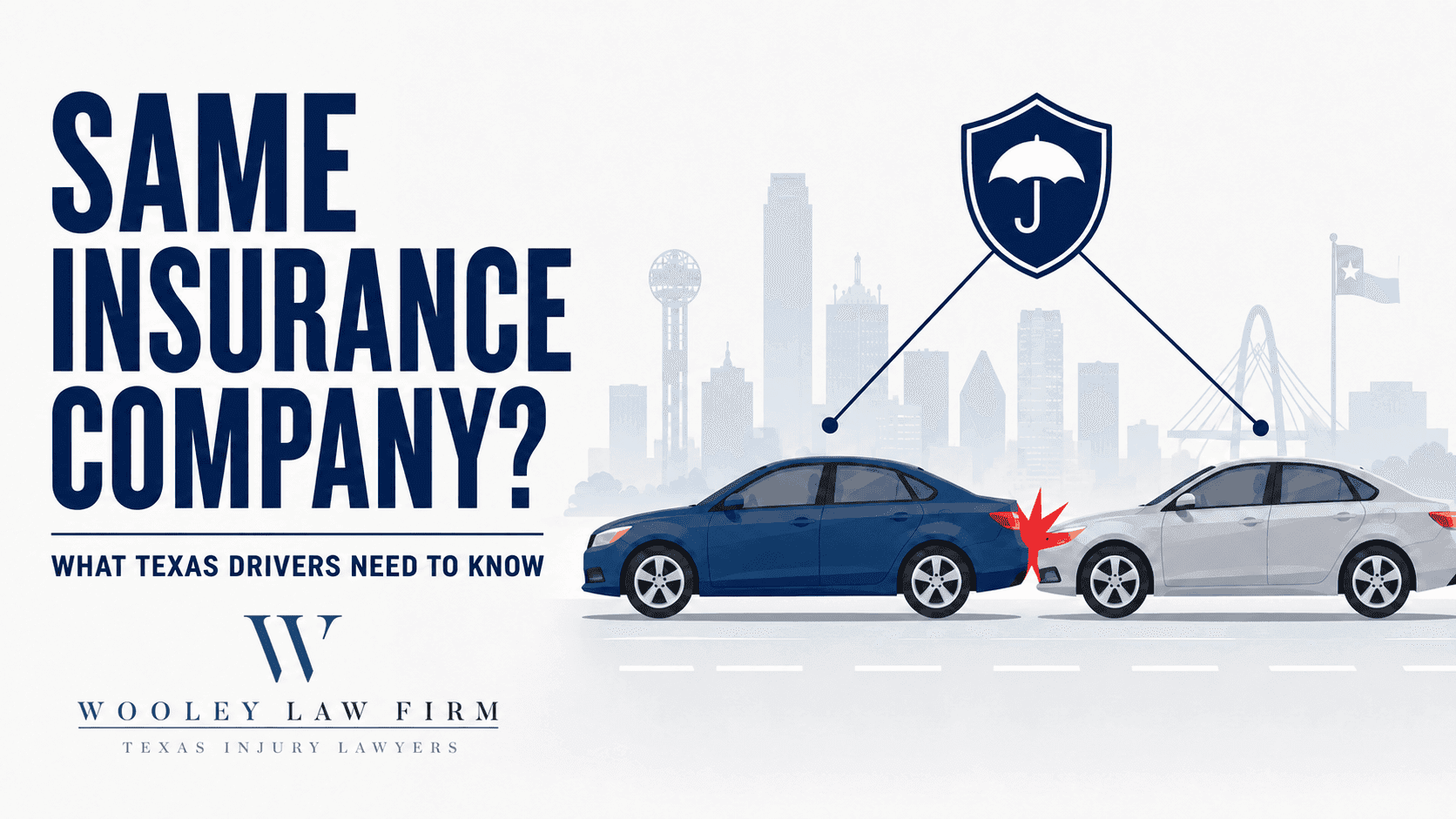
If another driver causes a car accident and you discover that you both have the same insurance company, the claims process can become surprisingly confusing.
For example, imagine you have Progressive insurance and the driver who rear-ended you also has Progressive. Someone from Progressive calls you after the crash. Because Progressive is your insurance company, you may assume you are talking to your insurance adjuster.
But that may not be true.
The adjuster could actually be handling the liability claim against the driver who hit you.
That distinction is extremely important.
Even though the same insurance company's name appears on both insurance cards, there may be separate policies, separate claims, separate adjusters, different insurance coverages, and different obligations depending on which claim is being handled.
If you were injured in this situation, you should know exactly whose policy and which coverage an adjuster is handling before giving a recorded statement, providing medical information, accepting a settlement, or signing a release.
If you have questions after a wreck, our Dallas car accident lawyer page explains more about how The Wooley Law Firm helps people injured in Dallas collisions.
Can Both Drivers Have the Same Insurance Company After a Car Accident?
Yes.
Progressive, State Farm, GEICO, Allstate, USAA, Farmers, and other major insurers cover enormous numbers of vehicles. It is entirely possible for the person who caused your Dallas car accident to have the same insurance company that you have.
That does not mean there is only one insurance claim.
Think of the insurance company as potentially wearing several different hats.
For example, after one collision there could be:
a bodily injury liability claim under the other driver's policy;
a property damage claim under the other driver's policy;
a collision claim under your own policy;
a Personal Injury Protection, or PIP, claim under your policy;
a MedPay claim under your policy;
an uninsured or underinsured motorist claim under your policy if applicable; and
a rental reimbursement claim under your policy if you purchased that coverage.
All of those claims could potentially involve the same insurance company, but they are not the same type of claim.
The important question is therefore not simply:
“What insurance company am I talking to?”
The better question is:
“Whose policy and what coverage is this adjuster handling?”
Example: Both Drivers Have Progressive Insurance
Suppose you are stopped at a red light in Dallas.
Another driver crashes into the back of your vehicle.
You suffer neck and back injuries and your vehicle is damaged.
You have Progressive.
The other driver also has Progressive.
You could potentially have a bodily injury liability claim against the other driver's Progressive policy. That claim seeks compensation from the driver who caused the accident for your injuries and damages.
You could also have a property damage liability claim against that driver's Progressive policy for damage to your vehicle.
At the same time, you may have your own collision coverage through Progressive that could potentially pay to repair or replace your vehicle, subject to your policy terms and deductible.
If you purchased or retained PIP coverage, you could also have a separate PIP claim under your own Progressive policy for certain medical expenses, lost income, and other covered losses.
You may have MedPay coverage under your policy as well.
And if the other driver's liability limits are not enough to cover your injuries, your own underinsured motorist coverage could potentially become important.
Our article on PIP versus MedPay in Texas explains how those two first-party coverages can differ after a Texas car accident.
The point is simple:
Same insurance company does not mean same claim.
The Other Driver's Liability Adjuster Is Not Your Adjuster
This is probably the most important issue for an injured driver to understand.
Imagine you receive this call:
“Hi, this is Sarah with Progressive. I'm calling about your accident.”
You have Progressive insurance, so naturally you think:
“This is my insurance company calling me.”
Technically, Progressive may be your insurance company.
But Sarah may not be handling your insurance claim.
She may be handling the bodily injury liability claim under the other driver's policy.
That adjuster may be investigating:
whether the other driver caused the crash;
whether you contributed to the collision;
whether your injuries were caused by the wreck;
when your symptoms began;
whether you had similar medical problems before the collision;
whether your treatment was reasonable or necessary;
whether you missed work;
whether you need future treatment; and
how much the liability claim should be worth.
The adjuster's role depends on the particular claim being handled.
An adjuster evaluating a liability claim against another insured is in a very different position from an adjuster processing PIP or collision benefits under your own policy.
That is one reason we recommend reading our guide on 5 Things Not to Say to an Insurance Adjuster before discussing an injury claim in detail.
Ask Which Claim the Adjuster Is Handling
When an insurance company covers both vehicles, you should make it a habit to identify exactly which claim each adjuster is handling.
You can ask:
“Are you handling a claim under my insurance policy, or are you handling the liability claim under the other driver's policy?”
You can also ask:
What is the claim number?
Who is the insured on this claim?
What coverage are you handling?
Are you handling bodily injury, property damage, collision, PIP, MedPay, or UM/UIM?
Is there another adjuster assigned to my own coverage?
Can you confirm this information by email?
Write down the answers.
If several claims are open with the same insurer, keeping the claim numbers separate can prevent significant confusion.
The Other Driver's Bodily Injury Liability Coverage
If the other driver caused the collision, you may have a bodily injury liability claim under that driver's policy.
This is the claim through which you may seek compensation for damages caused by the other driver's negligence.
Depending on the circumstances, recoverable damages may include:
medical expenses;
lost wages or lost earning capacity;
physical pain;
mental anguish;
physical impairment;
disfigurement; and
other legally recoverable damages.
The liability adjuster evaluates that claim on behalf of the policy covering the responsible driver.
That remains true even if you happen to pay premiums to the exact same insurance company.
For more information about pursuing compensation after a Dallas collision, visit our Dallas car accident lawyer page.
Property Damage Liability Is Another Separate Claim
The other driver's property damage liability coverage may be responsible for damage the at-fault driver caused to your vehicle.
This claim may involve:
repair costs;
whether the vehicle is a total loss;
towing charges;
storage costs;
rental expenses in appropriate circumstances; and
other covered property losses.
A property damage settlement is not automatically the same thing as a bodily injury settlement.
That distinction matters because many injured people want to get their car repaired or replaced quickly while continuing medical treatment for their injuries.
You should read anything you are asked to sign carefully to determine whether it resolves only property damage or whether the document also releases your bodily injury claim.
Your Own Collision Coverage Has a Different Purpose
If you purchased collision coverage, you may be able to use your own policy to address the vehicle damage even when another person caused the crash.
For example, Progressive could potentially be handling:
Claim One: Your collision claim under your Progressive policy.
At the same time:
Claim Two: Your property damage liability claim against the other driver's Progressive policy.
Although Progressive appears on both claims, the two coverages serve different purposes.
Your own collision coverage is contractual coverage you purchased.
A deductible may apply.
The insurer may later address responsibility and reimbursement through its own subrogation process.
Injured in an Accident?
Free consultation. Tell us what happened and learn what options may be available.
Your PIP Coverage Is Also a Separate Claim
Personal Injury Protection is another important example.
PIP is coverage under your own auto insurance policy.
Texas policies generally include PIP unless the named insured rejected it in writing.
Depending on the policy and facts, PIP may help pay certain accident-related medical expenses and lost income without first requiring you to prove the other driver was negligent.
So if both drivers have Progressive, you might simultaneously have:
a PIP claim under your own Progressive policy, and
a bodily injury liability claim against the other driver's Progressive policy.
Those are separate claims involving different coverage.
Read our detailed guide on PIP vs. MedPay in Texas if you want to understand how these coverages may help after an injury accident.
MedPay Could Be Yet Another Claim
Some Texas drivers purchase Medical Payments coverage, commonly called MedPay.
MedPay may pay certain accident-related medical expenses according to the terms and limits of your policy.
Once again, you could have:
a MedPay adjuster handling your own coverage; and
a liability adjuster handling your injury claim against the other driver.
Both could work for Progressive.
That does not mean they are handling the same claim.
Underinsured Motorist Coverage Can Become Important in Serious Accidents
Suppose the driver who hit you has liability insurance, but not enough insurance to compensate you fully.
For example, imagine the other driver has $30,000 in bodily injury liability coverage but you suffer a serious injury requiring surgery and extensive medical treatment.
Your own underinsured motorist coverage, commonly called UIM, could potentially become relevant depending on your policy and the circumstances.
This could create another unusual same-company situation.
Progressive might be handling the liability claim under the other driver's policy while also eventually handling a UIM claim under your policy.
Our Dallas uninsured and underinsured motorist attorney page explains this coverage in more detail.
We also have an in-depth article explaining Texas UM/UIM coverage and why it matters.
Why Having the Same Insurance Company Causes So Much Confusion
The problem is that everything may look like it is coming from your insurance company.
The adjuster's email may use the same company logo you see on your insurance card.
The telephone number may identify the company you pay every month.
You might receive several claim numbers from the same company.
Different adjusters may contact you within days of each other.
One adjuster may ask about vehicle repairs.
Another may ask about your injuries.
Another may contact you about PIP benefits.
Because the insurance company's name is the same, an injured person can easily assume every adjuster is working on the same claim.
They are not necessarily doing so.
Be Especially Careful With Recorded Statements
Suppose Progressive insures you and the person who caused the crash.
A Progressive adjuster calls and asks:
“Can we get a quick recorded statement about the accident?”
You might think you need to comply because this is your insurance company.
But before agreeing, find out which claim that person is handling.
Are they handling:
your collision claim?
your PIP claim?
your UM/UIM claim?
the other driver's liability claim?
Your obligations under your own insurance contract may be different from your obligations when dealing with an adjuster investigating a third-party liability claim.
Before discussing injuries, prior medical conditions, fault, or medical treatment, understand who is asking the questions and why.
Our article on what not to say to an insurance adjuster discusses this problem in greater detail.
Do Not Assume Information Given to One Adjuster Cannot Affect Another Claim
When the same company handles several claims arising from the same accident, be accurate and careful in every communication.
Information you provide may include:
descriptions of the collision;
photographs;
recorded statements;
medical information;
medical authorizations;
prior injury information;
employment information; and
statements about how you are feeling.
You should not assume information you give one department will necessarily be irrelevant to another part of the insurer's investigation.
That does not mean you should refuse legitimate requests made under your own insurance policy.
It means you should understand which claim you are dealing with and what information you are actually required to provide.
Do Not Sign a Release Just Because It Comes From “Your” Insurance Company
This may be the biggest danger when both drivers have the same insurer.
Suppose Progressive calls you and offers $7,500.
The adjuster says something like:
“We can get this resolved and get a check sent to you.”
Because you have Progressive insurance, you might assume Progressive is simply paying benefits owed under your own policy.
But the money may actually be offered under the other driver's bodily injury liability coverage.
The documents could contain a release of liability.
That release could state that, in exchange for the payment, you are releasing the driver who caused the crash from further claims.
That can have major consequences.
If you settle your bodily injury claim and sign a valid release, you may not be able to return months later and demand more money from the released party simply because:
your pain became worse;
injections did not work;
an MRI revealed a more serious injury;
you needed surgery;
you missed additional work; or
your medical bills increased.
Do not assume a document relates to your own insurance benefits merely because your insurance company's name appears on it.
Read what you are being asked to release.
Property Damage Paperwork and Injury Releases Are Different
Another important distinction involves property damage.
You may need money quickly to repair your vehicle or purchase another car.
Meanwhile, your medical treatment may continue for months.
Those claims should not automatically be treated as the same issue.
Before signing settlement paperwork, determine whether it releases:
only the property damage claim;
the bodily injury claim;
the driver who hit you;
the owner of the other vehicle;
other potentially responsible parties; or
every claim arising from the accident.
The wording matters.
If you are uncertain about what an insurance release does, having it reviewed before signing it can prevent a serious mistake.
A Liability Settlement Could Affect a Future UIM Claim
This issue can become even more important when your injuries are severe.
Suppose the responsible driver's insurance limits are inadequate and you may eventually need to pursue underinsured motorist coverage under your own policy.
You should not assume you can settle the liability claim, sign whatever release is presented, and sort out your UIM claim later.
Insurance policies can contain requirements affecting settlements, notice, subrogation rights, and UM/UIM claims.
If underinsured motorist coverage may be necessary, the available policies and settlement documents should be evaluated before the liability claim is finalized.
You can learn more from our Texas UM/UIM coverage guide.
What If the Insurance Company Denies Coverage?
Same-company claims can become even more complicated when one part of the insurer denies coverage.
For example, the company might claim:
the other driver was excluded from the policy;
the policy had lapsed;
the vehicle was not covered;
the driver did not have permission to use the vehicle;
an exclusion applies; or
another insurance policy is primary.
A coverage denial does not necessarily mean the investigation is over.
There may be additional insurance policies or legal issues that need to be examined.
Our article Denied Coverage in Texas: Denied Doesn't Always Mean No Coverage explains why accident victims should investigate a coverage denial rather than automatically accepting it.
You can also learn more about these disputes on our Dallas insurance coverage attorney page.
What Should You Do If You and the Other Driver Have the Same Insurance?
First, do not panic. Having the same insurance company does not automatically prevent you from pursuing compensation.
Instead, get organized.
1. Identify Every Claim Number
Ask whether separate claims have been opened for property damage, bodily injury, PIP, collision, MedPay, or UM/UIM.
2. Identify Which Policy Each Adjuster Is Handling
Ask whether the adjuster is working under your policy or the other driver's policy.
3. Ask What Coverage They Handle
Do not simply ask whether they are “your adjuster.”
Ask specifically whether they are handling liability, collision, PIP, MedPay, property damage, or UM/UIM.
4. Keep Written Records
Save emails, letters, text messages, estimates, and settlement offers.
Keep a note of telephone conversations including the date, adjuster's name, claim number, and what was discussed.
5. Review Your Own Insurance Policy
Look at your declarations page and determine whether you have:
collision;
PIP;
MedPay;
uninsured motorist coverage;
underinsured motorist coverage;
rental reimbursement; or
other optional coverages.
6. Be Careful With Medical Authorizations and Recorded Statements
Find out why the information is being requested and which claim it relates to before providing broad access to medical information.
7. Do Not Sign a Release Without Understanding It
Determine exactly which claim is being settled and which people, companies, policies, and claims the document releases.
This is especially important when your injuries are still being evaluated or additional medical treatment may be necessary.
How a Dallas Car Accident Lawyer Can Help When Both Drivers Have the Same Insurance Company
A same-insurer accident can require sorting through several different claims at the same time.
The Wooley Law Firm can help identify the insurance policies that may apply, determine which adjuster is handling each claim, investigate liability, gather medical evidence, review available PIP and UM/UIM benefits, evaluate coverage disputes, communicate with insurance adjusters, and review settlement paperwork before a client signs away important rights.
The goal is to make sure an injured person does not accidentally resolve one claim while believing they are simply receiving benefits from another.
For more information about representation after a wreck, visit our Dallas car accident lawyer page.
Frequently Asked Questions About Having the Same Insurance Company
What happens if the person who hit me has the same insurance company as me?
You may still pursue a liability claim against the responsible driver. The insurer may establish separate claims under each policy and assign different adjusters to different coverages.
If both drivers have Progressive, is the Progressive adjuster my adjuster?
Not necessarily. An adjuster could be handling your own collision or PIP claim, or that person could be handling the liability claim under the other driver's Progressive policy. Ask which policy and coverage the adjuster is handling.
Can I have two claims with Progressive after one accident?
Potentially, yes. You could have a liability claim against another Progressive insured while also making a PIP, collision, MedPay, or UM/UIM claim under your own Progressive policy.
Should I give the other driver's adjuster a recorded statement?
Before providing a recorded statement, determine exactly which claim the adjuster is handling and whether you have any contractual obligation to provide one. Do not assume you must give a liability adjuster a statement simply because that person works for the same company that insures you.
Can I use my collision coverage if the other driver has the same insurer?
Potentially. If you purchased collision coverage and the loss falls within that coverage, your own insurer may handle the vehicle damage subject to your policy terms and deductible.
Can I make a PIP claim and a liability claim at the same time?
Potentially, yes. PIP is generally first-party coverage under your own policy, while a bodily injury liability claim is made against the responsible driver's coverage.
Should I sign a release from my own insurance company?
Do not focus only on the insurance company's name. Determine which policy and which claim the document is settling. A document sent by the company that insures you could actually be a release settling your liability claim against another person insured by that company.
Talk to a Dallas Car Accident Lawyer Before Signing an Insurance Release
If you were injured in a Dallas, Fort Worth, or North Texas car accident and discovered that you and the responsible driver have the same insurance company, do not assume every adjuster who calls you is handling a claim under your policy.
Find out whose policy the adjuster is handling.
Find out which coverage applies.
And before you sign a bodily injury settlement or release, make sure you understand exactly which rights and claims you are giving up.
Call (214) 699-6524 for a free consultation. You don't pay unless we win.
If you were injured in a Dallas car accident, North Texas highway collision, or another vehicle wreck, you may have the right to seek justice and pursue compensation for medical expenses, pain and suffering, lost wages, mental anguish, impairment, and other damages.
Disclaimer
This article is for general informational purposes only and is not legal advice. Reading it does not create an attorney-client relationship. Insurance coverage depends on the language of the applicable policies and the facts of each accident. Every case is different, and past results do not guarantee a similar outcome.
Topics
Share This Article

Andrew J. Wooley
Personal Injury Attorney
Andrew J. Wooley is a dedicated personal injury attorney based in Dallas, Texas. He focuses on helping accident victims recover fair compensation for their injuries. With a commitment to personalized service, Andrew works directly with each client to understand their unique situation and fight for their rights.
Related Local News
Recent related coverage