A broken foot or broken toe after a Dallas car accident can make even basic activities difficult. Walking, standing, driving, working, climbing stairs, exercising, and caring for your family may suddenly become painful or impossible.
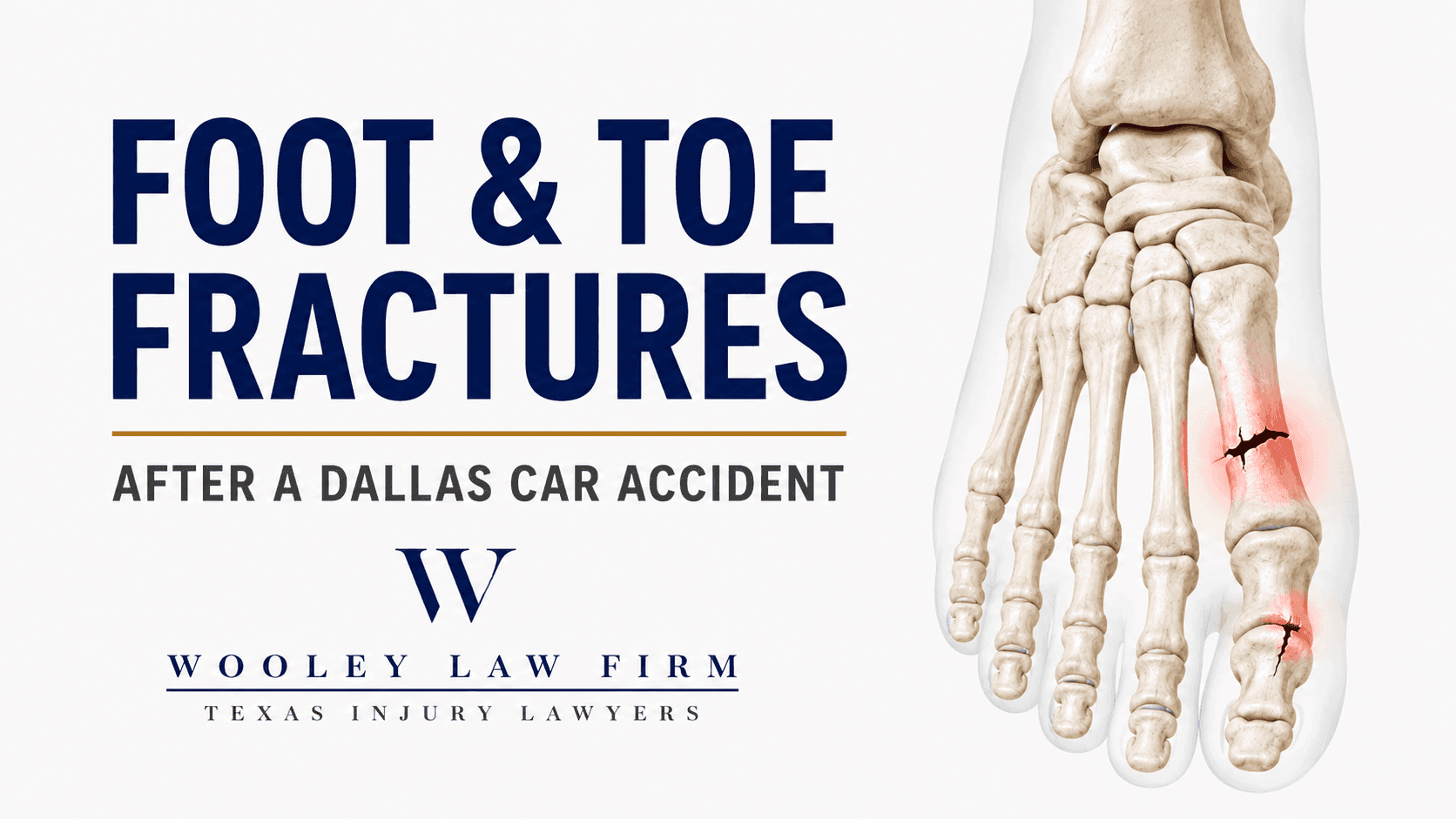
Foot fractures are especially important because the foot is a complex weight-bearing structure. Each foot contains 26 bones: 7 tarsal bones, 5 metatarsal bones, and 14 phalanges, or toe bones. A car wreck can fracture one bone or cause multiple fractures along with ligament, tendon, nerve, or joint injuries.
At The Wooley Law Firm, we have represented clients suffering from serious foot injuries after car accidents and other incidents, including fractures requiring extensive medical treatment. We have recovered millions of dollars for clients with foot injuries. Every case is different, however, and prior results do not guarantee a similar outcome.
If you suffered a broken foot, metatarsal fracture, tarsal fracture, or broken toe in a Dallas car accident, understanding the full extent of the injury before settling your insurance claim can be extremely important.
How Does a Car Accident Cause a Broken Foot?
A foot does not have to directly strike something for a fracture to occur.
During a collision, significant forces can travel through the floorboard, pedals, legs, and feet. Common mechanisms include:
A driver's foot being planted on the brake during impact
The foot becoming trapped beneath or around the pedals
The floorboard crushing or deforming inward
A side-impact collision forcing the foot sideways
The foot twisting while the body moves in another direction
A dashboard, console, or other object striking the foot
A rollover causing the foot or leg to become trapped
A pedestrian's foot being struck or run over by a vehicle
A motorcycle rider's foot becoming pinned between vehicles or the roadway
Serious crashes can cause multiple fractures at the same time, sometimes together with ankle, tibia, fibula, ligament, or nerve injuries.
Understanding the Bones of the Foot
Doctors may use medical terms such as tarsal fracture, metatarsal fracture, or phalangeal fracture. These terms simply describe which part of the foot is broken.
Tarsal Fractures
The tarsal bones are located primarily in the rear and middle portions of the foot. They include the:
Talus
Calcaneus
Navicular
Cuboid
Medial cuneiform
Intermediate cuneiform
Lateral cuneiform
Because these bones help transfer weight and force through the foot, a serious tarsal injury can interfere with walking and normal foot mechanics.
Some midfoot injuries can also involve the joints between the tarsal and metatarsal bones, including the Lisfranc joint complex.
Metatarsal Fractures
The five metatarsals are the long bones connecting the back and middle of the foot to the toes.
A crash can fracture one metatarsal or several at once. Multiple metatarsal fractures may make it extremely difficult to put weight on the injured foot.
Depending on the location and displacement of the fracture, treatment may range from immobilization and limiting weight-bearing to surgery.
Toe Fractures and Phalanges
The toe bones are called phalanges.
There are 14 phalanges in each foot. The big toe has two bones, while each of the other toes generally has three.
A broken toe can sound minor compared with other car accident injuries, but the toes play an important role in balance, walking, and pushing off the ground.
A significant fracture of the big toe can be particularly limiting.
Symptoms of a Foot or Toe Fracture After a Dallas Car Accident
Symptoms can depend on the location and severity of the fracture.
Common signs may include:
Severe foot or toe pain
Swelling
Bruising
Tenderness
Difficulty standing
Difficulty putting weight on the foot
Limping
Pain when walking
Visible deformity
Numbness or tingling
Reduced movement of the toes or foot
Pain that becomes worse with activity
Some people initially believe they merely bruised or sprained their foot. After the adrenaline of the collision wears off, however, swelling and pain may become much more noticeable.
If you continue having significant pain after a crash, seek appropriate medical evaluation rather than assuming the injury will simply disappear.
Can an X-Ray Miss a Foot Injury?
X-rays are commonly used to evaluate suspected fractures, but the appropriate imaging depends on the injury and symptoms.
Persistent pain may lead a physician to consider additional or follow-up imaging. Depending on the suspected injury, this may include additional X-rays, CT imaging, MRI, or other testing.
For example, the American Academy of Orthopaedic Surgeons notes that additional imaging may sometimes be considered when an initial X-ray does not explain continuing symptoms.
This is one reason ongoing foot pain after a collision should not automatically be dismissed simply because an initial emergency-room evaluation did not identify a major fracture.
Injured in an Accident?
Free consultation. Tell us what happened and learn what options may be available.
Treatment for Foot and Toe Fractures After a Car Accident
Treatment depends on the specific bone involved, whether the fracture is displaced, whether a joint is affected, and whether there are associated soft-tissue injuries.
Treatment may include:
Rest and activity restrictions
Crutches
Walking boot
Splinting
Casting
Limiting or eliminating weight-bearing
Orthopedic treatment
Podiatry treatment
Pain medication
Physical therapy
Follow-up imaging
Surgery
Plates, screws, pins, or other fixation in appropriate cases
Casts and splints are commonly used to keep fractured bones immobilized while they heal, although treatment varies considerably depending on the fracture.
Severe fractures may require surgery to restore alignment and stability.
Why Foot Fractures Can Have a Major Effect on Daily Life
An insurance company may focus on the size of the bone that was fractured.
That does not necessarily reflect the real impact of the injury.
Your feet bear your weight whenever you stand or walk. A painful foot injury can affect almost everything you do.
Depending on the severity of the fracture, an injured person may have difficulty:
Walking
Standing for long periods
Driving
Going to work
Performing construction or manual labor
Climbing ladders or stairs
Carrying children
Grocery shopping
Exercising
Running
Wearing normal shoes
Sleeping comfortably
Participating in hobbies or recreational activities
For someone whose job requires standing, walking, climbing, driving, lifting, or working on uneven surfaces, a serious foot fracture can also result in substantial lost income.
Future Problems After a Serious Foot Fracture
Not every fracture heals without complications.
Depending on the nature of the injury, a person may experience continuing:
Pain
Swelling
Reduced range of motion
Weakness
Difficulty walking
Limping
Sensitivity while wearing shoes
Nerve symptoms
Joint stiffness
Reduced endurance
Changes in gait
Post-traumatic arthritis
Need for additional surgery or medical treatment
The possibility of ongoing limitations is one reason it may be risky to resolve an injury claim before the medical condition and future treatment needs are reasonably understood.
Insurance Companies May Undervalue Broken-Foot Claims
Foot-fracture claims can become disputed when an insurance company argues that:
The fracture is minor
The victim should already be healed
Surgery was unnecessary
Continuing pain is unrelated to the wreck
The victim returned to work and therefore has no significant impairment
A prior foot condition caused the current symptoms
The property damage to the vehicles was too minor to cause the injury
The medical evidence matters.
That can include diagnostic imaging, orthopedic or podiatry records, surgical records, physical therapy records, work restrictions, photographs of swelling or bruising, and testimony explaining how the injury changed the person's daily life.
For additional information about related lower-extremity injuries, readers can also review The Wooley Law Firm's existing article on foot and ankle injuries after a Dallas car accident.
What Compensation May Be Available for a Foot Fracture?
When another driver's negligence causes a Dallas car accident, an injured person may be able to pursue compensation for losses caused by the collision.
Depending on the facts, damages may include:
Past medical expenses
Future medical expenses
Lost wages
Loss of earning capacity
Physical pain
Mental anguish
Physical impairment
Disfigurement
Other legally recoverable damages
The value of a broken-foot claim depends on much more than the name of the fracture.
Important factors may include the severity of the break, whether surgery was required, time spent unable to walk normally, lost income, future medical treatment, permanent restrictions, and how the injury affects the person's life.
We Have Recovered Millions for Clients With Foot Injuries
At The Wooley Law Firm, we have represented many clients suffering from foot injuries, including serious fractures and injuries requiring significant medical care.
We have recovered millions of dollars for clients with foot injuries.
When handling a serious foot-injury claim, we look beyond the diagnosis itself. We work to document how the injury affects the entire person—including walking, working, driving, sleeping, caring for family, recreational activities, and future quality of life.
We may also evaluate:
How the collision happened
Police reports and witness statements
Available photographs and video
All applicable insurance policies
Medical records and diagnostic imaging
Surgical recommendations
Future medical needs
Lost wages and employment restrictions
Permanent impairment and limitations
Past results do not guarantee a similar outcome. The value and outcome of every injury claim depend on its individual facts.
Do Not Settle a Broken-Foot Claim Too Early
An insurance adjuster may offer money shortly after a collision.
But once a bodily-injury claim is fully released, you generally cannot return later simply because the foot requires additional treatment or the injury turns out to be more serious than expected.
Before signing a settlement or release, make sure you understand what you are signing and the medical condition for which you are settling.
If you are unsure who an adjuster represents or what a document releases, consider having it reviewed before signing.
How a Dallas Car Accident Lawyer Can Help With a Foot-Fracture Claim
A serious fracture claim may involve much more than sending medical bills to an insurance adjuster.
An attorney can investigate the collision, preserve evidence, identify available insurance, document medical treatment and lost wages, evaluate future losses, negotiate with the insurer, and file a lawsuit when appropriate.
The Wooley Law Firm represents people injured in serious Dallas and North Texas car accidents. The firm's Dallas car-accident practice includes claims involving negligent drivers, rear-end crashes, intersection collisions, highway wrecks, commercial vehicles, pedestrians, and other serious accidents.
Frequently Asked Questions About Foot Fractures After Car Accidents
Can a car accident break a metatarsal?
Yes. Direct impact, crushing forces, twisting, or force transmitted through a planted foot can result in a metatarsal fracture.
Can you break several bones in your foot during one crash?
Yes. High-energy trauma can injure multiple bones and may also damage nearby joints, ligaments, tendons, nerves, or the ankle.
Is a broken toe worth filing a car accident claim?
A toe fracture can be part of a personal-injury claim when another person's negligence caused the crash. The significance of the claim depends on the medical treatment, pain, lost income, limitations, prognosis, and other damages—not merely the size of the fractured bone.
What if my foot still hurts even though the emergency-room X-ray was normal?
Persistent or worsening symptoms should be discussed with an appropriate medical provider. Some injuries may warrant follow-up evaluation or additional imaging depending on the circumstances.
Should I accept an insurance settlement while I am still treating?
Be cautious about settling before you understand your diagnosis, recovery, and reasonably anticipated future medical needs. A signed release may end your ability to pursue additional compensation from the released party.
Talk to a Dallas Car Accident Lawyer About Your Foot Injury
If you suffered a broken foot, tarsal fracture, metatarsal fracture, broken toe, or other serious foot injury in a Dallas car accident, The Wooley Law Firm may be able to help.
If you were injured in a Dallas car accident, North Central Expressway crash, I-35E wreck, I-30 collision, I-635 crash, intersection accident, rear-end collision, commercial vehicle accident, or multiple-vehicle wreck, you may have the right to seek justice and pursue compensation for medical expenses, pain and suffering, lost wages, mental anguish, impairment, and other damages.
Call (214) 699-6524 for a free consultation. You don't pay unless we win. The firm's current Dallas car-accident and contact pages confirm that consultation information and phone number.
Disclaimer
This article is for general informational purposes only and is not legal advice. Reading it does not create an attorney-client relationship. Every case is different, and past results do not guarantee a similar outcome.
Topics
Share This Article

Andrew J. Wooley
Personal Injury Attorney
Andrew J. Wooley is a dedicated personal injury attorney based in Dallas, Texas. He focuses on helping accident victims recover fair compensation for their injuries. With a commitment to personalized service, Andrew works directly with each client to understand their unique situation and fight for their rights.
Related Local News
Recent related coverage