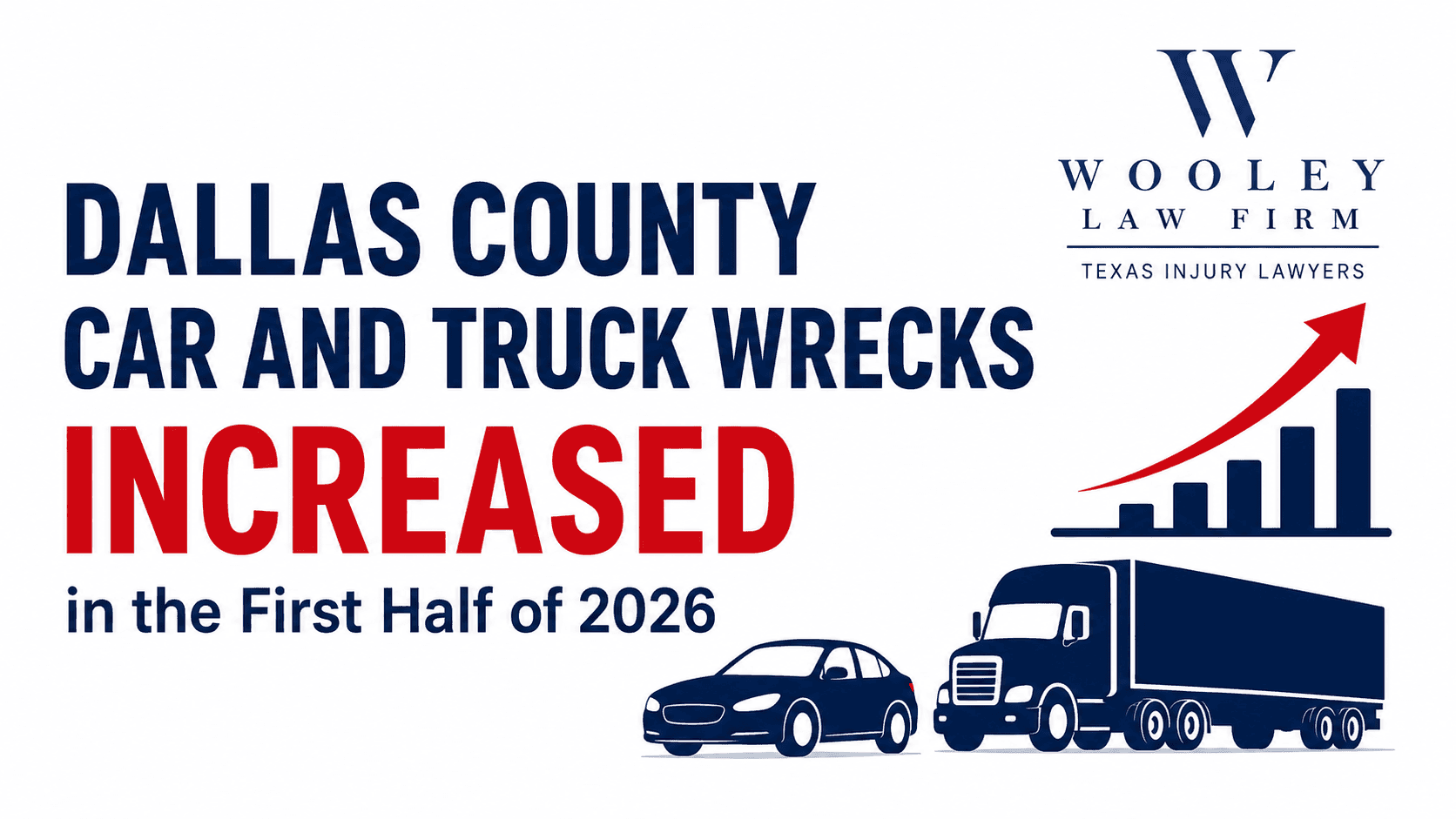
According to data obtained through the Texas Department of Transportation Crash Records Information System, Dallas County recorded 23,970 crashes from January 1 through June 30, 2026. During the same period in 2025, the county recorded 23,562 crashes.
That means Dallas County had 408 more reported car and truck wrecks, an increase of approximately 1.7%.
The injury numbers are even more concerning. Dallas County recorded 11,741 injured people during the first half of 2026—373 more than during the same period in 2025. Injuries increased by approximately 3.3%, nearly twice as fast as the overall number of crashes.
For someone hurt in a Dallas car accident, these are not abstract numbers. A wreck can lead to emergency treatment, ongoing pain, missed work, vehicle repairs, medical bills, and pressure from an insurance company to settle before the full effects of an injury are known.
The Wooley Law Firm represents people injured in car, truck, and commercial vehicle wrecks throughout Dallas County. If you need help understanding an insurance claim after a collision, speak with a Dallas car accident lawyer about the facts of your case.
Dallas County Crash Statistics Increased in 2026
From January 1 through June 30, 2026, Dallas County recorded:
23,970 reported crashes, compared with 23,562 during the first half of 2025. That represents an increase of 408 crashes, or approximately 1.7%.
49,593 units involved, compared with 49,054 in 2025. That is an increase of 539 units, or approximately 1.1%.
60,914 people involved, compared with 60,537. That represents 377 additional people involved in reported Dallas County crashes.
11,741 injured people, compared with 11,368. That is an increase of 373 injuries, or approximately 3.3%.
793 suspected serious injuries, compared with 781. That represents 12 additional suspected serious injuries, or an increase of approximately 1.5%.
139 traffic deaths, compared with 135. That represents four additional deaths, or an increase of approximately 3%.
Dallas County averaged approximately 132 reported crashes and 65 injured people every day during the first six months of 2026. On average, someone was killed in a Dallas County traffic crash approximately every 31 hours.
The CRIS “persons involved” category should not be confused with the number of injured people. It includes people involved in the reported crashes whether they were injured or not.
Our earlier analysis of Dallas County car and truck wrecks during the first quarter of 2026 showed that crashes and injuries were already outpacing the first quarter of 2025. The first-half figures show that Dallas County remained above the prior year after six months.
Dallas County Injuries Increased Faster Than Crashes
The number of crashes in Dallas County increased by approximately 1.7%, but the number of people injured rose by approximately 3.3%.
In other words, Dallas County did not simply experience more reported wrecks. It experienced a disproportionately larger increase in the number of injured people.
Suspected serious injuries increased from 781 to 793, while traffic deaths rose from 135 to 139. Although these percentage changes are based on relatively modest numerical increases, the underlying human consequences are substantial.
A suspected serious injury can involve permanent or life-changing harm. Depending on the crash, an injured person may face:
Traumatic brain injuries
Spinal cord injuries
Herniated discs
Broken bones
Internal organ injuries
Severe burns or lacerations
Amputations
Permanent scarring
Physical impairment
Chronic pain
Anxiety or post-traumatic stress
Car-accident injuries are not always obvious at the scene. Adrenaline can mask pain, and symptoms involving the head, neck, back, shoulders, knees, or other areas may become more noticeable hours or days later.
Someone experiencing new or worsening symptoms should seek appropriate medical attention. Our guides discuss concussion symptoms after a Dallas car accident and neck injuries after a Dallas car wreck.
Dallas Had More Than Half of the County’s Crashes
The City of Dallas continued to account for more crashes than every other city in Dallas County combined.
Dallas recorded 12,835 crashes during the first half of 2026, compared with 12,305 during the same period in 2025. That represents 530 additional crashes and an increase of approximately 4.3%.
Dallas alone accounted for approximately 53.5% of all Dallas County crashes and averaged nearly 71 reported crashes per day.
In fact, the City of Dallas added more crashes than Dallas County as a whole. The countywide total increased by 408, while the Dallas city total increased by 530. Decreases in several other Dallas County cities offset part of the increase within Dallas.
Dallas County Cities With the Most Crashes
The Dallas County cities with the most reported crashes during the first half of 2026 were:
Dallas: 12,835 crashes, up from 12,305 in 2025. That is an increase of approximately 4.3%.
Irving: 2,226 crashes, down from 2,256. That is a decrease of approximately 1.3%.
Garland: 1,601 crashes, up from 1,565. That is an increase of approximately 2.3%.
Mesquite: 1,160 crashes, up from 1,069. That is an increase of approximately 8.5%.
Grand Prairie: 1,153 crashes, up from 1,042. That is an increase of approximately 10.7%.
Carrollton: 771 crashes, down from 855. That is a decrease of approximately 9.8%.
Richardson: 675 crashes, down from 707. That is a decrease of approximately 4.5%.
Farmers Branch: 466 crashes, up from 455. That is an increase of approximately 2.4%.
Duncanville: 403 crashes, down from 423. That is a decrease of approximately 4.7%.
Lancaster: 391 crashes, up from 385. That is an increase of approximately 1.6%.
Dallas, Irving, Garland, Mesquite, and Grand Prairie collectively accounted for 18,975 crashes, or approximately 79.2% of all reported Dallas County wrecks during the first half of 2026.
Grand Prairie experienced the largest percentage increase among the five leading cities. Its crash total rose by approximately 10.7%. Mesquite followed with an increase of approximately 8.5%.
Other cities experienced notable declines. Carrollton recorded 84 fewer crashes, Rowlett had 74 fewer, and Balch Springs had 68 fewer.
These raw totals do not prove that one city became inherently safer or more dangerous. Population, traffic volume, roadway mileage, construction, commuting patterns, and crash-reporting practices can all affect the totals.
For cities extending into more than one county, the figures in this article reflect crashes returned by a Dallas County-filtered CRIS Query—not necessarily every crash throughout the entire city.
I-35E Had the Most Dallas County Wrecks
Major interstate highways, tollways, and commuter corridors accounted for a substantial share of Dallas County crashes.
I-35E recorded 1,916 crashes during the first half of 2026—more than any other listed roadway. That is an average of approximately 10.6 reported crashes every day.
Although I-35E remained the leading crash corridor, its total declined from 1,966 crashes in 2025. That represents 50 fewer crashes and a decrease of approximately 2.5%.
I-635 moved into second place after experiencing the largest numerical increase among Dallas County’s leading roadways. Its total rose from 1,416 crashes in 2025 to 1,547 in 2026. That represents 131 additional wrecks and an increase of approximately 9.3%.
I-30 moved from second to third after its total declined from 1,424 to 1,373 crashes.
Injured in an Accident?
Free consultation. Tell us what happened and learn what options may be available.
Dallas County Roads With the Most Reported Crashes
The Dallas County roads with the most reported crashes during the first half of 2026 were:
I-35E: 1,916 crashes
I-635: 1,547 crashes
I-30: 1,373 crashes
I-20: 905 crashes
US-75: 794 crashes
Loop 12: 782 crashes
Belt Line Road: 640 crashes
Dallas North Tollway: 444 crashes
SH-161: 413 crashes
SH-183: 381 crashes
I-45: 338 crashes
SH-78: 304 crashes
US-67: 300 crashes
US-175: 235 crashes
SH-190: 224 crashes
Spur 366: 212 crashes
SH-114: 177 crashes
SH-352: 174 crashes
FM-1382: 167 crashes
MacArthur Boulevard: 167 crashes
Several roads experienced notable year-over-year increases:
I-635 increased by 131 crashes, or approximately 9.3%.
Belt Line Road increased by 84 crashes, or approximately 15.1%.
Spur 366 increased by 44 crashes, or approximately 26.2%.
Illinois Avenue increased by 30 crashes, or approximately 26.5%.
SH-78 increased by 27 crashes, or approximately 9.7%.
Lake June Road increased by 25 crashes, or approximately 28.1%.
US-75 increased by 23 crashes, or approximately 3%.
Marsh Lane increased by 18 crashes, or approximately 20.5%.
Other major corridors recorded fewer crashes:
The Dallas North Tollway declined from 518 crashes to 444.
US-80 declined from 238 crashes to 166.
SH-190 declined from 281 crashes to 224.
I-20 declined from 961 crashes to 905.
I-30 declined from 1,424 crashes to 1,373.
I-35E declined from 1,966 crashes to 1,916.
The six leading highway corridors—I-35E, I-635, I-30, I-20, US-75, and Loop 12, collectively recorded 7,317 crashes in 2026. That was 33 fewer than during the first half of 2025, even though the countywide crash total increased by 408.
This means the countywide increase was not driven solely by the busiest interstate corridors. More crashes were spread across other highways, arterial roads, and city streets.
Road labels in CRIS can divide the same general corridor among route numbers and local names. For example, the system separately reports certain crashes under SH-190, SH-161, and President George Bush Turnpike. Those categories should not be combined without reviewing the underlying records.
Raw totals also do not establish a roadway’s crash rate. A meaningful risk comparison would require traffic-volume and roadway-mile data. These figures show where crashes were reported—not definitively which road was the “most dangerous.”
Fewer Commercial Vehicle Crashes but More Suspected Serious Injuries
Dallas County recorded 1,917 crashes involving commercial motor vehicles during the first half of 2026. That was 143 fewer than the 2,060 CMV crashes reported during the same period in 2025, a decrease of approximately 6.9%.
The number of people injured in CMV crashes declined from 782 to 718, a decrease of approximately 8.2%. CMV-related traffic deaths also declined from 17 to 11.
However, suspected serious injuries moved in the opposite direction.
Dallas County recorded 71 suspected serious injuries in CMV crashes during the first half of 2026, compared with 60 in 2025. That represents an increase of approximately 18.3%.
The major CMV findings include:
CMV crashes: Decreased from 2,060 to 1,917
People injured: Decreased from 782 to 718
Traffic deaths: Decreased from 17 to 11
Suspected serious injuries: Increased from 60 to 71
Although Dallas County experienced fewer commercial vehicle crashes, fewer overall injuries, and fewer deaths, the increase in suspected serious injuries remains concerning.
Commercial motor vehicles can include more than 18-wheelers. Depending on how a vehicle is classified and used, the category may include delivery trucks, box trucks, buses, construction vehicles, cargo vehicles, and other vehicles used for commercial purposes.
A serious commercial vehicle case may involve the:
Commercial driver
Trucking company
Driver’s employer
Vehicle owner
Maintenance provider
Cargo-loading company
Broker or shipper
Manufacturer
Insurance carrier
Another responsible party
Important evidence may include electronic vehicle data, driver logs, dispatch records, dash-camera footage, maintenance files, inspection reports, cargo records, driver qualification files, and company safety policies.
Much of this evidence may be controlled by the commercial operator or its insurance company. Our Dallas 18-wheeler accident lawyer page explains why truck and commercial vehicle claims can require a different investigation from passenger-car cases.
Why Dallas Highway Wreck Claims Can Be Complicated
A crash on I-35E, I-635, I-30, I-20, US-75, Loop 12, or another major Dallas road can involve higher speeds, multiple vehicles, disputed lane changes, merging traffic, construction zones, commercial trucks, and severe injuries.
Drivers may give conflicting accounts of what happened. One insurance company may blame another driver. A commercial carrier may deny responsibility for its driver. Multiple insurers may point fingers at one another.
Evidence that may help establish how a Dallas highway wreck occurred includes:
The police crash report
Scene photographs
Vehicle damage
Witness statements
Dash-camera footage
Nearby surveillance video
Traffic-camera footage
Vehicle event-data recorder information
Cellphone records
Roadway evidence
Commercial driver logs and records
Medical documentation
Some evidence can disappear or become harder to obtain with time. Vehicles may be repaired or destroyed, video may be overwritten, and witnesses may become difficult to locate. Early investigation can be especially important after a serious injury or commercial vehicle crash.
What Should You Do After a Dallas Car Accident?
If you are involved in a Dallas car wreck, focus first on safety and medical needs. The appropriate steps depend on the circumstances, but injured drivers should generally consider the following.
Call 911
Request police and emergency medical assistance when needed. A police investigation can create an official record of the collision and identify the drivers, vehicles, witnesses, insurance carriers, and apparent contributing factors.
Move to a Safe Location if Possible
Avoid remaining exposed to moving traffic, especially on I-35E, I-635, I-30, or another high-speed road. Follow the instructions of police officers and emergency responders.
Document the Crash Scene
If it is safe to do so, photograph or record:
All involved vehicles
Vehicle damage
License plates
The surrounding roadway
Traffic signals and signs
Skid marks
Debris
Construction conditions
Visible injuries
Photographs can help preserve details that may disappear after vehicles are moved and the roadway is cleared.
Identify Witnesses
Obtain the names and contact information of people who saw the wreck. Do not assume that the police report will include every witness.
Seek Appropriate Medical Care
Some injuries become more noticeable after the initial shock and adrenaline wear off. Describe your symptoms accurately and follow reasonable medical instructions.
A delay in treatment may allow an insurance company to argue that an injury was minor, occurred later, or was unrelated to the collision.
Preserve Evidence and Records
Keep copies of:
The crash report information
Photographs and videos
Medical records
Medical bills
Prescription receipts
Repair estimates
Rental-car expenses
Wage-loss documents
Insurance letters and emails
Notes about symptoms and limitations
Be Careful With Insurance Requests
The other driver’s insurance company may request a recorded statement or broad medical authorization. Understand what is being requested before agreeing.
An insurance adjuster may sound helpful, but the insurer’s financial interest is to limit what it pays.
Do Not Rush Into a Final Settlement
The full extent of an injury may not be known immediately. Accepting a settlement and signing a release generally ends the claim, even if additional symptoms, treatment, or medical expenses arise later.
What Compensation May Be Available After a Dallas Car Wreck?
Compensation depends on the facts, available evidence, insurance coverage, and Texas law. A Dallas car accident claim may include compensation for:
Past medical expenses
Future medical expenses
Lost wages
Loss of earning capacity
Physical pain
Mental anguish
Physical impairment
Disfigurement
Property damage
Other legally recoverable losses
A serious injury claim should account for more than the bills that have already arrived. It may also need to consider future treatment, permanent limitations, reduced ability to work, and the ways an injury affects daily activities and quality of life.
How a Dallas Car Accident Lawyer Can Help
A car accident claim involves more than showing that two vehicles collided. The injured person must generally establish responsibility, connect the injuries and losses to the wreck, document damages, and identify available insurance coverage.
The Wooley Law Firm can help by:
Investigating how the crash happened
Obtaining available police reports and evidence
Identifying witnesses
Preserving photographs and video
Determining which parties may be responsible
Identifying available insurance coverage
Reviewing medical records and bills
Documenting lost income and other damages
Communicating with insurance companies
Negotiating a potential settlement
Filing a lawsuit when necessary
Every case is different. The value of a Dallas car accident claim depends on factors such as fault, injury severity, medical evidence, future care, lost income, available insurance, and how the wreck has affected the injured person’s life.
Frequently Asked Questions About Dallas Car Wrecks
How many crashes occurred in Dallas County during the first half of 2026?
Dallas County recorded 23,970 crashes from January 1 through June 30, 2026, according to the CRIS Query results used for this analysis. That was 408 more crashes than during the same period in 2025.
How many people were injured in Dallas County crashes?
The data showed 11,741 injured people during the first half of 2026, including 793 suspected serious injuries. The overall injury total increased by approximately 3.3% from 2025.
Which Dallas County city had the most crashes?
The City of Dallas had 12,835 reported crashes, representing approximately 53.5% of the Dallas County total. Irving ranked second with 2,226 crashes, followed by Garland with 1,601.
Which Dallas County road had the most crashes?
I-35E had the highest raw total among the listed roadways, with 1,916 crashes. I-635 ranked second with 1,547.
These totals do not account for traffic volume or road length and should not be treated as crash-rate rankings.
When should I contact a lawyer after a Dallas car accident?
It may help to consult an attorney early when a wreck causes an injury, disputed fault, substantial medical treatment, missed work, an uninsured driver, multiple vehicles, or a commercial vehicle.
Evidence can become harder to obtain with time, but the urgency and applicable deadlines depend on the facts of the case.
How much does it cost to hire The Wooley Law Firm?
The Wooley Law Firm offers free consultations for personal injury cases. You do not pay attorney’s fees unless the firm obtains a recovery for you.
Injured in a Dallas Car Accident?
If you were injured in a wreck in Dallas, Irving, Garland, Mesquite, Grand Prairie, or elsewhere in Dallas County, The Wooley Law Firm can review what happened and explain the options that may be available.
Call (214) 699-6524 for a free consultation. You don’t pay unless we win.
You can also contact The Wooley Law Firm online.
Data Methodology and Limitations
The statistics in this article were obtained through TxDOT CRIS Query searches limited to Dallas County and the periods January 1 through June 30, 2025, and January 1 through June 30, 2026.
TxDOT explains that CRIS data comes from Texas Peace Officer’s Crash Reports processed by the agency. CRIS records may be updated as reports and supplemental information are received.
City and roadway figures are raw crash totals, not population-adjusted or traffic-volume-adjusted rates. A crash’s city or roadway label reflects the CRIS record and query parameters. The data cannot, by itself, explain why totals changed or establish fault in any particular collision.
Disclaimer
This article is for general informational purposes only and is not legal advice. Reading it does not create an attorney-client relationship. Every case is different, and past results do not guarantee a similar outcome.
Topics
Share This Article

Andrew J. Wooley
Personal Injury Attorney
Andrew J. Wooley is a dedicated personal injury attorney based in Dallas, Texas. He focuses on helping accident victims recover fair compensation for their injuries. With a commitment to personalized service, Andrew works directly with each client to understand their unique situation and fight for their rights.
Related Local News
Recent related coverage