A tibia or fibula fracture after a Dallas car accident can be painful, disabling, and life-changing. These are lower-leg fractures that may affect a victim’s ability to walk, stand, drive, work, climb stairs, sleep, and live independently. Depending on the severity of the break, treatment may involve emergency medical care, casting, bracing, surgery, plates, screws, rods, a walking boot, crutches, physical therapy, and months of recovery.
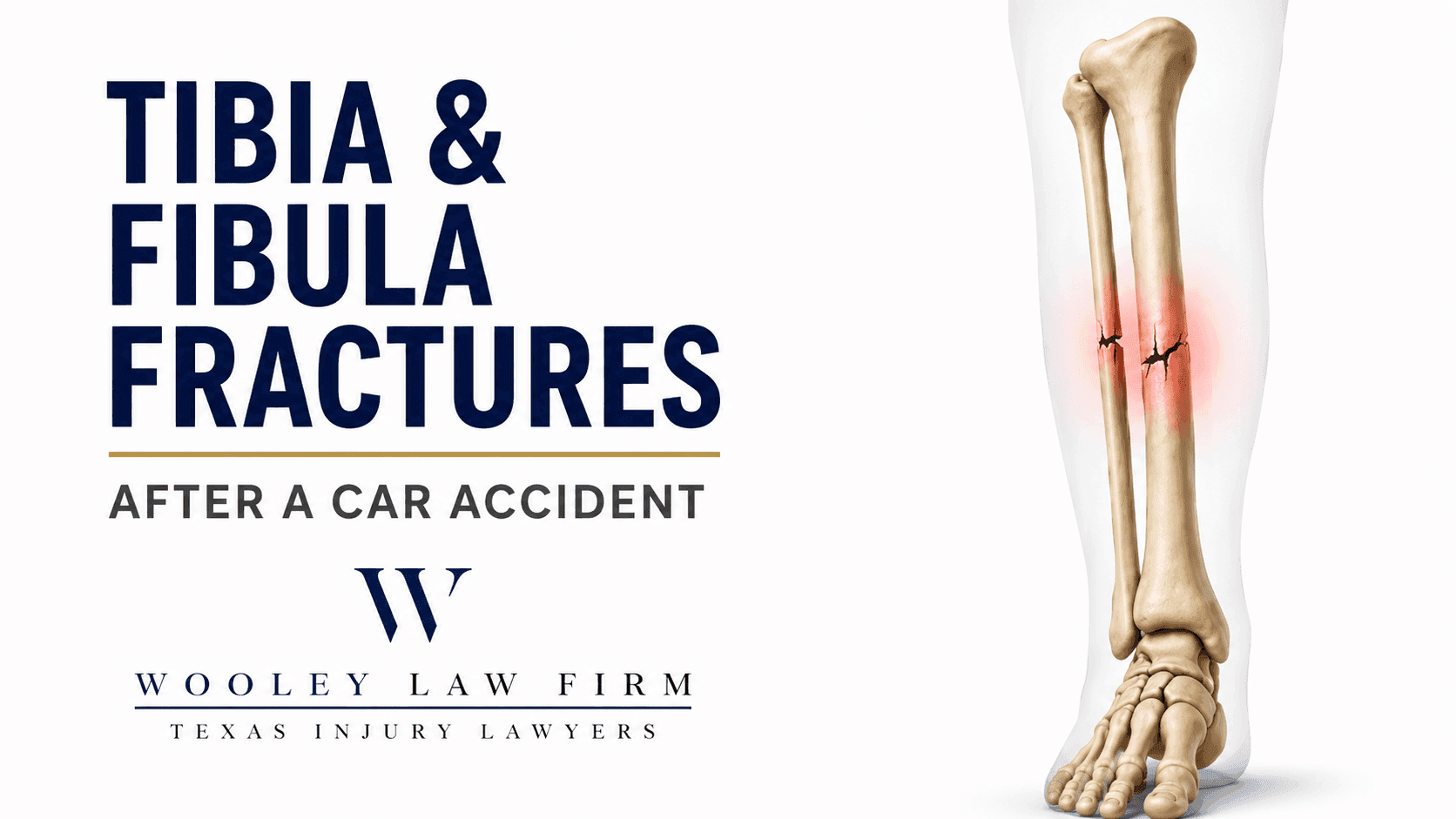
The tibia, commonly called the shinbone, is the larger weight-bearing bone in the lower leg. The fibula is the smaller bone on the outside of the lower leg that helps support the ankle and stabilize the leg. A car accident can break one or both bones when the leg is crushed, twisted, trapped, or forced against part of the vehicle.
At The Wooley Law Firm, Dallas car accident lawyer Andrew J. Wooley represents crash victims with serious lower-leg injuries, including tibia fractures, fibula fractures, ankle fractures, knee injuries, foot injuries, and other orthopedic trauma. These claims may involve major medical bills, future treatment, lost wages, pain and suffering, physical impairment, scarring, and loss of enjoyment of life.
Before accepting a settlement from an insurance company, it is important to understand the full seriousness of the injury, whether future care may be needed, and how the fracture may affect your work and daily life.
If you suffered a tibia or fibula fracture in a Dallas car accident, call The Wooley Law Firm at 214-699-6524 or contact us through our website for a free case evaluation.
Why Tibia and Fibula Fractures After a Car Accident Are Serious
A broken lower leg can affect almost every part of a person’s life. Walking, standing, driving, working, exercising, and even getting around the house can become difficult or impossible. Some victims are non-weight-bearing for weeks or months, meaning they cannot put weight on the injured leg.
Tibia and fibula fractures may involve:
Severe pain
Swelling and bruising
Inability to bear weight
Emergency room treatment
Orthopedic care
Casting or bracing
Surgery
Metal plates, screws, rods, or pins
Physical therapy
Work restrictions
Long-term stiffness or weakness
Chronic pain
Scarring
Hardware pain
Future surgery
Permanent impairment
Insurance companies may try to settle these claims before the victim understands the full cost of recovery. That can be a serious mistake. A lower-leg fracture claim should consider past medical bills, future medical expenses, lost income, physical impairment, pain, scarring, and how the injury affects the victim’s normal life.
How Dallas Car Accidents Cause Tibia and Fibula Fractures
Car wrecks can place tremendous force on the lower legs. A driver may have one foot planted on the brake pedal before impact. A passenger’s legs may strike the dashboard, floorboard, center console, or door. In a severe crash, the lower leg may be crushed or trapped inside the vehicle.
Common causes of tibia and fibula fractures in car accidents include:
The lower leg striking the dashboard or floorboard
The foot being trapped near the pedals
The leg being crushed in a head-on collision
Side-impact force against the door or lower body
The ankle twisting violently during impact
The knee or foot being forced into an unnatural position
Rollover crashes
Motorcycle crashes
Pedestrian accidents
Bicycle accidents
18-wheeler and commercial vehicle wrecks
High-speed collisions
Multi-vehicle crashes
A lower-leg fracture may also occur with other serious injuries, including knee injuries, ankle fractures, foot injuries, hip injuries, femur fractures, back injuries, and nerve trauma.
For more information about related injuries, visit our blog on leg injuries after a Dallas car accident.
Types of Tibia and Fibula Fractures After a Car Wreck
Not all lower-leg fractures are the same. The type, location, and severity of the break can affect treatment, recovery time, future limitations, and the value of the injury claim.
Tibia Fracture
A tibia fracture involves the larger shinbone. Because the tibia bears much of the body’s weight, a tibia fracture can be especially serious. Many tibia fractures require immobilization, limited weight bearing, or surgery.
Fibula Fracture
A fibula fracture involves the smaller bone on the outside of the lower leg. Some fibula fractures are treated without surgery, but others are more serious, especially when they affect the ankle joint or occur with a tibia fracture.
Tibia-Fibula Fracture
A tibia-fibula fracture occurs when both bones in the lower leg are broken. These injuries are often caused by significant trauma and may require surgery, hardware, and lengthy rehabilitation.
Distal Tibia or Fibula Fracture
A distal fracture occurs near the ankle. These injuries can affect ankle stability and may increase the risk of arthritis, stiffness, chronic swelling, and walking problems.
Proximal Tibia or Fibula Fracture
A proximal fracture occurs near the knee. These injuries may affect the knee joint and can cause long-term pain, stiffness, and mobility problems.
Tibial Plateau Fracture
A tibial plateau fracture involves the upper part of the tibia near the knee joint. This is a serious injury because it affects the surface of the knee joint. It may require surgery and can increase the risk of post-traumatic arthritis.
Open Tibia or Fibula Fracture
An open fracture occurs when the broken bone pierces the skin or communicates with an open wound. Open fractures are medical emergencies because of the risk of infection, soft tissue damage, and complications.
Comminuted Fracture
A comminuted fracture means the bone is broken into several pieces. These injuries are often caused by severe crash forces and may require complex surgical repair.
Displaced Fracture
A displaced fracture occurs when the broken bone pieces move out of alignment. Displaced fractures often require reduction, surgery, or hardware to stabilize the bone.
Symptoms of a Tibia or Fibula Fracture After a Car Accident
A lower-leg fracture is often painful and immediately noticeable. However, the full extent of the injury may not be known until x-rays or other imaging are performed.
Symptoms may include:
Severe lower-leg pain
Shin pain
Calf pain
Ankle pain
Knee pain
Swelling
Bruising
Visible deformity
Inability to bear weight
Difficulty standing or walking
Tenderness over the bone
Pain with movement
Numbness or tingling
Weakness
Open wound in severe cases
Foot or ankle instability
A suspected tibia or fibula fracture requires medical attention. A victim should not try to “walk it off” if there is severe pain, deformity, swelling, or inability to bear weight.
Injured in an Accident?
Free consultation. Tell us what happened and learn what options may be available.
Diagnosing Tibia and Fibula Fractures After a Dallas Car Accident
Doctors typically diagnose tibia and fibula fractures through a physical examination and imaging. Depending on the severity of the injury, doctors may order:
X-rays
CT scans
MRI in certain cases
Vascular evaluation if blood vessel injury is suspected
Nerve evaluation if numbness, tingling, or weakness is present
Imaging of the knee, ankle, foot, or hip
Orthopedic consultation
Because tibia and fibula fractures can occur in serious crashes, doctors may also evaluate the victim for other injuries, including head injuries, back injuries, hip injuries, knee trauma, ankle injuries, and internal injuries.
Treatment for Tibia and Fibula Fractures After a Car Wreck
Treatment depends on the location, severity, and stability of the fracture. Some lower-leg fractures can be treated without surgery. Others require surgical repair.
Common treatment may include:
Emergency room care
Pain medication
Splinting
Cast
Walking boot
Brace
Crutches
Walker
Non-weight-bearing restrictions
Limited weight-bearing restrictions
Orthopedic follow-up
Surgery
Plates and screws
Rods or nails
External fixation in severe injuries
Wound care for open fractures
Blood clot prevention
Physical therapy
Follow-up imaging
Long-term rehabilitation
Recovery can take months. Some victims are unable to work or drive during a significant part of their recovery.
Surgery for Tibia and Fibula Fractures
Surgery may be required when the fracture is displaced, unstable, open, comminuted, involves the joint, or affects alignment of the leg or ankle.
Surgical treatment may involve:
Intramedullary nailing: A rod is placed inside the tibia to stabilize the bone.
Open reduction internal fixation: The bone is surgically realigned and held with plates, screws, or rods.
External fixation: A frame outside the body stabilizes the bone, often in severe trauma or open fracture cases.
Ankle fixation: Hardware may be used when the fracture affects ankle stability.
Revision surgery: Additional surgery may be needed if the bone does not heal properly or hardware causes problems.
Surgery can lead to scarring, pain, physical therapy, and time away from work. Some victims later require hardware removal or additional procedures.
Complications After a Tibia or Fibula Fracture
Tibia and fibula fractures can cause long-term complications. These complications should be considered before settling with the insurance company.
Potential complications include:
Chronic pain
Infection
Blood clots
Delayed healing
Nonunion, where the bone fails to heal
Malunion, where the bone heals improperly
Hardware pain
Hardware failure
Need for future surgery
Nerve damage
Blood vessel injury
Muscle weakness
Reduced range of motion
Limping
Leg length problems
Knee stiffness
Ankle stiffness
Post-traumatic arthritis
Permanent impairment
Complex regional pain symptoms
Because complications may appear later, victims should be cautious before settling too early.
Compartment Syndrome After a Lower-Leg Fracture
One serious complication after a tibia or fibula fracture is compartment syndrome. This can happen when pressure builds inside the muscles of the leg and restricts blood flow. It is a medical emergency.
Warning signs may include:
Severe pain
Pain that seems worse than expected
Tightness or pressure in the leg
Numbness
Tingling
Weakness
Swelling
Pain with movement of the foot or ankle
This blog is not medical advice. Anyone with severe or worsening symptoms after a crash should seek immediate medical care.
Physical Therapy and Recovery After a Lower-Leg Fracture
Recovery from a tibia or fibula fracture often requires rehabilitation. Once the bone is stable enough, physical therapy may help restore strength, balance, range of motion, and walking ability.
Physical therapy may focus on:
Walking
Balance
Strengthening
Range of motion
Gait training
Knee mobility
Ankle mobility
Stair climbing
Reducing stiffness
Returning to work activities
Returning to normal daily activities
Some victims recover well. Others continue to have pain, swelling, stiffness, weakness, limping, or difficulty standing and walking for long periods.
How Tibia and Fibula Fractures Affect Work and Daily Life
A broken lower leg can disrupt every part of life. A victim may need help with transportation, bathing, dressing, cooking, cleaning, childcare, and getting around the home.
Tibia and fibula fractures may affect the ability to:
Walk
Stand
Drive
Work
Climb stairs
Sleep comfortably
Exercise
Carry groceries
Care for children
Perform household chores
Travel
Return to hobbies
Live independently
For workers who stand, walk, climb, lift, drive, or perform physical tasks, a lower-leg fracture can cause major wage loss and job limitations. This may include construction workers, delivery drivers, warehouse workers, nurses, teachers, restaurant workers, mechanics, retail employees, police officers, firefighters, and many others.
Even office workers may struggle if sitting, commuting, walking from parking areas, or using stairs becomes painful.
Compensation for Tibia and Fibula Fractures After a Dallas Car Accident
A tibia or fibula fracture claim may involve significant damages. Depending on the case, compensation may include:
Ambulance bills
Emergency room bills
Hospital bills
Surgeon bills
Anesthesia bills
Imaging costs
Follow-up doctor visits
Physical therapy
Medication
Medical equipment
Crutches, walker, cane, or boot
Future medical expenses
Future surgery
Lost wages
Loss of earning capacity
Pain and suffering
Mental anguish
Physical impairment
Disfigurement
Scarring
Loss of enjoyment of life
Out-of-pocket expenses
The value of a lower-leg fracture claim depends on liability, insurance coverage, medical evidence, treatment, surgery, complications, future care, lost earnings, and how the injury affects the victim’s life.
Why You Should Not Settle Too Early After a Tibia or Fibula Fracture
Insurance companies may try to settle before the victim understands the full impact of the injury. That can be risky.
Before resolving a tibia or fibula fracture claim, you should know:
Whether surgery was needed
Whether future surgery may be needed
Whether hardware may need to be removed
Whether the bone is healing properly
Whether there are complications
Whether the injury caused permanent impairment
Whether you can return to work
Whether your earning ability has changed
Whether you will need future physical therapy
Whether you have long-term pain, swelling, limping, or mobility problems
Whether all medical bills and records have been obtained
Whether future medical expenses have been evaluated
Once a settlement is signed, you generally cannot reopen the claim later because the injury became worse or required additional treatment.
Insurance Companies May Try to Minimize a Lower-Leg Fracture Claim
Even when the injury is serious, insurance companies may still try to limit what they pay. They may dispute fault, question the amount of medical bills, minimize future care, argue the victim recovered after the bone healed, or undervalue pain and suffering.
A strong tibia or fibula fracture claim may require:
Police report review
Crash investigation
Witness statements
Photos and videos
Medical records
Imaging reports
Surgical records
Physical therapy records
Work restriction documentation
Lost wage proof
Future medical opinions
Evidence of daily life limitations
A Dallas car accident lawyer can help gather and present the evidence needed to show the full impact of the injury.
How The Wooley Law Firm Helps Dallas Car Accident Victims
The Wooley Law Firm helps injured crash victims pursue compensation after serious wrecks. In a tibia or fibula fracture case, we may help by:
Investigating the crash
Reviewing the police report
Identifying all insurance coverage
Communicating with the insurance company
Gathering medical records and bills
Reviewing surgical records
Documenting lost wages
Evaluating future medical expenses
Reviewing physical therapy and orthopedic recommendations
Calculating pain, impairment, scarring, and loss of enjoyment damages
Negotiating with the insurance company
Filing a lawsuit when necessary
Insurance companies are not on your side after a wreck. Their goal is to pay as little as possible. Before giving a recorded statement, signing paperwork, or accepting a settlement, speak with a lawyer who can protect your rights.
Dallas Car Accident Lawyer for Tibia and Fibula Fracture Claims
If you suffered a tibia fracture, fibula fracture, or other lower-leg injury in a car accident in Dallas, Fort Worth, or anywhere in North Texas, The Wooley Law Firm may be able to help. Andrew J. Wooley represents car accident victims with serious orthopedic injuries and helps them pursue full compensation for medical expenses, future care, lost wages, pain and suffering, impairment, disfigurement, and loss of enjoyment of life.
Call 214-699-6524 or contact us through our website for a free case evaluation.
You don’t pay unless we win.
Frequently Asked Questions About Tibia and Fibula Fractures After a Car Accident
Can a car accident cause a tibia or fibula fracture?
Yes. A car accident can cause a tibia or fibula fracture when significant force is applied to the lower leg, knee, ankle, or foot. These injuries may occur when the leg is crushed, twisted, trapped, or struck during the crash.
What is the difference between the tibia and fibula?
The tibia is the larger shinbone and is the main weight-bearing bone in the lower leg. The fibula is the smaller bone on the outside of the lower leg and helps support ankle stability.
Does a broken tibia usually require surgery?
Some tibia fractures require surgery, especially when the bone is displaced, unstable, open, comminuted, or involves the knee or ankle joint. Other fractures may be treated with casting, bracing, or immobilization.
Does a broken fibula require surgery?
Some fibula fractures can heal without surgery. However, surgery may be needed if the fracture affects ankle stability, is displaced, or occurs with other injuries.
How long does it take to recover from a tibia or fibula fracture?
Recovery depends on the severity of the fracture, whether surgery was required, the victim’s health, complications, and rehabilitation. Many victims need weeks or months of limited activity and physical therapy.
Can a tibia or fibula fracture cause permanent problems?
Yes. Some victims experience chronic pain, stiffness, weakness, swelling, limping, scarring, hardware pain, arthritis, nerve symptoms, or permanent impairment.
What compensation can I recover for a broken lower leg after a Dallas car wreck?
Compensation may include medical bills, future medical expenses, lost wages, loss of earning capacity, pain and suffering, mental anguish, physical impairment, disfigurement, scarring, and loss of enjoyment of life.
Should I settle before I finish treatment for a tibia or fibula fracture?
It is usually risky to settle before you understand the full impact of the injury. If you later need additional surgery, therapy, or future treatment, the insurance company may not have to pay more after a settlement is signed.
Important Note
Andrew J. Wooley is not a healthcare provider. He is an attorney who primarily practices personal injury law. If you have questions about a tibia fracture, fibula fracture, medical treatment, symptoms, or your overall health, you should contact a qualified healthcare provider.
Topics
Share This Article

Andrew J. Wooley
Personal Injury Attorney
Andrew J. Wooley is a dedicated personal injury attorney based in Dallas, Texas. He focuses on helping accident victims recover fair compensation for their injuries. With a commitment to personalized service, Andrew works directly with each client to understand their unique situation and fight for their rights.
Related Local News
Recent related coverage