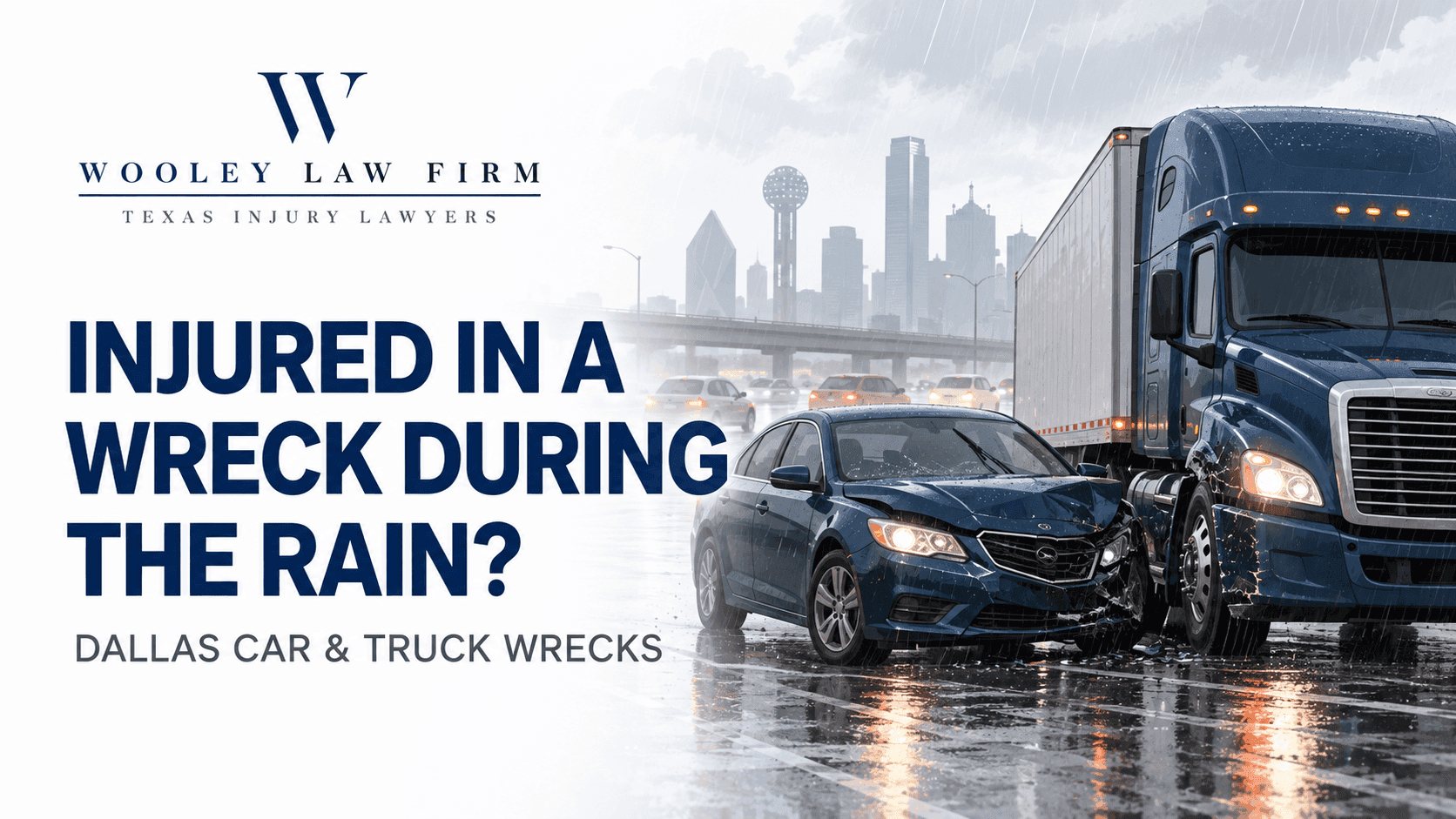
If you were injured in a car accident or 18-wheeler wreck while it was raining in Dallas, the insurance company may immediately focus on the weather.
The other driver may say:
“I hydroplaned.”
“The road was slick.”
“I couldn’t see.”
“Traffic stopped suddenly.”
“There was too much water on the highway.”
“There was nothing I could do.”
But rain does not automatically make a collision unavoidable.
Texas drivers are expected to operate their vehicles at a speed that is reasonable and prudent under the existing conditions. Texas law also requires drivers to control their speed as necessary to avoid a collision and to reduce speed when special hazards exist because of weather or highway conditions.
That means an investigation after a rainy-weather wreck should not end with the statement, “It was raining.”
The important question is often:
Did the driver adjust the way they were driving for the rain, wet pavement, reduced visibility, traffic, and standing water?
If you were injured in a Dallas wreck during heavy rain, The Wooley Law Firm can investigate what happened, preserve available evidence, identify the responsible parties, and determine what insurance coverage may be available.
Who Is Responsible for a Car Accident During the Rain in Dallas?
Liability depends on the facts of the collision.
Rain can contribute to a crash without being the only cause of it.
A driver may potentially be responsible when the evidence shows that he or she:
Drove too fast for the conditions;
Followed another vehicle too closely;
Failed to slow for standing water;
Hydroplaned after entering water at an unsafe speed;
Made an unsafe lane change;
Failed to maintain a single lane;
Rear-ended stopped or slowing traffic;
Drove with inadequate visibility;
Failed to use functioning headlights or windshield wipers;
Lost control after driving too aggressively for the conditions; or
Failed to react appropriately to traffic slowing because of weather.
Texas Transportation Code § 545.351 does not simply ask whether a driver was below the posted speed limit. The statute requires a speed that is reasonable and prudent under the circumstances then existing.
A driver might therefore be traveling below a posted 70-mph speed limit and still be driving too fast for a particular stretch of roadway during extremely heavy rain.
If you were injured by another vehicle, our Dallas car accident lawyer page explains how The Wooley Law Firm investigates serious collisions, insurance coverage, medical damages, and other issues that may affect a car-wreck claim.
What If the Other Driver Says They Hydroplaned?
“Hydroplaning” is not necessarily the end of the liability investigation.
Hydroplaning occurs when a vehicle’s tires lose sufficient contact with the roadway because of water between the tires and pavement. But after a collision, the investigation should look at why the driver lost control.
Important questions may include:
How fast was the vehicle traveling?
How heavy was the rain?
Was there visible standing water?
Had surrounding vehicles already slowed down?
Did the driver brake or accelerate immediately before losing control?
Was the driver changing lanes?
Were the tires worn or improperly inflated?
Did the driver have enough following distance?
Was the driver distracted?
Could the driver see traffic slowing ahead?
Simply saying “my car hydroplaned” does not establish that the collision was unavoidable.
Photographs, video, vehicle data, witness statements, tire condition, roadway evidence, and weather information can help determine what actually happened.
Rear-Ended While Stopped or Slowing in the Rain
Rainy-weather rear-end collisions are common when traffic slows suddenly on Dallas highways.
A driver may be traveling on I-35E, I-30, I-20, I-45, I-635, U.S. 75, SH 114, SH 121, the Dallas North Tollway, or another North Texas roadway when traffic ahead begins slowing because of heavy rainfall or standing water.
A driver behind you should be watching far enough ahead and leaving enough room to respond safely to changing conditions.
After a rear-end wreck, the other driver's insurer may argue:
“Traffic stopped unexpectedly because of the storm.”
That explanation should be tested against the evidence.
The investigation may determine whether the driver was following too closely, traveling too fast, looking at a cellphone, failing to watch traffic ahead, or simply did not begin braking soon enough.
When the vehicle behind you is an 18-wheeler, additional electronic evidence may be available.
Hit by an 18-Wheeler During Heavy Rain in Dallas
A rain-related truck wreck can require a much more extensive investigation than an ordinary two-car collision.
Federal regulations specifically address hazardous conditions affecting commercial vehicles.
Under 49 C.F.R. § 392.14, commercial drivers are required to exercise extreme caution when hazardous conditions affect visibility or traction, reduce their speed accordingly, and discontinue operation if conditions become sufficiently dangerous.
The Wooley Law Firm's guide concerning extra precautions 18-wheeler drivers must take during rain, wet roads, and flooding explains these commercial-driver obligations in greater detail.
If an 18-wheeler rear-ended you, changed lanes into you, jackknifed, lost control, or struck your vehicle during a Dallas storm, the investigation may need to determine:
The truck's speed before the collision;
When the driver began braking;
Whether cruise control was being used;
Whether the truck's collision-warning system activated;
Whether the driver received weather alerts;
Whether dispatch knew about severe weather;
How long the driver had been driving;
Whether the driver increased following distance;
Whether the truck's tires had adequate tread;
Whether the tractor and trailer brakes were properly maintained;
Whether onboard cameras recorded the collision; and
Whether the truck should have continued operating under the conditions.
Our Dallas 18-wheeler accident lawyer page explains how truck crashes can involve evidence from the driver, trucking company, tractor, trailer, electronic systems, and multiple layers of insurance coverage.
Injured in an Accident?
Free consultation. Tell us what happened and learn what options may be available.
The Truck's Black Box May Show What Happened Before the Wreck
Commercial trucks often contain electronic information that can help reconstruct a collision.
Depending on the truck and its systems, available evidence may include:
Engine control module data;
Event data;
Vehicle speed;
Brake application;
Accelerator position;
Cruise-control status;
GPS information;
Telematics;
Electronic logging device records;
Forward-facing camera footage;
Driver-facing camera footage; and
Collision-warning or automatic emergency braking information.
This evidence may help determine whether the truck driver slowed appropriately before encountering heavy rainfall, standing water, or stopped traffic.
Our article regarding 18-wheeler black-box data after a Dallas-Fort Worth truck wreck explains the types of electronic information that may be available after a serious commercial collision.
Photographs of the Road Can Be Extremely Important
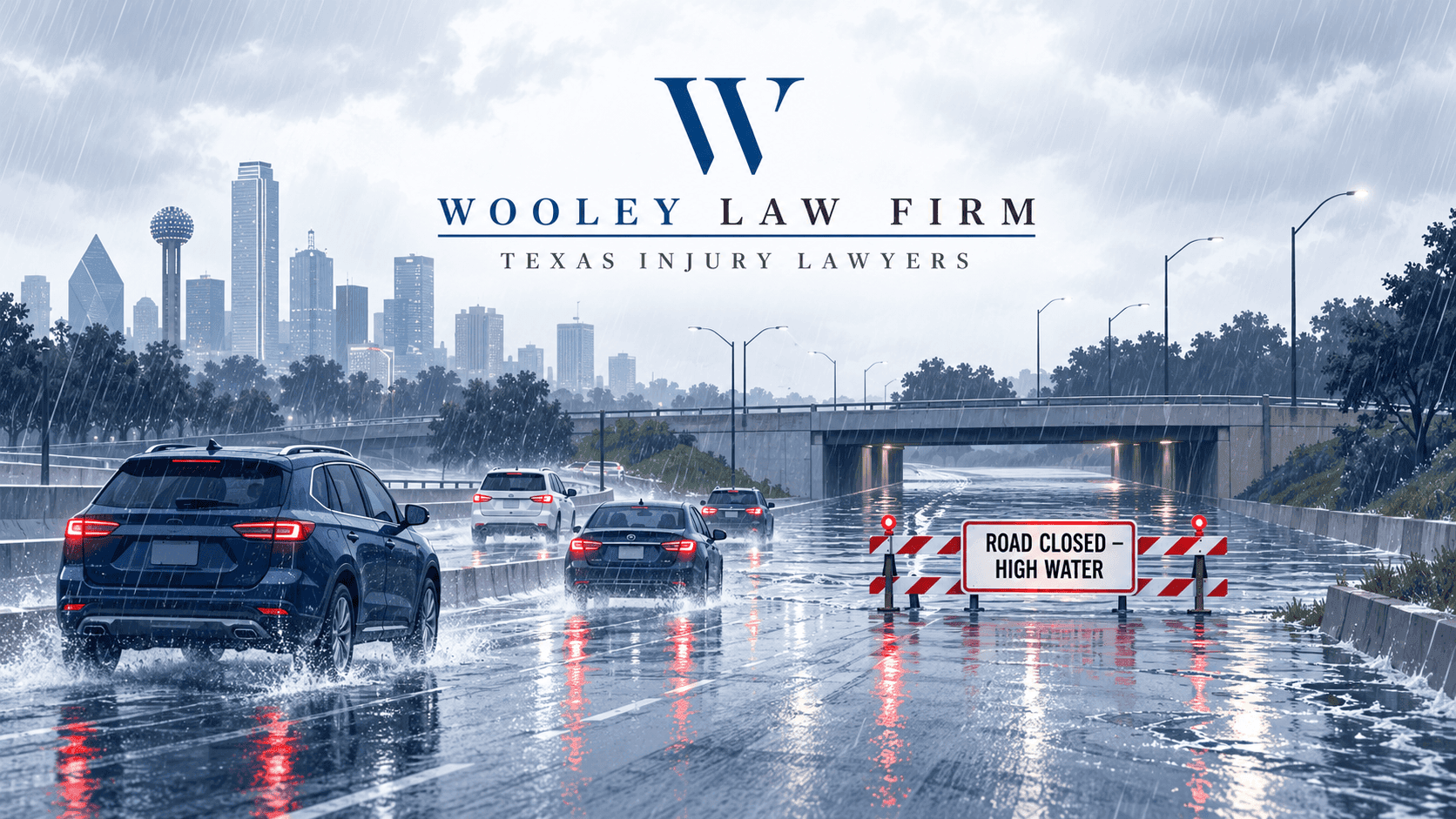
After the storm passes, the roadway can look completely different.
That makes photographs and video taken near the time of the collision particularly valuable.
Evidence may show:
Standing water;
Heavy rainfall;
Poor visibility;
Water flowing across the roadway;
Tire marks;
Vehicle resting positions;
Road construction;
Lane closures;
Flood warnings;
Traffic congestion;
Damaged barriers;
Debris; or
Whether other vehicles had already slowed.
If you can safely do so, photographs from several angles may help document conditions that will no longer exist when an insurance adjuster visits the location days or weeks later.
Dashcam Video Can Show the Rain and the Collision
A dash camera can be especially useful after a weather-related wreck.
Video may show not only the collision but also the conditions immediately beforehand.
For example, footage might establish:
How heavily it was raining;
Visibility;
Whether traffic was already slowing;
Whether the other driver was approaching too quickly;
A vehicle losing control;
An unsafe lane change;
Standing water;
The timing of traffic signals;
The other driver's speed relative to surrounding traffic; or
What happened immediately after impact.
Our guide to dash-camera evidence after a Dallas car or truck wreck explains how video can help document the collision and surrounding roadway conditions.
Preserve the original recording promptly. Many camera systems eventually overwrite older footage.
Nearby business and surveillance cameras may also capture important evidence, but those systems can overwrite recordings quickly as well. Our article on preserving dashcam and surveillance video discusses why early preservation can matter.
Do Not Assume the Police Report Will Explain Everything
A crash report can be important, but it is only one part of the investigation.
Police officers responding during a major Dallas storm may be handling multiple collisions, lane closures, stalled vehicles, flooding, and emergency calls.
The officer may not have access to:
Dashcam footage;
Business surveillance;
Vehicle electronic data;
Cellphone records;
Truck black-box information;
Detailed tire inspections;
Witnesses who left before police arrived; or
Records held by a trucking company.
An attorney can evaluate the crash report together with the physical, electronic, photographic, and witness evidence.
What If Both Drivers Are Blaming the Rain?
Insurance companies sometimes treat bad-weather collisions as if neither driver can really be blamed.
That is not necessarily correct.
Weather conditions form part of the circumstances under which each driver must operate safely.
The investigation should look at what each driver actually did before impact.
That can include comparing:
Vehicle speeds;
Lane positions;
Following distances;
Braking;
Driver statements;
Dashcam footage;
Vehicle damage;
Witness accounts;
Tire condition;
Electronic data; and
The precise roadway and weather conditions.
The rain may explain why more caution was necessary. It does not necessarily explain why one vehicle struck another.
What Damages Can Be Recovered After a Rain-Related Dallas Wreck?
A person injured because of another driver's negligence may potentially pursue compensation for damages allowed under Texas law.
Depending on the circumstances, those damages may include:
Medical expenses;
Future medical care;
Lost wages;
Loss of earning capacity;
Physical pain;
Mental anguish;
Physical impairment;
Disfigurement; and
Property damage.
The value of any particular case depends on the injuries, medical treatment, available insurance, liability evidence, prior medical history, lost income, and many other factors.
A serious 18-wheeler claim may also involve multiple businesses and multiple insurance policies.
What Should I Do After a Car or Truck Wreck in the Rain?
Your immediate priority should be your safety and medical condition.
After that, depending on the circumstances, useful steps may include calling 911, obtaining medical care, photographing the vehicles and roadway, saving dashcam footage, obtaining witness information, keeping the crash-report information, and preserving damaged property.
Be careful about giving detailed recorded statements to the other driver's insurance company before understanding your rights.
Rain-related collisions can become disputed because the insurer may attempt to characterize the wreck as an unavoidable weather event rather than a collision caused by unsafe driving.
The available evidence can make an enormous difference in answering that question.
Frequently Asked Questions About Dallas Rain-Related Wrecks
Can I sue someone who hydroplaned into my car?
Potentially. The issue is not simply whether the vehicle hydroplaned. The investigation should determine why the driver lost control and whether speed, following distance, tire condition, driver input, distraction, or another factor contributed.
Does rain automatically excuse the other driver?
No. Texas law requires motorists to drive at a speed that is reasonable and prudent for the existing conditions and to appropriately reduce speed when hazards exist because of weather or highway conditions.
What if an 18-wheeler hit me during heavy rain?
Commercial truck drivers are subject to additional federal hazardous-condition requirements. Truck cases may also involve black-box data, cameras, ELD information, GPS records, maintenance documents, dispatch communications, and trucking-company records.
Can a driver be at fault even if they were below the speed limit?
Potentially. The posted limit does not necessarily establish that a particular speed was safe during heavy rain, reduced visibility, standing water, or traffic congestion. Texas law requires drivers to consider the actual conditions.
What if there is no video of the collision?
A claim does not necessarily depend on video. Other evidence may include vehicle damage, photographs, witnesses, crash-report information, electronic vehicle data, phone records, roadway evidence, weather information, medical records, and expert analysis.
Injured in a Dallas Car or Truck Wreck During the Rain?
If you were hurt in a car accident, 18-wheeler wreck, or commercial-vehicle collision while it was raining in Dallas, do not assume the insurance company is correct when it says the weather caused the crash.
The investigation should determine whether the other driver reduced speed, maintained control, left enough following distance, responded appropriately to standing water and reduced visibility, and otherwise drove safely for the conditions.
Truck cases may require an even deeper investigation into electronic data, cameras, driver records, maintenance, dispatch communications, and the trucking company's response to dangerous weather.
The Wooley Law Firm represents people injured in serious car and truck wrecks throughout Dallas-Fort Worth and Texas.
Call (214) 699-6524 for a free consultation. You don't pay unless we win.
This article is for general informational purposes only and is not legal advice. Reading it does not create an attorney-client relationship. Every collision is different, and the application of Texas law and federal trucking regulations depends on the specific facts.
Topics
Share This Article

Andrew J. Wooley
Personal Injury Attorney
Andrew J. Wooley is a dedicated personal injury attorney based in Dallas, Texas. He focuses on helping accident victims recover fair compensation for their injuries. With a commitment to personalized service, Andrew works directly with each client to understand their unique situation and fight for their rights.
Related Local News
Recent related coverage