
After a wreck, many injured people hear the same thing from an insurance adjuster: it is probably just a strain. Sometimes that is true. Other times, a Dallas car accident or truck wreck has caused or aggravated a disc injury that can lead to radiating pain, numbness, tingling, weakness, and long-term medical problems.
This distinction matters. A soft-tissue strain is often treated by the insurance company as minor and temporary. A herniated disc, bulging disc, or other spinal injury may require more treatment, more documentation, more imaging, and a stronger legal response.
If you are dealing with neck pain, back pain, shoulder pain, leg pain, numbness, or tingling after a Dallas car wreck, 18-wheeler crash, commercial vehicle collision, or rideshare accident, it helps to understand how doctors tell the difference between a strain and a disc injury and why medical documentation can make or break your injury claim.
Why Neck and Back Pain After a Wreck Should Not Be Ignored
Car and truck wrecks can place sudden force on the spine. Even when a crash does not look catastrophic, the body can be thrown forward, backward, twisted, compressed, or jolted in ways that injure muscles, ligaments, joints, discs, and nerves.
Neck and back pain after a crash may come from several different injuries, including:
Cervical strain or sprain
Lumbar strain or sprain
Herniated disc
Bulging disc
Annular tear
Nerve root irritation
Radiculopathy
Spinal stenosis aggravated by trauma
Facet joint injury
Sacroiliac joint injury
Aggravation of a pre-existing spine condition
Insurance companies often prefer the simplest explanation: “It is just a strain.” But pain that continues, worsens, spreads, or causes neurological symptoms may point to something more serious.
Strain vs. Herniated Disc: What Is the Difference?
A strain usually involves injury to muscles or tendons. A sprain usually involves injury to ligaments. These injuries can be painful, limit movement, and require treatment, but insurers often argue they should heal quickly.
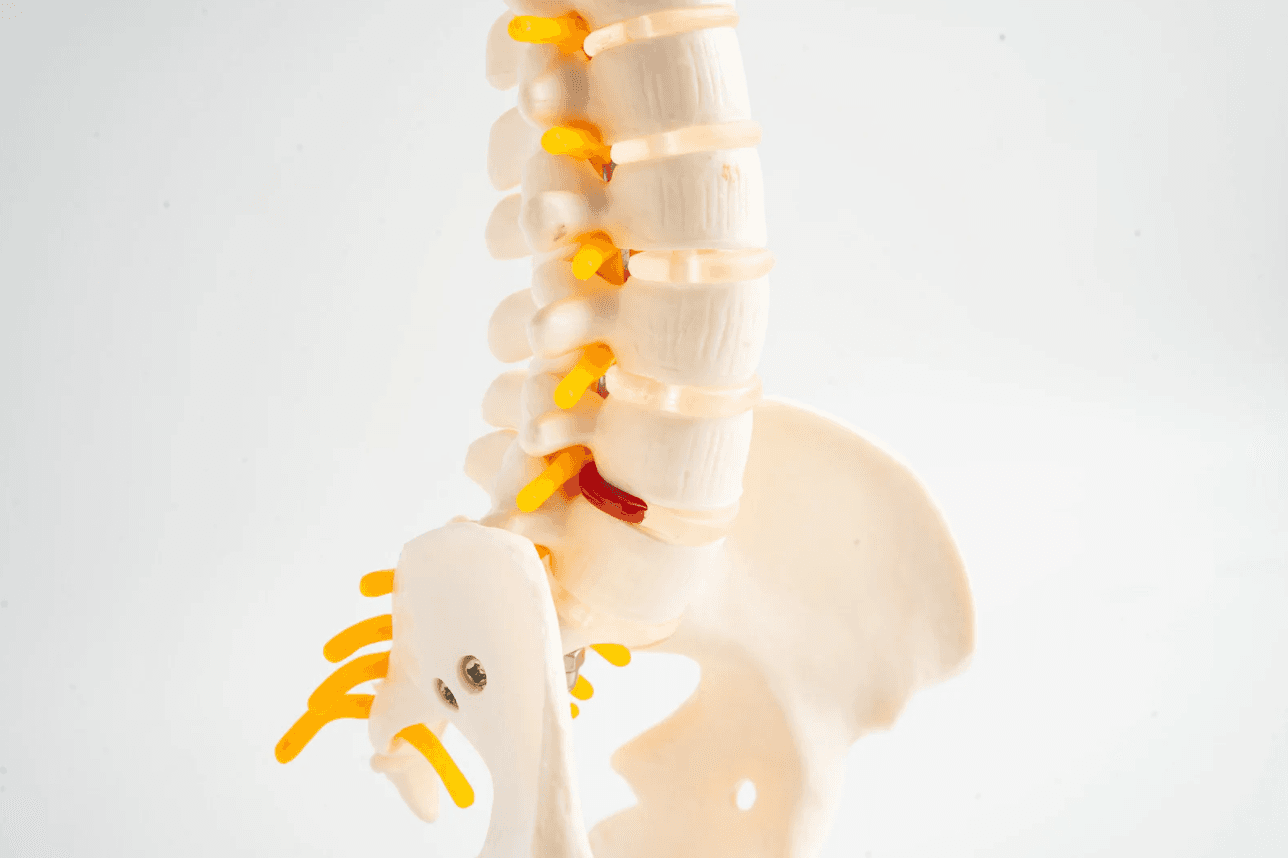
A herniated disc involves one of the discs between the bones of the spine. These discs act like cushions between the vertebrae. When a disc is injured, disc material may push outward and irritate nearby nerves. That nerve involvement is often what causes pain to travel into an arm, hand, leg, or foot.
In simple terms:
A strain or sprain usually affects soft tissue around the spine.
A herniated disc can affect the disc itself and nearby nerves.
That difference can change the entire value and direction of a personal injury claim.
Common Symptoms of a Disc Injury After a Dallas Car or Truck Accident
A disc injury does not always feel like simple back soreness. Some people feel symptoms immediately after the crash. Others notice symptoms in the hours or days that follow.
Possible signs of a herniated disc or nerve-related injury include:
Neck pain that travels into the shoulder, arm, hand, or fingers
Low back pain that travels into the hip, buttock, leg, calf, or foot
Numbness or tingling
Pins and needles sensations
Burning pain
Electric shock-like pain
Weakness in an arm or leg
Difficulty gripping objects
Trouble walking or standing
Pain that worsens with sitting, bending, coughing, or lifting
Pain that does not improve with conservative care
Abnormal reflexes or changes in sensation
When pain travels down the arm or leg, doctors may use terms like radiculopathy, sciatica, or nerve root irritation. These details are important because they can support the connection between your symptoms, your exam findings, your imaging, and the wreck.
Why the Difference Matters in a Personal Injury Claim
From a claim standpoint, insurance companies often treat strains and sprains as short-term injuries. They may argue that a few weeks of treatment should be enough. They may also claim that ongoing pain is exaggerated, unrelated, or caused by something else.
Disc injury claims are different.
A herniated disc or bulging disc after a car or truck wreck may involve:
Emergency room treatment
Chiropractic care
Physical therapy
Pain management
Orthopedic or neurosurgical evaluation
MRI imaging
Epidural steroid injections
Nerve studies
Work restrictions
Future medical treatment
Permanent pain or limitations
Surgery in severe cases
Because disc injuries can increase the value of a claim, insurers often fight them harder. They may challenge whether the wreck caused the injury, whether the MRI findings are new, whether treatment was necessary, or whether your symptoms are related to the crash.
That is why a clear medical timeline matters.
What Doctors Look for During an Exam
A good medical evaluation is more than asking, “Where does it hurt?” Providers may evaluate how the crash affected your spine, nerves, strength, movement, and daily function.
Doctors and medical providers may look at:
Range of motion in the neck or back
Muscle spasms
Tenderness
Strength in the arms or legs
Sensation changes
Reflexes
Gait or walking pattern
Pain with certain movements
Straight leg raise testing
Spurling’s test or other cervical nerve tests
Whether symptoms follow a nerve pattern
Patterns matter. Pain that stays in one area may suggest one type of injury. Pain that radiates into an arm or leg may suggest nerve involvement. Weakness, numbness, tingling, or abnormal reflexes can be especially important.
If you have symptoms that travel down your arm or leg, say that clearly to your medical provider. Do not simply say, “My back hurts,” if the pain is also shooting into your leg. Do not simply say, “My neck hurts,” if your fingers are numb or tingling.
Those details guide treatment, and they matter later when the insurance company tries to minimize the injury.
Why X-Rays Are Not the Full Picture
Many car and truck wreck victims are told their X-rays are normal and assume that means nothing serious happened. That is not always true.
X-rays can be helpful for showing fractures, alignment problems, and certain bone-related issues. But X-rays do not show spinal discs, nerve irritation, or many soft-tissue injuries well.
A normal X-ray does not rule out:
Herniated discs
Bulging discs
Annular tears
Nerve root compression
Ligament injuries
Muscle injuries
Certain spinal cord or nerve issues
This is one reason people can leave the emergency room after a Dallas crash with “normal X-rays” but still have a serious neck or back injury.
Injured in an Accident?
Free consultation. Tell us what happened and learn what options may be available.
When an MRI May Matter After a Car or Truck Wreck
An MRI is often more useful than an X-ray for evaluating discs, nerves, and soft tissues. Not every injury case requires an immediate MRI. But when symptoms continue, worsen, or suggest nerve involvement, an MRI may become important.
An MRI may be considered when there is:
Persistent neck or back pain
Pain radiating into an arm or leg
Numbness or tingling
Weakness
Symptoms that do not improve with conservative treatment
Concern for disc herniation
Concern for nerve compression
Worsening symptoms after the crash
A need to guide injections, specialist referral, or surgical evaluation
For injury claims, imaging can help connect the medical story. But imaging alone is not enough. The strongest cases usually show that the MRI findings match the symptoms, the exam findings, and the timing after the wreck.
Bulging Disc vs. Herniated Disc
People often ask whether a bulging disc is different from a herniated disc.
In simple terms, a bulging disc usually means the disc extends beyond its normal border. A herniated disc often means disc material has pushed out farther through a weakened or torn part of the disc.
Both can cause pain. Both can irritate nerves. Both can become major issues in a car accident or truck accident claim.
The most important questions are:
Do the MRI findings match your symptoms?
Do the symptoms match the physical exam?
Did the pain begin after the crash?
Were you symptom-free or functioning normally before the wreck?
Did you report your symptoms consistently?
Did you follow up when symptoms did not improve?
Insurance companies often focus on the wording in the MRI report. Your legal team should focus on the full medical story.
How Insurance Companies Fight Disc Injury Claims
Insurance companies know that disc injuries can increase the value of a personal injury claim. They also know that many adults have some age-related changes in the spine. Because of that, they often use the same arguments over and over.
Common insurance defenses include:
“It is just a strain.”
The insurer may argue that your injury is minor, temporary, and should have healed quickly.
“The MRI shows degeneration.”
The insurer may point to words like “degenerative,” “desiccation,” “spondylosis,” or “arthritis” and claim the crash had nothing to do with your pain.
“The crash was not severe enough.”
They may argue that the property damage was too minor to cause a serious injury.
“You waited too long to get treatment.”
If there is a gap in treatment, the insurer may argue that something else caused your symptoms.
“You had a pre-existing condition.”
Even if you had no pain before the crash, the insurer may claim your spine was already injured.
“Your symptoms do not match the imaging.”
If records are incomplete or inconsistent, the insurer may argue that the disc finding is unrelated.
These arguments are common in Dallas car accident, 18-wheeler crash, and commercial vehicle injury claims. They are also why documentation is so important.
What If the MRI Says “Degenerative”?
The word “degenerative” does not automatically defeat a personal injury claim.
Many people have age-related changes in their spine and live normal, pain-free lives before a wreck. A crash can aggravate, accelerate, or make symptomatic a condition that was previously silent.
In Texas personal injury cases, the key issue is often not whether a person had a perfect spine before the wreck. The key issue is whether the crash caused an injury, aggravated a condition, or made a previously asymptomatic condition painful and disabling.
A strong disc injury claim often shows:
No meaningful symptoms before the crash
Pain starting immediately or soon after the wreck
Consistent complaints in medical records
Symptoms that follow a nerve pattern
Exam findings that support nerve involvement
Imaging that matches the symptoms
Treatment that fits the diagnosis
Work, activity, and daily-life limitations after the crash
The before-and-after story matters.
Why Truck Wrecks Can Cause Serious Spine Injuries
Truck accident cases often involve greater force than ordinary passenger vehicle crashes. An 18-wheeler, delivery truck, dump truck, box truck, or commercial vehicle can cause severe impact because of its size and weight.
Spine injuries after truck wrecks may involve:
Rear-end impacts
Jackknife crashes
Underride collisions
Sideswipe crashes
Wide-turn collisions
Highway crashes
Multi-vehicle pileups
Commercial delivery vehicle wrecks
Rideshare or work vehicle collisions
Truck wreck claims may also involve more complex evidence, including driver logs, company policies, maintenance records, black box data, dash camera footage, safety violations, and multiple insurance policies.
When a truck wreck causes a herniated disc or aggravates a spinal condition, it is important to preserve evidence early and build the medical timeline carefully.
Why Delayed Symptoms Can Still Matter
Some people feel immediate pain at the scene. Others feel shaken up at first and notice worsening neck or back pain later. Adrenaline, stress, and the chaos of the crash can mask symptoms.
Delayed pain does not automatically mean the injury is fake or unrelated. But insurance companies may use any delay against you.
That is why it is important to seek medical attention, follow up if pain continues, and report symptoms accurately. If your pain changes or begins traveling into your arm or leg, make sure that is documented.
What You Should Do If You Have Neck or Back Pain After a Wreck
After a Dallas car accident or truck wreck, your health comes first. The following steps can also help protect your injury claim:
Get medical care promptly.
Do not ignore serious or worsening pain. If symptoms persist, follow up.
Be specific about your symptoms.
Tell your provider whether pain is sharp, burning, radiating, tingling, numb, or associated with weakness.
Report where the pain travels.
Arm pain, leg pain, numb fingers, or tingling feet may suggest nerve involvement.
Follow the treatment plan.
Insurance companies often attack missed appointments and gaps in care.
Keep track of your limitations.
Document missed work, sleep problems, lifting restrictions, driving limitations, and changes in daily life.
Do not let the adjuster diagnose you.
An insurance adjuster is not your doctor. Their job is to protect the insurance company’s money.
Talk to a lawyer before accepting a settlement.
Disc injuries can involve future treatment. Settling too early may leave you responsible for later medical bills.
How The Wooley Law Firm Helps With Disc Injury Claims
At The Wooley Law Firm, we help car and truck wreck victims build clear, defensible injury claims. When an insurance company tries to dismiss serious neck or back pain as “just a strain,” we work to show the full medical story.
Our work may include:
Gathering medical records and imaging reports
Reviewing the symptom timeline
Identifying gaps or insurance arguments early
Connecting symptoms, exam findings, imaging, and treatment
Evaluating whether the crash aggravated a pre-existing condition
Communicating with insurance companies
Calculating medical expenses, lost wages, pain, impairment, and other damages
Preparing the case for negotiation or litigation when necessary
Disc injury claims are often won or lost in the details. The insurance company will look for ways to minimize the injury. Our job is to make the evidence clear.
Injured in a Dallas Car or Truck Wreck? Call The Wooley Law Firm.
If you were injured in a Dallas car accident, truck wreck, 18-wheeler crash, rear-end collision, or commercial vehicle accident, you may have the right to seek compensation for medical expenses, pain and suffering, lost wages, mental anguish, impairment, and other damages.
If you are being told it is “just a strain” but you are still dealing with neck pain, back pain, radiating symptoms, numbness, tingling, or weakness, do not ignore it.
Call (214) 699-6524 for a free consultation. You don’t pay unless we win. Contact Us Today!
Frequently Asked Questions About Disc Injuries After Car and Truck Wrecks
Can a herniated disc happen in a lower-speed crash?
Yes. Injury depends on more than speed. The force of impact, body position, head and neck movement, prior spine condition, seat position, awareness of the crash, and direction of impact can all matter. Even crashes that insurers call “minor” can cause or aggravate neck and back injuries.
Do I need an MRI to prove a disc injury?
Not always. Some cases can be supported through symptoms, exams, treatment records, and medical opinions. But an MRI can be important when symptoms persist, worsen, or suggest nerve involvement. An MRI may help show disc changes, nerve irritation, or other spinal issues that X-rays do not show.
What if the insurance company says my disc injury is degenerative?
That is a common defense. The important question is whether you were having symptoms before the wreck and whether the crash caused, aggravated, or made symptomatic the condition. A clear before-and-after timeline can be powerful evidence.
What should I do if pain is spreading into my arm or leg?
Follow up with a medical provider promptly. Radiating pain, numbness, tingling, or weakness may suggest nerve involvement. Make sure those symptoms are clearly documented in your medical records.
Can a truck accident cause a herniated disc?
Yes. Truck accidents can involve major force because of the size and weight of commercial vehicles. Rear-end truck crashes, underride collisions, jackknife crashes, and highway collisions can all cause serious neck, back, and spinal injuries.
What if my X-rays were normal after the wreck?
Normal X-rays do not rule out a disc injury. X-rays are useful for certain bone injuries and alignment issues, but they do not show discs and nerves the same way an MRI can.
How long after a wreck can disc symptoms appear?
Some symptoms appear immediately. Others become more noticeable hours or days later. If pain continues, worsens, or starts traveling into your arm or leg, seek medical care and make sure the timing is documented.
Should I talk to the insurance adjuster about my back injury?
Be careful. Insurance adjusters may use your statements against you. Before giving a recorded statement or accepting a settlement, consider speaking with a personal injury lawyer, especially if you have ongoing pain or possible disc injuries.
What compensation may be available for a disc injury after a Dallas wreck?
Depending on the facts, an injured person may seek compensation for medical bills, future medical care, lost wages, loss of earning capacity, pain and suffering, mental anguish, physical impairment, and other damages.
When should I call a lawyer after a Dallas car or truck accident?
You should consider calling a lawyer as soon as possible if you have serious pain, radiating symptoms, an MRI referral, missed work, disputed fault, a commercial vehicle crash, or an insurance company that is minimizing your injury.
This article is for general information only and is not legal advice. Every case is different.
Topics
Share This Article

Andrew J. Wooley
Personal Injury Attorney
Andrew J. Wooley is a dedicated personal injury attorney based in Dallas, Texas. He focuses on helping accident victims recover fair compensation for their injuries. With a commitment to personalized service, Andrew works directly with each client to understand their unique situation and fight for their rights.