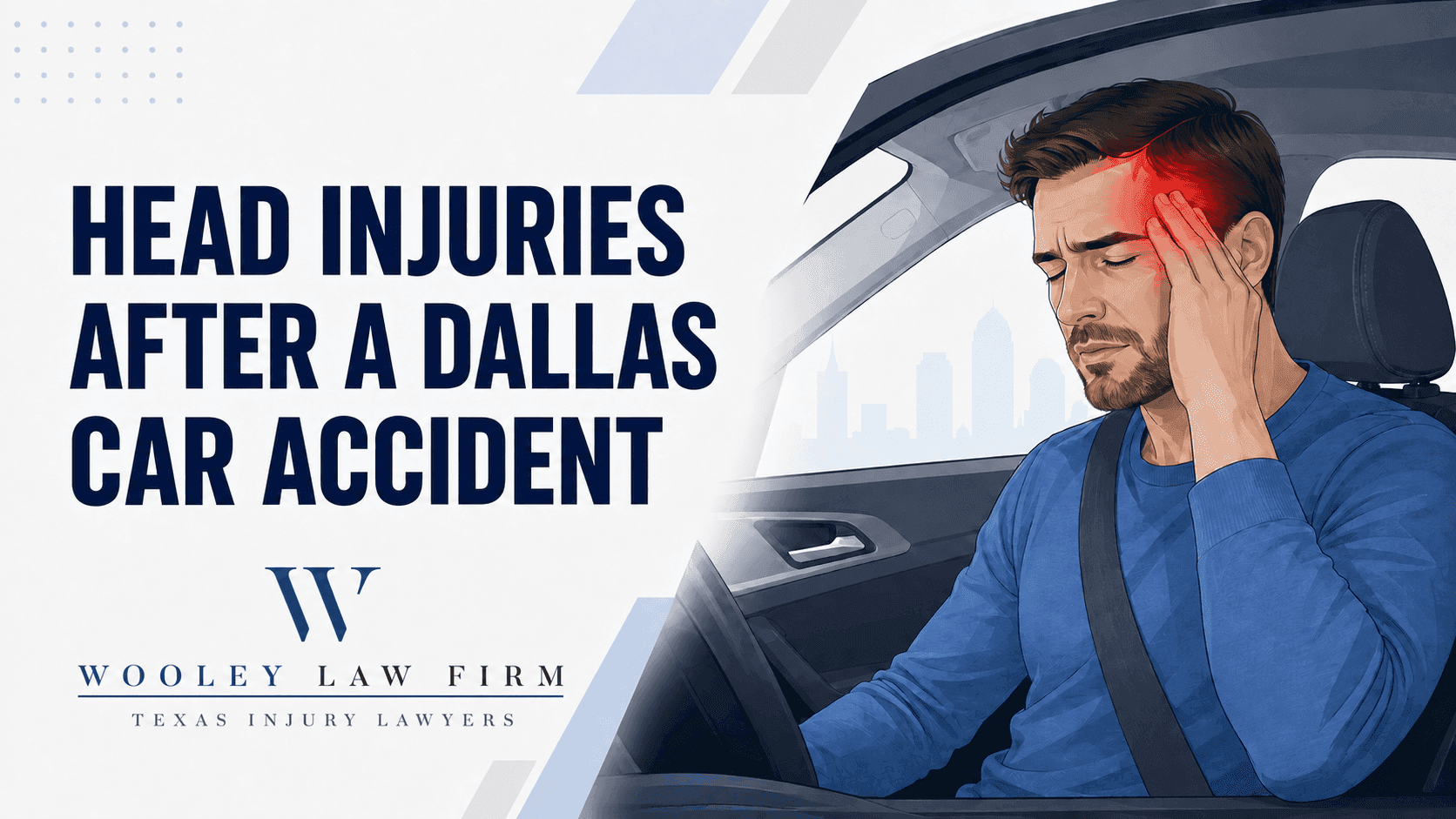
A head injury after a car accident can be frightening, painful, and more serious than it first appears. Many people leave a crash thinking they only have a headache, dizziness, soreness, or “brain fog,” only to later realize they may have suffered a concussion, traumatic brain injury, skull fracture, scalp injury, facial injury, or neurological damage.
Head injuries are common after Dallas car accidents because the head can move violently during impact. A driver or passenger may strike the steering wheel, window, headrest, dashboard, airbag, roof, or side pillar. Even when the head does not hit anything, the sudden back-and-forth movement of the crash can cause the brain to move inside the skull.
A head injury should never be ignored. Symptoms may appear immediately, or they may develop hours or days later. Head injuries can affect memory, concentration, mood, sleep, vision, balance, work, relationships, and daily life.
At The Wooley Law Firm, Dallas car accident lawyer Andrew J. Wooley represents injured crash victims with head injuries ranging from concussions to serious traumatic brain injuries. These claims may involve emergency room treatment, CT scans, MRIs, neurologists, neuropsychological testing, therapy, future medical expenses, lost wages, pain, impairment, and loss of enjoyment of life.
Before accepting a settlement from an insurance company, it is important to fully understand the nature of your head injury, your future medical needs, and how the injury may affect your work and daily life.
If you suffered a head injury in a Dallas car accident, call The Wooley Law Firm at 214-699-6524 or contact us through our website for a free case evaluation.
Why Head Injuries After a Car Accident Should Be Taken Seriously
Insurance companies often try to minimize head injury claims. They may argue that the injury is minor because there was no loss of consciousness, no skull fracture, no bleeding on a CT scan, or no visible wound. However, a serious head injury does not always involve an open wound or obvious external trauma.
A person can suffer a concussion or traumatic brain injury without losing consciousness. Some brain injuries may not show up on basic imaging. Symptoms such as headaches, dizziness, memory problems, confusion, nausea, light sensitivity, mood changes, and sleep problems may still be very real and very disruptive.
Car accident victims should be cautious before settling too quickly. Once a settlement is signed, the insurance company will usually not pay more money if the head injury later causes ongoing symptoms, requires specialist care, or interferes with work and daily life.
Common Causes of Head Injuries in Dallas Car Accidents
Head injuries can happen in many types of motor vehicle collisions. Common causes include:
The head striking the steering wheel
The head hitting the window or side pillar
The head striking the dashboard
Airbag deployment
Whiplash-type movement of the head and neck
The head hitting the headrest
The roof crushing in during a rollover
Side-impact crashes
Rear-end collisions
Head-on collisions
Pedestrian, bicycle, motorcycle, and truck accidents
Rideshare, delivery vehicle, and commercial vehicle crashes
A head injury does not require a direct blow to the skull. Rapid acceleration and deceleration forces can injure the brain even when there is no visible mark on the head.
Symptoms of a Head Injury After a Car Accident
Head injury symptoms may appear immediately or develop over time. Common symptoms include:
Headache
Dizziness
Confusion
Nausea or vomiting
Blurred vision
Sensitivity to light
Sensitivity to noise
Ringing in the ears
Balance problems
Fatigue
Sleep problems
Memory problems
Difficulty concentrating
Feeling slowed down
Brain fog
Irritability
Anxiety
Depression
Mood swings
Neck pain
Loss of consciousness
Seizures
Weakness, numbness, or tingling
Any of these symptoms should be taken seriously. A crash victim may need emergency care, diagnostic imaging, neurological evaluation, follow-up treatment, cognitive testing, therapy, or specialist care.
Warning Signs That May Require Emergency Medical Care
Some head injury symptoms may indicate a medical emergency. A crash victim should seek immediate medical attention if they experience:
Loss of consciousness
Repeated vomiting
Severe or worsening headache
Seizure
Confusion that worsens
Slurred speech
Weakness or numbness
Unequal pupil size
Difficulty waking up
Loss of coordination
Clear fluid or blood from the nose or ears
Severe drowsiness
Sudden behavior changes
This blog is not medical advice. If you have concerns about a head injury, symptoms, or your health, you should contact a qualified healthcare provider or seek emergency medical care.
Concussions After a Dallas Car Accident
A concussion is a type of traumatic brain injury. It can happen when the head is struck or when the brain is jolted by sudden crash forces. Concussions are sometimes described as “mild” traumatic brain injuries, but that does not mean they are harmless.
Symptoms of a concussion may include:
Headache
Dizziness
Nausea
Confusion
Memory problems
Difficulty concentrating
Fatigue
Sensitivity to light or noise
Sleep problems
Irritability
Feeling foggy or slowed down
Some concussion symptoms improve within days or weeks. Others last much longer. When symptoms continue, the victim may need additional medical care and documentation before resolving an injury claim.
Traumatic Brain Injuries After a Car Accident
A traumatic brain injury, also known as a TBI, can occur when crash forces disrupt normal brain function. TBIs can range from mild concussions to severe brain injuries involving bleeding, swelling, skull fractures, or permanent neurological problems.
Symptoms of a traumatic brain injury may include:
Persistent headaches
Memory loss
Difficulty focusing
Personality changes
Mood changes
Speech problems
Vision problems
Balance problems
Seizures
Sleep disturbance
Cognitive difficulties
Weakness or numbness
Difficulty working or performing daily tasks
A serious TBI may require emergency treatment, hospitalization, rehabilitation, neurology care, neuropsychological testing, therapy, and long-term medical support.
Coup-Contrecoup Brain Injuries
A coup-contrecoup injury can occur when the brain is injured at the site of impact and also on the opposite side of the brain. This may happen when the head strikes part of the vehicle or when sudden crash forces cause the brain to move inside the skull.
These injuries can be serious because multiple areas of the brain may be affected. Symptoms may include headaches, confusion, memory problems, mood changes, dizziness, and cognitive difficulties.
Injured in an Accident?
Free consultation. Tell us what happened and learn what options may be available.
Diffuse Axonal Injury After a Crash
A diffuse axonal injury can occur when the brain is rapidly shaken, stretched, or twisted. These injuries may be associated with high-force crashes, rollovers, truck accidents, and severe impacts.
Diffuse axonal injuries can affect communication between brain cells. Symptoms may range from confusion and cognitive problems to severe neurological impairment. These injuries may require advanced medical evaluation and long-term care.
Brain Bleeds and Intracranial Hemorrhage
Some car accident head injuries involve bleeding inside the skull. These conditions can be life-threatening and require immediate medical attention.
Examples may include:
Subdural hematoma
Epidural hematoma
Intracerebral hemorrhage
Subarachnoid hemorrhage
Symptoms may include severe headache, vomiting, confusion, weakness, drowsiness, seizures, slurred speech, or loss of consciousness. A brain bleed is a medical emergency.
Skull Fractures After a Car Accident
A skull fracture can occur when the head strikes a hard surface during a crash. These injuries may happen in severe head-on collisions, side-impact crashes, rollovers, pedestrian accidents, motorcycle crashes, and truck wrecks.
Symptoms may include:
Severe head pain
Swelling
Bruising
Bleeding
Tenderness
Confusion
Dizziness
Nausea
Clear fluid from the nose or ears
Loss of consciousness
Neurological symptoms
Skull fractures may require emergency care, CT imaging, neurosurgical evaluation, and follow-up treatment.
Post-Concussion Syndrome After a Car Accident
Some people continue to experience symptoms long after the initial concussion. This may be referred to as post-concussion syndrome.
Symptoms may include:
Ongoing headaches
Dizziness
Fatigue
Brain fog
Memory problems
Difficulty concentrating
Sleep problems
Irritability
Anxiety
Depression
Light or noise sensitivity
Post-concussion symptoms can interfere with work, school, driving, family responsibilities, and daily life. Insurance companies may try to dismiss these symptoms because they are not always visible, but they can be very real and very limiting.
Headaches After a Car Accident
Headaches are one of the most common symptoms after a crash. They may be related to a concussion, neck injury, muscle strain, nerve irritation, migraine condition, or more serious head trauma.
Headaches after a car accident should be evaluated, especially if they are severe, worsening, persistent, or accompanied by nausea, dizziness, confusion, vision changes, or neurological symptoms.
Memory Problems and Difficulty Concentrating
Head injuries can affect memory, focus, processing speed, and the ability to complete normal tasks. A person may struggle to remember appointments, follow conversations, complete work assignments, read, use a computer, or manage daily responsibilities.
These symptoms can be frustrating because they may not be visible to others. Family members, employers, and insurance adjusters may not fully understand how disruptive cognitive symptoms can be.
Mood and Personality Changes After a Head Injury
A head injury can affect more than physical health. Some victims experience emotional and behavioral changes after a crash, including:
Irritability
Anxiety
Depression
Mood swings
Anger
Emotional sensitivity
Loss of motivation
Social withdrawal
Sleep disruption
These symptoms may be related to the injury itself, the stress of the crash, pain, lost income, and the disruption of daily life. They should be documented and addressed with appropriate medical care.
Vision, Balance, and Dizziness Problems
Some head injury victims experience vision and balance problems after a car accident. Symptoms may include:
Blurred vision
Double vision
Eye strain
Dizziness
Vertigo
Trouble reading
Trouble looking at screens
Poor balance
Motion sensitivity
Nausea with movement
These symptoms can affect driving, working, walking, reading, using a phone, and completing everyday tasks. A victim may need follow-up care with specialists depending on the symptoms.
How Head Injuries Are Diagnosed After a Car Accident
A head injury may require several forms of medical evaluation. Depending on the symptoms, a doctor may recommend:
Emergency examination
Neurological examination
CT scan
MRI
Cognitive screening
Neuropsychological testing
Vestibular evaluation
Vision evaluation
Neurology referral
Neurosurgery consultation
Follow-up care
It is important for car accident victims to explain how the injury happened, whether the head struck anything, whether there was loss of consciousness, what symptoms developed, and how the injury affects work, sleep, memory, mood, driving, and daily life.
Treatment for Head Injuries After a Dallas Car Accident
Treatment depends on the type and severity of the head injury. Common treatment may include:
Emergency medical care
Rest and activity modification
Medication
Follow-up medical visits
Neurology care
Neurosurgical care
Physical therapy
Vestibular therapy
Vision therapy
Cognitive therapy
Speech therapy
Occupational therapy
Mental health treatment
Pain management
Rehabilitation
Long-term medical monitoring
Some head injuries improve with time and conservative treatment. Others require ongoing care and long-term support. The cost of treatment and the effect on the victim’s life should be considered before settling with the insurance company.
How a Head Injury Can Affect Your Work and Daily Life
A head injury can interfere with nearly every part of life. Pain, fatigue, cognitive problems, mood changes, dizziness, and sleep problems can make normal activities difficult.
Head injuries may affect your ability to:
Work
Drive
Read
Use a computer
Concentrate
Remember information
Sleep
Exercise
Care for children
Handle household tasks
Attend school
Manage appointments
Participate in conversations
Enjoy hobbies
Maintain relationships
Even when a person looks normal from the outside, a head injury can create serious limitations.
Compensation for a Head Injury After a Dallas Car Accident
A head injury claim may include compensation for both economic and non-economic damages. Depending on the case, damages may include:
Emergency room bills
Ambulance bills
Hospital bills
Doctor visits
CT scans, MRIs, and diagnostic testing
Neurology treatment
Neurosurgery care
Therapy and rehabilitation
Cognitive testing
Future medical expenses
Lost wages
Loss of earning capacity
Pain and suffering
Physical impairment
Mental anguish
Disfigurement
Loss of enjoyment of life
Out-of-pocket expenses
A serious head injury can affect more than medical bills. It can limit independence, work, family relationships, emotional health, and the ability to live normally.
Why You Should Not Settle Too Early After a Head Injury
Insurance companies may contact you quickly after a Dallas car accident and offer a settlement before you know the full extent of your head injury. This can be risky.
Before resolving your claim, you should know the answers to important questions:
Did you suffer a concussion or traumatic brain injury?
Do you need a CT scan or MRI?
Have you followed up with a doctor?
Do you need a neurologist?
Are your headaches continuing?
Are you having memory, concentration, or sleep problems?
Are you having dizziness, vision problems, or balance issues?
Can you return to work?
Can you drive safely?
Do you need therapy or rehabilitation?
Will you need future medical treatment?
Have all medical bills been obtained?
Have future medical expenses been evaluated?
Once you accept a settlement, you generally cannot reopen the claim later because your head injury became worse, required additional treatment, or caused ongoing limitations. A Dallas car accident lawyer can help evaluate the claim before the insurance company pushes you into a low settlement.
How The Wooley Law Firm Helps Dallas Car Accident Victims
The Wooley Law Firm helps injured car accident victims pursue compensation after serious head injuries. Depending on the facts of the case, we may help by:
Investigating the crash
Reviewing the police report
Identifying all insurance coverage
Communicating with the insurance company
Gathering medical records and bills
Documenting lost wages
Evaluating future medical expenses
Reviewing specialist recommendations
Documenting cognitive, emotional, and daily-life limitations
Calculating pain, impairment, mental anguish, and loss of enjoyment damages
Negotiating with the insurance company
Filing a lawsuit when necessary
Insurance companies are not on your side after a wreck. Their goal is to pay as little as possible. Before giving a recorded statement, signing paperwork, or accepting a settlement, speak with a Dallas car accident lawyer who can protect your rights.
Dallas Car Accident Head Injury Lawyer
If you suffered a head injury in a car accident in Dallas, Fort Worth, or anywhere in North Texas, The Wooley Law Firm may be able to help. Andrew J. Wooley represents car accident victims with minor and severe head injuries and helps them pursue full compensation, including emergency medical expenses, future medical expenses, lost wages, pain and suffering, impairment, mental anguish, and loss of enjoyment of life.
Call 214-699-6524 or contact us through our website for a free case evaluation.
You don’t pay unless we win.
Frequently Asked Questions About Head Injuries After a Car Accident
Can a car accident cause a concussion?
Yes. A car accident can cause a concussion when the head is struck or when crash forces cause the brain to move inside the skull. A concussion can occur even without loss of consciousness.
Do I have to hit my head to have a brain injury?
No. A person can suffer a brain injury from sudden acceleration and deceleration forces even if the head does not directly hit a hard surface.
What if my CT scan was normal but I still have symptoms?
A normal CT scan does not always mean there is no head injury. Some concussions and traumatic brain injuries may not show up on basic imaging. Persistent symptoms should be discussed with a qualified medical provider.
What are common concussion symptoms after a car accident?
Common symptoms include headache, dizziness, nausea, confusion, memory problems, trouble concentrating, fatigue, light sensitivity, noise sensitivity, sleep problems, irritability, and brain fog.
Should I settle my car accident claim before my head injury symptoms resolve?
It is usually risky to settle before you understand the full extent of your head injury. If you later need specialist care, therapy, testing, or future treatment, the insurance company may not have to pay more after a settlement is signed.
Can a head injury affect my ability to work?
Yes. Head injuries can affect memory, concentration, mood, sleep, balance, vision, and energy levels. These symptoms can interfere with work duties, driving, computer use, communication, and productivity.
What compensation can I recover for a head injury after a Dallas car accident?
Compensation may include medical bills, future medical expenses, lost wages, loss of earning capacity, pain and suffering, physical impairment, mental anguish, disfigurement, and loss of enjoyment of life.
Important Note
Andrew J. Wooley is not a healthcare provider. He is an attorney who primarily practices personal injury law. If you have questions about a head injury, concussion, traumatic brain injury, medical treatment, symptoms, or your overall health, you should contact a qualified healthcare provider.
For more information about your rights after a wreck, visit our Dallas Car Accident Attorney page.
Topics
Share This Article

Andrew J. Wooley
Personal Injury Attorney
Andrew J. Wooley is a dedicated personal injury attorney based in Dallas, Texas. He focuses on helping accident victims recover fair compensation for their injuries. With a commitment to personalized service, Andrew works directly with each client to understand their unique situation and fight for their rights.
Related Local News
Recent related coverage