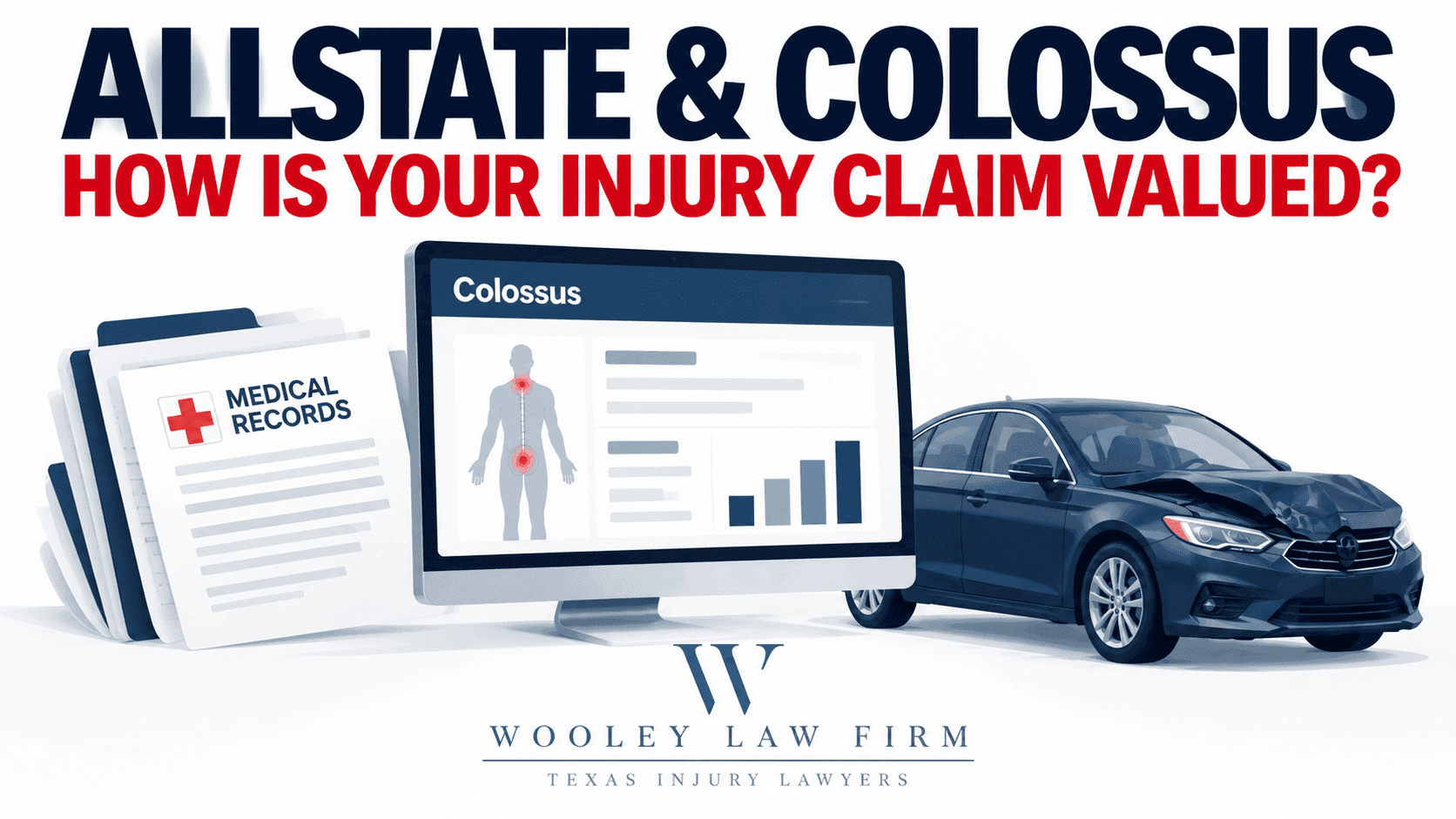
After a Dallas car wreck, you may expect Allstate to review your medical records, listen to how the injury affected your life, and make a reasonable settlement offer. You may be surprised to learn that claims software can play a role in the evaluation.
Allstate’s use of Colossus to help evaluate certain bodily injury claims is documented in a 2010 multistate regulatory agreement. That history does not establish which software or version is being used on your claim today. dfr.oregon.gov
An insurance company’s computer-generated estimate does not determine what you must accept. Before settling, you need to understand the evidence, the losses being claimed, and the rights you would give up by signing a release.
What Is Colossus?
The 2010 regulatory agreement describes Colossus as a rules-based tool. Adjusters enter medical information through prompts about injuries, treatment, results, and prognosis. The program assigns severity points and converts them into a recommended range for general damages.
The documented process also used settlement data to “tune” valuations. Medical expenses, lost wages, and comparative-fault percentages were entered by adjusters rather than independently determined by the software. dfr.oregon.gov
This distinction matters: an evaluation depends on both the information supplied and the judgments made by the people handling the claim.
Why Medical Documentation Matters in an Allstate Injury Claim
Whether an adjuster uses Colossus, another program, or a manual review, incomplete records can leave important parts of your injury unexplained.
A demand should give the insurer a clear picture of:
The symptoms you experienced after the collision.
The diagnoses and findings documented by your providers.
The treatment you received and why it was recommended.
Your response to treatment and continuing limitations.
Any medically supported need for future care.
The connection between the wreck and the injuries being claimed.
Sending a stack of bills may establish charges, but it may not explain what happened to you. A treatment timeline and supporting records can help connect the collision, symptoms, diagnosis, and recovery.
For a broader explanation of the claims process, read our guide to Allstate car accident claims after a Dallas wreck.
Explain the Actual Effect of the Injury
“Back pain” can describe very different experiences. One person may recover quickly. Another may struggle to sit through a workday, sleep comfortably, carry a child, or drive without symptoms.
Describe your limitations accurately to your healthcare providers. Keep a factual record of missed work, activities you cannot perform, and assistance you need. Specific examples can help explain losses that a medical bill alone does not show.
The goal is accurate documentation. Treatment decisions should follow medical advice, and descriptions of symptoms should reflect what you actually experience.
Injured in an Accident?
Free consultation. Tell us what happened and learn what options may be available.
Address Gaps in Treatment
If you could not attend appointments because of cost, transportation, work, or childcare, preserve information explaining what happened.
A gap does not automatically mean you recovered. But an unexplained gap can leave questions about the duration of symptoms or the need for care. Your attorney can address those questions with records and an accurate timeline.
Put Preexisting Conditions in Context
A prior neck or back problem may require a careful comparison of your condition before and after the collision.
Relevant evidence may include earlier medical records, prior symptoms, your ability to work before the wreck, and your treating provider’s assessment. An MRI finding alone may not resolve when a condition developed or whether the collision aggravated it.
Do not hide prior injuries. A complete history helps your attorney address causation disputes directly.
What Did the 2010 Colossus Investigation Find?
The agreement required changes to oversight, audits, claimant notices, and settlement practices, plus a $10 million regulatory fund. Regulators did not identify institutional underpayment issues; they also did not review individual claim files or decide whether any particular claim was underpaid. dfr.oregon.gov
These historical findings support scrutiny of the evaluation process. They do not prove that every Allstate offer is unfair or that the same procedures apply today.
Does an Allstate Software Evaluation Control My Settlement?
An insurer’s valuation is a negotiating position. It does not establish a binding award or require you to sign a release.
A useful review asks whether the offer accounts for the supported losses and the risks of the case. Disputed fault, medical causation, available insurance, and the strength of the evidence can all affect settlement decisions.
For example, an offer might recognize emergency treatment while leaving later specialist care unexplained. Or the insurer might dispute missed work despite supporting employer records. Those issues call for specific evidence and a response to the stated reasons for the offer.
Avoid relying on a simple “medical bills times three” formula. A Dallas car accident lawyer can evaluate your circumstances and explain the practical options.
What Should You Ask After a Low Allstate Offer?
Ask for a written explanation of the evaluation. Depending on the claim, useful questions include:
Which medical records and bills did you review?
Are you disputing any diagnosis, treatment, or charge?
What compensation did you include for lost income?
Did you consider medically supported future care?
Are you reducing the offer because you claim I share fault?
Was Colossus or another valuation program used?
Will you reconsider the offer after reviewing additional evidence?
These questions can identify disagreements that a revised demand should address. Asking about software does not guarantee access to the program, its settings, or internal reports.
Keep settlement correspondence and copies of everything you submit.
Should You Settle While You Are Still Treating?
Be careful about signing a final bodily injury release while your prognosis remains uncertain. Depending on its terms, a release may prevent you from seeking more money later if additional treatment becomes necessary.
Your attorney can help you weigh the offer against unresolved medical issues, available coverage, deadlines, and the risks of continuing the claim.
The Texas Department of Insurance’s auto insurance guide also explains common coverages. Your own policy may provide benefits worth reviewing alongside the claim against the other driver.
How The Wooley Law Firm Can Help
Challenging an injury valuation requires a supported explanation of why the claim deserves further consideration.
The Wooley Law Firm can review your records, organize the treatment history, document lost income and daily limitations, address causation disputes, and respond to the insurer’s reasons for its offer. When appropriate, an attorney can also evaluate whether filing suit against the responsible party is necessary.
If Allstate is handling your claim after a Dallas car wreck, speak with an attorney before accepting an offer or signing a release. Call (214) 699-6524 or contact The Wooley Law Firm for a free consultation.
Frequently Asked Questions
Does Allstate use Colossus on every injury claim?
Do not assume that it does. Its documented historical use does not establish whether your particular claim was evaluated with Colossus. Ask the adjuster.
Can I reject an Allstate settlement offer?
You can decline an offer and pursue further negotiation or other available legal options. Whether doing so is advisable depends on the evidence, coverage, deadlines, and risks.
Can a lawyer guarantee a higher offer?
No. An attorney can develop the evidence and challenge the evaluation, but no particular settlement or verdict is guaranteed.
This article provides general information and is not legal advice. Reading it does not create an attorney-client relationship. Every case is different.
Topics
Share This Article

Andrew J. Wooley
Personal Injury Attorney
Andrew J. Wooley is a dedicated personal injury attorney based in Dallas, Texas. He focuses on helping accident victims recover fair compensation for their injuries. With a commitment to personalized service, Andrew works directly with each client to understand their unique situation and fight for their rights.
Related Local News
Recent related coverage