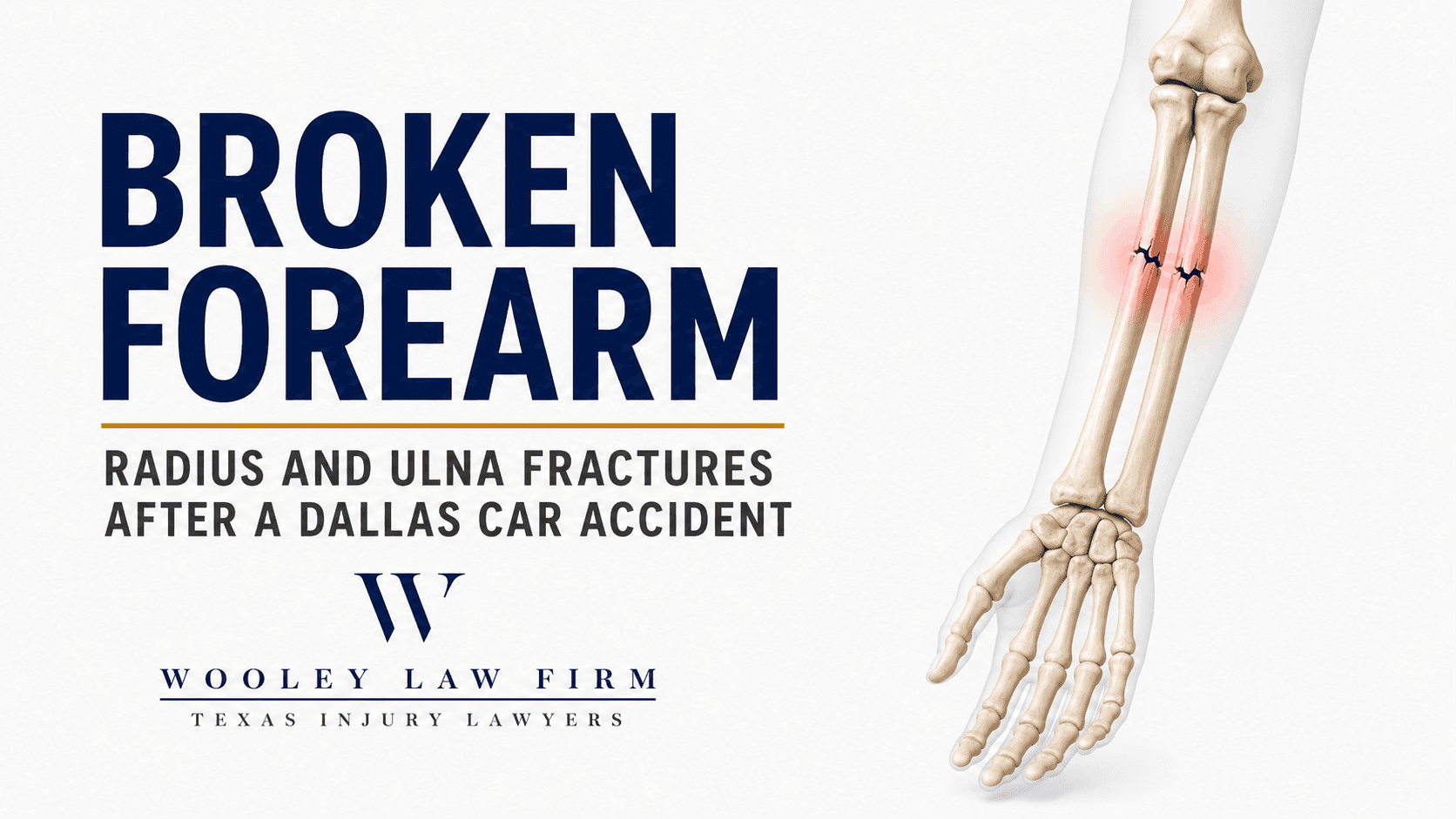
A broken arm is one of the most painful injuries a person can suffer in a Dallas car accident. Many people use the phrase “broken arm” generally, but the forearm is made up of two bones: the radius and the ulna. The radius is on the thumb side of the forearm, and the ulna is on the pinky side.
A crash can break one or both of these bones. These injuries are often called radius fractures, ulna fractures, or forearm fractures. Some people may also suffer wrist, elbow, shoulder, hand, nerve, or tendon injuries at the same time.
A broken forearm can affect nearly every part of daily life. It can make it difficult to drive, work, type, lift, cook, dress, bathe, care for children, exercise, or sleep comfortably. In serious cases, a radius or ulna fracture may require surgery, plates, screws, casts, splints, physical therapy, and months of recovery.
If you broke your forearm in a Dallas car wreck, it is important to get medical treatment, understand the injury, and protect your legal rights.
What Are the Radius and Ulna?
The forearm has two long bones:
The radius, which runs along the thumb side of the forearm
The ulna, which runs along the pinky side of the forearm
Together, these bones help the arm bend, rotate, grip, lift, and turn the wrist. When one or both bones break, the injury can limit hand, wrist, elbow, and arm function.
Common terms doctors may use include:
Radius fracture
Ulna fracture
Both-bone forearm fracture
Wrist fracture
Distal radius fracture
Displaced fracture
Comminuted fracture
Open fracture
Hairline fracture
Broken forearm
Broken arm
How Car Accidents Cause Broken Forearms
Radius and ulna fractures can happen when the force of a crash transfers into the arm. In a Dallas car accident, this may occur when a person braces for impact, strikes the inside of the vehicle, or is thrown against the door, steering wheel, dashboard, or center console.
Common causes include:
Bracing Before Impact
Many people instinctively put their hands on the steering wheel, dashboard, or seat before a crash. When the collision happens, the force can travel through the wrist and forearm, causing the radius or ulna to break.
Airbag Deployment
Airbags can save lives, but they deploy with significant force. If a driver’s hands or arms are near the steering wheel when the airbag deploys, the impact can cause wrist, hand, or forearm fractures.
Impact With the Door or Interior of the Vehicle
In a side-impact crash, the driver or passenger may be slammed into the door. The forearm can strike the door panel, window, armrest, or frame of the vehicle.
Steering Wheel Trauma
Drivers often suffer forearm injuries because their hands and arms are on the steering wheel at the time of impact. The sudden twisting, bending, or forceful impact can fracture the bones of the forearm.
Pedestrian, Bicycle, and Motorcycle Accidents
Pedestrians, bicyclists, and motorcyclists are especially vulnerable to broken arms because they do not have the protection of a vehicle. A person may suffer a radius or ulna fracture when struck by a car or when landing on an outstretched arm.
Symptoms of a Broken Forearm After a Dallas Car Wreck
A broken forearm is often obvious, but not always. Some fractures are displaced and visibly deformed, while others may initially feel like swelling, bruising, or severe soreness.
Common symptoms include:
Sharp pain in the forearm, wrist, or elbow
Swelling
Bruising
Tenderness
Difficulty moving the wrist, hand, or elbow
Pain when gripping or lifting
Visible deformity or crooked appearance
Numbness or tingling in the hand or fingers
Weakness
Popping or grinding sensation
Inability to rotate the palm up or down
Pain that worsens with movement
If you have arm pain after a Dallas car accident, do not assume it is only a sprain. A fracture may require imaging, casting, orthopedic care, or surgery.
Types of Radius and Ulna Fractures
Forearm fractures can vary in severity. Some are stable and heal with a splint or cast. Others are unstable and need surgery.
Common types include:
Radius Fracture
A radius fracture involves the bone on the thumb side of the forearm. Many people suffer a distal radius fracture near the wrist, especially when bracing with their hand during a crash.
Ulna Fracture
An ulna fracture involves the bone on the pinky side of the forearm. This may happen from a direct blow to the arm, such as hitting the door, dashboard, or another hard surface inside the vehicle.
Both-Bone Forearm Fracture
In more serious crashes, both the radius and ulna can break. These injuries are often unstable and may require surgery to properly align the bones.
Displaced Fracture
A displaced fracture occurs when the broken bone pieces move out of place. Displaced fractures are more likely to require reduction, surgery, or hardware.
Comminuted Fracture
A comminuted fracture means the bone is broken into multiple pieces. These injuries can be more complicated and may involve a longer recovery.
Injured in an Accident?
Free consultation. Tell us what happened and learn what options may be available.
Open Fracture
An open fracture occurs when the broken bone punctures the skin. This is a serious injury because of the risk of infection, nerve damage, and soft tissue trauma.
Diagnosis After a Car Accident
Doctors typically diagnose radius and ulna fractures through a physical exam and imaging. After a Dallas car accident, medical providers may evaluate the arm, wrist, elbow, hand, nerves, and blood flow.
Testing may include:
X-rays
CT scans
Orthopedic evaluation
Nerve and sensation checks
Range-of-motion testing
Follow-up imaging
It is important to tell your doctor about all symptoms, including numbness, tingling, weakness, wrist pain, elbow pain, shoulder pain, and difficulty gripping.
Treatment for Broken Forearms
Treatment depends on the location and severity of the fracture. Some forearm fractures can be treated without surgery, while others require an orthopedic surgeon.
Treatment may include:
Splint
Cast
Sling
Pain medication
Reduction to realign the bone
Surgery
Plates and screws
Pins or rods
Follow-up X-rays
Physical therapy
Work restrictions
Future hardware removal in some cases
Even when surgery is not required, a broken forearm can still interfere with work and daily life for weeks or months.
Surgery for Radius and Ulna Fractures
Surgery may be needed when the bones are displaced, unstable, broken in multiple places, or unlikely to heal correctly in a cast. In many cases, the surgeon uses plates and screws to hold the bones in proper position while they heal.
Surgery may increase the value of a personal injury claim because it can involve:
Hospital or surgery center bills
Anesthesia bills
Surgeon bills
Hardware placement
Scarring
Painful recovery
Physical therapy
Time away from work
Future medical care
Possible hardware removal
If the crash was caused by another driver, these damages should be considered when evaluating the claim.
Recovery After a Broken Arm
Recovery depends on the severity of the fracture, whether surgery was required, the person’s age and health, and the type of work the person does. Some people recover within weeks, while others experience pain, stiffness, weakness, or reduced function for months.
During recovery, a broken forearm can make it difficult to:
Drive
Type
Write
Lift groceries
Cook
Clean
Shower
Dress
Sleep
Care for children
Work
Exercise
Use tools
Perform physical labor
For people who work with their hands, a broken arm can create serious financial stress. Construction workers, delivery drivers, mechanics, nurses, warehouse workers, hairstylists, servers, office workers, and business owners may all lose income because of a forearm fracture.
Common Dallas Car Accidents That Cause Radius and Ulna Fractures
Broken forearms can happen in many types of Dallas crashes, including:
Rear-end collisions
T-bone accidents
Head-on crashes
Intersection wrecks
Highway crashes
Drunk driving accidents
Distracted driving crashes
Rideshare crashes involving Uber or Lyft
Delivery driver accidents
Motorcycle accidents
Pedestrian accidents
Bicycle accidents
18-wheeler wrecks
Commercial vehicle crashes
Multi-vehicle collisions
Serious crashes on I-35E, I-30, I-635, I-20, US-75, Loop 12, the Dallas North Tollway, and other Dallas roads can easily cause broken arms, wrist injuries, shoulder injuries, and other trauma.
What Compensation Can You Recover for a Broken Forearm?
If another driver caused your Dallas car accident, you may be able to pursue compensation for the losses caused by the wreck.
A broken forearm claim may include:
Medical Bills
This may include ambulance charges, emergency room care, X-rays, CT scans, orthopedic appointments, surgery, medication, follow-up visits, and physical therapy.
Future Medical Care
Some victims need future appointments, additional imaging, therapy, injections, hardware removal, or treatment for long-term pain and stiffness.
Lost Wages
A radius or ulna fracture can keep a person out of work, especially if the job requires lifting, driving, typing, using tools, or physical activity.
Loss of Earning Capacity
If the injury causes permanent restrictions or long-term limitations, the claim may include reduced future earning ability.
Pain and Suffering
Broken forearms can be extremely painful. Pain may affect sleep, movement, independence, and daily activities.
Physical Impairment
A person may have limited grip strength, reduced range of motion, stiffness, weakness, or difficulty using the arm.
Disfigurement
Surgical scars, visible deformity, or hardware-related changes may support a disfigurement claim.
Mental Anguish
A serious crash, painful injury, surgery, and financial stress can cause anxiety, frustration, fear, and emotional distress.
Insurance Companies May Undervalue Broken Arm Claims
Insurance companies often try to minimize radius and ulna fractures. They may argue that a broken arm is a temporary injury, that the medical bills are too high, or that the person should have recovered faster.
Common insurance arguments include:
The fracture was minor
The treatment was unnecessary
Surgery was excessive
The crash did not cause the injury
The injury was pre-existing
The victim waited too long to get treatment
The lost wages are not properly documented
The person recovered and has no lasting damages
These arguments ignore how disruptive a broken forearm can be. Even a “routine” fracture can affect work, sleep, independence, family responsibilities, and quality of life.
Evidence That Can Help a Broken Arm Car Accident Claim
Evidence matters in a Dallas car accident case. Helpful evidence may include:
Police crash report
Photos of vehicle damage
Photos of injuries, bruising, swelling, casts, splints, or scars
Emergency room records
X-rays and imaging reports
Orthopedic records
Surgery records
Physical therapy records
Medical bills
Work restriction notes
Lost wage documents
Witness statements
Video footage
Insurance information
The more clearly the evidence connects the crash to the broken forearm, the stronger the claim may be.
What to Do After a Dallas Car Accident Caused a Broken Arm
After a crash, take steps to protect your health and your legal claim:
Get medical treatment immediately.
Tell your doctor about all arm, wrist, elbow, shoulder, hand, numbness, and tingling symptoms.
Follow your treatment plan.
Attend orthopedic appointments.
Keep your cast, splint, sling, and therapy instructions documented.
Save medical bills and records.
Take photos of your injury and vehicle damage.
Do not give a recorded statement to the other driver’s insurance company without legal advice.
Do not accept a quick settlement before knowing the full extent of your injury.
Contact a Dallas car accident lawyer.
Once a personal injury claim is settled, you usually cannot reopen it later. That is why it is important to understand the full extent of your injury before signing a release.
How a Dallas Car Accident Lawyer Can Help
A Dallas car accident lawyer can investigate the wreck, gather evidence, deal with the insurance company, and pursue compensation for the full impact of the injury.
The Wooley Law Firm can help by:
Investigating how the crash happened
Getting the police report
Preserving evidence
Identifying all available insurance coverage
Reviewing medical records and bills
Documenting the radius or ulna fracture
Calculating past and future damages
Handling insurance adjusters
Negotiating for a fair settlement
Filing a lawsuit if the insurance company refuses to be reasonable
A broken arm after a car wreck should not be treated like a minor inconvenience. It can affect your work, finances, family, and daily life.
The Wooley Law Firm Represents Dallas Car Accident Victims
The Wooley Law Firm represents people injured in car accidents, truck wrecks, commercial vehicle crashes, and serious injury cases throughout Dallas and the DFW metroplex.
If you suffered a broken forearm, radius fracture, ulna fracture, wrist fracture, or other arm injury after a crash, you should not have to deal with the insurance company alone.
Our firm has recovered millions for injured Texans and understands how to build strong injury claims against negligent drivers and insurance companies.
Call a Dallas Car Accident Lawyer After a Broken Arm
If you broke your arm in a Dallas car accident, contact The Wooley Law Firm for a free consultation. We can review what happened, explain your options, and help you understand the potential value of your claim.
You do not pay unless we win.
Call The Wooley Law Firm today to speak with a Dallas car accident lawyer about your broken forearm claim.
Disclaimer
This article is for general informational purposes only and is not legal advice. Reading this blog post does not create an attorney-client relationship with The Wooley Law Firm. Every car accident case is different, and the outcome of any claim depends on the specific facts, injuries, insurance coverage, evidence, and applicable law. If you were injured in a car accident, you should speak with a qualified Texas personal injury lawyer about your specific situation.
Topics
Share This Article

Andrew J. Wooley
Personal Injury Attorney
Andrew J. Wooley is a dedicated personal injury attorney based in Dallas, Texas. He focuses on helping accident victims recover fair compensation for their injuries. With a commitment to personalized service, Andrew works directly with each client to understand their unique situation and fight for their rights.
Related Local News
Recent related coverage