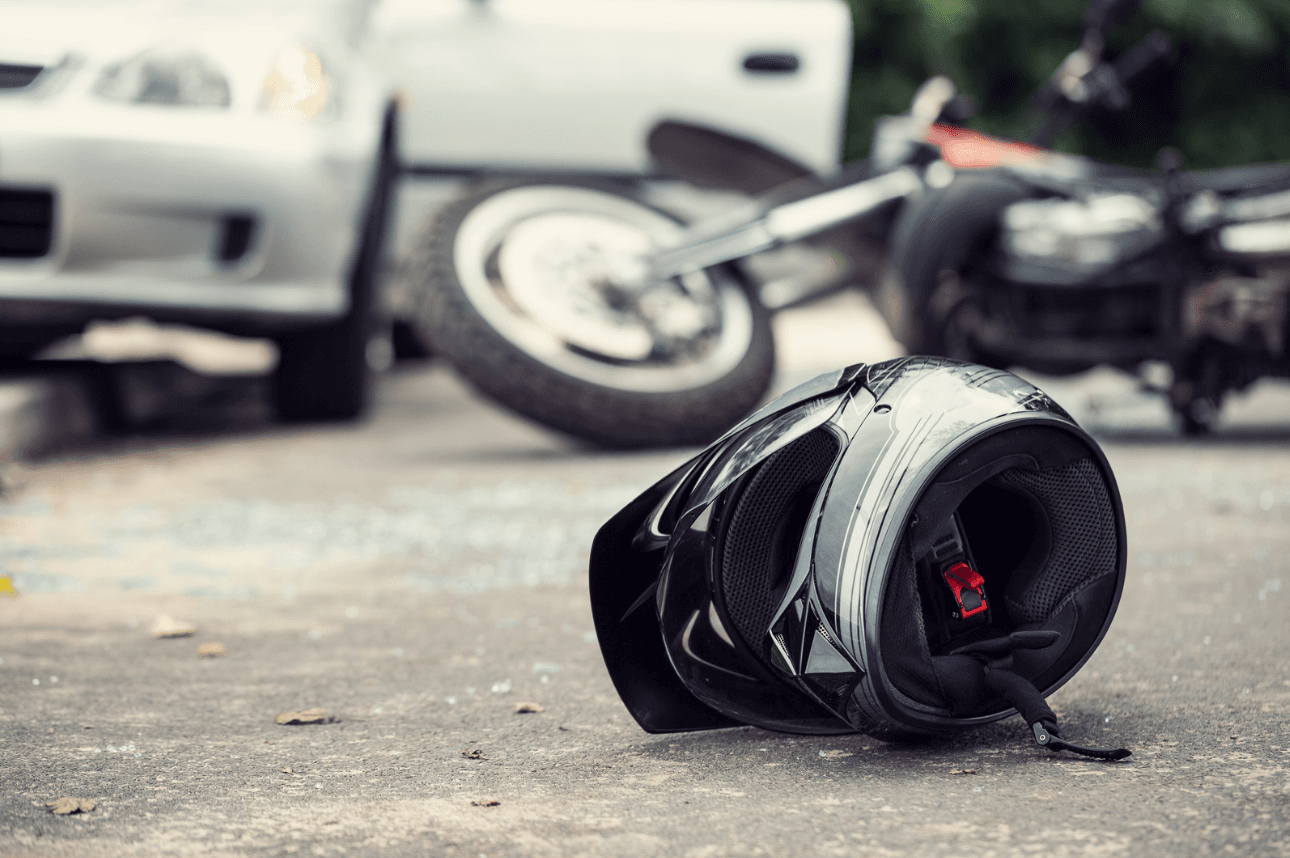
Motorcycle crashes are different, not just because injuries are often severe, but because the defense script shows up fast. “I didn’t see him.” “He came out of nowhere.” “He must have been speeding.” Those lines are common after a motorcycle collision. They are also often used to shift blame onto the rider before the facts are fully investigated. At The Wooley Law Firm, we know how insurance companies try to use stereotypes against injured motorcyclists. Our job is to build the case around evidence, not assumptions.
If you were hurt in a Dallas motorcycle crash, you need a legal team that understands motorcycle bias, left-turn collisions, visibility issues, impact evidence, and how to push back when an insurance company tries to make the rider the villain.
Why Insurance Companies Blame Motorcycle Riders
Insurance companies frequently lean on the same bias themes after a motorcycle wreck. They may suggest that the rider was reckless, speeding, weaving through traffic, lane splitting, racing, or taking unnecessary risks.
Sometimes a rider does make a mistake. Many times, however, the rider was simply smaller, harder to see, and more vulnerable than the car or truck that hit them. A driver may have failed to yield, misjudged the motorcycle’s distance, looked without truly seeing, turned across the rider’s path, or changed lanes without checking blind spots.
The problem is that motorcycle bias can shape a claim before the evidence is fully reviewed. That is why early investigation matters. Video footage, witness statements, crash debris, skid marks, vehicle damage, lighting conditions, and sightlines can all help tell the real story.
Common Bias Themes in Dallas Motorcycle Accident Claims
After a motorcycle crash in Dallas, the defense may try to frame the case around one or more of these themes.
“The Rider Must Have Been Speeding”
Drivers often assume a motorcycle was speeding because it seemed to appear suddenly. But a driver’s perception is not proof. Speed must be evaluated through physical evidence, video, witness statements, event data when available, and crash reconstruction principles.
“The Motorcycle Came Out of Nowhere”
Motorcycles do not come out of nowhere. This phrase often means the driver failed to keep a proper lookout, failed to judge distance correctly, or did not take enough time to identify oncoming traffic before turning or changing lanes.
“The Rider Was Hard to See”
Motorcycles are smaller than cars, but that does not excuse unsafe driving. Drivers still have a duty to look carefully, yield when required, check mirrors and blind spots, and avoid turning across the path of oncoming traffic.
“The Rider Assumed the Risk”
Riding a motorcycle is legal. Choosing to ride does not give other drivers permission to ignore right-of-way rules, make unsafe left turns, text behind the wheel, follow too closely, or drift into a rider’s lane.
“The Helmet Caused or Prevented the Claim”
Helmet use may become relevant to certain injury arguments, especially head injury disputes. But helmet use is usually not the cause of the crash. Fault focuses on what caused the collision: who failed to yield, who failed to keep a lookout, who made an unsafe turn, who changed lanes, and who violated traffic safety rules.
Left-Turn Motorcycle Crashes in Dallas
One of the most common and dangerous motorcycle crash scenarios involves a vehicle turning left across the path of a motorcycle traveling straight.
This can happen at intersections, driveways, parking lot exits, apartment entrances, shopping centers, and uncontrolled turn lanes. The driver may say they thought they had enough time. They may say they did not see the motorcycle. They may claim the rider was speeding. But the key question is often simple:
Was the motorcycle close enough to be an immediate hazard when the driver turned left?
If the answer is yes, the turning driver may be responsible for causing the crash.
Texas Left-Turn Duty to Yield
Texas law generally requires a driver turning left at an intersection, into an alley, into a private road, or into a driveway to yield the right of way to oncoming traffic that is already in the intersection or close enough to be an immediate hazard.
That rule matters in Dallas motorcycle accident cases because many severe motorcycle crashes happen when a driver turns left in front of an oncoming rider. The rider may have had the right of way. The driver may have simply misjudged the motorcycle’s speed or distance.
A left-turn crash is not automatically the rider’s fault just because the motorcycle was smaller, louder, or more difficult for the driver to notice. The law still requires the turning driver to yield when the oncoming motorcycle presents an immediate hazard.
How Left-Turn Motorcycle Crashes Happen
Left-turn motorcycle crashes often involve one or more of the following:
A driver turning left across a motorcycle traveling straight through an intersection
A driver turning into a parking lot, gas station, apartment complex, or side street
A driver rushing through a yellow light
A driver looking for cars but failing to register an approaching motorcycle
A driver misjudging how close the motorcycle really was
A driver distracted by a phone, passenger, GPS, or traffic congestion
A driver turning from a center lane without a clear view
A driver failing to wait for the motorcycle to pass before turning
These crashes can cause devastating injuries because the rider has little protection against the front, side, or corner of a car, SUV, pickup, delivery van, or commercial vehicle.
Injured in an Accident?
Free consultation. Tell us what happened and learn what options may be available.
Dallas Roads Where Motorcycle Crashes Can Be Especially Dangerous
Motorcycle crashes can happen anywhere in Dallas, but certain road types create serious risks for riders. Busy intersections, highway frontage roads, construction zones, high-speed corridors, and commercial driveways can all create danger when drivers fail to yield or fail to see motorcycles.
Dallas-area motorcycle crashes often involve roads and corridors such as:
North Central Expressway / US-75
I-35E
I-30
I-20
Loop 12
Northwest Highway
Dallas North Tollway
Lemmon Avenue
Greenville Avenue
Buckner Boulevard
Skillman Street
Belt Line Road
Harry Hines Boulevard
Jefferson Boulevard
Industrial areas, shopping centers, and apartment entrances throughout Dallas County
The location matters because road design, traffic signals, sightlines, lane layout, lighting, and nearby video sources can all become important evidence.
How The Wooley Law Firm Proves Visibility and Turning Issues
Motorcycle crash cases are won with proof. We do not let the insurance company rely on assumptions about riders. We investigate what the driver could see, what the driver should have done, and whether the motorcycle had the right of way.
Line of Sight and Lighting
We look at where the driver was positioned before the turn, what the driver could see, and whether anything blocked the view. This may include traffic, parked vehicles, medians, poles, signs, landscaping, roadway curves, hills, glare, darkness, rain, or construction equipment.
We also examine lighting conditions. A crash at night is not automatically the rider’s fault. Streetlights, headlights, reflective surfaces, surrounding businesses, traffic signals, and vehicle angles can all help determine whether the motorcycle should have been visible.
Driver Lookout
A driver can look in a direction without truly keeping a proper lookout. In motorcycle cases, the defense may say the driver looked but did not see the rider. That does not end the case. It may support the argument that the driver failed to pay attention, failed to recognize a visible hazard, or failed to wait until it was safe to turn.
Speed Claims and Impact Physics
Drivers often assume “speeding” because the motorcycle seemed to arrive quickly. But perception is not evidence. We compare the speed claim against objective proof.
That may include:
Video footage
Final resting positions
Crush damage
Impact angles
Debris fields
Skid marks or braking evidence
Gouge marks
Vehicle data
Witness statements
Traffic signal timing
Crash report details
Scene measurements
Even when speed is disputed, the central issue may still be whether the turning driver had enough time and space to safely complete the turn without cutting off the motorcycle.
Independent Video and Witness Proof
Video evidence can be extremely important in a Dallas motorcycle crash case. Dashcams, doorbell cameras, nearby business surveillance, apartment cameras, gas station cameras, traffic cameras, and security systems may show that the motorcycle was plainly visible and had the right of way.
But video can disappear quickly. Many businesses overwrite footage within days or even hours. That is why fast preservation letters and immediate investigation are important.
Vehicle Damage and Crash Reconstruction
The location and severity of vehicle damage can tell part of the story. A motorcycle striking the side of a left-turning vehicle may support a failure-to-yield theory. Damage patterns can help show where the vehicles were, how the impact occurred, and whether the driver turned across the rider’s path.
In serious cases, accident reconstruction may help explain speed, perception, reaction time, turning movement, braking, and avoidability.
Common Injuries in Dallas Motorcycle Crashes
Motorcyclists are exposed in ways car occupants are not. Even with a helmet, jacket, gloves, boots, and other safety gear, a rider can suffer life-changing injuries.
Common motorcycle crash injuries include:
Traumatic brain injuries
Concussions
Skull fractures
Spinal cord injuries
Paralysis
Neck and back injuries
Broken legs
Broken arms
Pelvic fractures
Shoulder injuries
Knee injuries
Foot and ankle injuries
Road rash and friction burns
Severe lacerations
Internal bleeding
Organ damage
Nerve damage
Amputation injuries
Permanent scarring
Disfigurement
Chronic pain
Psychological trauma
These injuries can affect every part of a person’s life: work, family, mobility, independence, sleep, mental health, and future medical needs.
Damages in a Dallas Motorcycle Accident Case
A motorcycle accident claim may include compensation for both economic and non-economic damages. Every case is different, but recoverable damages may include:
Emergency medical treatment
Hospital bills
Surgery
Physical therapy
Rehabilitation
Future medical care
Lost wages
Loss of earning capacity
Pain and suffering
Mental anguish
Physical impairment
Disfigurement
Scarring
Loss of enjoyment of life
Property damage
Motorcycle repair or replacement
Out-of-pocket expenses
In fatal motorcycle crash cases, surviving family members may also have a wrongful death claim. These cases can involve funeral expenses, loss of financial support, loss of companionship, mental anguish, and other damages available under Texas law.
What to Do After a Dallas Motorcycle Crash
After a motorcycle wreck, your health comes first. But when possible, these steps can help protect your claim:
Call 911 and report the crash.
Get medical care immediately.
Tell doctors about every area of pain, not just the worst injury.
Take photos of the vehicles, motorcycle, roadway, injuries, debris, and traffic signals.
Get names and phone numbers for witnesses.
Look for nearby cameras.
Do not give a recorded statement to the insurance company without legal guidance.
Do not accept a quick settlement before you know the full extent of your injuries.
Keep your helmet, gear, damaged clothing, and motorcycle parts.
Call a Dallas motorcycle accident lawyer as soon as possible.
The insurance company may begin building its defense immediately. You should not have to fight that battle alone while recovering from serious injuries.
Why Fast Investigation Matters
Motorcycle crash evidence can disappear quickly. Skid marks fade. Debris gets cleared. Vehicles are repaired or destroyed. Surveillance footage is overwritten. Witnesses become harder to find. The at-fault driver’s story may change.
The earlier a lawyer gets involved, the better the chance of preserving critical evidence.
At The Wooley Law Firm, we move quickly to identify what happened, preserve proof, and protect injured riders from unfair blame.
How The Wooley Law Firm Helps Motorcycle Crash Victims
We build motorcycle crash cases around objective proof, not stereotypes. That means we investigate the scene, preserve video, analyze right-of-way issues, review crash reports, identify witnesses, study vehicle damage, and push back against unsupported speed claims.
Our approach focuses on the facts:
Was the motorcycle visible?
Did the driver keep a proper lookout?
Did the driver fail to yield?
Did the driver misjudge distance or speed?
Did the driver turn left when it was unsafe?
Did distraction, impairment, fatigue, or inattention play a role?
What evidence proves the rider’s injuries and damages?
Insurance companies may try to reduce the value of a motorcycle claim by blaming the rider. We work to tell the full story clearly and forcefully.
Talk to a Dallas Motorcycle Accident Lawyer
If you were injured in a Dallas motorcycle crash, left-turn collision, intersection wreck, North Central Expressway crash, I-35E motorcycle accident, or another serious motorcycle wreck in Dallas County, you may have the right to seek justice and pursue compensation for medical expenses, pain and suffering, lost wages, mental anguish, impairment, and other damages.
Call The Wooley Law Firm at (214) 699-6524 for a free consultation. You do not pay unless we win. Contact Us Today!
Frequently Asked Questions About Dallas Motorcycle Accident Claims
Is the turning driver usually at fault in a left-turn motorcycle crash?
Often, yes. A driver turning left generally must yield to oncoming traffic that is in the intersection or close enough to be an immediate hazard. If the motorcycle had the right of way and the driver turned across its path, the turning driver may be responsible.
How do you fight the “I didn’t see the motorcycle” defense?
We fight that defense with evidence. That may include video, witness statements, sightline analysis, lighting conditions, vehicle damage, debris location, impact angles, and crash reconstruction. A driver’s claim that they did not see the motorcycle does not automatically excuse the crash.
What if the insurance company claims the rider was speeding?
That claim needs proof. We compare the allegation against physical evidence, video footage, scene measurements, crash damage, witness statements, and any available vehicle data. Insurance companies often raise speed arguments because they know motorcycle bias can influence a claim.
Can I still have a case if I was not wearing a helmet?
Possibly, yes. Helmet use may be relevant to certain injury arguments, but it does not automatically decide who caused the crash. Fault usually depends on the conduct that caused the collision, such as a driver failing to yield, failing to keep a lookout, or making an unsafe turn.
What compensation can I recover after a Dallas motorcycle crash?
Depending on the case, compensation may include medical bills, future medical care, lost wages, loss of earning capacity, pain and suffering, mental anguish, impairment, disfigurement, property damage, and other losses. The value of a case depends on liability, injuries, insurance coverage, and available evidence.
This article is for general information only and is not legal advice. Every case is different. Contact an attorney to discuss your specific situation.
Topics
Share This Article
Andrew J. Wooley
Personal Injury Attorney
Andrew J. Wooley is a dedicated personal injury attorney based in Dallas, Texas. He focuses on helping accident victims recover fair compensation for their injuries. With a commitment to personalized service, Andrew works directly with each client to understand their unique situation and fight for their rights.
Related Local News
Recent related coverage