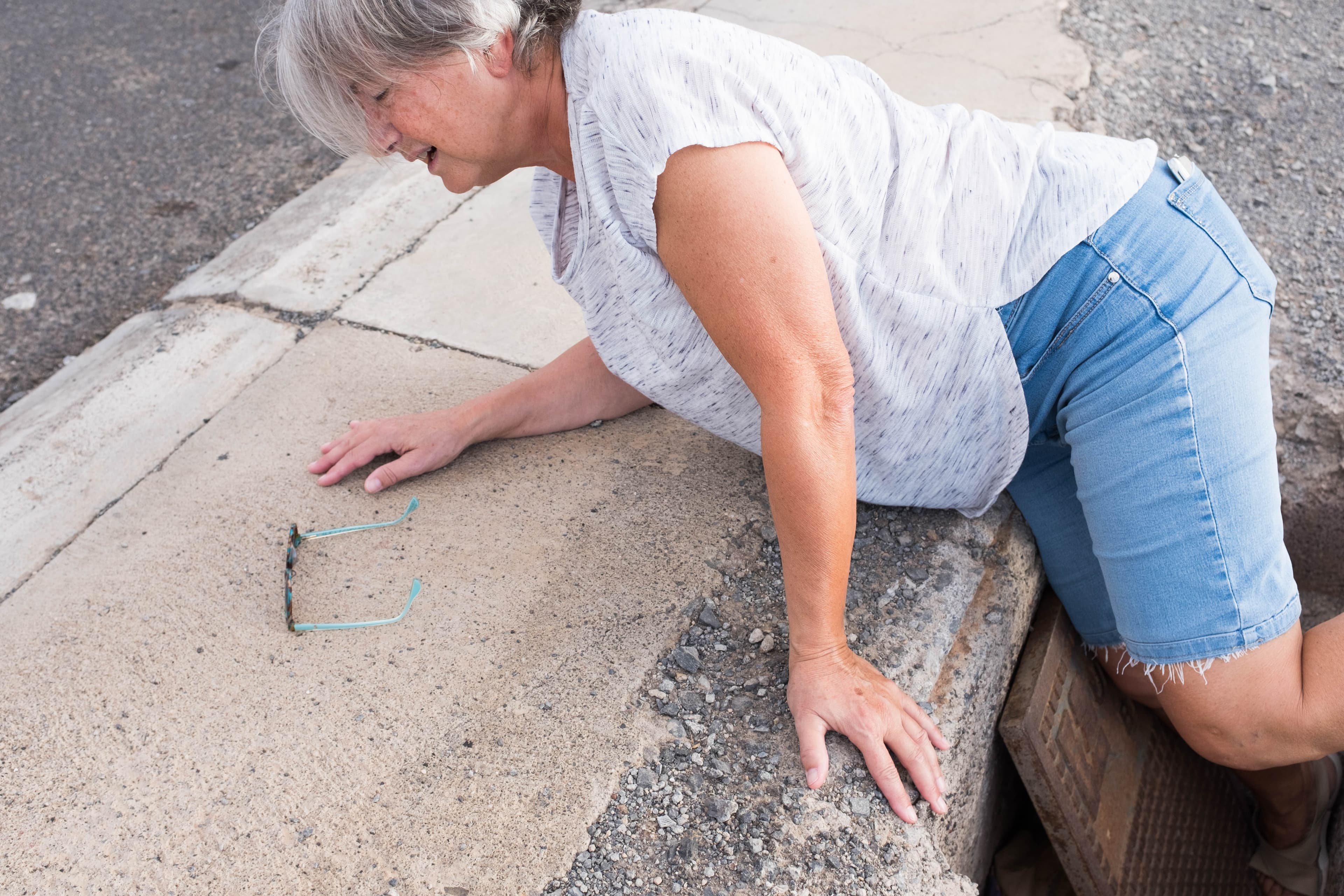

If you were injured after slipping, tripping, or falling on someone else’s property in Dallas, you may have a premises liability claim against the property owner, business, apartment complex, restaurant, grocery store, hotel, or insurance company responsible for the dangerous condition.
Slip-and-fall accidents can cause serious injuries. A fall on tile, concrete, stairs, a parking lot, or a hard store floor can lead to broken bones, knee injuries, back injuries, neck injuries, shoulder injuries, head injuries, concussions, torn ligaments, and long-term pain.
But slip-and-fall claims are difficult to prove in Texas.
In most Texas premises liability cases, it is not enough to show that you fell and got hurt. You generally must prove that the property owner, business, or person in control of the property knew or should have known about the dangerous condition and failed to fix it or warn you about it.
That makes evidence extremely important.
A spill may be cleaned up within minutes. A broken mat may be moved. A warning sign may appear after the fall. Surveillance video may be erased. Employees may forget what happened. Bruising and swelling may fade. By the time the insurance company gets involved, important evidence may already be gone.
While I do not encourage injured victims to handle serious slip-and-fall claims without a lawyer, the steps below can help protect your case.
If you were injured in a slip-and-fall accident in Dallas, North Texas, or anywhere in the DFW area, give The Wooley Law Firm a call or text at 214-699-6524 or contact us through our website for a free case evaluation.
What Is a Slip-and-Fall Claim?
A slip-and-fall claim is a type of premises liability claim. Premises liability cases involve injuries caused by unsafe property conditions.
These cases may involve:
Wet floors
Spilled liquids
Leaking freezers or refrigerators
Recently mopped floors without warning signs
Uneven flooring
Loose rugs or mats
Broken stairs
Missing handrails
Poor lighting
Parking lot defects
Potholes
Uneven sidewalks
Debris in walkways
Merchandise left in aisles
Unsafe apartment walkways
Broken tile
Slippery restaurant floors
In Dallas, slip-and-fall accidents commonly happen at grocery stores, restaurants, apartment complexes, hotels, retail stores, gas stations, parking lots, office buildings, shopping centers, bars, hospitals, and nursing homes.
Why Are Slip-and-Fall Cases Hard to Prove in Texas?
Texas law makes slip-and-fall claims challenging because the injured person usually has the burden to prove notice.
That means you may need evidence showing that the property owner or business:
Knew about the dangerous condition;
Should have known about the dangerous condition through reasonable inspection; or
Created the dangerous condition.
For example, if you slipped on water in a Dallas grocery store, the insurance company may argue that no one knows how the water got there or how long it was on the floor. If the store claims the spill happened moments before your fall, it may deny responsibility.
That is why evidence matters.
Helpful evidence may include photographs, surveillance video, witness statements, employee statements, cleaning logs, inspection records, prior complaints, incident reports, and maintenance records.
Step One: File an Incident Report
After a slip-and-fall accident, report the fall to a manager, employee, property owner, landlord, security officer, or other person in charge of the property.
Ask them to create an incident report.
An incident report is often the first written record that the accident happened. It may document:
The date and time of the fall
The exact location of the incident
The dangerous condition that caused the fall
The names of employees who responded
Whether EMS or medical help was requested
Whether video footage exists
Whether photographs were taken
Whether witnesses were present
If you did not file an incident report on the day of the fall, contact the business or property owner as soon as possible and ask to make a report.
If possible, ask for a copy of the report. Some businesses refuse to provide one, but you should still ask. The fact that you reported the fall can become important later.
Step Two: Take Pictures of Everything
Get your phone out and take pictures immediately.
Pictures can be some of the most important evidence in a Dallas slip-and-fall claim because dangerous conditions are often fixed quickly.
Take pictures of:
The spill, liquid, object, or defect that caused the fall
The floor, aisle, walkway, stairway, entrance, or parking lot
Any warning signs or lack of warning signs
The surrounding area
Lighting conditions
Mats, rugs, flooring transitions, curbs, tile, or steps
Ceiling tiles or nearby equipment if water may have leaked from above
Your shoes and clothing
Your visible injuries
The layout of the scene
Do not only take close-up photos. Take wide photos too. The insurance company will want to know where the fall happened, whether the hazard was visible, and whether the business had time to discover and correct it.
For example, if you slipped on water near a freezer section, take pictures of the water, the freezer, the aisle, nearby warning signs, the ceiling, nearby employees, and the surrounding area.
Injured in an Accident?
Free consultation. Tell us what happened and learn what options may be available.
Step Three: Photograph Your Injuries
Take pictures of your injuries as soon as possible and continue taking pictures over the next several days.
Bruising, swelling, cuts, scrapes, and discoloration may become more visible after the fall. These pictures help show the insurance company the real physical impact of the accident.
Document:
Bruising
Swelling
Cuts
Scrapes
Casts
Braces
Walking boots
Slings
Crutches
Surgical wounds
Changes in your condition over time
Many injured people wait too long to photograph their injuries. By the time they think about it, bruising may have faded and swelling may have improved.
Insurance adjusters handle injury claims every day. Photographs can help show that your injuries are real, visible, and connected to the fall.
Step Four: Get Witness Names and Contact Information
Witnesses can make a major difference in a Texas slip-and-fall case.
If anyone saw you fall, saw the dangerous condition before you fell, or heard employees discuss the hazard, get their contact information.
Try to gather:
Name
Phone number
Email address
What they saw
Whether they saw the dangerous condition before the fall
Whether they heard employees or managers say anything important
Witness testimony may help prove that the hazard existed before your fall and that the property owner had a reasonable opportunity to fix it.
This can be critical in a Dallas premises liability case.
Step Five: Identify Employees Who Responded
If employees, managers, maintenance workers, security guards, or property representatives responded after your fall, try to get their names.
Employees may know:
How long the dangerous condition existed
Whether similar incidents had happened before
Whether the area was supposed to be inspected
Whether there was a cleaning schedule
Whether someone had already reported the hazard
Whether surveillance video exists
Whether maintenance had been called
Sometimes employees make important statements after a fall, such as:
“We knew that was leaking.”
“That keeps happening.”
“Someone was supposed to clean that up.”
“We already called maintenance.”
“You’re not the first person to fall there.”
If something like that is said, write it down as soon as possible. Include who said it, what they said, and when they said it.
Step Six: Seek Medical Treatment Quickly
Do not delay medical treatment after a slip-and-fall accident.
Insurance companies look closely at the time between the fall and your first medical visit. If you wait too long, the insurance company may argue that you were not seriously hurt or that your injuries came from something else.
Depending on your injuries, treatment may include:
Emergency room care
Urgent care
Primary care
Orthopedic treatment
Chiropractic care
Physical therapy
Pain management
Imaging, including X-rays, CT scans, or MRIs
Surgery
Common injuries after a Dallas slip-and-fall accident include:
Broken wrists
Hip fractures
Knee injuries
Shoulder injuries
Back injuries
Neck injuries
Head injuries
Concussions
Torn ligaments
Herniated discs
Ankle fractures
Tailbone injuries
Falls can cause serious injuries, especially when the victim lands on concrete, tile, stairs, a parking lot, or another hard surface.
Step Seven: Tell Your Healthcare Providers About Every Injury
Be honest and complete with your healthcare providers.
Many injured people downplay their symptoms. Others only mention the body part that hurts the most. That can create problems later.
For example, you may have severe knee pain immediately after the fall but also mild lower back pain. If you only report the knee pain, the insurance company may later argue that your back injury was not caused by the fall because it was not documented during your first medical visit.
Tell your medical providers about:
Every area of pain
When the pain started
Whether symptoms are getting worse
Numbness or tingling
Radiating pain
Headaches
Dizziness
Weakness
Difficulty walking
Trouble sleeping
Difficulty working
Limitations with daily activities
Do not exaggerate your injuries, but do not minimize them either. Accurate medical documentation is one of the most important parts of an injury claim.
Step Eight: Do Not Give a Recorded Statement Without Legal Advice
The insurance company may ask you to give a recorded statement.
Be careful.
Insurance adjusters are trained to ask questions that may later be used against you. They may ask whether you were looking down, whether you saw the hazard, what shoes you were wearing, whether you were in a hurry, whether you had prior injuries, or whether anything distracted you.
Even innocent answers can be taken out of context.
Before giving a recorded statement, it is usually best to speak with a Dallas slip-and-fall lawyer.
Step Nine: Preserve Important Evidence
Evidence can disappear quickly after a fall.
A lawyer can send a preservation letter requesting that the business, property owner, apartment complex, or insurance company preserve important evidence, including:
Surveillance video
Incident reports
Inspection logs
Cleaning logs
Maintenance records
Employee statements
Photographs
Prior complaints
Prior incident reports
Work orders
Repair records
Policies and procedures
This is especially important when the fall happened at a grocery store, restaurant, apartment complex, hotel, retail store, gas station, parking lot, office building, or commercial property.
Many businesses have video systems that automatically overwrite footage. Waiting too long can make it much harder to prove what happened.
Common Places Slip-and-Fall Accidents Happen in Dallas
Slip-and-fall accidents can happen almost anywhere in Dallas and throughout North Texas, including:
Grocery stores
Big-box retail stores
Restaurants
Apartment complexes
Hotels
Office buildings
Shopping centers
Gas stations
Parking lots
Hospitals
Nursing homes
Bars and entertainment venues
Sidewalks
Stairways
Public buildings
Each type of property may involve different evidence, insurance coverage, and legal issues. A fall at a grocery store may involve inspection logs and surveillance video. A fall at an apartment complex may involve maintenance requests and prior complaints. A fall in a parking lot may involve lighting, potholes, drainage, or negligent property maintenance.
What Compensation Can You Recover After a Slip-and-Fall Accident?
If a property owner’s negligence caused your injuries, you may be able to pursue compensation for:
Medical expenses
Future medical care
Lost wages
Loss of earning capacity
Physical pain
Mental anguish
Physical impairment
Disfigurement
Out-of-pocket expenses
Loss of enjoyment of life
The value of a slip-and-fall claim depends on many factors, including the severity of the injury, the strength of the liability evidence, the amount of medical treatment, whether you have permanent limitations, and whether the property owner had notice of the dangerous condition.
When Should You Contact a Dallas Slip-and-Fall Lawyer?
You should consider contacting a lawyer as soon as possible if:
You were seriously injured
You went to the ER or urgent care
You need ongoing medical treatment
The business refuses to provide an incident report
The insurance company is blaming you
Witnesses saw what happened
Surveillance video may exist
You missed work
You suffered a fracture, torn ligament, head injury, back injury, neck injury, or surgery
Employees knew about the dangerous condition
The insurance company wants a recorded statement
A Dallas slip-and-fall lawyer can investigate the fall, preserve evidence, communicate with the insurance company, gather medical records, identify all available insurance coverage, and build the claim for settlement or lawsuit.
Injured in a Slip-and-Fall Accident in Dallas?
If you were injured on someone else’s property, do not assume the insurance company will treat you fairly. Slip-and-fall cases are aggressively defended in Texas, and the property owner may begin protecting itself immediately after the incident.
The sooner you act, the better chance you have of preserving the evidence needed to prove your claim.
If you were injured in a slip-and-fall accident in Dallas, Fort Worth, North Texas, or anywhere in the DFW area, contact a slip and fall accident lawyer at The Wooley Law Firm for a free case evaluation.
Give us a call or text at 214-699-6524 or contact us through our website for a free case evaluation.
You do not pay unless we win.
Topics
Share This Article

Andrew J. Wooley
Personal Injury Attorney
Andrew J. Wooley is a dedicated personal injury attorney based in Dallas, Texas. He focuses on helping accident victims recover fair compensation for their injuries. With a commitment to personalized service, Andrew works directly with each client to understand their unique situation and fight for their rights.