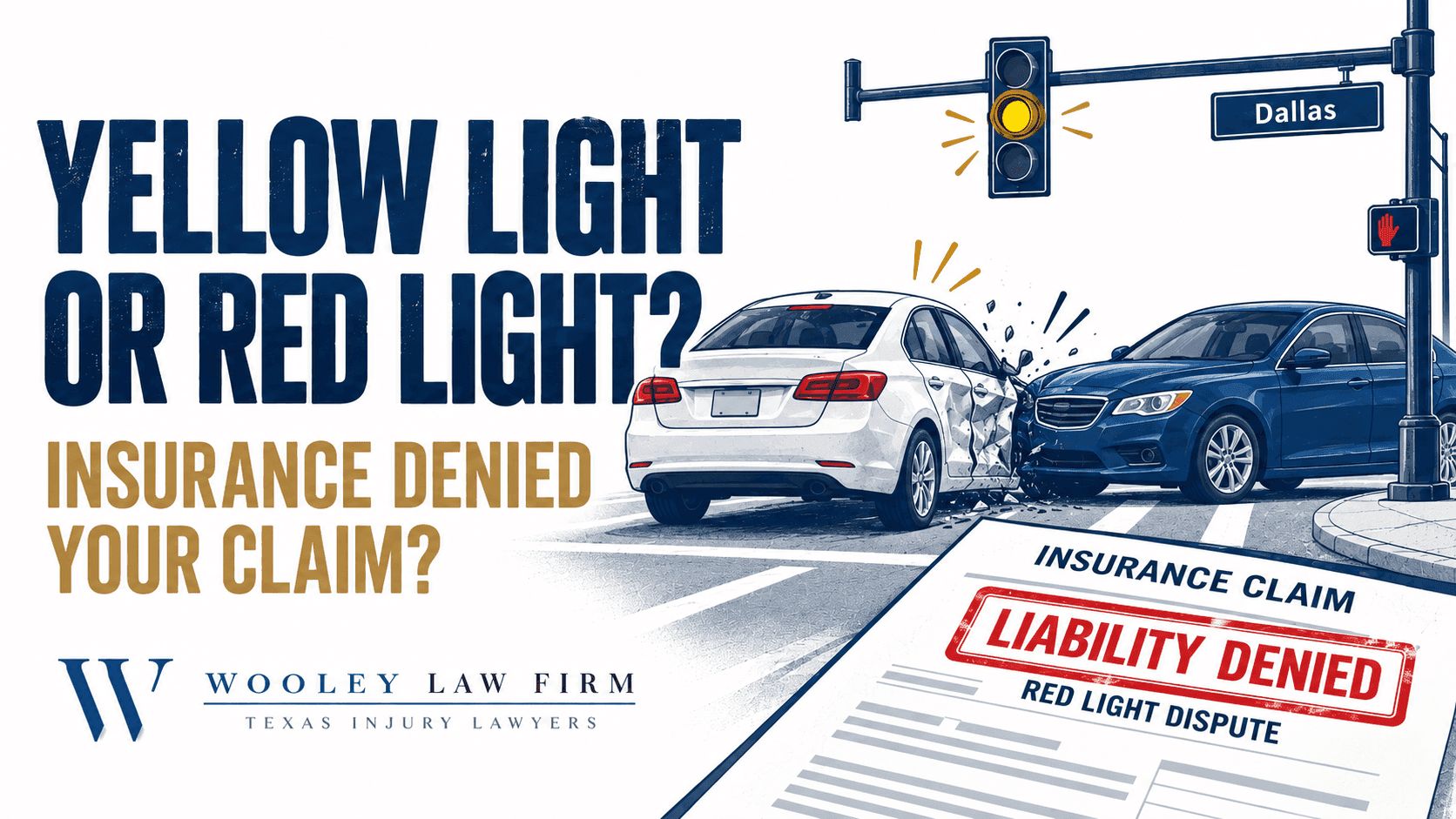
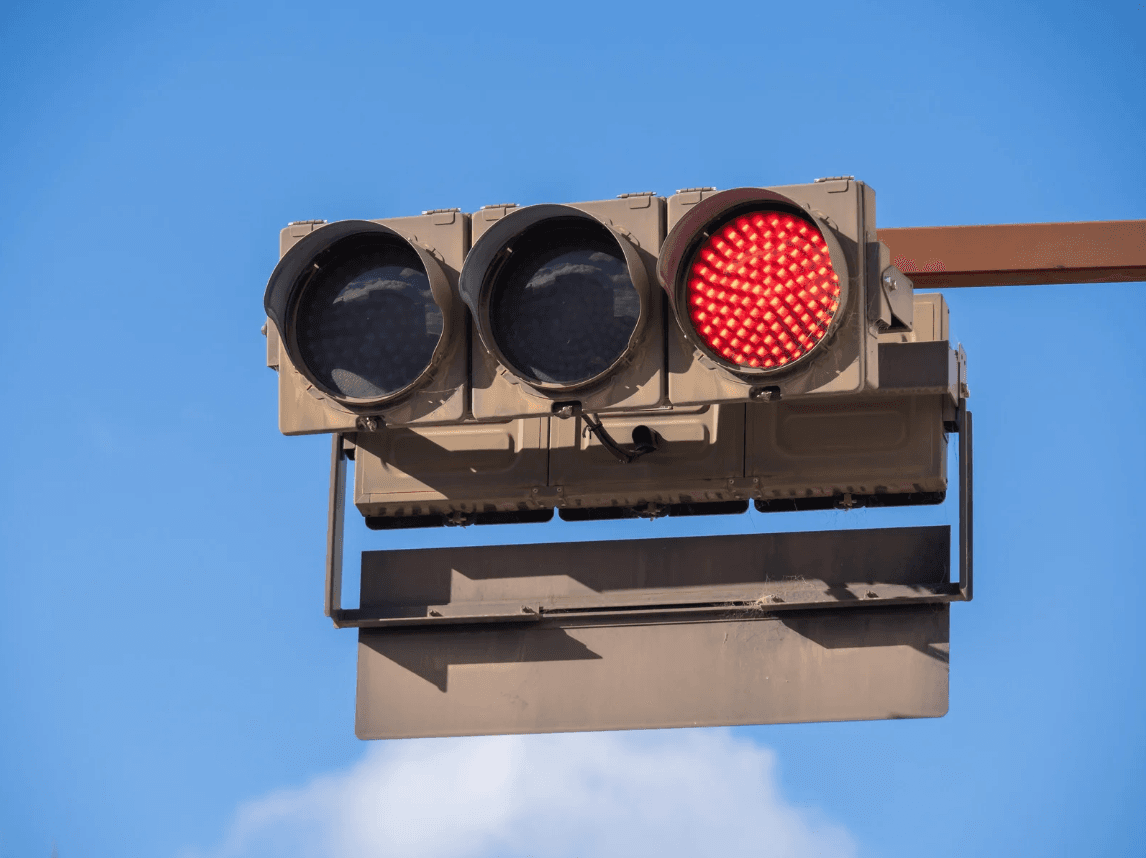
Intersection crashes are some of the most disputed car accident cases in Dallas. One driver says, “I had the green light.” The other driver says the exact same thing. At stop signs, the argument may be, “I stopped first,” “they rolled through,” or “they should have yielded.”
When a crash happens at an intersection controlled by a red light, green light, flashing signal, or stop sign, the question of who had the right of way can determine who is responsible for the collision. But proving fault is not always as simple as pointing to the traffic light or stop sign. Insurance companies often dispute liability, minimize injuries, or blame both drivers.
That is why evidence matters.
At The Wooley Law Firm, we help injured people in Dallas and throughout North Texas investigate intersection crashes, preserve evidence, and build claims based on facts instead of assumptions.
Why Intersection Crashes Are So Common in Dallas
Dallas drivers encounter busy intersections every day on roads like Central Expressway, Greenville Avenue, Northwest Highway, Lemmon Avenue, Mockingbird Lane, Belt Line Road, Preston Road, Coit Road, and countless neighborhood streets.
Intersection crashes often happen because one driver:
Runs a red light
Fails to stop at a stop sign
Rolls through a stop sign
Turns left without yielding
Turns right on red without checking for traffic
Speeds up to “beat the light”
Enters the intersection after the light changes
Fails to yield to a vehicle already in the intersection
Drives distracted while approaching a light or stop sign
Misjudges another vehicle’s speed or distance
These crashes can cause serious injuries because vehicles often collide at angles. T-bone crashes, side-impact collisions, and high-speed intersection wrecks can lead to head injuries, neck and back injuries, broken bones, shoulder injuries, hip injuries, internal injuries, and long-term pain.
Texas Traffic Signal Rules That Matter After a Red Light Crash
Texas law sets out rules for drivers approaching traffic control signals.
In general, a driver facing a green signal may proceed through the intersection, but only if it is lawful and safe to do so. A green light does not give a driver permission to ignore pedestrians, make an unsafe turn, speed, or crash into a vehicle already lawfully in the intersection.
A driver facing a steady red signal must stop and remain stopped unless a lawful turn is permitted. Even when a right turn on red is allowed, the driver must stop first and must yield to other traffic and pedestrians before turning.
These rules matter because many red light crash cases turn on details like:
Which direction each driver was traveling
Whether one driver entered on yellow or red
Whether a driver accelerated to beat the light
Whether a driver was turning left
Whether a right turn on red was allowed
Whether the other vehicle was already in the intersection
Whether a traffic signal was obstructed, malfunctioning, or confusing
Whether a pedestrian, cyclist, or other vehicle affected the driver’s path
A red light accident claim is not just about what each driver says. It is about proving what happened.
Stop Sign Rules After a Stop-Controlled Intersection Crash
Stop sign crashes often involve similar disputes. One driver may say the other vehicle never stopped. Another may claim both vehicles stopped, but the other driver entered first. Sometimes a driver stops briefly but fails to yield before entering the intersection.
At a stop sign, the driver must come to a legal stop and yield as required before moving into the intersection. At a four-way stop, fault may depend on who arrived first, which vehicle was to the right, who was turning, and whether one driver failed to yield to a vehicle already in the intersection.
Common stop sign crash scenarios include:
A driver rolls through a stop sign without fully stopping
A driver stops but pulls out too soon
A driver fails to yield to a vehicle that arrived first
A driver turns left in front of oncoming traffic
A driver is distracted and does not see the stop sign
A driver assumes the other vehicle will stop
Two drivers enter the intersection at nearly the same time
A driver’s view is blocked by parked cars, trees, signs, or buildings
Even low-speed stop sign crashes can cause real injuries, especially when one vehicle is struck from the side or when a driver is pushed into another lane, curb, pole, or vehicle.
Who Is at Fault in a Red Light or Stop Sign Accident?
Fault usually depends on which driver violated the rules of the road and whether that violation caused the crash.
A driver may be at fault if they:
Ran a red light
Failed to stop at a stop sign
Failed to yield the right of way
Made an unsafe left turn
Made an unsafe right turn on red
Drove too fast for the conditions
Entered the intersection when it was not safe
Failed to keep a proper lookout
Drove distracted
Followed too closely
Failed to brake in time
But insurance companies may still argue that the injured person was partly responsible. For example, they may claim the injured driver was speeding, distracted, entered late on a yellow light, failed to avoid the crash, or did not have the right of way.
That is why intersection accident cases often require a detailed investigation.
How You Actually Prove Who Had the Green Light
In many Dallas red light crash cases, both drivers give conflicting stories. The police report may help, but it may not resolve the issue. The officer usually did not witness the crash. The strongest cases are built with independent evidence.
1. Traffic Camera Footage
Video can be one of the most powerful forms of evidence in a red light crash case. Depending on the location, useful footage may come from:
City traffic cameras
Intersection monitoring cameras
Nearby business security cameras
Apartment or parking garage cameras
Gas station cameras
Bank cameras
School or church cameras
Dashcams
Rideshare vehicle cameras
Delivery vehicle cameras
The problem is timing. Many businesses overwrite security footage within days or even hours. Some systems automatically delete footage quickly. If no one acts fast, important video may disappear.
That is why injured people should contact a lawyer as soon as possible after a disputed red light or stop sign crash.
2. Business Cameras Near the Intersection
Many intersections in Dallas are surrounded by restaurants, convenience stores, banks, offices, pharmacies, and apartment complexes. Even if a camera does not point directly at the traffic light, it may still capture:
Vehicle movement
Signal timing
Brake lights
Headlights
Impact location
Speed before impact
Whether a vehicle stopped
Whether a vehicle entered after the other car
Sometimes a camera across the street, down the block, or facing a parking lot can still help prove who entered the intersection first.
Injured in an Accident?
Free consultation. Tell us what happened and learn what options may be available.
3. Dashcam Footage
Dashcams can be critical in intersection crash cases. Footage may come from the injured driver, the at-fault driver, a rideshare driver, a delivery driver, a commercial vehicle, or a witness.
Dashcam video may show:
The color of the light
The stop sign
The other driver’s approach
Speed and lane position
Sudden acceleration
Lack of braking
A rolling stop
The moment of impact
If you have dashcam footage, save it immediately. Do not edit it. Do not delete surrounding footage. Preserve the full file if possible.
4. Eyewitnesses
Neutral witnesses can make a major difference. A witness may have seen one driver run the red light, roll through a stop sign, or enter the intersection after another vehicle had already started through.
Helpful witnesses may include:
Other drivers
Pedestrians
Cyclists
Nearby workers
Construction workers
Delivery drivers
Rideshare passengers
People waiting at a bus stop
Customers at nearby businesses
Witnesses are often easiest to locate right after the crash. Over time, memories fade, phone numbers are lost, and people become harder to find.
5. The Police Report
A police report may include useful information such as:
Driver statements
Witness names
Insurance information
Vehicle positions
Citations
Weather and road conditions
A diagram of the crash
The officer’s observations
However, the police report is not always the final word. Officers often arrive after the crash has already happened. If the report contains mistakes or leaves out important information, additional evidence may still be used to prove what happened.
6. Scene Evidence
Physical evidence at the intersection can help reconstruct the crash. Important scene evidence may include:
Skid marks
Gouge marks
Debris fields
Broken glass
Vehicle fluid trails
Final resting positions
Crosswalk markings
Lane markings
Stop bars
Sight obstructions
Traffic signal location
Stop sign visibility
Road grade or curves
Construction zones
Malfunctioning or blocked signs
Photographs and measurements can be especially important before the scene changes.
7. Vehicle Damage and Point of Impact
The location and severity of vehicle damage can help show how the crash occurred. For example, damage to the front of one vehicle and the side of another may support a T-bone impact. Crush patterns may help show speed, angle, braking, and direction of travel.
Vehicle damage may help answer questions like:
Which vehicle entered the intersection first?
Was one vehicle turning?
Was one vehicle accelerating?
Did either driver brake before impact?
Was the crash a side-impact collision?
Did the vehicles rotate after impact?
Did one vehicle push the other into another lane?
This evidence can be especially helpful when the drivers disagree about who had the right of way.
8. Event Data Recorder Information
Some vehicles contain event data recorders, sometimes called “black boxes.” These systems may record information related to speed, braking, throttle, seatbelt use, and airbag deployment.
In serious injury cases, this data may help show whether a driver braked, accelerated, or entered the intersection at an unsafe speed. Because this data can be lost or overwritten, it should be preserved quickly when relevant.
9. Cell Phone and Distraction Evidence
Distracted driving is a major issue in intersection crashes. A driver who runs a red light or stop sign may have been texting, using GPS, scrolling, talking on the phone, or looking away from the road.
Evidence of distraction may include:
Phone records
App usage
Witness observations
Video footage
Admissions at the scene
Delayed braking
Failure to react
Drifting lanes before impact
A driver does not need to admit they were distracted for distraction to become part of the case.
Red Light Crashes and Left-Turn Accidents
Left-turn crashes are especially common at intersections. These cases often involve one driver turning left while another driver travels straight through the intersection.
The turning driver may claim they had a green arrow. The other driver may claim they had a green light. Sometimes the issue is whether the turn arrow had already ended, whether the straight-moving vehicle ran a red light, or whether the turning driver failed to yield.
Evidence that may matter includes:
Signal phase timing
Turn lane footage
Witness statements
Damage angles
Lane positions
Whether the turn was protected or unprotected
Whether the turning driver had a green arrow
Whether the straight-moving driver entered on yellow or red
These cases can become complicated quickly, especially when injuries are serious.
Right Turn on Red Accidents
Many drivers assume a right turn on red is always allowed. That is not true. Even when a right turn on red is permitted, the driver must stop first and yield before turning.
Right-turn-on-red crashes may involve:
A driver turning into the path of another vehicle
A driver failing to yield to a pedestrian in a crosswalk
A driver turning from the wrong lane
A driver making a wide turn into another lane
A driver failing to see a cyclist
A driver rolling through the red light without stopping
If a driver caused a crash while turning right on red, the fact that the turn may have been allowed does not automatically excuse the driver’s conduct.
Four-Way Stop Crashes
Four-way stop crashes often come down to order, timing, and yielding. The driver who arrives first generally proceeds first. When vehicles arrive at approximately the same time, the driver on the left generally yields to the driver on the right. Turning vehicles may also have additional yielding duties depending on the situation.
In real life, four-way stops can be chaotic. Drivers wave each other through, hesitate, roll forward, or assume someone else will stop. A crash may happen because one driver becomes impatient and enters the intersection when it is not safe.
Important evidence may include:
Witnesses who saw who arrived first
Dashcam footage
Nearby security footage
Vehicle resting positions
Damage location
Road markings
Whether either vehicle fully stopped
What to Do After a Dallas Red Light or Stop Sign Crash
If you are physically able, these steps may help protect your health and your injury claim:
Call 911 and report the crash.
Get medical care as soon as possible.
Take photos of the vehicles, intersection, traffic lights, stop signs, debris, skid marks, and visible injuries.
Get witness names and phone numbers.
Look for nearby cameras on businesses, homes, apartments, parking lots, and vehicles.
Do not argue with the other driver about fault.
Do not give a recorded statement to the other driver’s insurance company without legal advice.
Save dashcam footage if you have it.
Keep medical records, bills, repair estimates, and missed-work documentation.
Contact a Dallas car accident lawyer quickly so evidence can be preserved.
The faster an investigation begins, the better the chance of finding video, witnesses, and other proof before it disappears.
Why Insurance Companies Dispute Intersection Crashes
Insurance companies know that red light and stop sign cases often come down to credibility. If there is no video, they may argue that fault is unclear. They may also try to shift blame onto the injured person.
Common insurance company arguments include:
“Our driver had the green light.”
“You entered the intersection late.”
“You were speeding.”
“You should have avoided the crash.”
“Both drivers are equally at fault.”
“The damage does not match your version.”
“Your injuries are not serious.”
“Your injuries came from something else.”
“You waited too long to get treatment.”
A strong claim should answer these arguments with evidence.
How The Wooley Law Firm Helps After a Dallas Intersection Crash
The Wooley Law Firm moves quickly to investigate red light crashes, stop sign crashes, T-bone collisions, and other intersection accidents in Dallas.
Depending on the case, we may work to:
Identify nearby camera sources
Send preservation letters before footage is deleted
Gather police reports and crash records
Locate and interview witnesses
Photograph and inspect the crash scene
Review vehicle damage
Analyze right-of-way issues
Investigate distracted driving
Evaluate medical records and injury damages
Communicate with insurance companies
Build the liability story around independent proof
The goal is simple: prove what happened, prove who violated the rules of the road, and pursue the compensation our client deserves.
Injuries Caused by Red Light and Stop Sign Crashes
Intersection crashes can cause serious and lasting injuries. Common injuries include:
Concussions and traumatic brain injuries
Neck injuries
Back injuries
Herniated discs
Shoulder injuries
Knee injuries
Broken bones
Hip injuries
Chest and rib injuries
Internal injuries
Cuts and scarring
Nerve damage
Chronic pain
Anxiety after the crash
Loss of mobility
Wrongful death
Even if you feel “okay” at the scene, symptoms can worsen over hours or days. Getting medical care protects your health and creates documentation that may become important in your injury claim.
Compensation After a Dallas Intersection Accident
If another driver caused your crash by running a red light, ignoring a stop sign, or failing to yield, you may be able to pursue compensation for damages such as:
Emergency medical care
Hospital bills
Doctor visits
Physical therapy
Future medical treatment
Lost wages
Loss of earning capacity
Pain and suffering
Mental anguish
Physical impairment
Disfigurement
Property damage
Out-of-pocket expenses
Every case is different. The value of a claim depends on liability, injuries, medical treatment, available insurance, and the long-term impact of the crash.
Frequently Asked Questions About Red Light and Stop Sign Crashes
Do I need video to win a red light crash case?
No. Video can be powerful, but it is not the only way to prove fault. Witness testimony, vehicle damage, debris patterns, police reports, scene evidence, and expert analysis may also help prove who had the right of way.
What if the other driver says they had the green light?
That is common. Many intersection crash cases begin with two conflicting stories. The key is to look for independent evidence, including nearby cameras, dashcams, witnesses, vehicle damage, and traffic signal timing.
What law governs traffic lights in Texas?
Texas Transportation Code Section 544.007 addresses traffic control signals, including rules for green, yellow, and red signals.
What happens if someone runs a stop sign and hits me?
If a driver fails to stop or fails to yield at a stop sign and causes a crash, that driver may be responsible for the resulting injuries and damages. Evidence may include witness statements, camera footage, vehicle damage, and the police report.
Who is at fault in a four-way stop accident?
Fault depends on who arrived first, who had the right of way, whether each driver fully stopped, whether a driver was turning, and whether a driver entered the intersection when it was unsafe. These cases often require a close review of the facts.
Can I still recover compensation if the insurance company says I was partly at fault?
Possibly. Texas uses proportionate responsibility rules, which means fault percentages can matter. If the insurance company is blaming you, you should speak with a lawyer before accepting their version of the crash.
What if the traffic light was yellow?
Yellow light cases can be disputed. Important questions include whether the driver could safely stop, whether the light turned red before entry, whether the other vehicle entered early, and whether either driver was speeding or distracted.
How fast should I act after a red light or stop sign crash?
Quickly. Camera footage can be overwritten, witnesses can disappear, and physical evidence at the scene can be cleaned up. The sooner evidence is preserved, the stronger the case may be.
Injured in a Dallas Red Light or Stop Sign Crash? Call The Wooley Law Firm.
If you were injured in a Dallas car accident, red light crash, stop sign collision, T-bone wreck, or intersection accident, you may have the right to seek justice and pursue compensation for medical expenses, pain and suffering, lost wages, mental anguish, impairment, and other damages.
The Wooley Law Firm can help investigate who had the right of way, preserve key evidence, and deal with the insurance company.
Call (214) 699-6524 for a free consultation. You don’t pay unless we win. Contact Us Today!
This article is for general information only and is not legal advice. Every case is different.
Topics
Share This Article
Andrew J. Wooley
Personal Injury Attorney
Andrew J. Wooley is a dedicated personal injury attorney based in Dallas, Texas. He focuses on helping accident victims recover fair compensation for their injuries. With a commitment to personalized service, Andrew works directly with each client to understand their unique situation and fight for their rights.
Related Local News
Recent related coverage